

In 2025, Americans lost $2.1 billion to scams on social media.
New data from the FTC released on Monday reveals that nearly 30% of all reported financial losses due to scams last year originated on social media. Investment scams alone resulted in losses of $1.1 billion, while shopping scams were reported most frequently.
Romance scams traced back to social media accounted for 60% of reported incidents. All age demographics, except those over 80, experienced greater losses from social media scams compared to any other communication method.
The Federal Trade Commission's latest report indicates that in 2025, Americans lost $2.1 billion to scams that began on social media, marking an eightfold increase since 2020 and surpassing any other method used by scammers to engage consumers.
Almost 30% of individuals who reported losing money said the scam started on a social media platform. Facebook reported the highest losses compared to other platforms, with WhatsApp and Instagram trailing behind in second and third place.
In 2025, losses attributed solely to scams initiated on Facebook exceeded those from all text and email scams combined. Investment scams were identified as the most financially harmful, with losses reaching $1.1 billion from scams originating on social media, constituting over half of the total amount.
These schemes often start with an advertisement or post that promises to share lucrative investing strategies, develop into a "friendly adviser" scenario, and eventually lead victims to fraudulent investment platforms. A variation of this type of scam utilizes WhatsApp or Facebook groups where supposed “successful investors” share false testimonials to create bogus social proof before soliciting investments.
Shopping scams were the most frequently reported, making up more than 40% of social media scam cases. Victims typically recounted ordering items showcased in social media advertisements, with clothing, cosmetics, car parts, and pets being among the most commonly mentioned. Many either received nothing, received substandard replicas, or were redirected to a fraudulent website mimicking a reputable brand with enticing discounts.
The FTC highlighted that scammers leverage the same targeted advertising tools used by legitimate businesses, drawing on age, interest, and shopping data to pinpoint potential victims for each fraud type.
Romance scams heavily rely on social media, with nearly 60% of individuals reporting financial losses from romance scams in 2025 indicating that their scams began on such platforms. Scammers analyze their targets' profiles prior to reaching out, customizing their initial approach to align with the target's apparent interests and situations, and later construct crises requiring financial assistance or introduce phony investment opportunities as secondary scams within the relationship.
The reported figure of $2.1 billion is based on voluntary consumer reports to the FTC, underrepresenting the actual losses. The FTC has previously suggested that the true financial impact of fraud on consumers may be as much as ten times greater than the reported figures, as many victims do not formally lodge complaints.
Total reported fraud losses through all communication methods hit a record $15.9 billion in 2025, up from $12.5 billion in 2024, with investment scams across all channels contributing $7.9 billion, or about half of the total losses.
The $2.1 billion attributed to social media fraud accounts for roughly 13% of total reported fraud losses, establishing it as the largest single source channel despite this concentrated share.
Additionally, the FTC's data categorizes losses by age. All demographics, except individuals aged 80 and older, reported more substantial losses from scams that originated on social media than from any other method of contact. For those over 80, phone calls remain the leading method in terms of reported losses, with social media following in second place. The prominence of social media as the primary channel for fraud across other age groups reflects both the high usage of these platforms and the increasingly sophisticated targeting methods accessible to scammers, who can affordably purchase targeted advertising directed at specific demographic groups.
Other articles
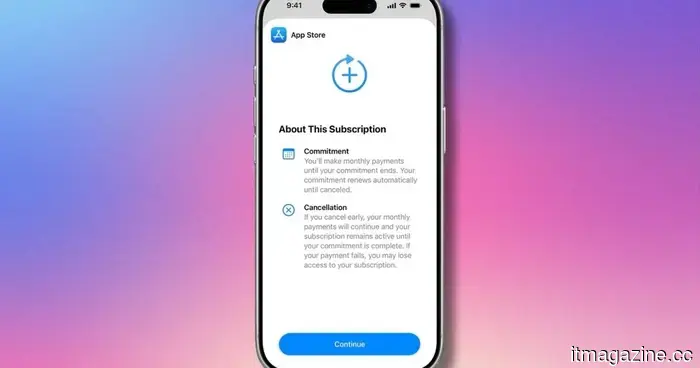 Apple's updated App Store strategy allows you to pay monthly for yearly subscriptions, but there’s a catch.
Apple's recently introduced App Store subscription feature allows users to pay monthly at rates equivalent to an annual subscription. This reduces costs without requiring an upfront lump sum, although it comes with a commitment of 12 months.
Apple's updated App Store strategy allows you to pay monthly for yearly subscriptions, but there’s a catch.
Apple's recently introduced App Store subscription feature allows users to pay monthly at rates equivalent to an annual subscription. This reduces costs without requiring an upfront lump sum, although it comes with a commitment of 12 months.
 Redpine secures €6.8 million, with NordicNinja at the helm, to develop a licensed data API for AI agents.
Edpine has secured €6.8 million for its API, which enables AI agents to access licensed premium datasets in real time; it follows the 'Spotify model' for AI training data.
Redpine secures €6.8 million, with NordicNinja at the helm, to develop a licensed data API for AI agents.
Edpine has secured €6.8 million for its API, which enables AI agents to access licensed premium datasets in real time; it follows the 'Spotify model' for AI training data.
 Social media fraud resulted in a loss of $2.1 billion for Americans in 2025.
Recent FTC data indicates that $2.1 billion was lost to social media scams in 2025, an increase of eight times compared to 2020. Facebook accounted for the largest share of these losses.
Social media fraud resulted in a loss of $2.1 billion for Americans in 2025.
Recent FTC data indicates that $2.1 billion was lost to social media scams in 2025, an increase of eight times compared to 2020. Facebook accounted for the largest share of these losses.
 Gemini aims to access your emails, calendar, and notifications to assist you proactively, even before you make a request.
The forthcoming Proactive Assistance feature of Google Gemini will offer tailored suggestions automatically, utilizing user-chosen applications such as Gmail and Calendar, along with content displayed on the screen.
Gemini aims to access your emails, calendar, and notifications to assist you proactively, even before you make a request.
The forthcoming Proactive Assistance feature of Google Gemini will offer tailored suggestions automatically, utilizing user-chosen applications such as Gmail and Calendar, along with content displayed on the screen.
 Meta is set to reverse its $2 billion acquisition of Manus following China's prevention of the deal.
Meta is getting ready to reverse its $2 billion acquisition of Manus following the block issued by China's NDRC, with an initial deadline of a few weeks to undo the agreement.
Google finalizes a confidential AI agreement with the Pentagon.
Google has entered into a confidential AI agreement with the Pentagon that permits its models to be used for "any lawful government purpose."
Meta is set to reverse its $2 billion acquisition of Manus following China's prevention of the deal.
Meta is getting ready to reverse its $2 billion acquisition of Manus following the block issued by China's NDRC, with an initial deadline of a few weeks to undo the agreement.
Google finalizes a confidential AI agreement with the Pentagon.
Google has entered into a confidential AI agreement with the Pentagon that permits its models to be used for "any lawful government purpose."
In 2025, Americans lost $2.1 billion to scams on social media.
Recent FTC data indicates that $2.1 billion was lost to social media scams in 2025, which is eight times greater than the losses recorded in 2020. Facebook accounted for the most significant losses.