
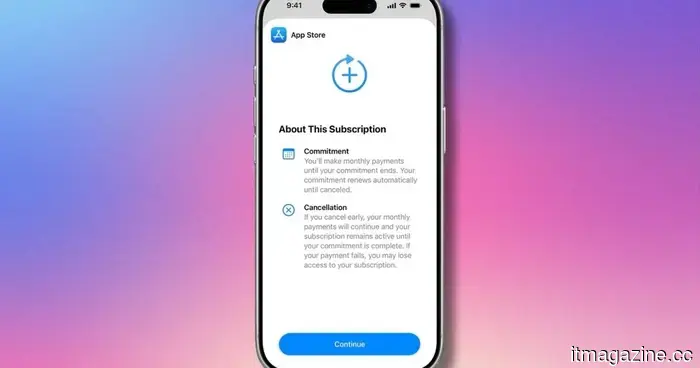
Apple's updated App Store strategy allows you to pay monthly for yearly subscriptions, but there’s a catch.
The hybrid subscription model represents a compromise between the desired flexibility of monthly payments and the savings of an annual subscription that users have sought for years. It’s important to fully grasp what this entails.
Apple
No one enjoys paying for a full year's subscription to an app in advance, especially when there's uncertainty about continued use in a few months. Apple has acknowledged this frustration, to some extent.
The company has introduced a new subscription type in the App Store: monthly billing at a price equivalent to an annual rate. It sounds great, right? However, there’s a catch. Monthly billing requires a 12-month commitment.
Apple
So, what Exactly does this new subscription type provide?
Rather than choosing between a more expensive monthly plan or a discounted annual payment (which is how many apps entice customers to choose the yearly option), App Store subscribers can now pay a lower, annual-equivalent amount (annual price divided by 12) on a monthly basis.
For example, an app that traditionally costs $9.99 per month or $90 upfront could now be available for $7.50 per month paid over 12 months. In other words, you receive the same discount as the annual payment without needing to pay the total amount upfront.
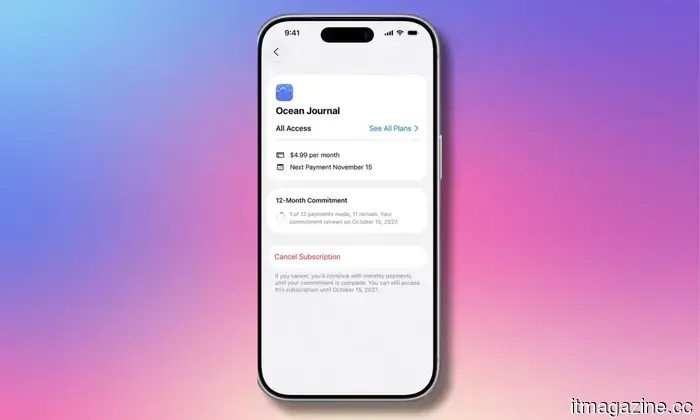
Apple enhances transparency with this new subscription by allowing users to see how many payments they’ve completed and how many are left at any moment. Additionally, similar to regular subscriptions, the company will send reminder emails and push notifications before renewals.
Developers can start testing this new subscription type in App Store Connect and Xcode now, and it will be available to users on iOS 26.4 and equivalent platform versions starting next month.
Unsplash
What’s the catch?
As mentioned earlier, the monthly billing is locked in for a year. Even if you cancel your subscription in the ninth or tenth month, you are still responsible for completing the remaining installments (essentially fulfilling a commitment of 12 monthly payments at the annual equivalent rate) before you can exit the commitment for the next 12-month cycle.
While this may seem like a disadvantage, the new App Store subscription model actually balances the flexibility of monthly payments at a discounted rate with ensuring developers receive their set annual fee.
However, it’s peculiar that this new model isn’t launching yet in the United States and Singapore, with no clear timeline provided for when those markets will be included. To me, this new tier appears to stem from regulatory pressure for more transparency in subscriptions. Regardless, it allows users to break down an app’s annual subscription fee, typically paid upfront, into 12 committed monthly payments.
For over five years, Shikhar has continuously simplified advancements in consumer technology and presented them…
The QWERTY-equipped Clicks Communicator phone finally has a launch date
Somewhere, there is still an individual who quietly laments the loss of physical keyboards. They have mostly adjusted to touchscreens and adapted like everyone else. Yet occasionally, amid a slip on a glass surface, that longing returns. The Clicks Communicator is designed for such individuals, and after months of prototype units and carefully managed anticipation, it finally has a timeline worthy of attention.
The BlackBerry loyalists never really departed.
Motorola finally creates a genuine flagship – and it only took them years
No, we aren't discussing foldables. Yes, we mean the Motorola Signature.
For a long time, Motorola has occupied an unusual position. It wasn’t irrelevant, but it also wasn’t actively competing. Its phones were acceptable, sometimes even enjoyable—but rarely serious competitors. This is what makes the Motorola Signature feel distinct. For once, this is not just a "good for Motorola" phone; it’s simply… good.
And that's both refreshing and a bit disappointing. That said, this is not a revolution. It's arguably something more crucial for Motorola: a correction. A correction that will likely shape its future smartphones.
Gemini aims to read your emails, calendar, and notifications to assist even before you ask.
Gemini's Proactive Assistance does more than respond to your questions; it observes what's coming, reads what you’ve permitted it to see, and anticipates your needs throughout the day.
Google’s vision for Gemini has always been about creating an AI assistant that proactively assists you without being called upon, and that vision is finally materializing. A detailed examination of the latest beta version of the Google app by 9To5Google reveals code for a feature named “Proactive Assistance.”
As the name implies, this feature is designed to provide personalized suggestions when you need them without you having to type anything or invoke Gemini.



Other articles
 Valve has officially announced the Steam Controller, including its price and release date.
Following weeks of rumors, Valve has officially announced its new hardware: the Steam Controller will be released on May 4 for $99.
Valve has officially announced the Steam Controller, including its price and release date.
Following weeks of rumors, Valve has officially announced its new hardware: the Steam Controller will be released on May 4 for $99.
 Gemini aims to access your emails, calendar, and notifications to assist you proactively, even before you make a request.
The forthcoming Proactive Assistance feature of Google Gemini will offer tailored suggestions automatically, utilizing user-chosen applications such as Gmail and Calendar, along with content displayed on the screen.
Google finalizes a confidential AI agreement with the Pentagon.
Google has entered into a confidential AI agreement with the Pentagon that permits its models to be used for "any lawful government purpose."
Google enters into a classified AI agreement with the Pentagon.
Google has entered into a secret AI agreement with the Pentagon that permits its models to be used for 'any legal government purpose.'
Gemini aims to access your emails, calendar, and notifications to assist you proactively, even before you make a request.
The forthcoming Proactive Assistance feature of Google Gemini will offer tailored suggestions automatically, utilizing user-chosen applications such as Gmail and Calendar, along with content displayed on the screen.
Google finalizes a confidential AI agreement with the Pentagon.
Google has entered into a confidential AI agreement with the Pentagon that permits its models to be used for "any lawful government purpose."
Google enters into a classified AI agreement with the Pentagon.
Google has entered into a secret AI agreement with the Pentagon that permits its models to be used for 'any legal government purpose.'
 The trailer for House of the Dragon season 3 has arrived, and it's just as intense as we expected.
After two seasons of careful anticipation, the trailer for House of the Dragon season 3 has finally been released. The Dance of the Dragons is underway, and the grandeur appears to be just as monumental as fans were led to believe.
The trailer for House of the Dragon season 3 has arrived, and it's just as intense as we expected.
After two seasons of careful anticipation, the trailer for House of the Dragon season 3 has finally been released. The Dance of the Dragons is underway, and the grandeur appears to be just as monumental as fans were led to believe.
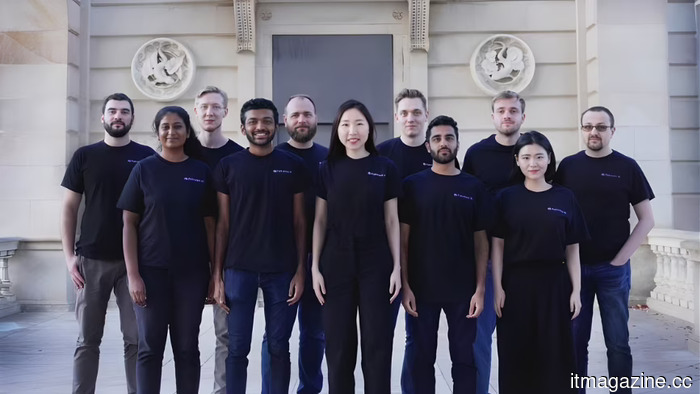 Patronus has secured €11 million in funding to transform senior emergency smartwatches from mere 'bedside decoration' into everyday wearable devices.
Berlin’s Patronus secures €11M, led by 3TS Capital Partners, for its senior emergency smartwatch that boasts an 85% daily usage rate.
Patronus has secured €11 million in funding to transform senior emergency smartwatches from mere 'bedside decoration' into everyday wearable devices.
Berlin’s Patronus secures €11M, led by 3TS Capital Partners, for its senior emergency smartwatch that boasts an 85% daily usage rate.
Apple's updated App Store strategy allows you to pay monthly for yearly subscriptions, but there’s a catch.
Apple's recently introduced App Store subscription feature allows users to pay monthly at rates equivalent to an annual subscription. This reduces costs without requiring an upfront lump sum, although it comes with a commitment of 12 months.