
Google enters into a classified AI agreement with the Pentagon.
The Information reported on Tuesday that Google has entered into a classified AI agreement with the US Department of Defense, allowing the Pentagon to utilize Google's AI models for "any lawful government purpose." This arrangement does not include the restrictions that resulted in Anthropic being blacklisted in February. Google joins a series of AI companies, including OpenAI and xAI, in providing classified AI capabilities to the US military.
The deal was disclosed shortly after over 560 Google employees published an open letter to CEO Sundar Pichai on Monday, advocating against such classified military AI agreements. As of the time of this article's publication, Google had not publicly acknowledged or commented on the agreement.
According to The Information, this agreement is structured without the ethical constraints that Anthropic had in its contract with the Pentagon. These constraints contributed to Anthropic being identified as a national security supply chain risk and subsequently banned by the Trump administration in February 2026. While Anthropic declined to eliminate its contractual restrictions on mass domestic surveillance and fully autonomous weapons without human oversight, Google's contract is described as allowing "any lawful government purpose" without such exclusions.
This perspective aligns Google’s deal with the unrestricted model preferred by the Trump administration, contrasting with the modified terms negotiated by OpenAI, which included limitations on domestic surveillance while adhering to the Pentagon’s contracting framework.
The Pentagon has now formed classified AI agreements with four of the largest AI companies in the United States: OpenAI, xAI, Google, and Anthropic, until its ban. This sequence is significant; Anthropic was excluded for maintaining ethical restrictions, OpenAI re-negotiated to stay compliant while keeping some restrictions, xAI signed without apparent limitations, and now Google has entered into an agreement that seemingly grants the most extensive discretion to the Pentagon.
The outcome is a classified AI supplier network from which Anthropic is absent, and where the three remaining suppliers possess varying degrees of freedom to offer AI capabilities for military uses.
The timing concerning Monday’s employee letter is particularly striking. The 560 employees who signed the letter to Pichai on Monday morning were, by Tuesday, part of a company that had signed the deal they urged Pichai to reject. This situation creates a direct and uncomfortable contradiction that Pichai will need to address in town halls, press conferences, and potentially in the courtroom during the Musk v. Altman trial, should Google’s stance on AI ethics be relevant to the proceedings.
Google has not confirmed the specific terms of its Pentagon AI arrangements, and the “any lawful government purpose” characterization stems from a single anonymous source cited by The Information.
The employee letter and the Pentagon contract together highlight the dilemma that all major AI companies are currently facing. On one side is the US government's requirement for unrestricted AI capabilities for classified military purposes, and on the other are the published AI ethical principles that companies adopted in part in response to the 2018 Project Maven controversy, which commit them to steering clear of AI weapons without human oversight. Anthropic adhered to its principles and was blacklisted.
OpenAI and Google appear to have opted for the contracts. Whether this decision will be temporary, commercially reversible, or permanent will depend on the evolution of the political landscape and whether the 560 signatories of Monday’s letter, along with potential future supporters, can influence internal decisions.
Other articles
 Apple has reportedly secured the names iPhone Ultra and MacBook Ultra for its upcoming flagship products.
Apple is transforming Ultra into a comprehensive product strategy. The iPhone Ultra, which is their inaugural foldable phone, will launch this September, while the MacBook Ultra will introduce OLED touch to the Mac in early 2027.
Apple has reportedly secured the names iPhone Ultra and MacBook Ultra for its upcoming flagship products.
Apple is transforming Ultra into a comprehensive product strategy. The iPhone Ultra, which is their inaugural foldable phone, will launch this September, while the MacBook Ultra will introduce OLED touch to the Mac in early 2027.
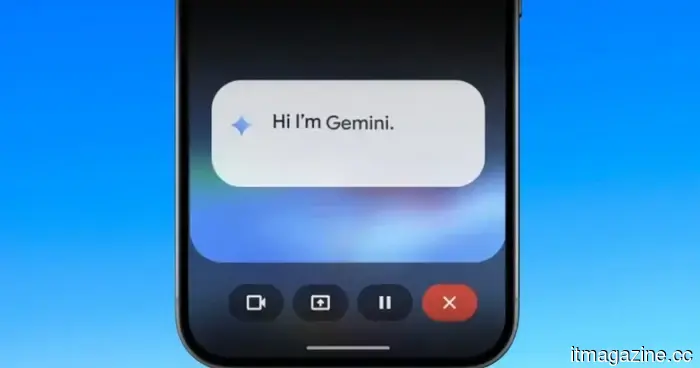 Gemini aims to access your emails, calendar, and notifications to assist you proactively, even before you make a request.
The forthcoming Proactive Assistance feature of Google Gemini will offer tailored suggestions automatically, utilizing user-chosen applications such as Gmail and Calendar, along with content displayed on the screen.
Gemini aims to access your emails, calendar, and notifications to assist you proactively, even before you make a request.
The forthcoming Proactive Assistance feature of Google Gemini will offer tailored suggestions automatically, utilizing user-chosen applications such as Gmail and Calendar, along with content displayed on the screen.
 Social media fraud resulted in a loss of $2.1 billion for Americans in 2025.
Recent FTC data indicates that $2.1 billion was lost to social media scams in 2025, an increase of eight times compared to 2020. Facebook accounted for the largest share of these losses.
Social media fraud resulted in a loss of $2.1 billion for Americans in 2025.
Recent FTC data indicates that $2.1 billion was lost to social media scams in 2025, an increase of eight times compared to 2020. Facebook accounted for the largest share of these losses.
 Meta is set to reverse its $2 billion acquisition of Manus following China's prevention of the deal.
Meta is getting ready to reverse its $2 billion acquisition of Manus following the block issued by China's NDRC, with an initial deadline of a few weeks to undo the agreement.
Meta is set to reverse its $2 billion acquisition of Manus following China's prevention of the deal.
Meta is getting ready to reverse its $2 billion acquisition of Manus following the block issued by China's NDRC, with an initial deadline of a few weeks to undo the agreement.
 One of the most powerful desktop processors on the market has just seen a price drop of $125: the AMD Ryzen 9 9950X3D is now priced at $573.
The AMD Ryzen 9 9950X3D is currently available for $573.99 as part of a limited-time promotion, which is a $125 discount from its original price of $699. This product marks a first for AMD: a 3D V-Cache processor that boasts a sufficient core count to manage intensive creative and professional tasks while still maintaining the gaming performance benefits of cache stacking. [...]
One of the most powerful desktop processors on the market has just seen a price drop of $125: the AMD Ryzen 9 9950X3D is now priced at $573.
The AMD Ryzen 9 9950X3D is currently available for $573.99 as part of a limited-time promotion, which is a $125 discount from its original price of $699. This product marks a first for AMD: a 3D V-Cache processor that boasts a sufficient core count to manage intensive creative and professional tasks while still maintaining the gaming performance benefits of cache stacking. [...]
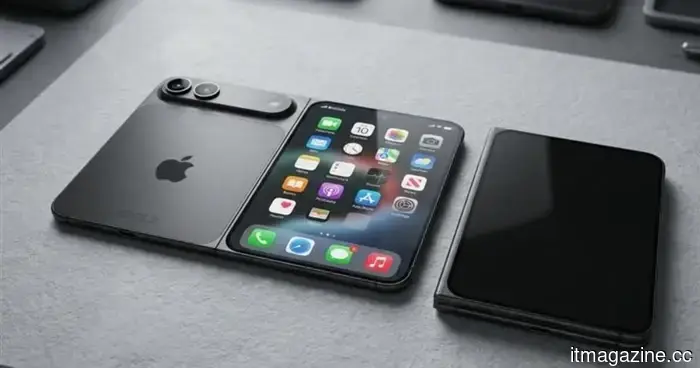 Apple has seemingly secured the names iPhone Ultra and MacBook Ultra for its upcoming flagship devices.
Apple is establishing Ultra as a comprehensive product strategy. The iPhone Ultra, its inaugural foldable device, is set to launch this September, while the MacBook Ultra will introduce OLED touch technology to the Mac in early 2027.
Apple has seemingly secured the names iPhone Ultra and MacBook Ultra for its upcoming flagship devices.
Apple is establishing Ultra as a comprehensive product strategy. The iPhone Ultra, its inaugural foldable device, is set to launch this September, while the MacBook Ultra will introduce OLED touch technology to the Mac in early 2027.
Google enters into a classified AI agreement with the Pentagon.
Google has entered into a secret AI agreement with the Pentagon that permits its models to be used for 'any legal government purpose.'