
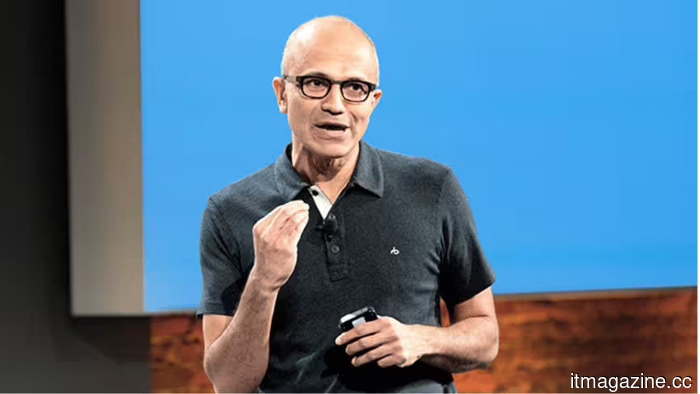
Microsoft's initial voluntary retirement offer is a buyout presented as an advantage.
Summary: Microsoft is providing voluntary retirement options to around 7% of its US workforce, totaling about 8,750 employees from a pool of 125,000, marking the company's first such initiative in its 51 years. This was revealed by Chief People Officer Amy Coleman, targeting those at the senior director level and below, based on a "Rule of 70" calculation (age plus years of service). Details will be shared on May 7, with a decision period of 30 days. This follows over 15,000 layoffs in 2025 and a hiring freeze in March 2026 (with exceptions for AI teams). While Microsoft is investing over $80 billion in AI infrastructure and generated $81.3 billion in quarterly revenue, this program comes as part of a strategy to streamline operations and redirect savings.
The company announced the voluntary retirement option for about 7% of its American workforce, estimating 8,750 employees out of 125,000, through its first-ever program of this nature in the company's long history. The initiative, detailed in an internal memo by Amy Coleman, the chief people officer, employs the "Rule of 70": those at the senior director level and below whose age combined with years of service totals 70 or more will qualify. Employees on sales incentive plans are not eligible. Information regarding the offer will be provided on May 7, and participants will have 30 days to make a decision. The package includes a financial payout and extended healthcare options. Coleman expressed that the goal is to allow those eligible to make their own choices with substantial company support.
The inclusion of the term "voluntary" serves a significant role here. In 2025, Microsoft reduced its workforce by more than 15,000, including approximately 9,000 cuts in one round in July and another 6,000 in May. In March 2026, the company initiated a hiring freeze in its Azure cloud and North American sales teams, while specifically exempting AI and Copilot divisions. This voluntary retirement program is a less severe approach than layoffs, but it aligns with the same overarching strategy: reducing the workforce in areas deemed overstaffed while reallocating financial resources to critical sectors.
Regarding financials, Microsoft is not in a difficult position. In its most recent quarter of fiscal year 2026, it reported $81.3 billion in revenue, a year-over-year increase of 17%, with operating income rising by 21% to $38.3 billion. Net income surged 60% to $38.5 billion. The company’s cloud revenue exceeded $51.5 billion, and Azure experienced a 39% growth in constant currency. Microsoft returned $12.7 billion to shareholders in dividends and buybacks during the quarter, marking a 32% increase. Predictions for the upcoming third quarter suggest revenue between $80.65 billion and $81.75 billion.
Nonetheless, the quarter also saw a capital expenditure of $37.5 billion, a 66% increase compared to the previous year, nearly all allocated for AI infrastructure. Microsoft has committed over $80 billion to AI data centers and computing resources. CEO Satya Nadella has referred to the company's count of over 220,000 employees as a "massive disadvantage" in the AI competition, making the voluntary retirement program a response to this challenge: lowering the workforce number without incurring the negative attention associated with large-scale layoffs.
Microsoft is not alone in this trend. Oracle announced cuts of up to 30,000 jobs in March to finance AI data centers, delivering news via early morning emails without prior notice. Meta plans to eliminate 8,000 jobs on May 20 as part of its AI restructuring while simultaneously doubling its AI infrastructure spending to between $115 billion and $135 billion. Atlassian cut 1,600 positions and appointed two AI-focused executives in place of its chief technology officer. Amazon indicated approximately 30,000 layoffs in early 2026 across its Alexa, AWS, and Prime Video divisions. By April, more than 95,000 tech workers had lost their jobs among 249 companies in 2026, with around 44% of these reductions attributed to AI automation. In the first quarter alone, 78,557 positions were eliminated.
The methods differ across companies. Oracle's method was direct and immediate. Meta is phasing its cuts, planning a second wave in the latter half of the year. Microsoft’s approach is unique: authentically voluntary, specifically targeting employees by tenure and age rather than by division or performance, and providing a 30-day decision timeframe rather than a prompt exit. The Rule of 70 disproportionately impacts long-tenured employees in their fifties and sixties—those responsible for shaping pre-AI Microsoft and whose institutional knowledge is hardest to replace but whose roles are considered most vulnerable to automation or removal.
The hiring freeze does not affect AI teams. AI and machine learning roles typically offer a
Other articles
 SoftBank is looking for a $10 billion margin loan collateralized by OpenAI shares at a rate of SOFR+425 basis points as its leverage structure becomes more complex.
SoftBank is securing a $10 billion loan using its stake in OpenAI as collateral, with a spread nearly three times higher than that of its 2018 margin loan with Alibaba. S&P has downgraded its credit outlook to negative.
SoftBank is looking for a $10 billion margin loan collateralized by OpenAI shares at a rate of SOFR+425 basis points as its leverage structure becomes more complex.
SoftBank is securing a $10 billion loan using its stake in OpenAI as collateral, with a spread nearly three times higher than that of its 2018 margin loan with Alibaba. S&P has downgraded its credit outlook to negative.
 UK Biobank data from 500,000 volunteers has been offered for sale on Alibaba following breaches of access agreements by Chinese research institutions.
Health information from 500,000 UK Biobank volunteers was listed for sale on Alibaba following breaches of data-sharing agreements by three Chinese research institutions. The Information Commissioner's Office is currently conducting an investigation.
OpenAI has introduced GPT-5.5, marking its first entirely retrained base model since GPT-4.5.
OpenAI has introduced GPT-5.5, its initial fully retrained base model following GPT-4.5, aimed at enterprises with capabilities in agentic coding, computer utilization, and knowledge-based tasks.
UK Biobank data from 500,000 volunteers has been offered for sale on Alibaba following breaches of access agreements by Chinese research institutions.
Health information from 500,000 UK Biobank volunteers was listed for sale on Alibaba following breaches of data-sharing agreements by three Chinese research institutions. The Information Commissioner's Office is currently conducting an investigation.
OpenAI has introduced GPT-5.5, marking its first entirely retrained base model since GPT-4.5.
OpenAI has introduced GPT-5.5, its initial fully retrained base model following GPT-4.5, aimed at enterprises with capabilities in agentic coding, computer utilization, and knowledge-based tasks.
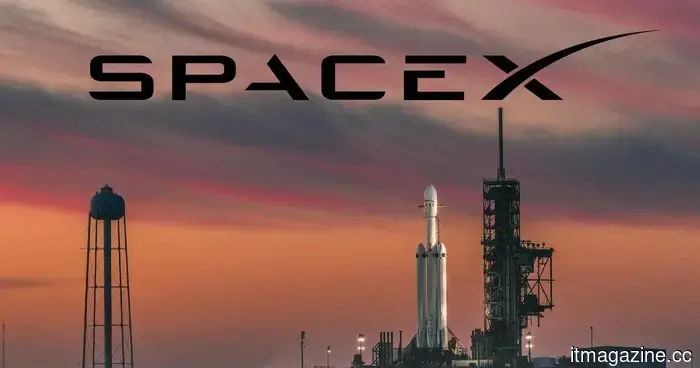 Musk’s SpaceX is considering GPU manufacturing due to difficulties with Nvidia’s supply.
SpaceX aims to develop its own GPUs, but the process of chip manufacturing is quite challenging. Here's what we currently know.
Musk’s SpaceX is considering GPU manufacturing due to difficulties with Nvidia’s supply.
SpaceX aims to develop its own GPUs, but the process of chip manufacturing is quite challenging. Here's what we currently know.
 Data from 500,000 UK Biobank volunteers is being offered for sale on Alibaba after Chinese research institutions violated access agreements.
Health information from 500,000 volunteers in the UK Biobank was listed for sale on Alibaba after three Chinese research organizations breached data-sharing agreements. The ICO is currently conducting an investigation.
Rilian secures $17.5 million to advance agentic AI for sovereign defense.
Rilian secures $17.5 million in funding, spearheaded by 8VC, to implement agentic AI in air-gapped defense and sovereign cloud settings.
Data from 500,000 UK Biobank volunteers is being offered for sale on Alibaba after Chinese research institutions violated access agreements.
Health information from 500,000 volunteers in the UK Biobank was listed for sale on Alibaba after three Chinese research organizations breached data-sharing agreements. The ICO is currently conducting an investigation.
Rilian secures $17.5 million to advance agentic AI for sovereign defense.
Rilian secures $17.5 million in funding, spearheaded by 8VC, to implement agentic AI in air-gapped defense and sovereign cloud settings.
Microsoft's initial voluntary retirement offer is a buyout presented as an advantage.
Microsoft is providing voluntary retirement to around 8,750 US employees through a "Rule of 70" formula, marking its first such initiative in 51 years, as it shifts its spending focus towards AI.