
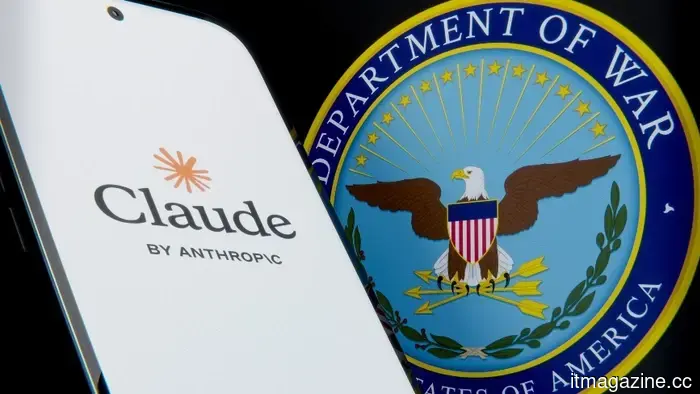
Trump states that the Anthropic deal with the Pentagon is 'feasible'.
The US president informed CNBC on Tuesday that Anthropic is "shaping up" following a White House meeting last Friday, where CEO Dario Amodei discussed the company’s Mythos AI model with Chief of Staff Susie Wiles and Treasury Secretary Scott Bessent.
The Pentagon’s decision to blacklist Anthropic is still in a state of legal ambiguity, as a federal appeals court and a San Francisco district court have arrived at conflicting conclusions.
President Donald Trump stated on CNBC’s Squawk Box on Tuesday that a deal permitting the use of Anthropic’s AI models within the Department of Defense is “possible,” describing the company as “shaping up.”
“They came to the White House a few days ago, and we had some very good talks with them, and I think they’re shaping up,” Trump remarked. “They’re very smart, and I think they can be of great use.” These comments represent a notable shift from Trump’s earlier stance, where in late February he posted on Truth Social directing all federal agencies to “IMMEDIATELY CEASE all use of Anthropic’s technology” and announced that his administration would “not do business with them again.”
Trump’s statements came after a White House meeting on Friday, April 18, where Anthropic CEO Dario Amodei met with Chief of Staff Susie Wiles and Treasury Secretary Scott Bessent to discuss the new Mythos model, which Anthropic has touted as highly capable in cybersecurity and has only been made available to a few select organizations.
The White House characterized the discussions as “productive and constructive.” Anthropic mentioned that Amodei had a "productive discussion" with government officials about how the company and the US government can "collaborate on key shared priorities like cybersecurity, maintaining America’s lead in the AI race, and AI safety.”
When asked by reporters about the meeting while on a runway in Phoenix, Trump initially responded “Who?” and claimed he had “no idea” that Amodei had attended.
The meeting took place amidst a dispute that is largely unprecedented in the relationship between Washington and the technology sector. In July 2025, Anthropic entered into a $200 million contract with the Pentagon, becoming the first AI lab to have its models approved for use on the Department of Defense's classified networks. However, as discussions began in September regarding the deployment of the Claude model on the department’s GenAI.mil platform, negotiations fell apart. The Pentagon insisted that Anthropic allow unrestricted access to its models for all lawful purposes.
Anthropic firmly stated two conditions: its AI would not be utilized in fully autonomous weapons systems that select targets without human intervention, and it would not be employed for domestic mass surveillance of Americans.
In response, Defense Secretary Pete Hegseth labeled Anthropic a “supply chain risk to national security” in late February 2026, a designation previously reserved for firms linked to foreign adversaries. This formal designation, communicated to Anthropic’s leadership on March 5, required defense contractors to certify that they were not using Anthropic’s models in military work. Trump amplified this measure with his Truth Social directive.
Anthropic contended in subsequent litigation that this designation was unprecedented: US District Judge Rita Lin noted in a critical 43-page ruling granting Anthropic a preliminary injunction in late March, that it seemed aimed not at an actual national security threat but rather at punishing the company for “bringing public scrutiny to the government’s contracting position,” which she described as “classic illegal First Amendment retaliation.”
The legal situation is still divided. A federal appeals court in Washington DC rejected Anthropic’s request to temporarily block the supply chain risk designation on April 8. Judge Lin’s preliminary injunction in San Francisco from a separate but related case prevents enforcement of Trump’s Truth Social ban on Claude across the government.
The practical outcome is that while Anthropic is barred from Pentagon contracts, it can continue collaborating with other government agencies as both legal cases proceed. The DOD has continued to utilize Claude during the US-Iran war, which began prior to the blacklisting taking effect.
What seems to have altered the White House's stance is the Mythos model. Portions of the intelligence community and the Cybersecurity and Infrastructure Security Agency (CISA) have been testing it. The White House Office of Management and Budget is developing protocols to allow federal agencies to access a controlled version.
Treasury Secretary Bessent’s presence at Friday’s meeting was interpreted by sources close to the negotiations as a signal that the economic and financial security rationale for access to Mythos had escalated to the highest levels of the administration.
An administration source told Axios: “It would be grossly irresponsible for the US government to deprive itself of the technological advances that the new model offers. It would be a gift to China.”
It remains uncertain whether a resumption of the relationship between Anthropic and the Pentagon is feasible.
Other articles
 Trump states that the Anthropic deal with the Pentagon is "possible."
On Tuesday, Trump mentioned to CNBC that a Pentagon agreement with Anthropic is ‘possible’, just days after Amodei held discussions with Wiles and Bessent at the White House regarding access to Mythos.
Trump states that the Anthropic deal with the Pentagon is "possible."
On Tuesday, Trump mentioned to CNBC that a Pentagon agreement with Anthropic is ‘possible’, just days after Amodei held discussions with Wiles and Bessent at the White House regarding access to Mythos.
 Eight Sleep Pod review: Can improved sleep enhance your life?
The Eight Sleep Pod, featuring adjustable temperature control and biometric monitoring, is a premium investment that greatly enhances sleep quality.
Eight Sleep Pod review: Can improved sleep enhance your life?
The Eight Sleep Pod, featuring adjustable temperature control and biometric monitoring, is a premium investment that greatly enhances sleep quality.
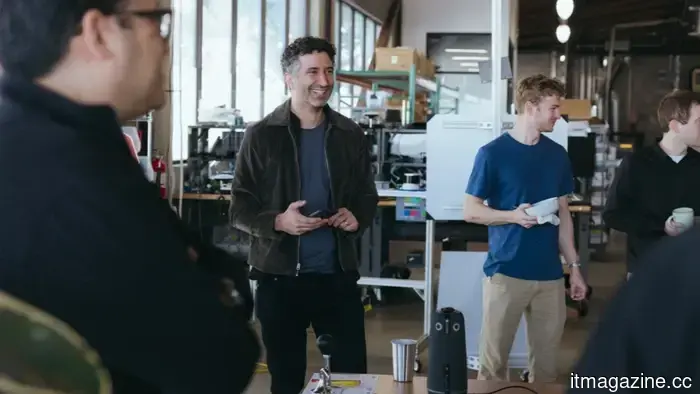 Humble secures $24 million to develop a truck without a cab that runs on electric power.
Humble has come out of stealth mode with a $24 million seed funding round and has introduced the Humble Hauler, an electric autonomous truck without cables, created for dock-to-dock freight transportation.
Humble secures $24 million to develop a truck without a cab that runs on electric power.
Humble has come out of stealth mode with a $24 million seed funding round and has introduced the Humble Hauler, an electric autonomous truck without cables, created for dock-to-dock freight transportation.
 Des leaked renders del Motorola Edge 70 Pro+ muestran cinco colores y tres acabados.
Leaked images showcase the Motorola Edge 70 Pro+ in five different color choices, featuring a range of finishes such as fabric, marble, and wood.
Des leaked renders del Motorola Edge 70 Pro+ muestran cinco colores y tres acabados.
Leaked images showcase the Motorola Edge 70 Pro+ in five different color choices, featuring a range of finishes such as fabric, marble, and wood.
 Des leaks des rendus du Motorola Edge 70 Pro+ montrent cinq couleurs et trois finitions.
Leaked images show the Motorola Edge 70 Pro+ available in five color variants, featuring a range of finishes such as fabric, marble, and wood.
Des leaks des rendus du Motorola Edge 70 Pro+ montrent cinq couleurs et trois finitions.
Leaked images show the Motorola Edge 70 Pro+ available in five color variants, featuring a range of finishes such as fabric, marble, and wood.
 Endearing security crisis: 48 days of uncovered projects, unresolved bug reports, and the systemic breakdown of vibe coding security.
Lovable's API revealed source code and database credentials for 48 days following the closure of a bug report. As much as 62% of code generated by AI harbors vulnerabilities.
Endearing security crisis: 48 days of uncovered projects, unresolved bug reports, and the systemic breakdown of vibe coding security.
Lovable's API revealed source code and database credentials for 48 days following the closure of a bug report. As much as 62% of code generated by AI harbors vulnerabilities.
Trump states that the Anthropic deal with the Pentagon is 'feasible'.
On Tuesday, Trump informed CNBC that a Pentagon agreement with Anthropic is "possible," just days after Amodei met with Wiles and Bessent at the White House regarding access to Mythos.