
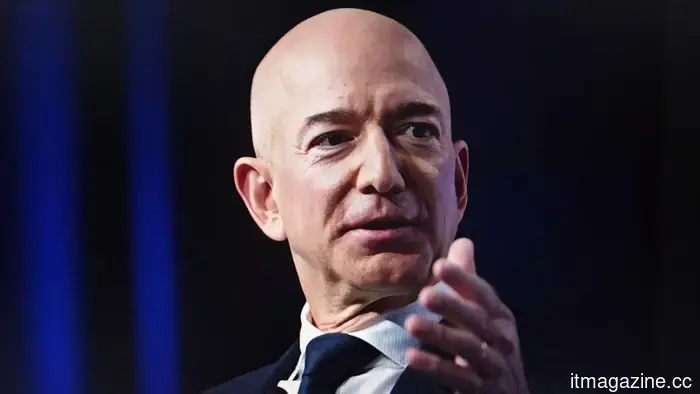
Jeff Bezos' physical AI laboratory is nearing the achievement of raising $10 billion.
Project Prometheus, which commenced in November 2025 with initial funding of $6.2 billion, is focused on developing AI systems capable of understanding the physical world. Its target sectors include engineering, manufacturing, aerospace, robotics, and drug discovery. The funding round is still ongoing.
According to a report by the Financial Times on Monday, Jeff Bezos is nearing the completion of a $10 billion funding round for his AI laboratory, which is valued at $38 billion, as noted by sources familiar with the arrangement. The startup, internally referred to as Project Prometheus, has garnered investments from JPMorgan and BlackRock in this new funding phase. However, the fundraising had not been finalized at the time of reporting, and BlackRock chose not to comment.
Launched with $6.2 billion in November 2025, Project Prometheus focuses on what is referred to in the AI sector as “physical AI,” which involves systems that learn from interactions with the physical world and comprehend the principles of physics, rather than relying solely on textual and visual information.
The lab aims to target areas such as engineering, manufacturing, aerospace, robotics, drug discovery, and logistics automation. Vikram Bajaj, a former Google X scientist and co-founder of Foresite Labs, leads the initiative, which has expanded to over 120 employees from prominent AI companies like OpenAI, xAI, Meta, and DeepMind.
Bezos is reported to be one of the early investors in this initiative and has been actively involved in the fundraising efforts alongside Bajaj. If the $38 billion valuation is confirmed, Prometheus would rank among the highest valued early-stage AI startups globally.
This funding deal comes shortly after Amazon, founded by Bezos, pledged up to $25 billion in new investments to Anthropic and secured a $100 billion commitment in cloud spending in return.
This scenario highlights the significant shift in the scale of AI infrastructure investments: Prometheus is raising $10 billion in a single round, exceeding the total raised by most AI companies throughout their histories.
Physical AI stands apart from the large language models (LLMs) that have dominated AI funding since 2022. While LLMs rely on readily available text, images, and code, which are abundant and relatively inexpensive, physical AI systems need specialized data on material behavior, engineering tolerances, manufacturing methods, and the laws of physics—much of which is proprietary and difficult to gather at scale.
This scarcity presents both a barrier to entry and a potential long-term advantage for companies able to collect such data, which may partly explain why Prometheus has attracted significant institutional investors like BlackRock and JPMorgan at this early stage.
This venture represents the first operational role Bezos has assumed in a technology firm since departing from Amazon in 2021. It also indicates a broader ambition to directly apply AI to physical industries such as manufacturing, aerospace, construction, and logistics, areas that language models have only superficially touched.
Whether Prometheus will fulfill this ambition remains uncertain; the lab is still in its early stages and has yet to demonstrate any products or commercial deployments publicly.
Other articles
 Amazon invests an additional $25 billion in Anthropic.
Amazon is investing an additional $25 billion in Anthropic, which has committed to spending $100 billion on AWS cloud services over the next decade. This mirrors Amazon's earlier agreement with OpenAI two months ago.
Amazon invests an additional $25 billion in Anthropic.
Amazon is investing an additional $25 billion in Anthropic, which has committed to spending $100 billion on AWS cloud services over the next decade. This mirrors Amazon's earlier agreement with OpenAI two months ago.
 iQIYI’s AI Artist Library encounters escalating challenges as actors refuse to grant authorization.
On Monday, the Chinese streaming service iQIYI launched its AI Artist Library project with much excitement, asserting that over 100 artists had
iQIYI’s AI Artist Library encounters escalating challenges as actors refuse to grant authorization.
On Monday, the Chinese streaming service iQIYI launched its AI Artist Library project with much excitement, asserting that over 100 artists had
 VisioLab secures $11 million to expand its AI-driven iPad checkout solution.
VisioLab secures $11 million in Series A funding, led by eCAPITAL and Simon Capital, to expand its AI checkout system that operates without barcodes.
VisioLab secures $11 million to expand its AI-driven iPad checkout solution.
VisioLab secures $11 million in Series A funding, led by eCAPITAL and Simon Capital, to expand its AI checkout system that operates without barcodes.
 Amazon invests up to an additional $25 billion in Anthropic.
Amazon is set to invest an additional $25 billion in Anthropic, which has committed to spending $100 billion on AWS cloud services over the next decade, reflecting a similar agreement Amazon made with OpenAI two months earlier.
Amazon invests up to an additional $25 billion in Anthropic.
Amazon is set to invest an additional $25 billion in Anthropic, which has committed to spending $100 billion on AWS cloud services over the next decade, reflecting a similar agreement Amazon made with OpenAI two months earlier.
 Google Photos introduces new editing features focused on subtle enhancements.
For the first time, Google Photos allows users to modify specific facial features post-capture, utilizing AI-driven tools that function for every individual in group photos, without the need for extra apps or subscriptions.
Google Photos introduces new editing features focused on subtle enhancements.
For the first time, Google Photos allows users to modify specific facial features post-capture, utilizing AI-driven tools that function for every individual in group photos, without the need for extra apps or subscriptions.
 Deezer reports that songs created by AI now account for 44% of daily uploads.
Deezer reports that almost 50% of daily music uploads are now produced by AI, leading to worries about quality, authenticity, and the potential for fraud.
Deezer reports that songs created by AI now account for 44% of daily uploads.
Deezer reports that almost 50% of daily music uploads are now produced by AI, leading to worries about quality, authenticity, and the potential for fraud.
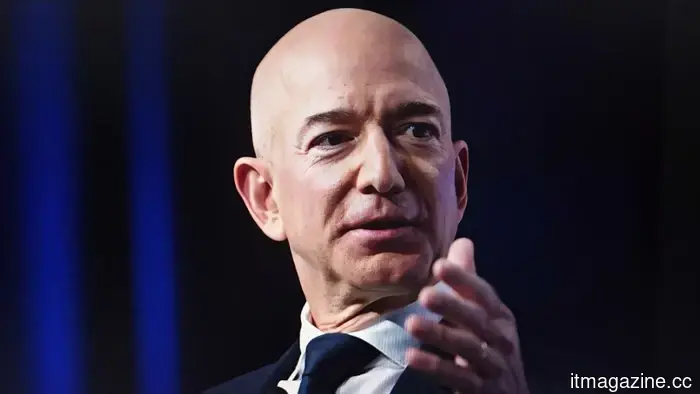
Jeff Bezos' physical AI laboratory is nearing the achievement of raising $10 billion.
According to the FT, Jeff Bezos' AI lab, Project Prometheus, is approaching a $10 billion funding round, boasting a valuation of $38 billion, with investors including JPMorgan and BlackRock.