
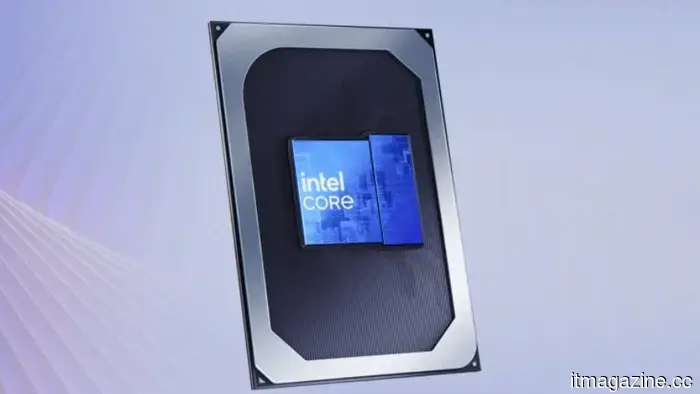
Intel Core Series 3 Wildcat Lake is introduced to compete with Apple's $599 MacBook Neo.
Intel has introduced its Core Series 3 processors, codenamed Wildcat Lake, in a direct reaction to the MacBook Neo. Announced on April 16, these new chips aim at the same budget laptop segment that Apple recently reshaped with its $599 model, emphasizing a familiar message: increased choice, enhanced AI capabilities, and the robust backing of the Windows ecosystem.
The challenge for Intel lies in the fact that the MacBook Neo is already sold out until April, with Apple increasing its production orders to 10 million units, and early performance tests indicate that Wildcat Lake falls short in terms of raw power. Intel counters this by arguing that performance isn't the sole important factor for laptop processors anymore and that the AI functionalities integrated into its 18A process node provide Windows OEMs with features that Apple has yet to deliver at this price level.
What Wildcat Lake offers
The Core Series 3 is manufactured using Intel's 18A process, the same technology that supports the company's high-end Panther Lake chips and its Terafab partnership with Musk's xAI consortium. The entry-level lineup features a maximum of six cores, comprising two performance-focused Cougar Cove cores and four low-power Darkmont efficiency cores, along with up to two Xe3 graphics cores and Intel’s NPU5 neural processing unit.
The AI performance reaches 40 TOPS, which meets Microsoft’s requirements for Copilot+ PCs. Intel claims improvements of 47% in single-threaded performance and 41% in multi-threaded performance compared to a five-year-old PC, along with 64% lower processor power consumption and a 2.7x enhancement in GPU-accelerated AI tasks. The top consumer model, the Core 7 360, operates at a base power of 15 watts with a 35-watt turbo option, and it supports LPDDR5x memory, Wi-Fi 7, Bluetooth 6.0, and Thunderbolt 4.
The initial lineup consists of six consumer SKUs and one edge variant. More than 70 laptop designs from companies like Acer, Asus, HP, Lenovo, and Infinix are either currently available or set to launch throughout 2026. MSI has already revealed its Modern 14S and 16S as direct competitors to the MacBook Neo. The extensive OEM response implies that the industry views Wildcat Lake as a key contender against Apple’s budget ambitions across various price points and form factors available to Windows.
The MacBook Neo benchmark
Released on March 11 at $599, with an educational price of $499, Apple’s MacBook Neo has reset expectations for budget laptops. Equipped with the A18 Pro chip from the iPhone 16 Pro, it offers up to 16 hours of battery life in a 13-inch Liquid Retina chassis available in four colors. It sold out within weeks, prompting Apple to reportedly double its initial production orders from five million to 10 million units to accommodate demand.
Early benchmark comparisons show Wildcat Lake struggling. The MacBook Neo's single-core performance is approximately 44% higher, and its multi-core score exceeds Wildcat Lake by nearly 29%. For users focused on general productivity, web browsing, and media consumption—key activities for the budget laptop market—the Neo provides more computing power per dollar than what Intel’s partners are likely to compete with.
Intel’s strategy to address this discrepancy is to shift the narrative. With 40 TOPS of AI processing power, Wildcat Lake enables on-device inference for features that the MacBook Neo's A18 Pro, which lacks a dedicated NPU in this performance tier, cannot perform locally. Whether this aspect will resonate with students and small-business professionals looking for sub-$700 laptops remains uncertain, but it is the most distinct technical advantage Intel can claim.
The wider Intel revival
While Wildcat Lake may not be the most glamorous addition to Intel's 2026 lineup, it holds strategic importance as it demonstrates that the 18A process node can scale in both directions. The premium Panther Lake chips, launched at CES in January under the Core Ultra Series 3 branding, target the MacBook Pro and MacBook Air, featuring up to 16 cores, 50 NPU TOPS, 180 total platform TOPS, and a claimed battery life of up to 27 hours. Tom’s Guide referred to Panther Lake as Intel’s “M1 moment,” and integrated graphics benchmarks show it outperforming Apple’s M5, even though Apple retains an edge in single-core CPU performance.
Intel's 18A represents a 1.8-nanometre-class node, the most advanced semiconductor manufacturing technology entirely produced in the United States. This process is now utilized in the Terafab project, a $25 billion joint venture with Tesla, SpaceX, and xAI, where Intel is the primary foundry partner, with Tesla’s AI6 chip tape-out expected late in 2026. After several fabrication setbacks that allowed Intel to
Other articles
 Zoom introduces World ID verification to ensure that meeting attendees are genuine humans and not deepfakes.
Zoom incorporates World's Deep Face biometric verification to show "Verified Human" badges during meetings, as losses from deepfake fraud exceed $200 million in just one quarter.
Zoom introduces World ID verification to ensure that meeting attendees are genuine humans and not deepfakes.
Zoom incorporates World's Deep Face biometric verification to show "Verified Human" badges during meetings, as losses from deepfake fraud exceed $200 million in just one quarter.
 Allbirds rebrands itself as NewBird AI, shifting its focus from footwear to GPU cloud computing.
Allbirds sold its footwear brand for $39 million, obtained $50 million in funding, and is rebranding as NewBird AI to lease GPUs; the stock initially soared 600% before decreasing by 35%.
Allbirds rebrands itself as NewBird AI, shifting its focus from footwear to GPU cloud computing.
Allbirds sold its footwear brand for $39 million, obtained $50 million in funding, and is rebranding as NewBird AI to lease GPUs; the stock initially soared 600% before decreasing by 35%.
 Canva and Anthropic have introduced Claude Design, a tool for AI-driven visual creation.
Canva's Design Engine drives Claude Design, enabling users to generate on-brand visuals from text within Claude, while Canva AI 2.0 launches agentic orchestration and workspace connections.
Canva and Anthropic have introduced Claude Design, a tool for AI-driven visual creation.
Canva's Design Engine drives Claude Design, enabling users to generate on-brand visuals from text within Claude, while Canva AI 2.0 launches agentic orchestration and workspace connections.
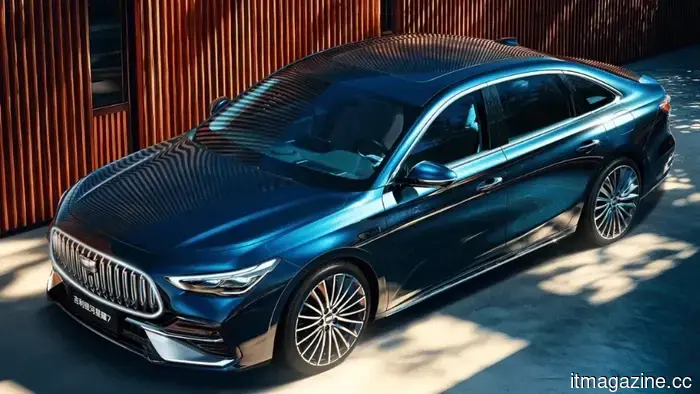 Geely EX5: the $15,300 electric SUV equipped with luxury amenities, now available in 35 nations.
The starting price of Geely's EX5 is $15,300, featuring massaging seats, a 1,000W audio system, and a range of 610 km. It is currently exported to 35 countries, offering a significantly lower price than European electric vehicles by thousands.
Geely EX5: the $15,300 electric SUV equipped with luxury amenities, now available in 35 nations.
The starting price of Geely's EX5 is $15,300, featuring massaging seats, a 1,000W audio system, and a range of 610 km. It is currently exported to 35 countries, offering a significantly lower price than European electric vehicles by thousands.
 Canva and Anthropic introduce Claude Design for AI-enhanced visual creation.
Canva's Design Engine fuels Claude Design, enabling users to generate on-brand visuals from text in Claude, while Canva AI 2.0 launches agentic orchestration and workspace connectors.
Canva and Anthropic introduce Claude Design for AI-enhanced visual creation.
Canva's Design Engine fuels Claude Design, enabling users to generate on-brand visuals from text in Claude, while Canva AI 2.0 launches agentic orchestration and workspace connectors.
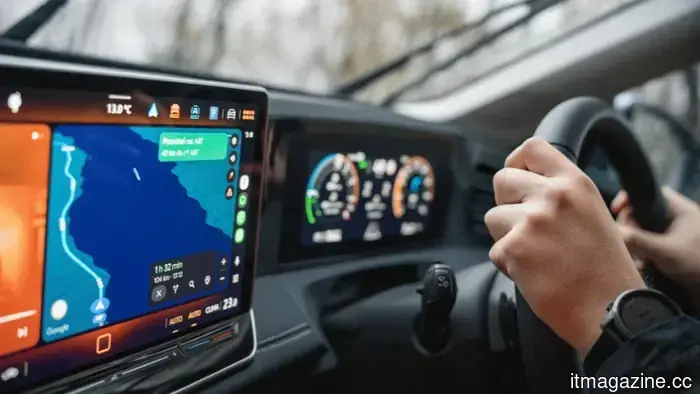 Uber will now dispatch a courier to your location for a $5 fee to return your purchases.
Uber's Return a Package service dispatches a courier to pick up items purchased via Uber Eats and return them to Target, Best Buy, and seven additional retailers for a fee of $5, or $3 for Uber One members.
Uber will now dispatch a courier to your location for a $5 fee to return your purchases.
Uber's Return a Package service dispatches a courier to pick up items purchased via Uber Eats and return them to Target, Best Buy, and seven additional retailers for a fee of $5, or $3 for Uber One members.
Intel Core Series 3 Wildcat Lake is introduced to compete with Apple's $599 MacBook Neo.
Intel's Wildcat Lake processors deliver 40 TOPS of AI performance for budget laptops built on the 18A node; however, the MacBook Neo benchmarks surpass them with a 44% lead in single-core performance as over 70 OEM designs come into play.