
Canva and Anthropic introduce Claude Design for AI-enhanced visual creation.
In summary: Canva and Anthropic have introduced Claude Design, a new product from Anthropic Labs powered by Claude Opus 4.7 that utilizes Canva’s Design Engine to create fully editable, brand-compliant visuals from text inputs. This announcement aligns with Canva AI 2.0, which the company labels as its largest product launch to date, featuring conversational design, agentic orchestration, and integration with Slack, Gmail, Zoom, and HubSpot.
Canva and Anthropic have strengthened their two-year partnership with this new product that combines their goals: Claude Design, a feature from Anthropic Labs powered by Claude Opus 4.7, leveraging Canva’s Design Engine and Visual Suite to enable users to transform text descriptions into fully editable, brand-aligned visuals without needing to access Canva directly.
The announcement, strategically timed with the launch of Canva AI 2.0 at its Create event in Los Angeles, positions Canva as the foundational design infrastructure for conversational AI. Claude Design is currently available in research preview for Claude Pro, Max, Team, and Enterprise subscribers, allowing designs to be exported as PDFs, URLs, or PowerPoint files, or sent directly to Canva for full editing in the drag-and-drop editor.
What Claude Design offers
Claude Design caters to individuals who need to create visuals but do not identify as designers, such as founders developing pitch decks, product managers sketching interfaces, and marketing teams producing one-pagers. A user articulates their needs in a Claude conversation, and the system generates a designed output that incorporates structure, layout, and branding elements right from the outset.
The core enterprise function is the most commercially vital aspect. Claude Design can analyze a company’s codebase and design files to automatically apply its design system to every project, ensuring that fonts, colors, layout standards, and brand governance are preserved without the need for manual enforcement. This is particularly beneficial for organizations that expend considerable effort ensuring brand consistency across various teams, making this feature essential.
Canva is also launching HTML import capabilities, enabling users to incorporate interactive content generated in Claude or other platforms into the Canva editor for further refinement and publication. This feature connects AI-generated outputs—often code or static imagery—to the collaborative editing environment utilized by Canva’s 265 million monthly active users.
The collaboration with Anthropic is part of a larger transformation that Canva announced on April 16, which it termed “the biggest product launch in our history.” Canva AI 2.0 signifies a strategic transition from a design platform with AI capabilities to an AI platform supporting design tools.
The update brings in conversational design, where users describe concepts and receive editable results; agentic orchestration, allowing a single prompt to create an entire campaign across various formats; and object-based intelligence, enabling changes to one element without disrupting the overall design. These advancements represent a significant rethinking of how Canva’s platform functions.
Six new intelligent workflows connect Canva with external tools: Slack, Gmail, Google Drive, Calendar, Notion, Zoom, and HubSpot. Canva AI can now produce meeting summaries from Zoom transcripts, transform customer emails into customized sales materials, and generate company newsletters based on Slack activity. These connectors elevate Canva from a design tool to a more automated content production system that utilizes an organization’s existing communications and data.
Canva AI 2.0 is being launched as a research preview, initially targeting the first one million users who discover it on the Canva homepage, with wider availability to follow in the coming weeks.
The economics of the partnership
The Canva-Anthropic relationship has developed over two years; Canva introduced a Canva MCP for Claude in July 2025, and millions of users have since created Canva designs through Claude conversations. In January 2026, the integration broadened to support on-brand design generation with the automatic application of corporate branding rules. Claude Design represents the next phase: a dedicated product interface rather than simply a connector.
For Anthropic, this partnership equips Claude with a visual output capability that its text-focused interface lacks. While Claude can reason, code, and analyze, it previously could not deliver designed visual content that non-technical users would consider complete. Canva’s Design Engine provides this crucial layer, enhancing Claude's applicability in various work areas such as presentations, social media content, and marketing materials, which constitute a large portion of enterprise knowledge work.
For Canva, this partnership establishes it as the default design backend for conversational AI. If Claude Design succeeds, every visual created through Claude will automatically become a Canva document, drawing users into Canva’s ecosystem for editing, collaboration, and publication. This strategy mirrors what has made Canva a leader in browser-based design: being the platform that other tools funnel into.
The competitive landscape
Canva’s aspirations in AI are supported by strong commercial results. The company achieved $3.5 billion in annual revenue in 2025, an increase from an estimated $2.8 billion the previous year. Monthly active users rose from 180 million to 265 million, with over
Другие статьи
 A leak regarding Assassin’s Creed: Black Flag Resynced suggests that its release could be just a few weeks away.
The highly anticipated Assassin’s Creed: Black Flag Resynced from Ubisoft, which has been rumored for some time, is said to be launching on July 9, with its official announcement likely delayed by only a week.
A leak regarding Assassin’s Creed: Black Flag Resynced suggests that its release could be just a few weeks away.
The highly anticipated Assassin’s Creed: Black Flag Resynced from Ubisoft, which has been rumored for some time, is said to be launching on July 9, with its official announcement likely delayed by only a week.
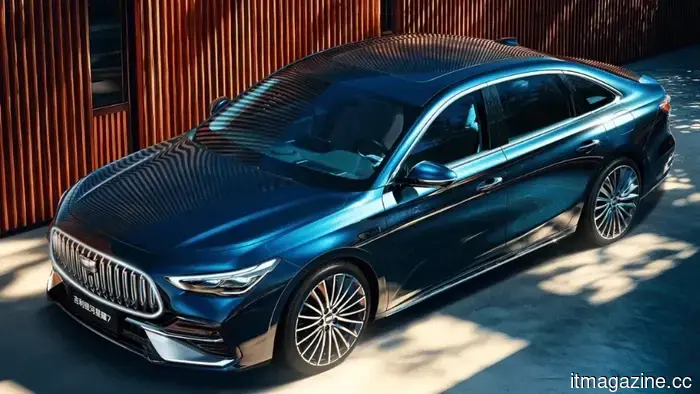 Geely EX5: the $15,300 electric SUV equipped with luxury amenities, now available in 35 nations.
The starting price of Geely's EX5 is $15,300, featuring massaging seats, a 1,000W audio system, and a range of 610 km. It is currently exported to 35 countries, offering a significantly lower price than European electric vehicles by thousands.
Geely EX5: the $15,300 electric SUV equipped with luxury amenities, now available in 35 nations.
The starting price of Geely's EX5 is $15,300, featuring massaging seats, a 1,000W audio system, and a range of 610 km. It is currently exported to 35 countries, offering a significantly lower price than European electric vehicles by thousands.
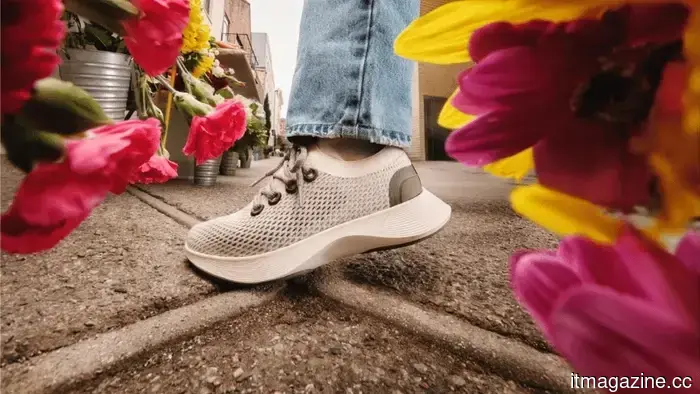 Allbirds rebrands itself as NewBird AI, shifting its focus from footwear to GPU cloud computing.
Allbirds sold its footwear brand for $39 million, obtained $50 million in funding, and is rebranding as NewBird AI to lease GPUs; the stock initially soared 600% before decreasing by 35%.
Allbirds rebrands itself as NewBird AI, shifting its focus from footwear to GPU cloud computing.
Allbirds sold its footwear brand for $39 million, obtained $50 million in funding, and is rebranding as NewBird AI to lease GPUs; the stock initially soared 600% before decreasing by 35%.
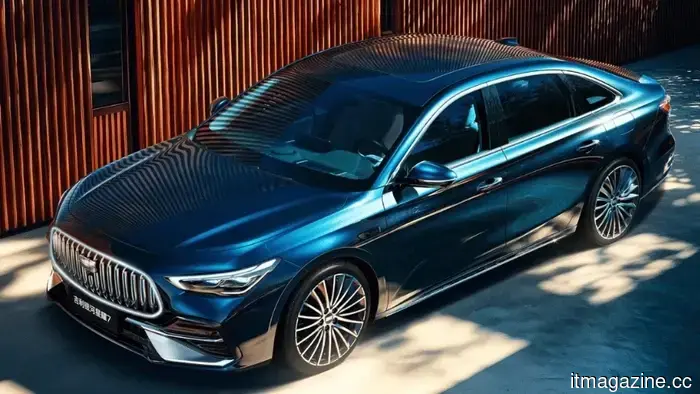 Geely EX5: the electric SUV priced at $15,300 that boasts luxury features and is currently available in 35 countries.
The Geely EX5 has a starting price of $15,300 and features massaging seats, a 1,000W audio system, and a range of 610 km. It is now being exported to 35 countries, offering a price advantage over European electric vehicles by several thousand dollars.
Geely EX5: the electric SUV priced at $15,300 that boasts luxury features and is currently available in 35 countries.
The Geely EX5 has a starting price of $15,300 and features massaging seats, a 1,000W audio system, and a range of 610 km. It is now being exported to 35 countries, offering a price advantage over European electric vehicles by several thousand dollars.
 Zoom introduces World ID verification to ensure that meeting attendees are genuine humans and not deepfakes.
Zoom incorporates World's Deep Face biometric verification to show "Verified Human" badges during meetings, as losses from deepfake fraud exceed $200 million in just one quarter.
Zoom introduces World ID verification to ensure that meeting attendees are genuine humans and not deepfakes.
Zoom incorporates World's Deep Face biometric verification to show "Verified Human" badges during meetings, as losses from deepfake fraud exceed $200 million in just one quarter.
 Intel's Core Series 3 Wildcat Lake is being introduced to compete with Apple's MacBook Neo priced at $599.
Intel's Wildcat Lake processors offer 40 TOPS of AI performance for budget laptops built on the 18A node, yet MacBook Neo benchmarks surpass them by 44% in single-core performance, with over 70 OEM designs coming to market.
Intel's Core Series 3 Wildcat Lake is being introduced to compete with Apple's MacBook Neo priced at $599.
Intel's Wildcat Lake processors offer 40 TOPS of AI performance for budget laptops built on the 18A node, yet MacBook Neo benchmarks surpass them by 44% in single-core performance, with over 70 OEM designs coming to market.
Canva and Anthropic introduce Claude Design for AI-enhanced visual creation.
Canva's Design Engine fuels Claude Design, enabling users to generate on-brand visuals from text in Claude, while Canva AI 2.0 launches agentic orchestration and workspace connectors.