
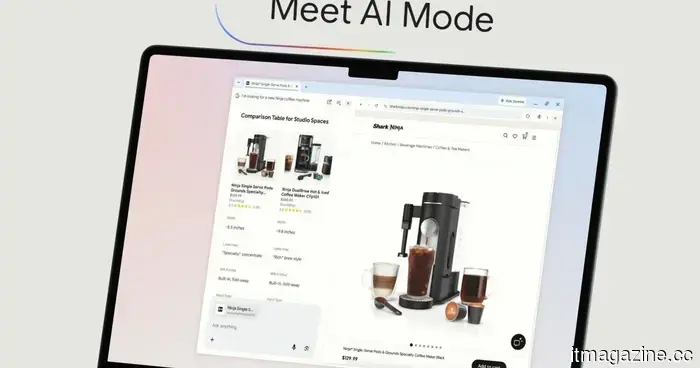
Amazon believes you are fond of AI, so it has introduced a dedicated storefront for gadgets powered by artificial intelligence.
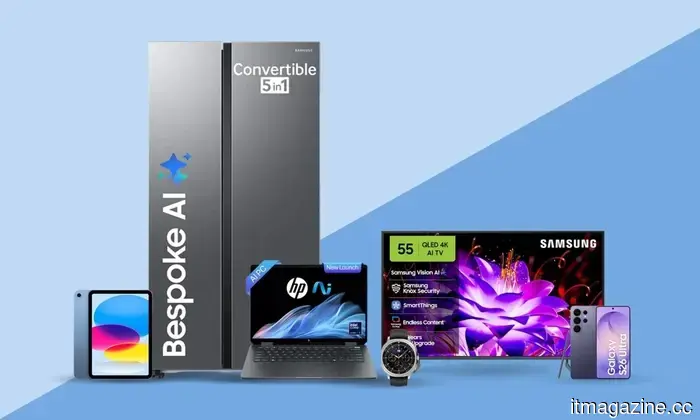
You’re on the hunt for a new laptop: one model boasts a superior processor, another offers extra RAM, while a third prominently advertises “AI-powered” features, leaving you somewhat puzzled about its significance. Amazon has picked up on your interest in that third option and has responded. The company has recently introduced an AI Store on Amazon.in — a specialized section that showcases AI-enabled devices across various categories, including smartphones, laptops, refrigerators, and washing machines. Instead of having to sift through specifications to decipher which “AI feature” is genuinely beneficial, the store provides clear information for you.
Understanding the AI Store
It acts as a curated selection. Amazon has gathered devices from eight categories: phones, laptops, TVs, tablets, smartwatches, smart glasses, cameras, and audio devices, marking those where AI is more than just a marketing term. Zeba Khan, Amazon India’s Director of Consumer Electronics, explains that the goal is to assist customers in “navigating a rapidly evolving technology landscape with clarity.” AI specifications can be perplexing, and most consumers simply want to know if the product will enhance their lives.
Some products in the store showcase their advantages effectively. For example, the Samsung Galaxy S26 Ultra offers features like real-time call translation and AI-enhanced low-light photography—useful when capturing moments like a birthday cake at 11 PM. On the laptop front, the HP OmniBook Ultra and Lenovo Yoga Slim 7x are equipped with dedicated NPUs (Neural Processing Units), allowing AI tasks like video editing and noise cancellation during calls to operate more efficiently while consuming less battery. If you work from home and have received complaints about your audio, the AI noise cancellation in the Yoga Slim 7x could be a compelling reason to consider it.
The Ray-Ban Meta Smart Glasses also exhibit valuable AI features, such as hands-free photo capture and voice-controlled AI assistance. Hence, the AI Store helps clarify what the AI functionalities entail and whether investing in these products would be worthwhile for you.
The offerings extend beyond this. Smart devices in your living room and kitchen incorporate AI-powered functionalities as well. For instance, the Samsung Vision AI QLED TV upscales content to 4K in real time and adjusts sound based on on-screen actions. The Apple Watch Series 11 goes beyond merely counting steps to offer predictive health insights and personalized coaching. Your LG air conditioner adapts to your cooling preferences, your Haier refrigerator maintains its temperature autonomously, and your Bosch washing machine determines its actual water requirements.
Additionally, Amazon has integrated a significant level of AI into the shopping process itself — featuring a conversational assistant named Rufus to aid in product selection, visual search via Lens AI, a “View in Your Room” tool that positions an item in your actual environment before purchase, and summary reviews that condense numerous opinions into a comprehensible format. It’s a smart combination; you’re utilizing AI tools to shop for AI tools.
So, what does this mean for you?
I understand why upgrading technology seems overwhelming right now. It’s all around you: AI here, AI there. The noise is incessant, and eventually, it blurs together. You may find yourself questioning what actually impacts your experience and what is merely intended to sound impressive. This is where the AI Store becomes relevant.
Rather than sifting through countless listings, it aims to organize the confusion. It serves as a launchpad, helping you comprehend what these features entail before you decide on their necessity. This is especially beneficial for individuals who prefer straightforward explanations, such as our parents, who would prefer clarity over technical jargon. However, it’s not a substitute for your own research. You’ll still want to verify details, compare options, and ensure the product meets your needs. But it offers you some guidance, which is often the most challenging aspect.
Looking at the broader context, this strategy seems logical. Amazon is clearly banking on “AI-powered” becoming a significant consideration for consumers.


Other articles
 ONWARD Medical secures €40.6 million to further develop its spinal cord stimulation implant.
ONWARD Medical secures €40.6 million in a private placement led by EQT Life Sciences to finance its Empower BP pivotal trial and to enhance sales of ARC-EX.
ONWARD Medical secures €40.6 million to further develop its spinal cord stimulation implant.
ONWARD Medical secures €40.6 million in a private placement led by EQT Life Sciences to finance its Empower BP pivotal trial and to enhance sales of ARC-EX.
 Casely is recalling almost 500,000 power banks due to a fire risk. Here’s how to determine if your device is included in the recall.
The Casely Power Pods 5000mAh MagSafe wireless power bank is undergoing another recall. Here’s how to verify your unit and obtain a complimentary replacement.
Casely is recalling almost 500,000 power banks due to a fire risk. Here’s how to determine if your device is included in the recall.
The Casely Power Pods 5000mAh MagSafe wireless power bank is undergoing another recall. Here’s how to verify your unit and obtain a complimentary replacement.
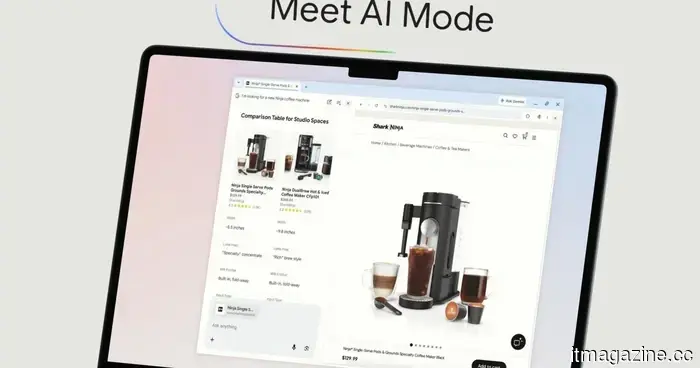 Amazon believes you have a fondness for AI, which is why it has introduced a dedicated storefront for AI-driven devices.
In a world dominated by AI, determining what is effective can be challenging. This store simplifies the process.
Amazon believes you have a fondness for AI, which is why it has introduced a dedicated storefront for AI-driven devices.
In a world dominated by AI, determining what is effective can be challenging. This store simplifies the process.
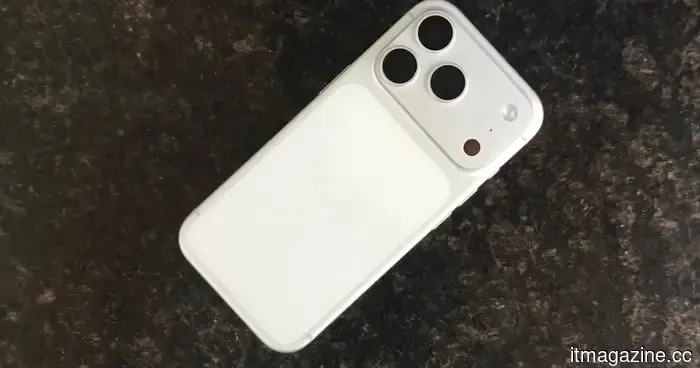 Repair shops in China seem to have discovered a method for fixing unsightly dents on iPhones.
Talented repair technicians in China are refurbishing scratched and dented iPhone 17 Pro Max devices to a condition that closely resembles factory finish, and the outcomes are truly impressive.
Repair shops in China seem to have discovered a method for fixing unsightly dents on iPhones.
Talented repair technicians in China are refurbishing scratched and dented iPhone 17 Pro Max devices to a condition that closely resembles factory finish, and the outcomes are truly impressive.
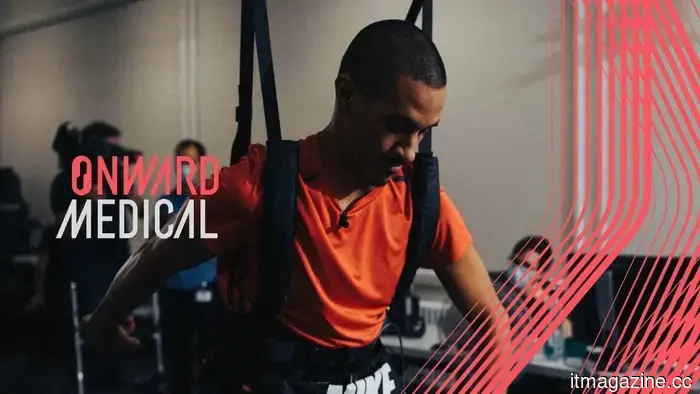 ONWARD Medical secures €40.6 million to progress its spinal cord stimulation implant.
ONWARD Medical secures €40.6M through a private placement led by EQT Life Sciences to finance its Empower BP pivotal trial and enhance ARC-EX commercial sales.
ONWARD Medical secures €40.6 million to progress its spinal cord stimulation implant.
ONWARD Medical secures €40.6M through a private placement led by EQT Life Sciences to finance its Empower BP pivotal trial and enhance ARC-EX commercial sales.
 The EU has granted its €180 million sovereign cloud contract.
The European Commission has granted a €180M sovereign cloud contract to Post Telecom, StackIT, Scaleway, and a consortium of Proximus, Thales, and Google Cloud, covering a period of six years.
The EU has granted its €180 million sovereign cloud contract.
The European Commission has granted a €180M sovereign cloud contract to Post Telecom, StackIT, Scaleway, and a consortium of Proximus, Thales, and Google Cloud, covering a period of six years.
Amazon believes you are fond of AI, so it has introduced a dedicated storefront for gadgets powered by artificial intelligence.
In a world dominated by AI, determining what is effective becomes more complicated. This store simplifies the process.