

AI has caused such a severe RAMmageddon that Apple now appears to be the reasonable option.
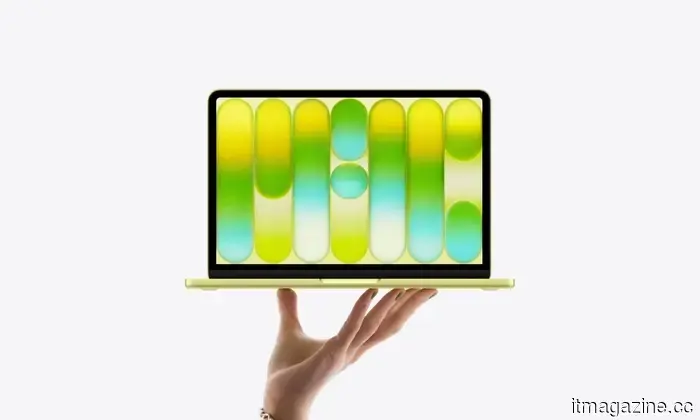
I really didn't want to accept this, but here we are. Apple is starting to appear as the sensible choice for laptops, instead of the cool underdog or the budget-friendly alternative. It's 2026, and the reason for this shift isn't that Apple has suddenly become generous; it's that the competition has become so chaotic that a MacBook starting at $599 feels surprisingly reasonable.
Apple's MacBook Neo begins at $599, while Microsoft's 13-inch Surface Laptop now starts at $1,199 following recent price increases. This is not a minor difference that can be overlooked. On the other hand, Apple's MacBook Air with M5 is priced at $1,099, offering 16GB of memory and 512GB of storage, making it one of the few premium laptops still reasonably priced.
The primary factor impacting prices is the shortage of memory. Gartner predicts that DRAM and SSD prices will rise 130% by the end of 2026, resulting in a 17% increase in PC prices. Additionally, the entry-level PC market under $500 is expected to vanish by 2028, and the adoption of AI PCs will slow as prices become unmanageable.
TrendForce is even more candid: AI demand has led to a memory supercycle, causing DRAM manufacturers to focus on HBM and server-grade products while consumer electronics suffer. In essence, AI has not only increased laptop prices but has also shifted the industry's focus away from producing affordable options.
This isn't just a case of one company overreaching; it's an entire category that has lost its way.
Microsoft's Surface pricing illustrates just how askew things have become. Their latest Surface lineup has experienced price hikes of up to $500, resulting in entry-level prices exceeding $1,000, while their premium PCs are essentially competing against the latest MacBook Pro.
I had hoped that ARM laptops on Windows would finally turn the tide. Qualcomm initially showed promise with their slim designs, excellent battery life, and efficiency akin to Apple. However, the reality in 2026 has been tough for Snapdragon-powered devices too. ASUS’s new Zenbook A14 and A16 launched in the US, but their prices quickly escalated once reviews were released.
The A14 shot up to $1,349 and the A16 to $1,699, and this price increase was seen in other markets as well. This is particularly frustrating, as I wanted Windows manufacturers to match Apple's efficiency while offering lower prices. With the new AMD Ryzen AI and Intel Core Ultra series, we were on the verge of a golden age for Windows laptops—finally combining performance and efficiency.
Instead, we faced the AI-induced memory crisis that led to the exact opposite scenario. The PC industry now appears to have no solution other than the excuse of high component costs. Gartner's latest shipping report even notes that vendors and channels inflated their first-quarter inventories in anticipation of price increases in the second quarter due to memory inflation. So, while this was predictable, we find ourselves in the current situation.
Apple hasn't become more consumer-friendly; the rest of the market has simply become untenable.
The situation is clear: Apple hasn't revived its old motto of "Does More. Costs Less." The entire laptop industry has become so pricey, bewildered, and inflated that Macs now seem like the obvious value choice. This should concern Microsoft, cause worry for ASUS, and raise big alarms for anyone who expected the AI PC era to bring more favorable options instead of just higher prices.
I wanted Windows laptops to step up. I wanted Snapdragon X2 devices to reach the price-to-performance balance that M-series Macs have mastered for years. Instead, the AI-driven memory crisis has made Apple the rational choice—and that's one of the most troubling observations about the laptop market in 2026.

Other articles
 The AI-induced RAMmageddon was so severe that Apple now seems like the rational option.
I didn't anticipate that 2026 would be the year Apple appeared to offer reasonable prices on laptops, but the rest of the PC market made it unavoidable.
The AI-induced RAMmageddon was so severe that Apple now seems like the rational option.
I didn't anticipate that 2026 would be the year Apple appeared to offer reasonable prices on laptops, but the rest of the PC market made it unavoidable.
 Repair shops in China seem to have discovered a method for fixing unsightly dents on iPhones.
Talented repair technicians in China are refurbishing scratched and dented iPhone 17 Pro Max devices to a condition that closely resembles factory finish, and the outcomes are truly impressive.
Repair shops in China seem to have discovered a method for fixing unsightly dents on iPhones.
Talented repair technicians in China are refurbishing scratched and dented iPhone 17 Pro Max devices to a condition that closely resembles factory finish, and the outcomes are truly impressive.
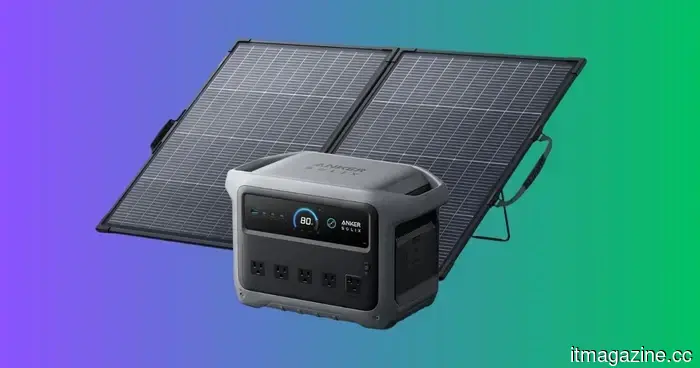 One of the top deals on portable solar generators currently is the Anker SOLIX C1000 Gen 2, which includes a 200W panel for $699.
The Anker SOLIX C1000 Gen 2 is currently available for $699.98 in a limited-time offer, providing a savings of $898 from its regular price of $1,598. This deal includes not only the power station but also a 200W bifacial solar panel, creating a comprehensive off-grid power system at a price that most [...]
One of the top deals on portable solar generators currently is the Anker SOLIX C1000 Gen 2, which includes a 200W panel for $699.
The Anker SOLIX C1000 Gen 2 is currently available for $699.98 in a limited-time offer, providing a savings of $898 from its regular price of $1,598. This deal includes not only the power station but also a 200W bifacial solar panel, creating a comprehensive off-grid power system at a price that most [...]
 Metro 2039’s haunting post-apocalyptic setting appears grimmer, stranger, and more otherworldly this Winter, and I’m already convinced.
Metro 2039 appears to be less of a typical post-apocalyptic shooter and more of an immersive return to the eerie, supernatural anxiety that defined the series.
Metro 2039’s haunting post-apocalyptic setting appears grimmer, stranger, and more otherworldly this Winter, and I’m already convinced.
Metro 2039 appears to be less of a typical post-apocalyptic shooter and more of an immersive return to the eerie, supernatural anxiety that defined the series.
 Gemini now creates customized images by analyzing your preferences from the Photos library.
Personalized AI images seem exciting — until you understand that the 'personalization' involves Google analyzing your entire photo collection.
Gemini now creates customized images by analyzing your preferences from the Photos library.
Personalized AI images seem exciting — until you understand that the 'personalization' involves Google analyzing your entire photo collection.
 Netflix is set to resemble social media more closely with the introduction of a vertical feed soon.
By the end of April, Netflix will introduce a vertical video discovery feed that allows users to swipe through clips of shows and movies before watching them in full.
Netflix is set to resemble social media more closely with the introduction of a vertical feed soon.
By the end of April, Netflix will introduce a vertical video discovery feed that allows users to swipe through clips of shows and movies before watching them in full.
AI has caused such a severe RAMmageddon that Apple now appears to be the reasonable option.
I didn't anticipate that 2026 would be the year when Apple's laptop prices seemed reasonable, but the rest of the PC market made it unavoidable.