

The AI-induced RAMmageddon was so severe that Apple now seems like the rational option.
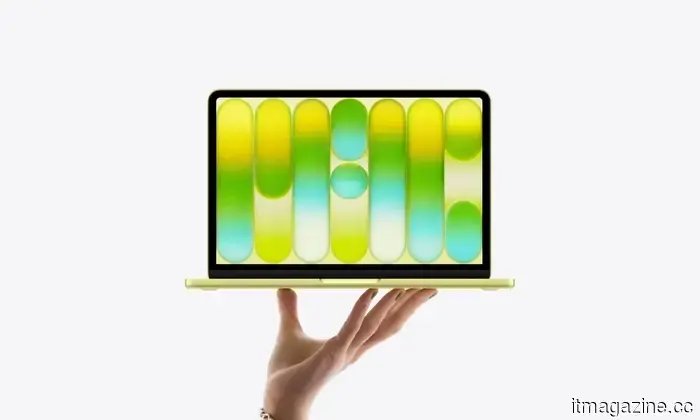
I really struggled to accept it, but here we are. Apple now seems like the rational laptop brand. No longer the edgy underdog or the budget option. Apple, in 2026, appears grounded, not because the company has suddenly become generous, but because the rest of the competition has become absurd to the point where a MacBook lineup starting at $599 feels remarkably reasonable.
Apple's MacBook Neo begins at $599, whereas Microsoft's 13-inch Surface Laptop now starts at $1,199 following recent price increases. This is a significant gap that cannot be overlooked. In contrast, Apple's MacBook Air with M5 starts at $1,099, featuring 16GB of memory and 512GB of storage, and seems to be one of the few high-end laptops still priced fairly.
The primary factor affecting pricing is the memory shortage. Gartner predicts that by the end of 2026, DRAM and SSD prices will rise by 130%, resulting in a 17% increase in PC prices. Additionally, the entry-level PC segment priced below $500 is expected to vanish by 2028, and the adoption of AI PCs will slow due to escalating prices.
TrendForce has been even more straightforward, stating that AI demand has created a memory supercycle, causing DRAM manufacturers to focus on HBM and server-grade products while impacting consumer electronics. In essence, AI hasn't just made laptops more expensive; it has shifted the focus away from producing affordable options.
This isn't merely an issue of one company going too far but rather the entire category losing its way.
Microsoft and the Windows sector have no substantial solutions.
Microsoft’s pricing for the Surface line exemplifies how convoluted the situation has become. Their latest Surface products have seen increases of up to $500, raising the starting price to over $1,000, with their premium PCs now competing directly with the latest MacBook Pro.
I had hoped that ARM laptops running Windows might finally alter the playing field. Qualcomm initially appeared to have that potential, showcasing sleek designs, excellent battery life, and efficiency reminiscent of Apple. However, the reality for Snapdragon-powered notebooks in 2026 has been harsh. ASUS' latest Zenbook A14 and A16 were launched in the US at prices that quickly increased once reviews came out.
The A14 soared to $1,349, and the A16 reached $1,699. This price surge was reflected in other markets as well. This is what makes the situation so frustrating. I wanted Windows OEMs to rival Apple in efficiency and beat them on price. With the advent of new AMD Ryzen AI and Intel Core Ultra series, we were on the brink of a golden age for Windows laptops—finally achieving performance alongside efficiency.
Instead, we faced an AI-driven memory crunch that produced the exact opposite result. The PC industry now seems to lack a response other than “apologies, components are costly.” Gartner’s latest shipment report indicates that vendors and retailers inflated inventories ahead of anticipated second-quarter price hikes due to memory inflation. So, everyone was aware this was coming, yet here we are.
Apple hasn’t become more consumer-friendly. The rest of the market has simply become untenable.
The situation is quite clear. Apple didn't rediscover its old motto of “Does More. Costs Less.” The rest of the laptop industry has become so exorbitant, confused, and inflated that Apple’s offerings now appear to represent the obvious value. This should be concerning for Microsoft. It should alarm ASUS. And it should serve as a huge warning to anyone who believed the AI PC era would bring better options rather than merely more expensive ones.
I wanted Windows laptops to rise to the occasion. I had hoped Snapdragon X2 devices would achieve the price-to-performance balance that M-series Macs have dominated for years. Instead, the AI-driven memory crisis has positioned Apple as the rational choice—and that’s one of the most critical observations I can make about the laptop market in 2026.

Other articles
 AI has caused such a severe RAMmageddon that Apple now appears to be the reasonable option.
I didn't anticipate that 2026 would be the year when Apple's laptop prices seemed reasonable, but the rest of the PC market made it unavoidable.
AI has caused such a severe RAMmageddon that Apple now appears to be the reasonable option.
I didn't anticipate that 2026 would be the year when Apple's laptop prices seemed reasonable, but the rest of the PC market made it unavoidable.
 Repair shops in China seem to have discovered a method for fixing unsightly dents on iPhones.
Talented repair technicians in China are refurbishing scratched and dented iPhone 17 Pro Max devices to a condition that closely resembles factory finish, and the outcomes are truly impressive.
Repair shops in China seem to have discovered a method for fixing unsightly dents on iPhones.
Talented repair technicians in China are refurbishing scratched and dented iPhone 17 Pro Max devices to a condition that closely resembles factory finish, and the outcomes are truly impressive.
 Gemini now creates customized images by analyzing your preferences from the Photos library.
Personalized AI images seem exciting — until you understand that the 'personalization' involves Google analyzing your entire photo collection.
Gemini now creates customized images by analyzing your preferences from the Photos library.
Personalized AI images seem exciting — until you understand that the 'personalization' involves Google analyzing your entire photo collection.
 Metro 2039’s haunting post-apocalyptic setting appears grimmer, stranger, and more otherworldly this Winter, and I’m already convinced.
Metro 2039 appears to be less of a typical post-apocalyptic shooter and more of an immersive return to the eerie, supernatural anxiety that defined the series.
Metro 2039’s haunting post-apocalyptic setting appears grimmer, stranger, and more otherworldly this Winter, and I’m already convinced.
Metro 2039 appears to be less of a typical post-apocalyptic shooter and more of an immersive return to the eerie, supernatural anxiety that defined the series.
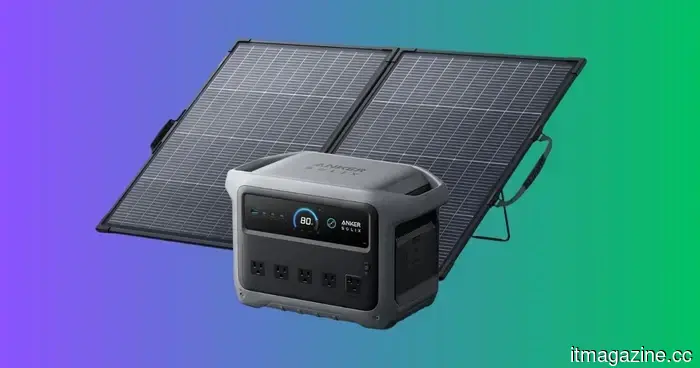 One of the top deals on portable solar generators currently is the Anker SOLIX C1000 Gen 2, which includes a 200W panel for $699.
The Anker SOLIX C1000 Gen 2 is currently available for $699.98 in a limited-time offer, providing a savings of $898 from its regular price of $1,598. This deal includes not only the power station but also a 200W bifacial solar panel, creating a comprehensive off-grid power system at a price that most [...]
One of the top deals on portable solar generators currently is the Anker SOLIX C1000 Gen 2, which includes a 200W panel for $699.
The Anker SOLIX C1000 Gen 2 is currently available for $699.98 in a limited-time offer, providing a savings of $898 from its regular price of $1,598. This deal includes not only the power station but also a 200W bifacial solar panel, creating a comprehensive off-grid power system at a price that most [...]
 Netflix is set to resemble social media more closely with the introduction of a vertical feed soon.
By the end of April, Netflix will introduce a vertical video discovery feed that allows users to swipe through clips of shows and movies before watching them in full.
Netflix is set to resemble social media more closely with the introduction of a vertical feed soon.
By the end of April, Netflix will introduce a vertical video discovery feed that allows users to swipe through clips of shows and movies before watching them in full.
The AI-induced RAMmageddon was so severe that Apple now seems like the rational option.
I didn't anticipate that 2026 would be the year Apple appeared to offer reasonable prices on laptops, but the rest of the PC market made it unavoidable.