
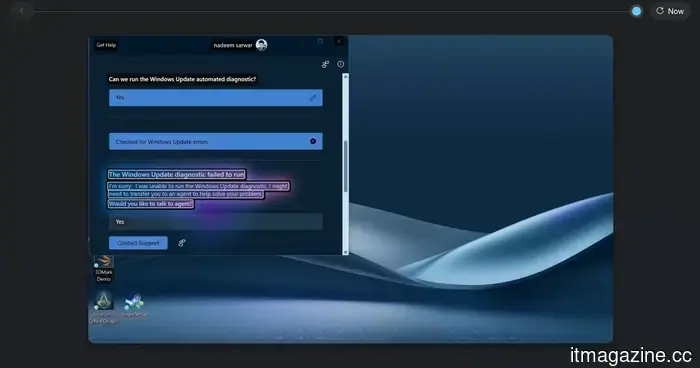
Windows Recall still provides a backdoor into your personal PC history.
Windows Recall was designed to simplify the process of searching through your PC's history, but a new proof of concept is challenging that promise once again.
TotalRecall Reloaded demonstrates that information captured by the Windows 11 feature can still be intercepted after signing in, despite Microsoft having revamped its protections following last year’s criticism.
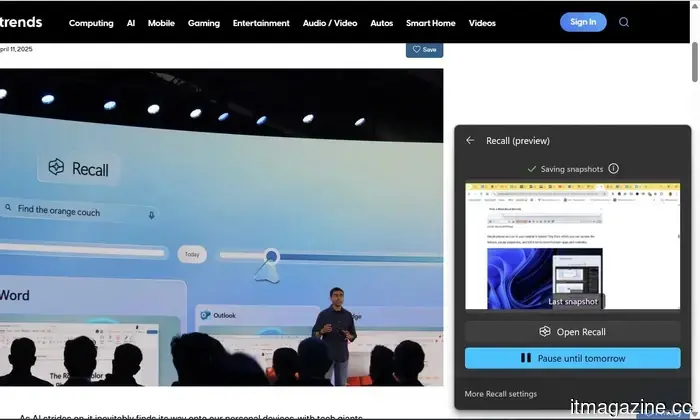
Recall does not record just a small portion of activities; it can maintain a comprehensive visual record of what occurs on your PC, including applications, websites, messages, and other on-screen content.
Microsoft changed the feature to require opting in and incorporated encryption along with Windows Hello protection. However, the latest findings suggest that the vulnerability arises after the service is unlocked and begins to relay information to another system process.
The vulnerability may lie elsewhere
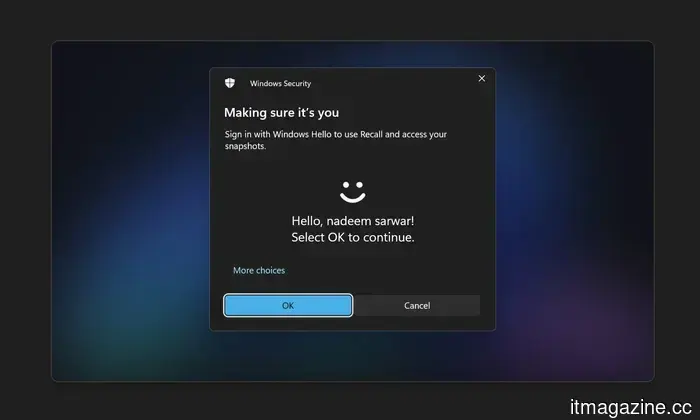
The recent assertion indicates that the database itself is no longer the easiest target. Instead, the exposure begins once someone logs in with Windows Hello, prompting the system to transmit screenshots, extracted text, and metadata to a different process named AIXHost.exe.
TotalRecall Reloaded reportedly injects code into that process without needing administrator privileges and waits for the session to initiate and the information to begin transferring.
Certain actions, such as retrieving the latest screenshot, gathering specific metadata, and removing the entire archive, can occur without Windows Hello authentication.
Microsoft's perspective differs
Microsoft informed Ars Technica that the behavior demonstrated by the researcher aligns with its intended protections and existing controls, asserting that it does not constitute a security boundary breach or unauthorized access.
The findings were reported to Microsoft’s Security Response Center on March 6, and the company categorized them as non-vulnerabilities on April 3.
This response is unlikely to calm concerns. Anyone who has access to your PC and can utilize your Windows Hello fallback PIN could potentially access a comprehensive archive of emails, browsing history, messages, and other personal data.
Reasons for ongoing trust issues
Recall has already faced scrutiny for its ability to capture extensive details of PC usage, and this report provides critics with another justification to remain doubtful, even if Microsoft contends that the behavior is functioning as intended.
Entities like Signal, Brave, and AdGuard have already implemented measures to exclude their content from Recall by default, indicating that concerns extend beyond just security researchers.
For Windows 11 users, the practical takeaway is clear: if Recall is unnecessary, it is safer to keep it turned off. If you choose to use it, view it as a convenience feature that carries significant privacy trade-offs, and be attentive to whether more applications begin to opt out in the future.
Other articles
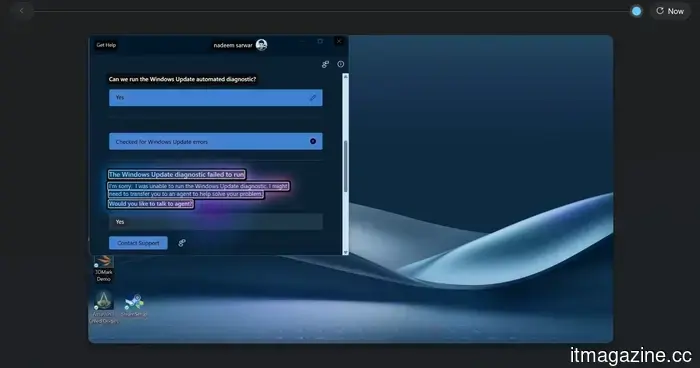 Windows Recall still maintains a backdoor to access your private PC history.
While Windows Recall's database may have improved protection, a new proof of concept indicates that the data path following sign-in still poses privacy risks for users of Windows 11.
Windows Recall still maintains a backdoor to access your private PC history.
While Windows Recall's database may have improved protection, a new proof of concept indicates that the data path following sign-in still poses privacy risks for users of Windows 11.
 The fintech company that changed its direction due to Kanye West has achieved a valuation of $1.4 billion.
Slash, the vertical banking startup established by two college dropouts, has secured $100 million in a Series C funding round at a valuation of $1.4 billion, with Khosla Ventures and Ribbit Capital leading the investment.
The fintech company that changed its direction due to Kanye West has achieved a valuation of $1.4 billion.
Slash, the vertical banking startup established by two college dropouts, has secured $100 million in a Series C funding round at a valuation of $1.4 billion, with Khosla Ventures and Ribbit Capital leading the investment.
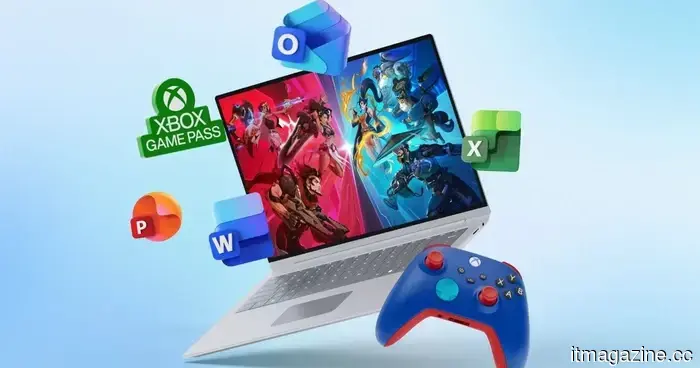 Microsoft College Offer provides free software to make you overlook the fact that the MacBook Neo is a superior option.
Microsoft is utilizing free software, Game Pass, and student discounts on laptops to enhance the attractiveness of Windows 11 PCs for college students; however, the actual value still hinges on the hardware, eligibility criteria, and whether the additional features will be utilized.
Microsoft College Offer provides free software to make you overlook the fact that the MacBook Neo is a superior option.
Microsoft is utilizing free software, Game Pass, and student discounts on laptops to enhance the attractiveness of Windows 11 PCs for college students; however, the actual value still hinges on the hardware, eligibility criteria, and whether the additional features will be utilized.
 I never thought food reels would benefit my diet – but they could.
According to recent research, viewing food videos may assist individuals on a diet in minimizing cravings and preventing overeating.
I never thought food reels would benefit my diet – but they could.
According to recent research, viewing food videos may assist individuals on a diet in minimizing cravings and preventing overeating.
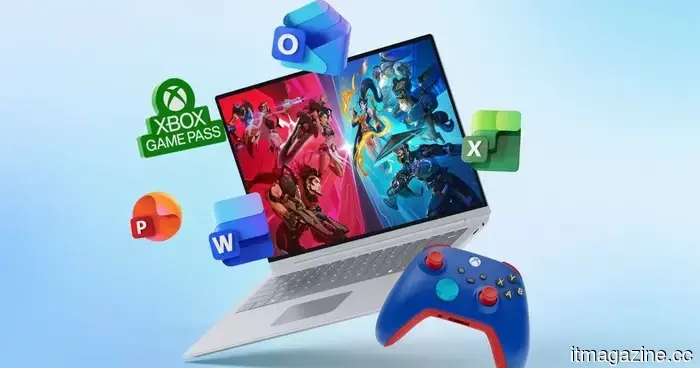 Microsoft College Offer provides free software to make you overlook that the MacBook Neo is a more advantageous option.
Microsoft is leveraging free software, Game Pass, and discounts on laptops for students to enhance the attractiveness of Windows 11 PCs for college students. However, the actual value still relies on the hardware, the eligibility criteria, and whether the additional features will be utilized.
Microsoft College Offer provides free software to make you overlook that the MacBook Neo is a more advantageous option.
Microsoft is leveraging free software, Game Pass, and discounts on laptops for students to enhance the attractiveness of Windows 11 PCs for college students. However, the actual value still relies on the hardware, the eligibility criteria, and whether the additional features will be utilized.
 The fintech company that shifted its focus due to Kanye West has now reached a valuation of $1.4 billion.
Slash, the vertical banking startup established by two college dropouts, has secured $100 million in a Series C funding round, achieving a valuation of $1.4 billion. The round was led by Khosla Ventures and Ribbit Capital.
The fintech company that shifted its focus due to Kanye West has now reached a valuation of $1.4 billion.
Slash, the vertical banking startup established by two college dropouts, has secured $100 million in a Series C funding round, achieving a valuation of $1.4 billion. The round was led by Khosla Ventures and Ribbit Capital.
Windows Recall still provides a backdoor into your personal PC history.
The database of Windows Recall may now have improved protection, but a recent proof of concept indicates that the data path following sign-in still poses privacy risks for users of Windows 11.