

We use our phones constantly throughout the day, and researchers have just evaluated which ones are the most exhausting to use.
It appears your thumb has been working silently and more than you realized.
We understand that spending extensive time on your phone is not beneficial for mental well-being. But what about the impact on your fingers? Until now, researchers struggled to quantify this. A new AI model, Log2Motion, developed by Aalto and Leipzig Universities, addresses this issue.
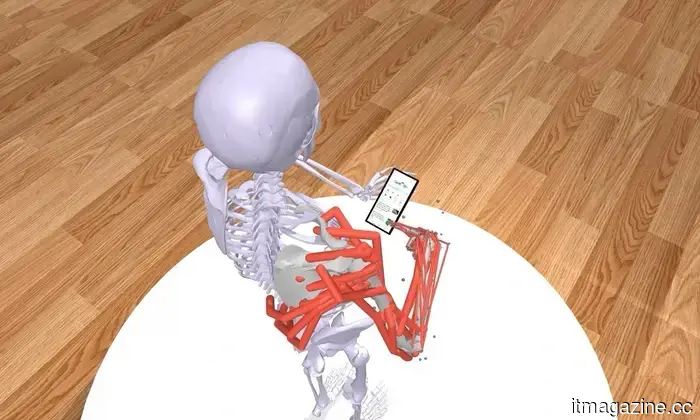
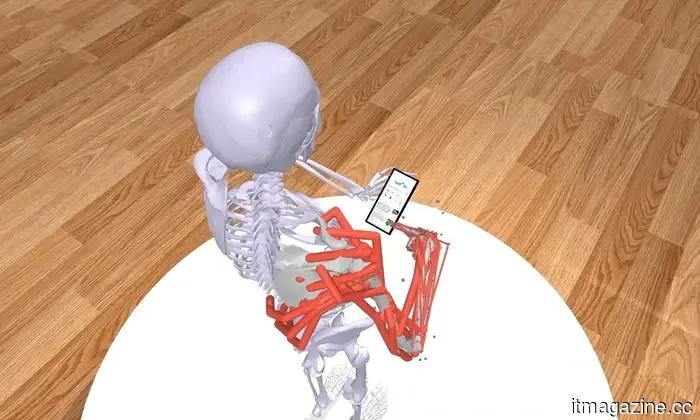
This model translates smartphone activity logs into simulated human movements, resembling a digital skeleton moving fingers across a phone screen to reflect real user actions.
Utilizing a software emulator, it can even operate genuine apps in real time, replicating recorded interactions to analyze the physical actions during each swipe, tap, and scroll.
Is scrolling impacting our health?
Researchers assert that scrolling negatively influences your health. They discovered that not all gestures require the same level of effort. Vertical swipes demand more physical exertion than other types of movements. Given today’s focus on short-form content, this serves as additional encouragement to reduce usage of apps like Instagram and TikTok.
Researchers also noted that tapping on small icons and reaching the screen's corners necessitate extra physical effort from your fingers. While these may seem like minor issues, when multiplied by hundreds of interactions daily, the accumulated effort can be considerable.
Why is this important for you?
Currently, this research primarily benefits designers rather than average users. Prior to Log2Motion, smartphone interaction logs merely tracked finger contact points on the screen, lacking insights into whether these actions were comfortable or physically taxing.
Designers can now leverage this simulation early in the design phase to create interfaces that are less strenuous to use. The model's implications for accessibility are also noteworthy. It can be adjusted to emulate how users with tremors, limited strength, or prosthetics interact with their devices, assisting developers in creating more user-friendly experiences.
The researchers also believe this model can be adapted to recreate other common situations, such as lying on a couch and scrolling with one hand, which many can relate to.
Your smartphone may not be as idle a device as you assumed. Each swipe takes a physical toll, even if it's minimal.
Rachit is an experienced technology journalist with over seven years of expertise in the consumer technology field.
The Pixel 10 receives a security enhancement that most users won’t notice.
Google is strengthening the modem, where silent attacks can initiate without any user action.
The Pixel 10 is set to receive a security update that won’t be reflected in speed tests or signal indicators, but it could be of greater significance than either. Google has incorporated Rust into the modem firmware, enhancing memory safety in one of the most challenging areas of smartphone security.
This is crucial because the modem always manages network connections, and bugs in such low-level software can create vulnerabilities for attackers. Here, Google specifically addresses memory-safety issues like buffer overflows, which often lead to remote code execution.
OnePlus phones might soon feature an innovative lock screen information function.
Leaked images indicate that OnePlus is experimenting with a lock screen widget for calls and media, similar to Samsung’s.
OnePlus appears to be introducing a smarter way to display real-time information on the lock screen before unlocking the device. Shared images by OnePlus Club reveal a new bottom-aligned lock screen element, referred to as a Lockscreen Island, designed to showcase media controls and call information.
This would enhance OxygenOS 16.1’s lock screen without overwhelming it with alerts. The same leak also hints at a revamped lock screen media player, suggesting that OnePlus is reworking this aspect of the interface more comprehensively rather than simply adding a floating widget.
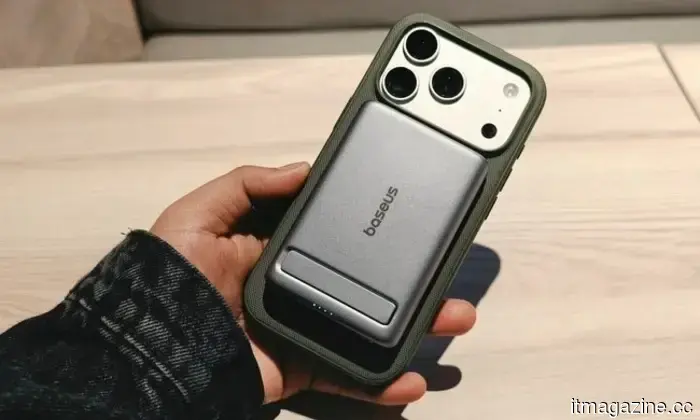
Baseus PicoGo AM31 Qi2 power bank review: I finally found my ideal iPhone companion.
At a mere $50, this compact power bank is hardly noticeable in your pocket or wallet.
Instant Insight
The Baseus PicoGo AM31 Qi2 power bank is an excellent everyday carry (EDC) option if you're looking for a pocket-sized solution for a quick power boost for your phone. Its solid design features strong magnets and includes a convenient built-in kickstand.




Other articles
 Amazon has reached an agreement to purchase Globalstar in a deal valued at $11.6 billion.
Amazon has reached an agreement to purchase Globalstar in a deal valued at $11.6 billion and will assume control of the Emergency SOS feature on iPhone. The Amazon Leo D2D service is set to launch in 2028.
Amazon has reached an agreement to purchase Globalstar in a deal valued at $11.6 billion.
Amazon has reached an agreement to purchase Globalstar in a deal valued at $11.6 billion and will assume control of the Emergency SOS feature on iPhone. The Amazon Leo D2D service is set to launch in 2028.
 The $852 billion valuation of OpenAI is being questioned by its own investors.
Certain investors in OpenAI are raising doubts about its $852 billion valuation as the company updates its roadmap. A leaked memo alleges that Anthropic has exaggerated its $30 billion run rate by $8 billion.
The $852 billion valuation of OpenAI is being questioned by its own investors.
Certain investors in OpenAI are raising doubts about its $852 billion valuation as the company updates its roadmap. A leaked memo alleges that Anthropic has exaggerated its $30 billion run rate by $8 billion.
 Synera secures $40 million to integrate agentic AI into engineering processes.
Synera has secured $40 million in a Series B funding round to expand its agentic AI platform for engineering, which is already in use at NASA, BMW, Airbus, Volvo Trucks, and Hyundai.
Synera secures $40 million to integrate agentic AI into engineering processes.
Synera has secured $40 million in a Series B funding round to expand its agentic AI platform for engineering, which is already in use at NASA, BMW, Airbus, Volvo Trucks, and Hyundai.
 Beatbot Sora 70 Review: The Wireless 4-in-1 Robot That Effectively Cleans Your Tanning Ledge
The Beatbot Sora 70 avoids flashy technology and offers practical features that effectively ensure a clean pool.
Beatbot Sora 70 Review: The Wireless 4-in-1 Robot That Effectively Cleans Your Tanning Ledge
The Beatbot Sora 70 avoids flashy technology and offers practical features that effectively ensure a clean pool.
 Hexagon purchases Waygate Technologies for $1.45 billion.
Hexagon has consented to purchase Waygate Technologies from Baker Hughes in a cash transaction valued at $1.45 billion. Waygate reports revenue of $630 million.
Hexagon purchases Waygate Technologies for $1.45 billion.
Hexagon has consented to purchase Waygate Technologies from Baker Hughes in a cash transaction valued at $1.45 billion. Waygate reports revenue of $630 million.
 Roblox enhances child safety by introducing new account types that restrict chat and access to games.
Roblox's recent safety overhaul goes beyond a simple policy change. It represents a fundamental redesign of the platform's functionality for the millions of children under 16, featuring age-appropriate game accessibility and automatic chat controls.
Roblox enhances child safety by introducing new account types that restrict chat and access to games.
Roblox's recent safety overhaul goes beyond a simple policy change. It represents a fundamental redesign of the platform's functionality for the millions of children under 16, featuring age-appropriate game accessibility and automatic chat controls.
We use our phones constantly throughout the day, and researchers have just evaluated which ones are the most exhausting to use.
Scientists developed an AI model that mimics the physical effort your finger exerts while using a smartphone, and the findings could be surprising.