

Samsung's upcoming foldable smartphones will come equipped with advanced features to combat scam calls.
**Google / Digital Trends**
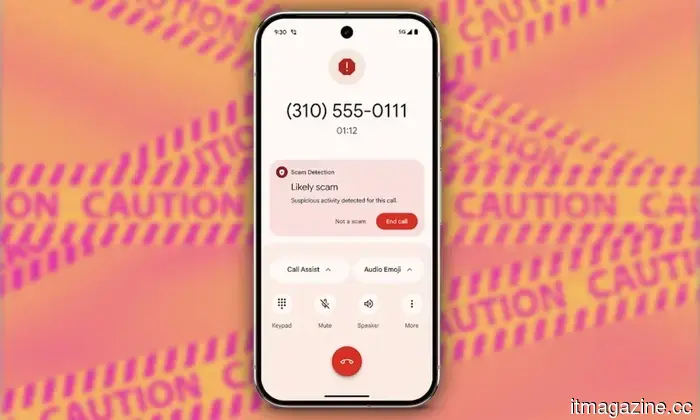
Scam calls are evolving, and your phone is about to evolve too. Samsung's upcoming foldable devices are set to receive an intelligence upgrade, with Scam Detection powered by Google's Gemini expected to be included in models like the Galaxy Z Fold 8, Galaxy Z Flip 8, and a new Wide Fold variant. This time, your phone may actually be more efficient at identifying scammers than your patience worn thin after receiving the fifth unknown call of the day at 7 PM.
**Samsung joins the scam detection initiative**
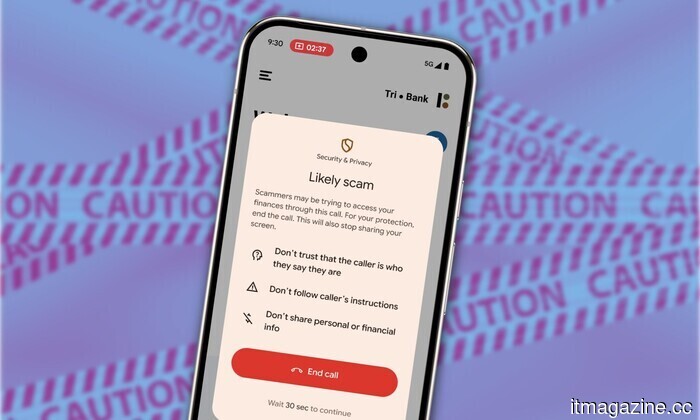
Google has been progressively integrating Scam Detection into its AI framework, utilizing Gemini to monitor live phone calls and identify suspicious activity in real-time. If a caller begins sounding suspicious, your device may intervene with a gentle reminder, “Perhaps you shouldn’t trust this one.” On Pixel devices, this feature operates directly on the device, avoiding the need to send calls to the cloud for analysis, ensuring privacy while still allowing AI to recognize patterns typically indicative of scams.
Earlier this year, Samsung collaborated with Google to implement this feature into its Phone app, beginning with the Galaxy S26 series. This means users no longer need to depend on Google's default dialer for built-in scam protection. However, there was a limitation; the rollout has primarily been confined to English-speaking users in the United States, leaving many international users to handle unknown calls the traditional way. That appears to be changing.
Recent information from the Phone by Google app indicates that Scam Detection is being prepared for Samsung’s next-generation foldable devices. This feature seems to be associated with several model families, including the Galaxy Z Fold 8, Galaxy Z Flip 8, and a new Wide Fold device. These models are linked to various regional variants, indicating a strategy for global deployment. In summary, Samsung is not merely experimenting but looks poised to extend this feature across different markets from the outset.
**Moving beyond the US-only limitation**
Google's Scam Detection currently operates in various regions on newer Pixel devices, such as the Pixel 9 and Pixel 10 series. This indicates that Samsung’s future rollout may not remain as geographically limited as it currently is. The inclusion of multiple regional variants in the code suggests a wider goal: standardizing scam protection rather than making it a region-specific feature. Frankly, it is long overdue.
**Android Headlines**
Samsung is anticipated to reveal its next foldables during its usual Galaxy Unpacked event around July 2026. While advancements in hinges, displays, and processors will likely be the main attractions, this AI-enhanced call protection adds a practical element to the offerings. If Samsung and Google execute this correctly, your next foldable could very well be the smartest device you interact with before even unlocking it.
**Shimul is a contributor at Digital Trends, with over five years of experience in the tech industry.**
---
**Your old Kindle is about to be outdated. Here’s what you can do to keep it functioning.**
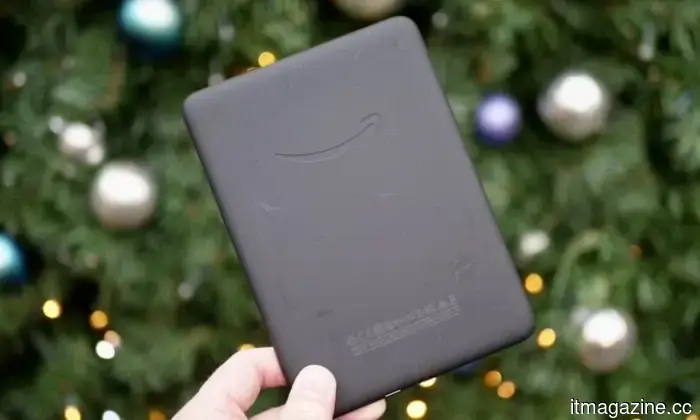
Amazon is discontinuing Kindles from 2012 and older. While your books will remain accessible, your device is nearing the end of its lifespan.
If you’re still using a first-generation Kindle Paperwhite or any older Kindle device, I have unfortunate news. Amazon will cease support for all Kindle e-readers launched in 2012 or prior, starting May 20, 2026.
There’s quite a bit of confusion about what this implies, so as a dedicated Kindle reader, I decided to clarify precisely what will happen.
---
**The FBI has accessed Signal texts on an iPhone. Here’s how to secure yours.**
Investigators managed to retrieve Signal messages from an iPhone, and here are the adjustments you should make to ensure your protection.
Signal has long been recognized as one of the most secure messaging applications available. It utilizes end-to-end encryption, gathers minimal data, and provides features such as disappearing messages to maintain privacy in conversations. For many, it’s the preferred app when privacy is a critical concern. While that remains unchanged, a recent case reveals that parts of your discussions might still be susceptible to exposure. Fortunately, there’s a straightforward way to mitigate this risk.
---
**Adobe's Project Indigo introduces iPad support alongside a variety of new features.**
Project Indigo is broadening its reach, and your iPad is finally included.
Over time, smartphone cameras have started producing images that appear overly processed and unnatural. This has led to the development of new camera applications that allow for image capture with minimal processing, with Halide Process Zero being the most notable solution.
In June 2025, Adobe discreetly entered this market by launching Project Indigo, an experimental camera app with a straightforward goal: to make your phone photographs appear less like typical mobile photos.



Other articles
 Volkswagen cancels ID.4 electric vehicle plans for consumers in the U.S.
The Volkswagen ID.4 is being phased out in the US following years of inconsistent sales and the elimination of crucial federal incentives, with VW now relying on a redesigned Atlas to support its American operations.
Volkswagen cancels ID.4 electric vehicle plans for consumers in the U.S.
The Volkswagen ID.4 is being phased out in the US following years of inconsistent sales and the elimination of crucial federal incentives, with VW now relying on a redesigned Atlas to support its American operations.
 Samsung's upcoming foldable phones will come equipped with advanced anti-scam call features.
You no longer need to answer that unfamiliar call.
Samsung's upcoming foldable phones will come equipped with advanced anti-scam call features.
You no longer need to answer that unfamiliar call.
 Volkswagen terminates ID.4 electric vehicle plans for customers in the U.S.
The Volkswagen ID.4 will no longer be available in the US following years of fluctuating sales and the elimination of important federal incentives, as VW shifts its focus to a redesigned Atlas to support its business in America.
Volkswagen terminates ID.4 electric vehicle plans for customers in the U.S.
The Volkswagen ID.4 will no longer be available in the US following years of fluctuating sales and the elimination of important federal incentives, as VW shifts its focus to a redesigned Atlas to support its business in America.
Samsung's upcoming foldable smartphones will come equipped with advanced features to combat scam calls.
You no longer need to answer that unknown call.