
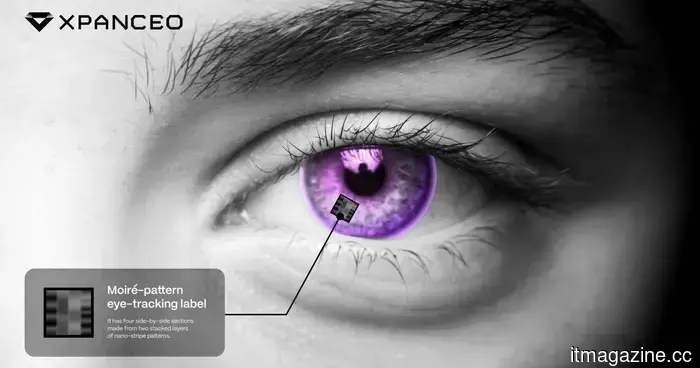
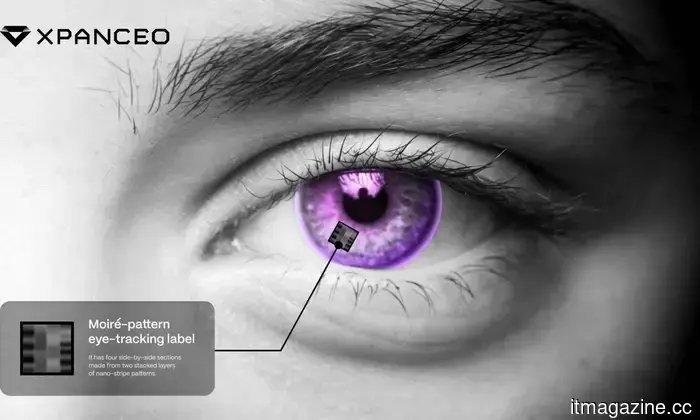
Next-generation contact lenses offer advanced eye-tracking capabilities without the need for expensive equipment.
No need for sensors or batteries, this innovative method transforms regular devices into accurate gaze trackers.
Eye tracking has traditionally been associated with costly hardware, infrared sensors, and controlled settings. However, that may soon change, as a new intelligent contact lens system seeks to provide precise tracking using the cameras that you regularly use.
XPANCEO is working on a passive design that integrates microscopic patterns into contact lenses, converting them into optical markers that can be read by built-in cameras found in laptops, phones, cars, and helmets. This transition is simple, as it eliminates the requirement for additional hardware or power sources.
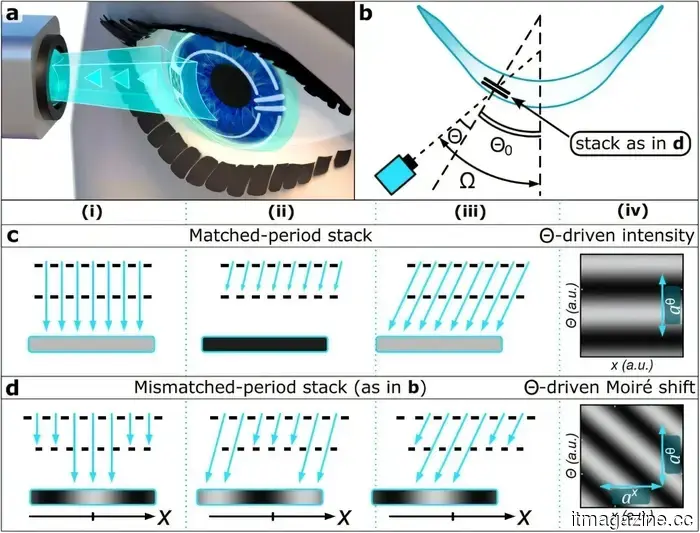
Instead of employing active electronics, the lenses utilize nano-patterns that shift in response to eye movement. External cameras track these changes and convert them into gaze direction with an accuracy reported to be around 0.3 degrees.
Understanding the passive tracking mechanism
Each lens features two ultra-thin optical gratings spaced apart by a microscopic gap. As the eye rotates, these layers shift and produce varying moiré patterns, which cameras can detect and interpret.
The tracking component is small, approximately 2.5 by 2.5 millimeters, and is placed inside a soft material compatible with standard lens manufacturing. This suggests it could be scalable without necessitating a complete overhaul of current production methods.
Most existing systems depend on infrared lighting and continuous processing, which raises power consumption and can perform poorly in bright environments. This new approach sidesteps those issues by focusing on optical geometry instead of active sensing.
Potential implications beyond consumer gadgets
If this technology proves reliable, eye tracking could become integrated into everyday devices without increasing costs or size. Built-in cameras could facilitate gaze detection, allowing for more intuitive interactions with screens.
Users may be able to navigate interfaces with their gaze rather than touch. In automotive or industrial contexts, existing cameras could continuously monitor attention in real-time without the need for specialized devices.
Moreover, there’s a healthcare aspect to consider. Subtle movements of the eye can indicate conditions like Parkinson’s and Alzheimer’s, and making this tracking more accessible could enhance early monitoring, although validation in real-world scenarios is still necessary.
What to monitor moving forward
The next phase involves demonstrating the effectiveness of this technology outside controlled environments. Its performance will rely on the ability of various devices to consistently read those patterns across different lighting conditions and daily use.
If this technique is scalable, manufacturers may be able to avoid incorporating new sensors, thus reducing costs and streamlining designs. This could potentially result in gaze tracking becoming a standard feature in personal devices and vehicles.
At this stage, the research is still in the early phases, with no defined timeline or pricing details available. Key factors to observe will be real-world testing, readiness for manufacturing, and whether the lenses can provide reliable performance without compromising comfort or safety.
---
Paulo Vargas is a former English major turned journalist and technical writer, with a career that has continuously looped back to…
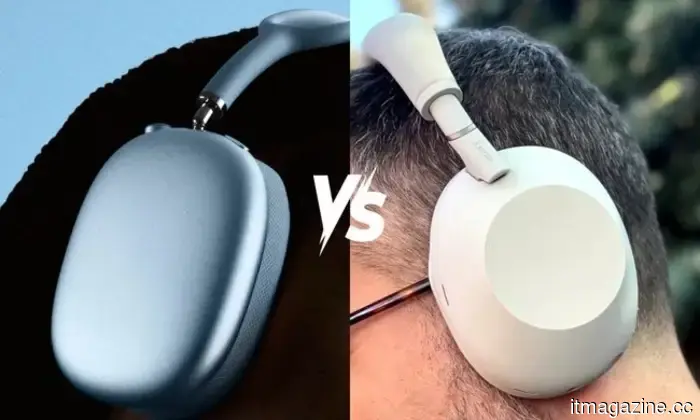
Sony may be on the verge of introducing new headphones that make even the AirPods Max seem affordable.
Sony has historically had no trouble selling high-priced headphones, but this time it appears poised to explore the outer limits of premium pricing. Following the launch of the Sony WF-1000XM6 and Sony WH-1000XM6, the brand is reportedly developing something much more exclusive and significantly pricier. This product could elevate the perceived value of even the Apple AirPods Max.
The ColleXion is more than just a name.
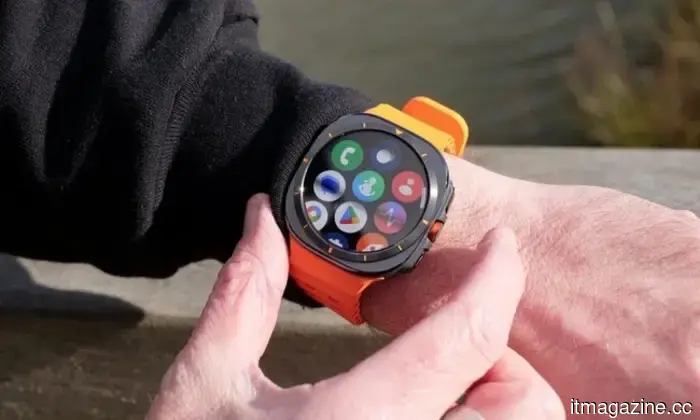
A recent leak hints that Samsung might restrict the 5G version of the Galaxy Watch Ultra 2 to select regions, leaving the majority of consumers with a 4G/LTE model.
Samsung is anticipated to unveil its next Ultra-series smartwatch this year, and previous leaks suggested a significant upgrade in connectivity. However, this enhancement may not be accessible in all markets if the latest report holds true.
Is Samsung contemplating region-specific models for the Galaxy Watch Ultra 2?
Your smartwatch could soon enable you to control your PC through hand gestures.
Can your smartwatch substitute for a mouse? Research indicates it can.
Your smartwatch might have capabilities beyond your expectations. Researchers at Cornell University and KAIST in South Korea have created a system called WatchHand, which allows any standard smartwatch to function as a hand-tracking device.
The best part? It requires no additional hardware to operate. According to the published study, the technology utilizes AI-powered micro sonar to interpret your hand movements and finger positions in real-time, without needing any extra components.



Other articles
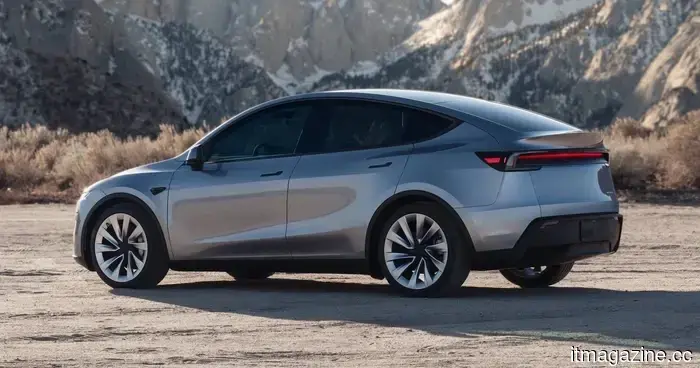 Tesla might be working on its most affordable electric vehicle to date, featuring an SUV design and significant cost reductions.
Tesla's upcoming model may be its most affordable electric vehicle to date, featuring a single-motor configuration and a smaller battery. However, considering the company's track record, it's wise to approach this speculation with a significant amount of skepticism.
Tesla might be working on its most affordable electric vehicle to date, featuring an SUV design and significant cost reductions.
Tesla's upcoming model may be its most affordable electric vehicle to date, featuring a single-motor configuration and a smaller battery. However, considering the company's track record, it's wise to approach this speculation with a significant amount of skepticism.
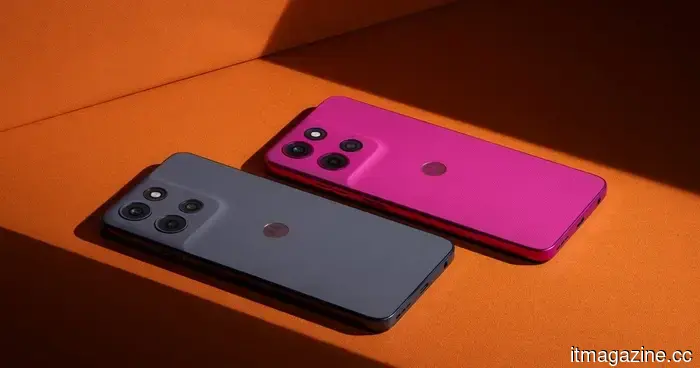 Motorola's budget smartphones will now cost you more.
The Moto G 2026 series was designed with affordability in mind; however, overnight price hikes of as much as 50% have significantly undermined that reputation for consumers in the US.
Motorola's budget smartphones will now cost you more.
The Moto G 2026 series was designed with affordability in mind; however, overnight price hikes of as much as 50% have significantly undermined that reputation for consumers in the US.
 Tesla may be working on its most affordable electric vehicle to date, featuring SUV design elements and significant reductions in costs.
Tesla's upcoming model might be its most affordable electric vehicle to date, featuring a single-motor design and a smaller battery. However, considering the brand's past, it's wise to approach this rumor with a significant level of skepticism.
Tesla may be working on its most affordable electric vehicle to date, featuring SUV design elements and significant reductions in costs.
Tesla's upcoming model might be its most affordable electric vehicle to date, featuring a single-motor design and a smaller battery. However, considering the brand's past, it's wise to approach this rumor with a significant level of skepticism.
 Crimson Desert is now up and running on Intel Arc GPUs after an initial rejection.
Crimson Desert now operates on Intel Arc GPUs due to a new driver; however, initial feedback points out visual issues, the absence of XeSS support, and crashes associated with specific settings, indicating that while this is a promising advancement, it is still incomplete.
Crimson Desert is now up and running on Intel Arc GPUs after an initial rejection.
Crimson Desert now operates on Intel Arc GPUs due to a new driver; however, initial feedback points out visual issues, the absence of XeSS support, and crashes associated with specific settings, indicating that while this is a promising advancement, it is still incomplete.
 TCL's NXTPAPER 70 Pro has finally arrived in the US, and it is priced at just $199.
TCL's NXTPAPER 70 Pro is now offered in the US via T-Mobile and Metro by T-Mobile for a price of $199.99.
TCL's NXTPAPER 70 Pro has finally arrived in the US, and it is priced at just $199.
TCL's NXTPAPER 70 Pro is now offered in the US via T-Mobile and Metro by T-Mobile for a price of $199.99.
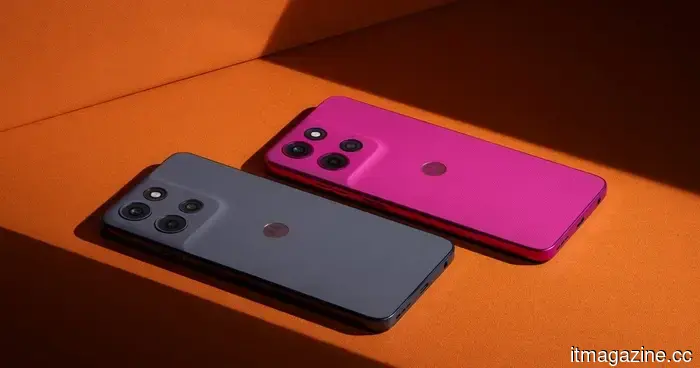 Motorola's budget smartphones are set to cost you more than before.
The Moto G 2026 series was designed to be budget-friendly, but sudden price hikes of up to 50% have significantly challenged that reputation among US consumers.
Motorola's budget smartphones are set to cost you more than before.
The Moto G 2026 series was designed to be budget-friendly, but sudden price hikes of up to 50% have significantly challenged that reputation among US consumers.
Next-generation contact lenses offer advanced eye-tracking capabilities without the need for expensive equipment.
Next-generation contact lenses may offer accurate eye tracking for everyday devices through integrated cameras, eliminating the need for costly hardware and facilitating more intuitive controls along with enhanced medical monitoring.