
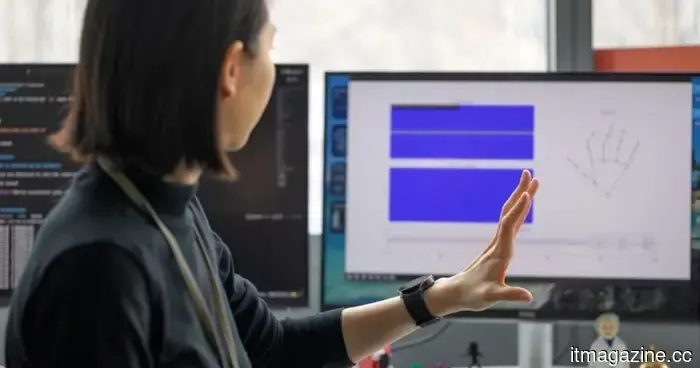
Your smartwatch may soon allow you to operate your PC using hand gestures.
Can your smartwatch take the place of your mouse? Research indicates it can.
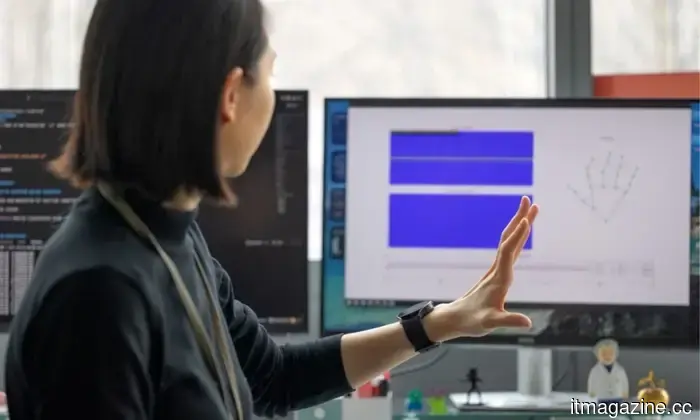
Doctoral student Chi-Jung Lee showcases the WatchHand device, which could enable users to navigate their computer screens without needing a mouse or trackpad.
Your smartwatch may have more capabilities than you realize. Researchers from Cornell University and KAIST in South Korea have created a system named WatchHand that transforms any standard smartwatch into a hand-tracking tool.
The most remarkable aspect is that this doesn't necessitate additional hardware. As per the published research, the technology utilizes AI-driven micro sonar to capture your hand movements and finger placements in real time, relying solely on the existing hardware of your smartwatch.
So, how does WatchHand function?
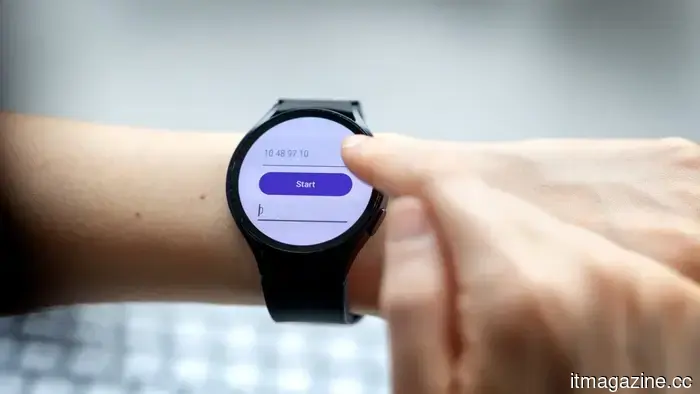
Your smartwatch contains a built-in speaker and microphone. WatchHand leverages both in an unexpected manner. The speaker produces inaudible sound waves that reflect off your hand and return to the microphone, forming a distinctive echo pattern.
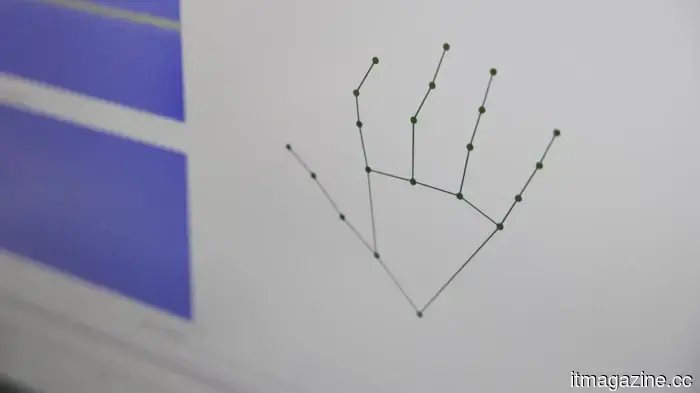
An AI algorithm operating directly on the watch interprets that pattern and maps your hand's position in three dimensions. It's similar to how bats use echolocation to navigate, but it fits right on your wrist. Since all processing takes place within the watch, none of your movement data is transmitted elsewhere.
What advantages does WatchHand offer?
The potential applications are truly thrilling. Double-tapping your fingers could skip a music track, while subtle hand movements could move your cursor without requiring contact with a mouse or trackpad.
In the future, WatchHand might be able to track your typing, act as a controller in augmented or virtual reality environments, and assist individuals with limited mobility who find conventional input devices challenging.
This system allows standard smartwatches to utilize AI-powered micro sonar for tracking hand movements.
Researchers also believe that a simple software update could enable this feature on millions of existing smartwatches already in use.
However, there are some limitations to consider. Currently, WatchHand only functions on Android devices, not on Apple watches, and it struggles to keep up while you're walking. Nevertheless, for a groundbreaking system that relies solely on hardware you already possess, this is a remarkable beginning.
Smartwatches are evidently evolving to become much more advanced than anticipated, as researchers are also developing a wristband device capable of detecting microplastics within the human body.
Additionally, medical professionals have developed an app to alleviate the tendency to jump to incorrect conclusions.
We've all experienced it: a delayed text response suddenly triggers concerns, a neutral comment comes off as critical, or a minor situation escalates into a major worry in moments. This mental shortcut, where the brain rushes to a negative conclusion, is referred to as interpretation bias. For individuals coping with anxiety or depression, it isn’t merely sporadic overthinking; it can significantly influence their emotions, reactions, and daily functioning.
This app aims to soften the way you perceive the world.
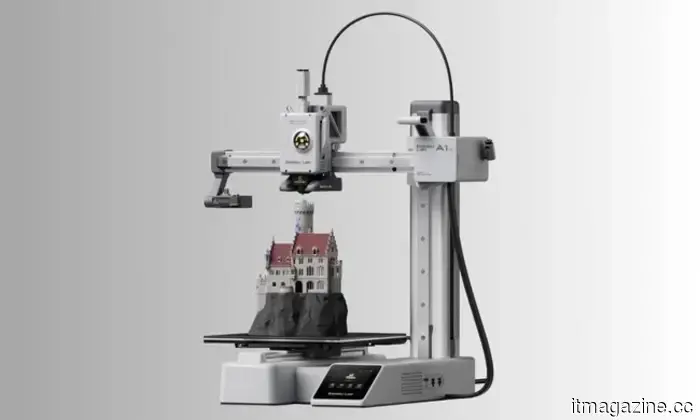
Moreover, MIT specialists have devised a solution for a common issue in 3D printing.
A new tool reveals what your print will actually look like. 3D printing is designed to simplify prototyping, yet anyone who has used it understands the frustration. You create a design, press print, wait for hours, and then discover it looks nothing like you envisioned—incorrect texture, odd color variations, or just an overall disappointing result. Researchers at MIT believe they have addressed this specific headache.
Lastly, can AI alleviate loneliness? The answer is complex.
Loneliness has stealthily emerged as one of the most significant contemporary issues, and now, AI is stepping in as an unexpected companion. A fresh study led by Aalto University, slated for presentation at CHI 2026, examines the long-term effects of AI companions on users. The findings are somewhat mixed. Although interactions with AI companions can provide users with a sense of support and reduce feelings of isolation, the study also noted signs of heightened emotional distress in participants' online language over time, indicating that the dynamics of the relationship are not as straightforward as they appear.



Other articles
 nFuse secures $2M to enable small retailers to place orders through WhatsApp.
nFuse has secured $2 million in funding from Eleven Ventures and LAUNCHub for a B2B ordering platform that operates via WhatsApp and SMS.
nFuse secures $2M to enable small retailers to place orders through WhatsApp.
nFuse has secured $2 million in funding from Eleven Ventures and LAUNCHub for a B2B ordering platform that operates via WhatsApp and SMS.
 nFuse secures $2M to enable small retailers to place orders through WhatsApp.
nFuse has secured $2 million in funding from Eleven Ventures and LAUNCHub for a B2B ordering platform that operates via WhatsApp and SMS.
nFuse secures $2M to enable small retailers to place orders through WhatsApp.
nFuse has secured $2 million in funding from Eleven Ventures and LAUNCHub for a B2B ordering platform that operates via WhatsApp and SMS.
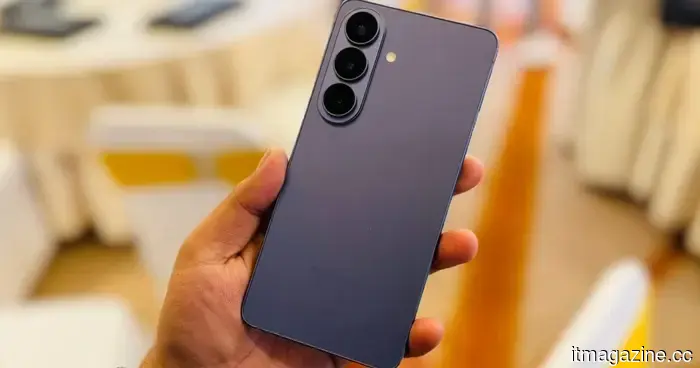 Even if Samsung releases a Galaxy S27 Pro, the name by itself won't be enough to ensure its success.
A Galaxy S27 Pro could enhance Samsung’s range, but only if it addresses the issues related to charging, value, and hardware present in the current non-Ultra models.
Even if Samsung releases a Galaxy S27 Pro, the name by itself won't be enough to ensure its success.
A Galaxy S27 Pro could enhance Samsung’s range, but only if it addresses the issues related to charging, value, and hardware present in the current non-Ultra models.
 The cyberattack on the Uffizi should be a cause for concern for every museum in Europe.
The cyberattack on the Uffizi exposes a sector that is fundamentally unready for digital risks, despite physical robberies occurring at the Louvre and various museums throughout Italy.
The cyberattack on the Uffizi should be a cause for concern for every museum in Europe.
The cyberattack on the Uffizi exposes a sector that is fundamentally unready for digital risks, despite physical robberies occurring at the Louvre and various museums throughout Italy.
 Netflix has launched a new gaming app for children that eliminates ads and in-app purchases.
Netflix has introduced Playground, a new standalone gaming app for children aged 8 and younger, featuring no advertisements, no in-app purchases, and characters from Peppa Pig, Sesame Street, and others.
Netflix has launched a new gaming app for children that eliminates ads and in-app purchases.
Netflix has introduced Playground, a new standalone gaming app for children aged 8 and younger, featuring no advertisements, no in-app purchases, and characters from Peppa Pig, Sesame Street, and others.
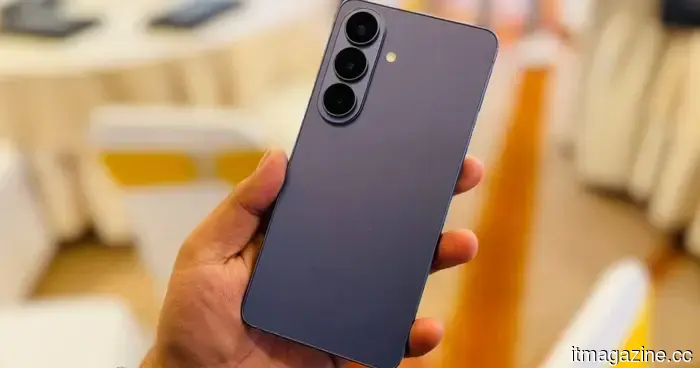 Samsung Galaxy S26 Review: This small flagship seems to be playing it too safe.
The Galaxy S26 offers the well-known Samsung flagship experience in a smaller size, but the absence of significant hardware advancements prevents it from feeling genuinely thrilling.
Samsung Galaxy S26 Review: This small flagship seems to be playing it too safe.
The Galaxy S26 offers the well-known Samsung flagship experience in a smaller size, but the absence of significant hardware advancements prevents it from feeling genuinely thrilling.
Your smartwatch may soon allow you to operate your PC using hand gestures.
WatchHand is an innovative AI system that transforms standard smartwatches into hand-tracking tools through sonar technology, possibly enabling users to operate computers using just finger gestures.