
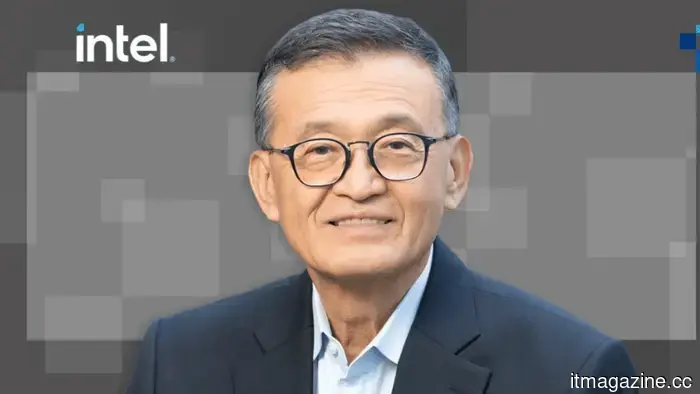
Intel partners with Musk’s Terafab as a foundry collaborator in a $25 billion chip mega initiative.
In summary: Intel has become the primary foundry partner for Elon Musk's Terafab, a $25 billion collaboration among Tesla, SpaceX, and xAI aimed at producing one terawatt of AI computing annually. This partnership provides the struggling chip company with a high-profile customer it has sought since shifting to a foundry-first strategy.
On April 7, 2026, Intel revealed its involvement in the Terafab project, becoming the foundry partner for the most ambitious semiconductor manufacturing facility ever proposed in the U.S. This announcement followed Musk's unveiling of Terafab at Giga Texas in Austin, where the joint venture claims it will generate one terawatt of AI computing each year. Intel's contributions will include its most advanced process node, packaging expertise, and manufacturing capacity to bring this goal to fruition. For CEO Lip-Bu Tan, who has been dedicated to restructuring Intel around an external foundry business over the past year, this agreement represents the largest external customer acquisition since he assumed leadership.
What Terafab aims to create
Terafab is designed as a fully integrated semiconductor complex encompassing chip design, lithography, fabrication, memory production, advanced packaging, and testing, all under one roof, with an objective of generating between 100 billion and 200 billion custom AI and memory chips annually. The initial plan targets 100,000 wafer starts per month, with aspirations to ultimately ramp up to one million wafer starts per month at full capacity. The project will comprise two facilities on the Giga Texas campus: one for automotive and humanoid robotics chips—supporting Tesla’s Full Self-Driving initiative, its Cybercab robotaxi program, and the Optimus robot line—and another for high-performance AI data center infrastructure and specialized processors for orbital deployments.
The orbital aspect is crucial to the project's rationale. SpaceX, which acquired xAI in an all-stock transaction in February 2026, plans to develop a constellation of AI satellites dubbed AI Sat Mini. Musk has indicated that 80% of Terafab’s computational output will support this orbital infrastructure, with the remaining 20% allocated for ground applications. The total cost of the project has been estimated between $20 billion and $25 billion, though analysts have been skeptical about whether this funding is adequate to achieve the stated production goals. Bernstein Research projected that the actual capital needed to reach one terawatt of annual compute is around $5 trillion, which exceeds 70% of the entire annual U.S. federal budget.
Intel’s contribution and the deal's value
Intel will provide its 18A process node, the company's most advanced logic manufacturing technology, which is currently scaling to high-volume production in its facilities located in Arizona and Oregon. Intel's 18A node, rated at 1.8 nanometers, aligns with the world's leading-edge processes entering commercial production and marks the most sophisticated semiconductor technology produced entirely in the U.S. Regarding its partnership with Terafab, Intel stated, “Intel is proud to join the Terafab project with SpaceX, xAI, and Tesla to help refactor silicon fab technology,” adding, “Our capability to design, fabricate, and package ultra-high-performance chips at scale will be instrumental in accelerating Terafab’s goal of achieving 1 TW/year of compute to advance future AI and robotics developments.”
Tan's message on X emphasized a personal perspective. He noted, “Elon has a proven track record of reimagining entire industries. This approach is precisely what the semiconductor manufacturing sector requires today. Terafab signifies a transformative shift in how silicon logic, memory, and packaging will be developed in the future. Intel is honored to be a partner.” Following the announcement, Intel's shares increased by about 4%, ending at $52.91. This market response showcases the significance of the deal for Intel's foundry aspirations: in its most recent full year, Intel Foundry generated merely $307 million in external customer revenue, a figure that pales compared to Taiwan Semiconductor Manufacturing Company's annual tens of billions from external clients. Should Terafab be partially realized, it would fundamentally reshape Intel Foundry's commercial standing.
Intel’s recovery and the requirements of this bet
Tan inherited a company in severe crisis, having lost competitive ground to TSMC and AMD across nearly all key product categories. Intel’s manufacturing timeline had faced multiple delays, and its foundry business, aimed at manufacturing chips for external clients akin to TSMC, had drawn little meaningful interest beyond government-supported contracts linked to the U.S. CHIPS and Science Act. Tan's restructuring efforts have been assertive: thousands of layoffs, a sharper emphasis on Intel’s 18A and 14A process nodes as the foundation for its foundry offering, and a strategic objective to promote Intel’s domestic manufacturing capabilities as a geopolitical differentiator amid heightened U.S. government focus on minimizing reliance on Taiwanese semiconductor production.
Terafab is the clearest indication of where that strategy is
Other articles
 This PS3 emulator has just released its official PC requirements, and they are quite straightforward to fulfill.
The official system requirements for RPCS3 indicate that PS3 emulation is more attainable than anticipated, as even basic PCs and handheld devices can run numerous games with good performance.
This PS3 emulator has just released its official PC requirements, and they are quite straightforward to fulfill.
The official system requirements for RPCS3 indicate that PS3 emulation is more attainable than anticipated, as even basic PCs and handheld devices can run numerous games with good performance.
 DeepSeek V4 could be released this month, with the test interface indicating the presence of Vision and Expert modes.
Within China's domestic large model sector, DeepSeek V4 is undoubtedly one of the most anticipated releases in recent months. Following its launch, its
DeepSeek V4 could be released this month, with the test interface indicating the presence of Vision and Expert modes.
Within China's domestic large model sector, DeepSeek V4 is undoubtedly one of the most anticipated releases in recent months. Following its launch, its
 Miro now integrates AI agents into your team's whiteboard.
Miro's AI Workflows transform visual brainstorming sessions into completed deliverables. Sidekicks and Flows reduce innovation cycles from weeks to hours for over 250,000 businesses.
Miro now integrates AI agents into your team's whiteboard.
Miro's AI Workflows transform visual brainstorming sessions into completed deliverables. Sidekicks and Flows reduce innovation cycles from weeks to hours for over 250,000 businesses.
 Airline passengers will soon need to limit the number of chargers they can bring with them.
Beginning April 20, Southwest Airlines will restrict passengers to one portable charger per flight due to the increasing number of lithium battery fire incidents on aircraft each year.
Airline passengers will soon need to limit the number of chargers they can bring with them.
Beginning April 20, Southwest Airlines will restrict passengers to one portable charger per flight due to the increasing number of lithium battery fire incidents on aircraft each year.
 Pixel surpasses iPhone and Galaxy in terms of repairability.
A recent 2026 repairability report alters the rankings of smartphones, placing the Google Pixel above iPhone and Galaxy models. Additionally, more rigorous EU scoring reveals how design decisions impact long-term usability and repair expenses.
Pixel surpasses iPhone and Galaxy in terms of repairability.
A recent 2026 repairability report alters the rankings of smartphones, placing the Google Pixel above iPhone and Galaxy models. Additionally, more rigorous EU scoring reveals how design decisions impact long-term usability and repair expenses.
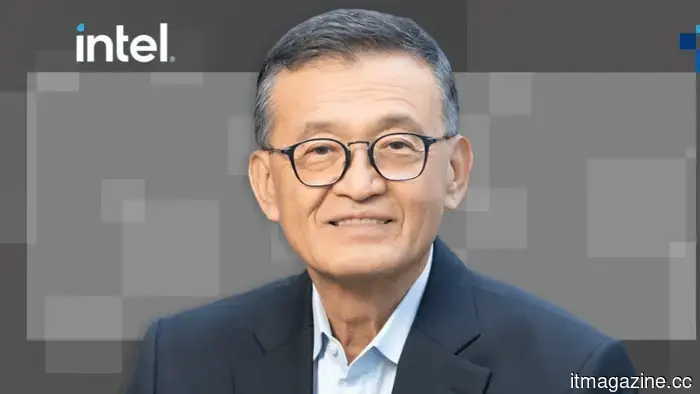 Intel teams up with Musk's Terafab as a foundry partner in a $25 billion chip megaproject.
Intel has agreed to participate in Elon Musk's $25 billion Terafab project alongside SpaceX and Tesla, utilizing its 18A process technology to aim for a terawatt of AI computing annually in Austin, Texas.
Intel teams up with Musk's Terafab as a foundry partner in a $25 billion chip megaproject.
Intel has agreed to participate in Elon Musk's $25 billion Terafab project alongside SpaceX and Tesla, utilizing its 18A process technology to aim for a terawatt of AI computing annually in Austin, Texas.
Intel partners with Musk’s Terafab as a foundry collaborator in a $25 billion chip mega initiative.
Intel has joined Elon Musk's $25 billion Terafab project alongside SpaceX and Tesla, leveraging its 18A process node to aim for a terawatt of AI computing annually in Austin, Texas.