
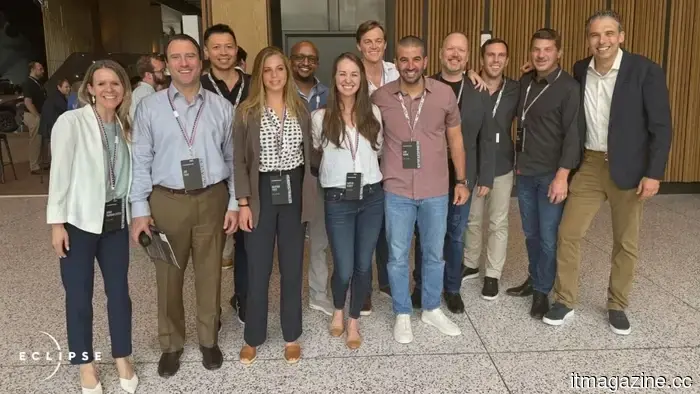
Eclipse has secured $1.3 billion through two funds to support the upcoming phase of physical industries.
Fund VI, with a total of $720 million, focuses on early-stage companies within the realms of robotics, manufacturing, and energy. Meanwhile, Early Growth Fund III, amounting to $591 million, aids companies that are progressing toward Series A funding. The overall assets under management (AUM) now reach approximately $10 billion.
Eclipse, a venture firm located in Palo Alto that supports efforts to revitalize physical industries, has successfully closed $1.3 billion across two funds at the same time. Eclipse Fund VI has secured $720 million for early-stage investments, while Early Growth Fund III has gathered $591 million to assist companies nearing commercial viability.
With this fundraising, Eclipse's total AUM approaches $10 billion. Established in 2015 by Lior Susan, the firm operates under the belief that the most impactful companies of the upcoming decade will emerge not from software but from physical sectors—specifically the systems responsible for moving, manufacturing, and powering the world. This encompasses manufacturing, robotics, energy, agriculture, and critical infrastructure—industries that represent a significant portion of global GDP but have historically received only a small share of venture capital compared to enterprise software.
Susan envisions the fund not as a traditional portfolio, but as what he refers to as a connected industrial economy, consisting of firms that share infrastructure, customers, talent, and accumulated operational knowledge to expedite their progress more effectively than if they operated independently.
The structure of having two funds underlines the distinct phases that Eclipse supports. Fund VI is aimed at early-stage companies during their initial capitalization, typically providing funding between seed rounds and Series A. In contrast, Early Growth Fund III addresses the transitional period from established product to commercial scale, where hardware-focused companies encounter their most capital-intensive hurdles and face the highest operational risks.
Bloomberg reported on this fundraising, highlighting Susan’s insights into the rapidly evolving landscape of physical industries, driven by advancements in artificial intelligence, enhanced robotics technology, and revitalized industrial policies in the U.S., which are reducing development timelines that previously spanned decades.
Eclipse’s portfolio includes a variety of sectors within physical industries. It has invested in companies such as Cerebras, known for creating the world's largest chip to facilitate machine learning processes, and Redwood Materials, a battery recycling firm that secured a $350 million Series E round led by Eclipse in October 2025. The firm's identity as operator-first—featuring partners with backgrounds at Amazon, Apple, and Samsara—is crucial to its appeal to founders of hardware-centric companies, as it assures them that their investors not only know how to finance factories but also how to operate them effectively.
Other articles
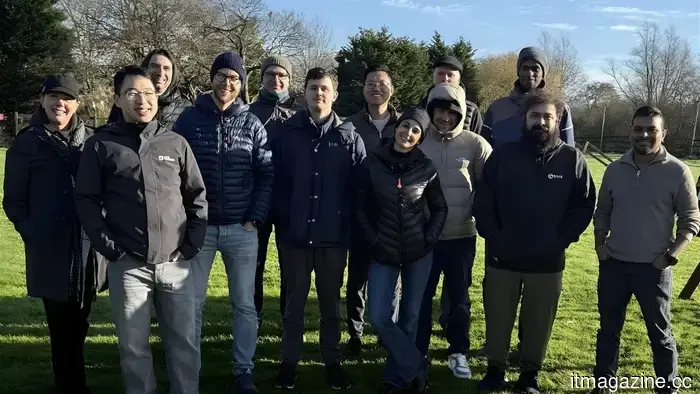 Trent AI secures $13 million to develop multi-agent security systems.
The London startup revealed itself on 7 April with a multifaceted agentic security solution and a seed funding round supported by LocalGlobe and Cambridge Innovation Capital. Among its co-founders is a professor from Cambridge who formerly held a position at Amazon.
Trent AI secures $13 million to develop multi-agent security systems.
The London startup revealed itself on 7 April with a multifaceted agentic security solution and a seed funding round supported by LocalGlobe and Cambridge Innovation Capital. Among its co-founders is a professor from Cambridge who formerly held a position at Amazon.
 Uber becomes part of Amazon's Trainium lineup through an AWS expansion agreement.
Uber is extending its AWS agreement to utilize Graviton4 for real-time ride-matching and to test AI training on Trainium3, joining Anthropic, OpenAI, and Apple in using Amazon's chip technology.
Uber becomes part of Amazon's Trainium lineup through an AWS expansion agreement.
Uber is extending its AWS agreement to utilize Graviton4 for real-time ride-matching and to test AI training on Trainium3, joining Anthropic, OpenAI, and Apple in using Amazon's chip technology.
 Narwhal Labs secures €22.9 million in funding and introduces DeepBlue OS.
The Bristol-based firm, which is the parent company of Narwhal AI, is developing an operating system for autonomous customer interactions through voice, SMS, email, and WhatsApp. CEO Luke Sartain has formerly been at the helm of the Narwhal Media Group.
Narwhal Labs, based in Bri...
Narwhal Labs secures €22.9 million in funding and introduces DeepBlue OS.
The Bristol-based firm, which is the parent company of Narwhal AI, is developing an operating system for autonomous customer interactions through voice, SMS, email, and WhatsApp. CEO Luke Sartain has formerly been at the helm of the Narwhal Media Group.
Narwhal Labs, based in Bri...
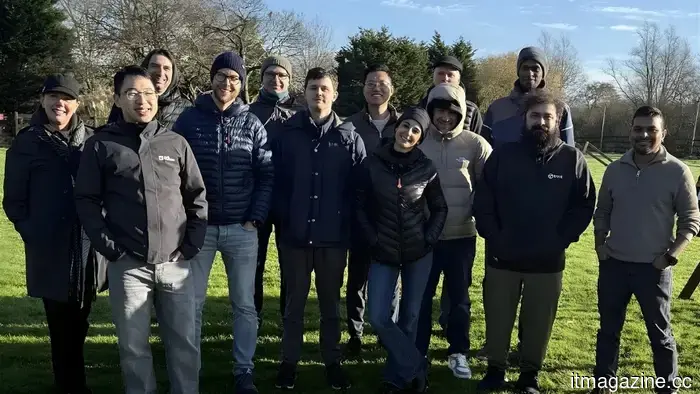 Trent AI secures $13 million to develop multi-agent security solutions.
The London-based startup officially revealed itself on April 7, introducing a multi-layered agentic security solution and securing a seed funding round with support from LocalGlobe and Cambridge Innovation Capital. Among its co-founders is a professor from Cambridge who had formerly served as Amazon’s director.
Trent AI secures $13 million to develop multi-agent security solutions.
The London-based startup officially revealed itself on April 7, introducing a multi-layered agentic security solution and securing a seed funding round with support from LocalGlobe and Cambridge Innovation Capital. Among its co-founders is a professor from Cambridge who had formerly served as Amazon’s director.
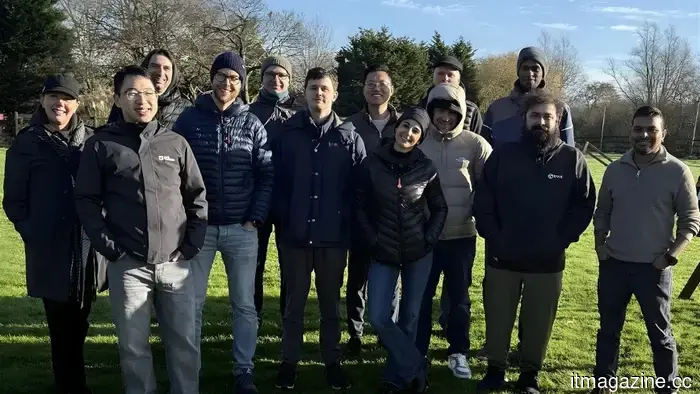 Trent AI secures $13 million to develop multi-agent security.
The London-based startup revealed itself from stealth mode on April 7, introducing a multi-faceted agentic security solution along with a seed funding round supported by LocalGlobe and Cambridge Innovation Capital. Among its co-founders is a professor from Cambridge who formerly served as Amazon's director.
Trent AI secures $13 million to develop multi-agent security.
The London-based startup revealed itself from stealth mode on April 7, introducing a multi-faceted agentic security solution along with a seed funding round supported by LocalGlobe and Cambridge Innovation Capital. Among its co-founders is a professor from Cambridge who formerly served as Amazon's director.
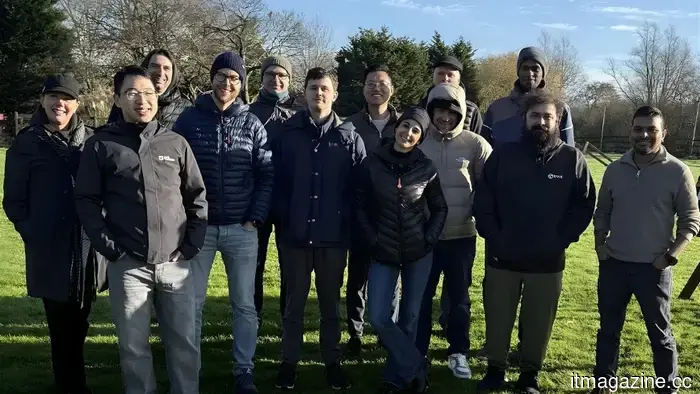 Trent AI secures $13 million to develop multi-agent security systems.
The London-based startup revealed itself on April 7 with a multi-layered agentic security solution and secured a seed funding round supported by LocalGlobe and Cambridge Innovation Capital. Among its co-founders is a professor from Cambridge who formerly served as Amazon’s director.
Trent AI secures $13 million to develop multi-agent security systems.
The London-based startup revealed itself on April 7 with a multi-layered agentic security solution and secured a seed funding round supported by LocalGlobe and Cambridge Innovation Capital. Among its co-founders is a professor from Cambridge who formerly served as Amazon’s director.
Eclipse has secured $1.3 billion through two funds to support the upcoming phase of physical industries.
Eclipse has secured $1.3 billion through Fund VI ($720 million) and Early Growth Fund III ($591 million) to support companies in the physical industries, including robotics, manufacturing, and energy.