
The climate-tech startup Satellites on Fire has secured $2.7 million in funding.
Satellites on Fire, established in 2020 by three Argentine teenagers as a school project, has successfully completed a seed funding round led by Dalus Capital. This software-only platform combines satellite data from various agencies and is able to detect fires more quickly than NASA's FIRMS system by minimizing the time between satellite passes.
The Argentine climate-tech startup Satellites on Fire has secured a $2.7 million seed round, with Dalus Capital leading the investment, and participation from Draper Associates, Draper Cygnus, VitaminC, Savia Ventures, Avesta Fund, Reciprocal, Zenani Capital, Innventure, Air Capital, Gain VC, Antom VC, and Embarca Tech.
The company has developed an AI-driven wildfire detection platform that merges satellite imagery, tower cameras, fire spread modeling, and real-time alerts, claiming that its technology identifies fires an average of 35 minutes sooner than NASA's FIRMS service.
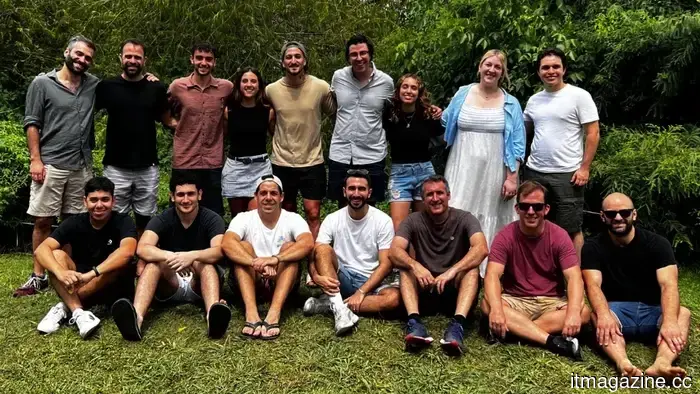
Founded in 2020 by Franco Rodriguez Viau, Ulises López Pacholczak, and Joaquín Chamo, who were secondary school students at ORT Buenos Aires, the project was inspired after friends of Rodriguez Viau lost their homes to wildfires in Córdoba.
What started as a school project underwent a complete overhaul after the founders interviewed over 80 firefighters and emergency officials, concluding that their initial version was not practically useful. Now 22, Rodriguez Viau serves as the CEO.
In 2025, MIT Technology Review’s Spanish edition recognized him as one of its 35 Innovators Under 35 in Latin America.
The platform's advantage over existing systems is its satellite coverage density. NASA’s FIRMS service relies on a limited number of satellites with revisit intervals that can result in multi-hour delays in monitoring Latin American regions.
Satellites on Fire compiles imagery from more than eight satellites operated by NASA, NOAA, and the European Space Agency, with updates occurring as often as every five minutes, and employs its own AI models to identify heat signatures and produce fire spread simulations.
The company claims this technology consistently detects fires around 35 minutes before NASA alerts, which it identifies as a crucial timeframe for successful early containment. A November 2025 report from Newsweek documented an incident in Argentina where their system detected a fire at 1:40 a.m., seven hours before NASA's notification.
Their commercial model operates on a software-as-a-service basis, with annual pricing ranging between $0.02 and $10 per hectare, depending on the service level. The platform currently oversees land in 21 countries across four continents, boasting over 55,000 users and a training dataset derived from more than 20,000 field-validated fire reports, which the company claims is the largest database of its kind in Latin America.
In 2025, the system was engaged in the response to more than 600 wildfires, as reported by the company. Clients include forestry companies, agricultural businesses, energy utilities, carbon credit initiatives, insurance providers, and government entities. Aon has integrated this platform into all its forestry insurance policies in Latin America for risk assessment and premium pricing.
The newly acquired capital will support the company's expansion into the U.S. market, where it is already conducting pilot programs and has partnered with Watch Duty, a non-profit wildfire tracking platform.
Funds will also be allocated to optimize AI models, launch a parametric wildfire insurance product in collaboration with Aon, and develop an intelligence dashboard for client protection planning.
Rodriguez Viau has previously indicated that the company aims to eventually delve into suppression technology utilizing drones. The U.S. is the main target for expansion, as wildfires are believed to incur costs in the hundreds of billions of dollars annually; the 2025 fires in Los Angeles have intensified awareness of detection gaps.
John Mills, CEO of Watch Duty and an advisor to Satellites on Fire, remarked that the platform’s effectiveness with existing satellite data had "genuinely astounded" his team. Diego Serebrisky, co-founder and managing partner at lead investor Dalus Capital, characterized this funding round as proof that Latin American entrepreneurs are creating globally competitive AI solutions in the climate sector.
Earlier, the company received $250,000 from Tim Draper and Adam Draper after appearing on Meet the Drapers Season 9, and has also gained recognition from the UN while receiving support from MIT and Cornell University during its formative stages.
Other articles
 IBM and Arm have joined forces to operate AI software on mainframes, with no set date announced.
IBM and Arm have revealed a partnership to execute Arm-based AI software on IBM Z mainframes through virtualization. A shipping date has not been provided, as this announcement serves as a roadmap rather than a product release.
IBM and Arm have joined forces to operate AI software on mainframes, with no set date announced.
IBM and Arm have revealed a partnership to execute Arm-based AI software on IBM Z mainframes through virtualization. A shipping date has not been provided, as this announcement serves as a roadmap rather than a product release.
 Following the Pixel 10 series, users of the Pixel 8 Pro are experiencing connectivity issues that require an ice pack to resolve.
Owners of the Pixel 8 Pro are experiencing extensive Wi-Fi issues following the March update, with attempted fixes proving ineffective and support responses lacking.
Following the Pixel 10 series, users of the Pixel 8 Pro are experiencing connectivity issues that require an ice pack to resolve.
Owners of the Pixel 8 Pro are experiencing extensive Wi-Fi issues following the March update, with attempted fixes proving ineffective and support responses lacking.
 Bolt is introducing its Hopp ride-hailing brand to the Canadian corporate travel market.
Hopp for Business has been introduced in 17 municipalities within the Greater Toronto Area, while Bolt expands into corporate accounts one year after its launch for consumers in Toronto.
Bolt is introducing its Hopp ride-hailing brand to the Canadian corporate travel market.
Hopp for Business has been introduced in 17 municipalities within the Greater Toronto Area, while Bolt expands into corporate accounts one year after its launch for consumers in Toronto.
 Which Telegram growth service will be worthwhile in 2026? An explanation of effective growth strategies.
Discover which Telegram growth services are effective in 2026. Investigate intelligent automation, engagement techniques, and hybrid growth methods that expand in a sustainable manner.
Which Telegram growth service will be worthwhile in 2026? An explanation of effective growth strategies.
Discover which Telegram growth services are effective in 2026. Investigate intelligent automation, engagement techniques, and hybrid growth methods that expand in a sustainable manner.
 UBTech is proposing $18 million to recruit a chief AI scientist.
UBTech is providing up to $18 million for a chief AI scientist, as the revenue from its humanoid robots surged twenty times in 2025.
UBTech is proposing $18 million to recruit a chief AI scientist.
UBTech is providing up to $18 million for a chief AI scientist, as the revenue from its humanoid robots surged twenty times in 2025.
 The iPhone 17 Pro Max captures breathtaking images from a lunar mission.
NASA’s Artemis II mission demonstrates the iPhone 17 Pro Max capturing actual images from space, indicating a transition where consumer devices start to enhance traditional cameras in extreme conditions beyond our planet.
The iPhone 17 Pro Max captures breathtaking images from a lunar mission.
NASA’s Artemis II mission demonstrates the iPhone 17 Pro Max capturing actual images from space, indicating a transition where consumer devices start to enhance traditional cameras in extreme conditions beyond our planet.
The climate-tech startup Satellites on Fire has secured $2.7 million in funding.
Climate-tech startup Satellites on Fire has secured $2.7 million in funding, with Dalus Capital leading the investment. Their AI platform identifies wildfires 35 minutes earlier than NASA's system.