
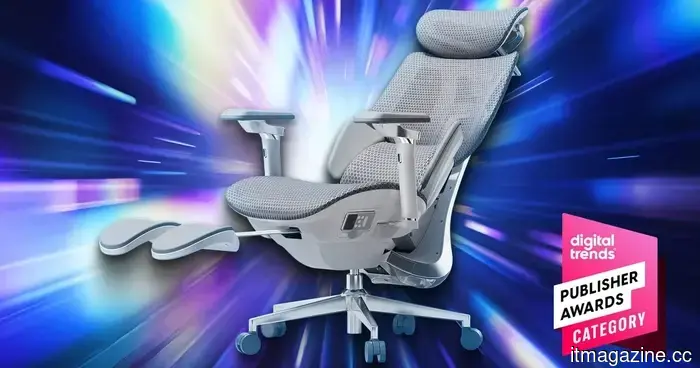
The Hbada X7 introduces AI-powered lumbar support for your office environment.
For anyone who spends six to eight hours seated, experiencing ergonomic discomfort is unavoidable. If not properly addressed, this discomfort can quickly escalate into persistent pain. I overlooked this issue and paid a steep price, suffering from back and neck strain for many years. It took numerous workouts and medications before I recognized that my workstation setup was to blame. Many desk-bound individuals around the globe share a similar experience. Hbada, backed by 16 years of research and expertise in ergonomics, understands this all too well. The answer? The Hbada X7 Smart Ergonomic Chair, which is distinguished as the world's first AI-powered lumbar tracking ergonomic chair.
But why choose the Hbada X7?
There are numerous misconceptions regarding ergonomic chairs, as well as a degree of complacency in their engineering. Many believe that a reclining back, adjustable armrests, and a lumbar pillow are sufficient for a chair to be considered ergonomic. However, this only provides static support, which falls short for the modern worker spending extended periods focused on a screen, whether coding, documenting, researching, gaming, or tackling academic tasks.
The Hbada X7 Smart Ergonomic Chair redefines active ergonomics by adapting dynamically to your body in ways you likely haven't encountered before. It’s not just about comfort; it involves active intervention. Powered by advanced chips and servo motors, Hbada's lumbar-tracking ergonomic chair is designed to ensure weight distribution and adjustments that provide multi-stage lumbar support with high accuracy and minimal manual input.
Drawing inspiration from high-end robotics and automotive engineering principles, the Hbada X7 chair features an AI-assisted lumbar-tracking system. By incorporating cutting-edge hardware and software innovations, it utilizes an auto-grade computing chip and microsecond Hall magnetic sensors to detect your posture and pressure distribution hundreds of times per second, all thanks to a 1,000Hz high-frequency sampling rate.
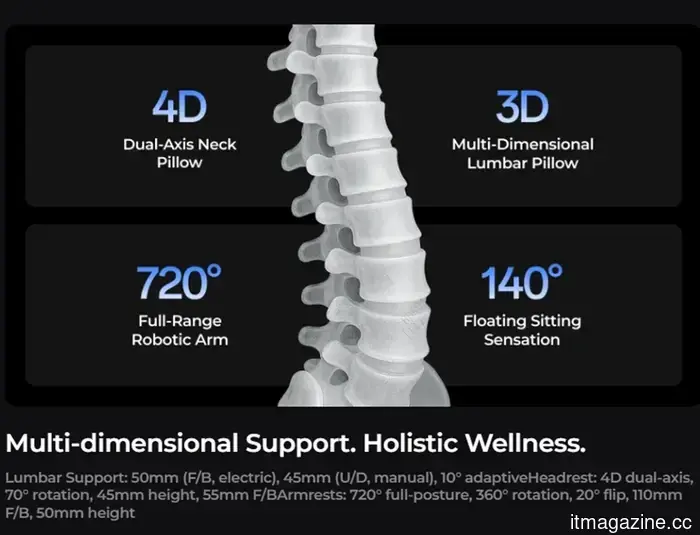
Whether you lean forward for concentrated tasks or recline for relaxation, the built-in linear motors activate instantly to provide 50mm of electric depth extension and 10 degrees of adaptive deflection. This results in a dynamic adjustment that consistently supports your lumbar region. In essence, the Hbada X7 operates as a bionic extension of your backbone, ensuring even pressure distribution.
Where engineering meets medical excellence
The careful design involved extensive collaboration with experts like Dr. Dennis Miller, a certified physician associated with the International Chiropractors Association (ICA). A prime example of this partnership is the patented three-zone floating wing structure, which targets the erector spinae and quadratus lumborum muscle groups to mitigate fatigue often experienced during long periods of desk work.
Hbada
A showcase of thoughtful design
A quality ergonomic chair is not just a feat of mechanical skill. It should adopt a holistic approach, a quality that the Hbada X7 generously provides. Along with superior ergonomics, it includes a comprehensive physiotherapy system. For example, the unique 8D Bionic Massage features dual-core massage nodes designed to imitate a physiotherapist's hands working on your tense back.
These nodes can extend for a deep kneading effect and retract when not in use. However, kneading alone isn't enough for complete recovery. To optimize restoration, the innovative Thermotherapy system restricts heat output to the range of 45-54°C, promoting even blood circulation and reducing tension in your back muscles, particularly in the lower area.
What happens if the surrounding temperatures aren't suitable for heat treatment? The Hbada X7 offers a thoughtful solution for that as well. Its integrated dual-fan cloud ventilation system activates a 3,000 RPM fan assembly capable of delivering air at a rate of 810,000 cubic centimeters per minute, allowing you to avoid the discomfort of being too hot and stay focused while the chair manages cooling.
Going beyond the rest
For optimal mechanical flexibility, the 720-degree omnidirectional arm provides full rotational freedom along with 55 millimeters of depth adjustment. Whether you're typing vigorously or casually scrolling on your phone, your arms will be comfortably supported. A standout feature is the Smart Alert system, which prompts you if the chair detects prolonged periods of sedentary posture. When you're ready to stretch and relax your lumbar area, the Hbada X7 accommodates you with a 140-degree recline adjustment.
In rest mode, the auto gravity-sensing chassis ensures maximum comfort without the risk of tipping or sliding, facilitating a secure and restorative break that enhances sustained productivity. By dynamically redistributing weight without the risk of falling, Hbada’s chair supports deep relaxation and mental recovery.
Additionally, discussing safety and wellness, Hbada provides extra peace of mind by complying with UL laboratory fire safety standards and earning FCC electromagnetic interference certification for its AI-enhanced ergonomic chair. It has also met rigorous quality and durability standards to receive BIFMA X5.1 certification, ensuring a hassle-free operational life of 10 years. Ultimately, what you have in the Hbada X7 is not just another ordinary ergonomic chair that overpromises but under-del
Other articles
 Standing Ovation secures €30 million in a Series B funding round.
Standing Ovation has secured €30 million in a Series B funding round to advance the commercialization of its precision-fermentation casein derived from dairy waste.
Standing Ovation secures €30 million in a Series B funding round.
Standing Ovation has secured €30 million in a Series B funding round to advance the commercialization of its precision-fermentation casein derived from dairy waste.
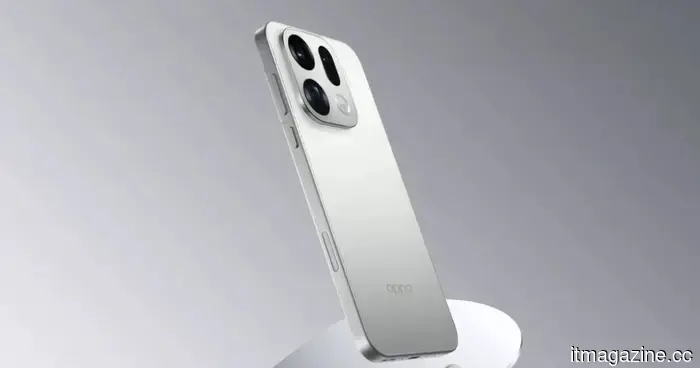 The next version of one of the top camera phones of 2025 now has an official launch date.
Oppo's upcoming Ultra-tier flagship, the Find X9 Ultra, is expected to be launched worldwide at the end of next month, showcasing a remarkable quad-camera setup that includes dual 200MP sensors and a 10x optical zoom lens.
The next version of one of the top camera phones of 2025 now has an official launch date.
Oppo's upcoming Ultra-tier flagship, the Find X9 Ultra, is expected to be launched worldwide at the end of next month, showcasing a remarkable quad-camera setup that includes dual 200MP sensors and a 10x optical zoom lens.
 The Last of Us Part 3 could be a possibility, and fans believe its creator may have just dropped a hint about it.
A recent Instagram post from
The Last of Us Part 3 could be a possibility, and fans believe its creator may have just dropped a hint about it.
A recent Instagram post from
 Apple's intelligence presence emerges in China quickly, but is promptly halted.
Apple Intelligence made a short-lived appearance on iPhones in China before disappearing, highlighting how advanced Apple is in software, while also indicating the distance it still needs to cover in terms of regulatory approval.
Apple's intelligence presence emerges in China quickly, but is promptly halted.
Apple Intelligence made a short-lived appearance on iPhones in China before disappearing, highlighting how advanced Apple is in software, while also indicating the distance it still needs to cover in terms of regulatory approval.
 myStoria secures $1.6 million in seed funding, with Graphite Ventures leading the round.
myStoria has secured $1.625 million in seed funding to develop a platform that combines AI and human care coordination, focusing on fertility, PCOS, endometriosis, and perimenopause.
myStoria secures $1.6 million in seed funding, with Graphite Ventures leading the round.
myStoria has secured $1.625 million in seed funding to develop a platform that combines AI and human care coordination, focusing on fertility, PCOS, endometriosis, and perimenopause.
 myStoria secures $1.6 million in seed funding, with Graphite Ventures leading the investment.
myStoria has secured $1.625 million in seed funding to develop a platform that combines AI with human care coordination, focusing on fertility, PCOS, endometriosis, and perimenopause.
myStoria secures $1.6 million in seed funding, with Graphite Ventures leading the investment.
myStoria has secured $1.625 million in seed funding to develop a platform that combines AI with human care coordination, focusing on fertility, PCOS, endometriosis, and perimenopause.
The Hbada X7 introduces AI-powered lumbar support for your office environment.
For anyone who spends six to eight hours sitting, experiencing ergonomic discomfort is unavoidable. If not addressed properly, this discomfort can escalate into persistent pain. I disregarded it and ended up with a painful lesson, resulting in prolonged back and neck strain for several years. It required a lot of […]