

New tests indicate that you're spending money unnecessarily on audiophile cables.
New tests suggest that investing in audiophile cables may be unnecessary. A controlled comparison between an inexpensive RCA cable and a premium model costing thousands revealed no significant difference in sound quality.
This conclusion is based on precise lab measurements along with listening evaluations, challenging the long-standing notion that more expensive cables provide superior audio performance.
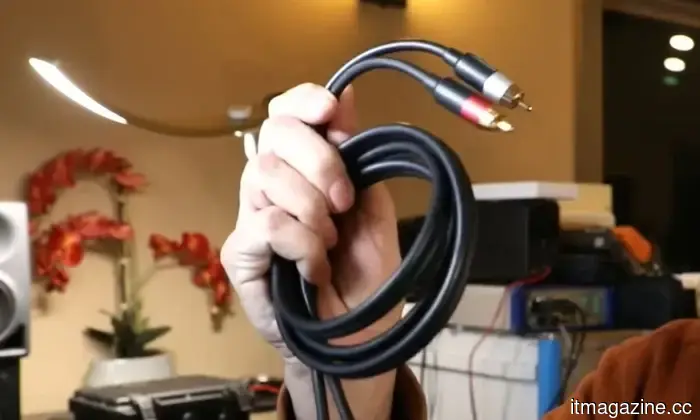
In the experiment, a $7 Amazon Basics RCA cable was tested alongside a high-end option exceeding $4,000. Despite the drastic price difference, both cables produced identical results in both measurement and listening tests.
Lab evaluations indicate equivalent performance
The most compelling evidence stems from controlled measurements using professional analyzing equipment. Both cables were assessed for distortion, noise, and frequency response under identical conditions.
When tested with a 4 kHz signal, both cables only generated minimal distortion, showing no significant difference between them. Interestingly, the pricier cable even recorded slightly more electrical noise during this test, although it was inconsequential in practical situations.
Audio Science Review
Across a broader spectrum, the same pattern was observed. Frequency response was consistent, phase behavior remained aligned, and there were no practical differences in signal transitions. Even detailed analyzer graphs failed to indicate any meaningful divergence between the two cables.
Jitter testing produced similar results. While the cheaper cable exhibited a slight increase in jitter, it was measured in very small units and came with the note that it was also longer than the high-end cable.
Why the misconception persists
So, why does this myth endure? It largely boils down to perception and expectations.
Listeners often perceive differences during casual listening, especially if they are aware of the specific product they are using. However, these impressions tend to diminish in blind tests, where bias is eliminated.
There is also the allure of high-quality materials and technical jargon. Premium cables advertise features such as silver conductors or specialized insulation, which sound persuasive but did not yield audible improvements in this case.
Audio Science Review
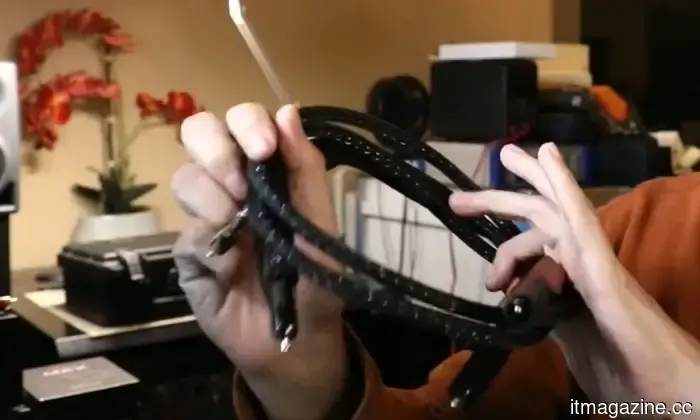
Certain design features can even introduce drawbacks. The costly cable in this test included a locking connector, which adds complexity and potential risks without enhancing signal transmission.
Where your investment is better spent
If cables aren’t the issue, other components of your system likely are.
These findings confirm that RCA cables function well within their design limitations. They transmit audio with minimal noise, low distortion, and ample bandwidth, meaning they aren't the bottleneck in your setup.
Genuine improvements stem from other elements in the audio chain. Components like speakers, amplifiers, room acoustics, and source quality significantly influence the listening experience.
Investing thousands in a cable not only yields diminishing returns but shows no measurable benefits. This makes it one of the least effective enhancements you can make.
Opt for a reliable, well-constructed cable and allocate the remainder of your budget toward equipment that truly enhances your listening experience.
Other articles
 The Nvidia DLSS 4.5 update featuring 6x frame generation is now available for RTX graphics cards today.
Nvidia's DLSS 4.5 update has officially launched, introducing Dynamic Multi Frame Generation along with a new 6x mode capable of producing up to five additional frames for each rendered frame on RTX 50 Series GPUs.
The Nvidia DLSS 4.5 update featuring 6x frame generation is now available for RTX graphics cards today.
Nvidia's DLSS 4.5 update has officially launched, introducing Dynamic Multi Frame Generation along with a new 6x mode capable of producing up to five additional frames for each rendered frame on RTX 50 Series GPUs.
 Samsung's new Tab S11 Ultra Pro Keyboard is approaching a price similar to that of the MacBook Neo.
Samsung's latest Pro Keyboard offers the Galaxy Tab S11 Ultra a setup that's closer to that of a traditional laptop, but its price of $399.99 places it in a rather uneasy price range.
Samsung's new Tab S11 Ultra Pro Keyboard is approaching a price similar to that of the MacBook Neo.
Samsung's latest Pro Keyboard offers the Galaxy Tab S11 Ultra a setup that's closer to that of a traditional laptop, but its price of $399.99 places it in a rather uneasy price range.
 iOS 26.5 beta 1 paves the way for advertisements in Apple Maps.
Apple has launched the initial beta version of iOS 26.5. This update sets the stage for advertisements in Apple Maps and includes the new Suggested Places feature.
iOS 26.5 beta 1 paves the way for advertisements in Apple Maps.
Apple has launched the initial beta version of iOS 26.5. This update sets the stage for advertisements in Apple Maps and includes the new Suggested Places feature.
 iOS 26.5 beta 1 lays the groundwork for advertisements in Apple Maps.
Apple has launched the initial beta version of iOS 26.5. This update sets the stage for advertisements in Apple Maps and brings in Suggested Places.
iOS 26.5 beta 1 lays the groundwork for advertisements in Apple Maps.
Apple has launched the initial beta version of iOS 26.5. This update sets the stage for advertisements in Apple Maps and brings in Suggested Places.
 Austrian food waste startup Afreshed has taken over its German competitor Etepetete.
Afreshed has purchased Munich-based Etepetete and obtained a mid-seven-figure investment from Raiffeisen-Holding NÖ-Wien, acquiring 25.1% equity, to broaden its organic rescue-box model throughout Germany.
Austrian food waste startup Afreshed has taken over its German competitor Etepetete.
Afreshed has purchased Munich-based Etepetete and obtained a mid-seven-figure investment from Raiffeisen-Holding NÖ-Wien, acquiring 25.1% equity, to broaden its organic rescue-box model throughout Germany.
 Austrian food waste startup Afreshed has acquired its German competitor Etepetete.
Afreshed has purchased Munich's Etepetete and obtained a mid-seven-figure investment from Raiffeisen-Holding NÖ-Wien, which acquired a 25.1% stake, in order to grow the organic rescue-box model throughout Germany.
Austrian food waste startup Afreshed has acquired its German competitor Etepetete.
Afreshed has purchased Munich's Etepetete and obtained a mid-seven-figure investment from Raiffeisen-Holding NÖ-Wien, which acquired a 25.1% stake, in order to grow the organic rescue-box model throughout Germany.
New tests indicate that you're spending money unnecessarily on audiophile cables.
A laboratory test that compared a $7 RCA cable to a $4,000 version revealed no significant difference in sound quality, calling into question a fundamental belief among audiophiles and suggesting that your upgrade budget might be better allocated elsewhere.