
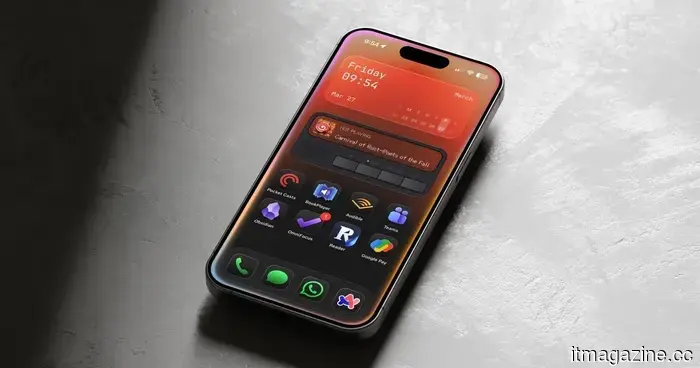
I observe that Apple is avoiding the AI turmoil and instead is focusing on making Siri a highly adaptable assistant.
When Apple unveiled Siri in 2011, it generated a tremendous buzz. The concept of a personal assistant on a phone capable of engaging in conversation left the audience in awe and raised concerns. CNN's report suggested fears of it being a potentially harmful, alien-like AI that could threaten humanity. At that time, it was an unparalleled innovation that Apple consistently delivered.
However, over time, Siri's reputation has waned. It is now viewed as, well… not particularly adept at assisting, especially when compared to emerging generative AI assistants like Claude, Gemini, and ChatGPT. Anyone who's tried to ask it a challenging question knows how frustrating it can be to interact with Siri and accomplish tasks. Nevertheless, changes may be on the horizon. Bloomberg’s Mark Gurman, a well-known Apple insider, revealed yesterday that Siri might soon allow integration with third-party AI tools in a significant iOS update. Indeed, Apple’s enclosed ecosystem may finally be opening up.
This development is quite remarkable. Siri could evolve from a restricted, self-sufficient assistant into a versatile AI hub capable of interacting with competing technologies. Imagine an Apple assistant that isn’t limited, one that can adapt, learn, and cooperate with a broader array of AI systems. Frankly, it’s hard to grasp the idea that Siri could soon rank among the most adaptable assistants available and perhaps finally stop eliciting eye-rolls.
If you can’t create it, unlock access to it
Rachit Agarwal / Digital Trends
The ability to pick up from where you left off on one device and effortlessly transition to another, whether it’s an iPhone or a MacBook, is fantastic. I appreciate being in Apple’s curated environment; it functions well. However, there are hints of change. Apple seems to be easing its grip, suggesting a future where Siri could finally operate beyond its walls.
AirDrop now works with Android devices. Chinese brands are making the Apple Watch compatible with their smartphones. Open-source enthusiasts are connecting AirPods to non-Apple devices. I’ve even been able to remotely access my Mac using an Oppo foldable phone. Siri might be next. Instead of being restricted to Apple’s clumsy in-house AI, Siri could utilize smarter third-party AI resources like ChatGPT, Google Gemini, or Claude.
ChatGPT excels at conversation, functioning as a rich knowledge base, doing research, and even handling some automated tasks linked to external services such as GrubHub. Gemini integrates deeply into Android and collaborates with Google’s core workspace tools like Gmail and Drive, as well as various third-party applications. It’s also adept at processing videos and images, shining in NotebookLM.
Meanwhile, Microsoft’s Copilot and Anthropic’s Claude are integrating impressive functionalities within Office 365. In its current form, Siri barely scratches the surface. Instead of trying to keep pace, Siri could simply leverage the intelligence of its competitors. The potential is enticing. Apple maintains the elegance of its ecosystem while allowing Siri the freedom to explore the broader AI landscape. It’s akin to inviting a maverick into a luxurious mansion, instantly making that mansion feel much larger.
Maintaining control
Unsplash
Even as Apple starts to open up its famously enclosed ecosystem, it shouldn't be seen as relinquishing control. This is still fundamentally Apple’s domain, just with a slightly expanded roster of participants. Every integration will likely undergo thorough scrutiny, filtering, and approval. True to Apple’s style, control doesn’t diminish; it just becomes more sophisticated.
The company will decide which AI services to incorporate, ensuring they align with its ecosystem. It resembles an exclusive gathering where Apple retains authority over the proceedings. Additionally, privacy concerns remain paramount. Allowing third-party AI access doesn’t equate to lowering security. Any external AI wishing to collaborate will have to adhere to Apple’s stringent privacy guidelines.
So, while the ecosystem may feel a bit more open now, Apple is still the keyholder, determining exactly how far anyone can venture. A prime example is Apple’s emphasis on on-device AI tasks and Private Cloud Compute. It functions as an AI server while upholding Apple’s rigorous privacy and security standards. Third parties won’t access your media submitted for AI processing, and your interactions won’t be exploited by advertisers for personalized applications.
My perspective
With WWDC 2026 approaching, the moment of change could be imminent. If Apple decides to proceed, we may finally witness these long-anticipated transformations come to life. However, let’s temper our enthusiasm; this is still Apple we’re discussing. It remains committed to its core principles: privacy, security, and a tightly managed user experience.
Yes, Siri’s openness to third-party AI represents a significant shift, and it truly is. But Apple isn't flinging open the doors without caution. There will be regulations, limitations, and a clear understanding of who is allowed in and how extensive their access will be.
For users, this could result in quicker responses and an assistant that genuinely


Other articles
 Grasping the Concept of Mind Mapping and Its Possible Advantages
We are currently in an information age, which leads to a continual absorption of narrative data throughout our personal and professional lives. This mental burden can clutter the mind, potentially reducing productivity and diverting attention. Digital mind mapping applications, like Miro, can help tackle this issue by providing structured, visual resources for organizing thoughts, overseeing tasks, and […]
Grasping the Concept of Mind Mapping and Its Possible Advantages
We are currently in an information age, which leads to a continual absorption of narrative data throughout our personal and professional lives. This mental burden can clutter the mind, potentially reducing productivity and diverting attention. Digital mind mapping applications, like Miro, can help tackle this issue by providing structured, visual resources for organizing thoughts, overseeing tasks, and […]
 I observe that Apple is avoiding the AI chaos, instead focusing on making Siri the most adaptable assistant.
The walls remain standing, but they have lost some of their height.
I observe that Apple is avoiding the AI chaos, instead focusing on making Siri the most adaptable assistant.
The walls remain standing, but they have lost some of their height.
 The Dynamic Island may reduce in size on the iPhone 18 series, and this change might apply to all models, not exclusively the Pro versions.
According to reports, Apple intends to introduce a more compact Dynamic Island across the entire iPhone 18 lineup; however, an atypical staggered launch schedule indicates that the overall situation is still uncertain.
The Dynamic Island may reduce in size on the iPhone 18 series, and this change might apply to all models, not exclusively the Pro versions.
According to reports, Apple intends to introduce a more compact Dynamic Island across the entire iPhone 18 lineup; however, an atypical staggered launch schedule indicates that the overall situation is still uncertain.
 Following the PS5 price increase, Xbox and Nintendo may be the next to raise their prices.
Following Sony's increase in PS5 prices, analysts caution that Xbox and Nintendo may also elevate their console prices owing to escalating component expenses and heightened demand driven by AI.
Following the PS5 price increase, Xbox and Nintendo may be the next to raise their prices.
Following Sony's increase in PS5 prices, analysts caution that Xbox and Nintendo may also elevate their console prices owing to escalating component expenses and heightened demand driven by AI.
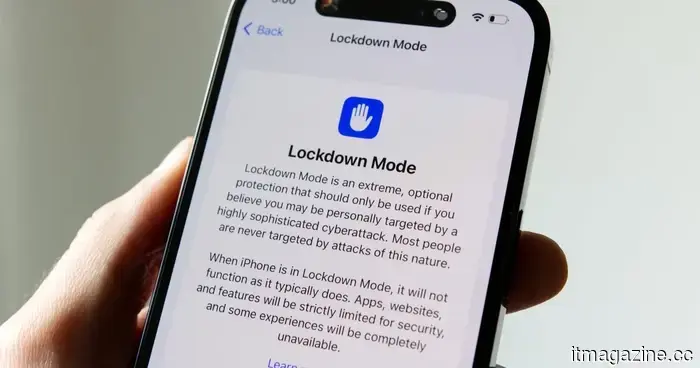 Apple claims that Lockdown Mode successfully defended against spyware attacks without leaving a trace.
Apple claims that it has not observed any successful spyware attacks on iPhones with Lockdown Mode activated, emphasizing that the feature reduces attack surfaces and prevents typical entry points utilized by sophisticated threats.
Apple claims that Lockdown Mode successfully defended against spyware attacks without leaving a trace.
Apple claims that it has not observed any successful spyware attacks on iPhones with Lockdown Mode activated, emphasizing that the feature reduces attack surfaces and prevents typical entry points utilized by sophisticated threats.
 Mowing Simplified: Enjoy savings of up to $300 with the Wire-free Lymow One Plus this Spring.
Lawn care no longer needs to feel like a tedious task. This Spring, with savings of up to $300, the Lymow One Plus is revolutionizing the experience. Designed for contemporary living, this wireless robotic mower ensures your yard stays perfectly groomed, giving homeowners the chance to relax and make the most of their outdoor areas.
Mowing Simplified: Enjoy savings of up to $300 with the Wire-free Lymow One Plus this Spring.
Lawn care no longer needs to feel like a tedious task. This Spring, with savings of up to $300, the Lymow One Plus is revolutionizing the experience. Designed for contemporary living, this wireless robotic mower ensures your yard stays perfectly groomed, giving homeowners the chance to relax and make the most of their outdoor areas.
I observe that Apple is avoiding the AI turmoil and instead is focusing on making Siri a highly adaptable assistant.
The walls remain, but they no longer stand as tall.