
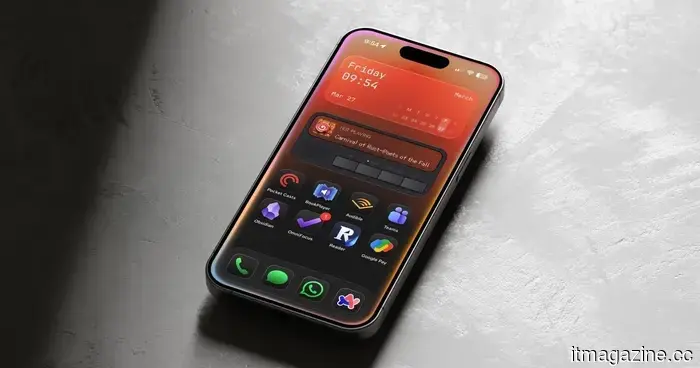
I observe that Apple is avoiding the AI chaos, instead focusing on making Siri the most adaptable assistant.
When Apple unveiled Siri in 2011, it caused quite a stir. A personal assistant on a smartphone with conversational abilities prompted gasps from the audience and a sense of apprehension. CNN noted the fears surrounding the prospect of a malicious, possibly alien AI that could threaten humanity. At that time, it was a remarkable innovation that Apple was known for delivering consistently.
However, interest waned. Today, Siri is often regarded as, well... not the most capable voice assistant, especially when compared to the next-gen generative AI assistants like Claude, Gemini, and ChatGPT. Anyone who's attempted to ask it a challenging question can attest to the frustration — talking to Siri can be tedious, making it difficult to get tasks done. Yet, there are signs of change. Bloomberg’s Mark Gurman, an insightful source on matters concerning Apple, revealed yesterday that Siri may soon integrate third-party AI tools in a significant update to iOS. This hints at the possibility of Apple’s traditionally enclosed ecosystem being opened up.
This development is quite remarkable. Siri may evolve from a limited, self-sufficient assistant into a versatile AI hub that can interact with rival technologies. Envision an Apple assistant that is no longer restricted, able to adapt, learn, and collaborate within a broader AI ecosystem. Honestly, it's hard to believe that Siri might soon become one of the most adaptable assistants available, and possibly stop eliciting eye-rolls.
If you can't create it, let others help
Rachit Agarwal / Digital Trends
The ability to seamlessly continue working across devices — from iPhones to MacBooks — is impressive. I enjoy being within Apple’s curated ecosystem; it functions efficiently. However, there are signs of change in the air. Apple seems to be easing its grip, suggesting a future where Siri might extend beyond its traditional confines.
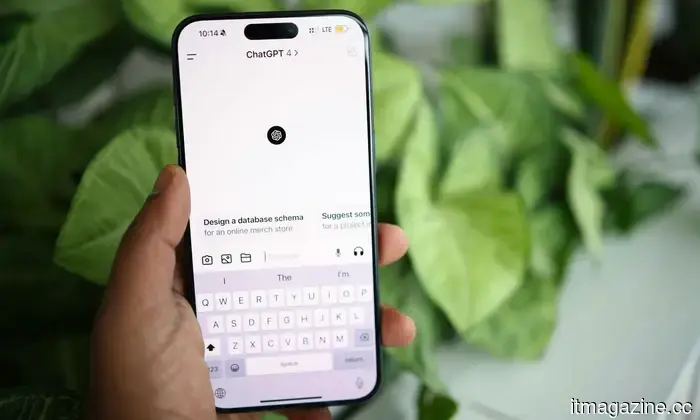
AirDrop now supports Android devices, while Chinese manufacturers are enabling their smartphones to work with the Apple Watch. Open-source enthusiasts are connecting AirPods to non-Apple hardware. I can even remotely access my Mac using an Oppo foldable phone. Siri could be next in this evolution. Rather than being limited to Apple’s own AI capabilities, it could leverage smarter third-party AI systems like ChatGPT, Google Gemini, or Claude.
ChatGPT excels in conversations, providing a wealth of knowledge, research, and some autonomous tasks with external services, like ordering food from GrubHub. Gemini integrates deeply with Android and offers functionality across Google’s essential tools such as Gmail and Drive, even supporting third-party applications. It also performs well with videos and images, especially with NotebookLM.
Microsoft’s Copilot and Anthropic’s Claude bring impressive features to Office 365. In its current form, Siri barely makes a dent. Instead of racing to catch up — something it has struggled with — Siri could simply adopt insights from its competitors. The implications are exciting. Apple could maintain the elegance of its ecosystem while allowing Siri to explore the expansive AI landscape. It’s akin to welcoming a rebel into a luxury mansion, instantly making it feel much larger.
Retaining control
Unsplash
Even as Apple begins to loosen the gates of its well-known walled garden, that shouldn't be interpreted as relinquishing control. This is still decidedly Apple’s domain, albeit with a somewhat expanded guest list. Every integration will likely undergo thorough scrutiny and approval. True to Apple’s style, control remains — it just becomes more nuanced.
The company will selectively allow which AI services enter, ensuring they align with its ecosystem. It feels more like an exclusive gathering where Apple still governs the proceedings. Moreover, there's the issue of privacy. Just because the door is opening doesn’t mean the guard is relaxing. Any external AI looking to collaborate must adhere to Apple’s strict privacy regulations.
So while the garden may seem a bit more open now, Apple is still the one holding the keys and determining how far anyone can go. A prime example of this is Apple's focus on on-device AI tasks and Private Cloud Compute. This acts like an AI server but operates under Apple’s stringent privacy and security guidelines. No third-party will have access to your media sent for AI processing, and your interactions won’t be shared with sellers for personalized apps.
My perspective
With WWDC 2026 approaching, we may soon witness these long-anticipated changes come to life. However, let’s not get overly optimistic; this is still Apple we’re discussing. The company doesn’t waver on its core principles of privacy, security, and a tightly controlled user experience.
Yes, Siri collaborating with third-party AI does signal a substantial shift, and it is. But Apple isn’t flinging the doors wide open and hoping for the best. There will be rules, limitations, and a clear understanding of who is granted access and to what extent.
For users, this could mean quicker responses and an assistant that genuinely feels intelligent. For Apple, though, it represents a more significant strategy. It’s a calculated decision that emphasizes that controlling the

Other articles
 Sony is stopping the sale of memory cards, and AI is to blame for this decision.
Sony has suspended the majority of its memory card sales as a result of a worldwide memory shortage, which has been partially fueled by demand from AI, impacting both CFexpress and SD cards.
Sony is stopping the sale of memory cards, and AI is to blame for this decision.
Sony has suspended the majority of its memory card sales as a result of a worldwide memory shortage, which has been partially fueled by demand from AI, impacting both CFexpress and SD cards.
 Tests of the M5 MacBook Pro indicate that Apple is nearing a solution for its biggest flaw.
Recent tests indicate that the M5 MacBook Pro is capable of running AAA Windows games smoothly through emulation, marking significant advancement in Apple's gaming capabilities.
Tests of the M5 MacBook Pro indicate that Apple is nearing a solution for its biggest flaw.
Recent tests indicate that the M5 MacBook Pro is capable of running AAA Windows games smoothly through emulation, marking significant advancement in Apple's gaming capabilities.
 CrunchyRoll anime is now available on Apple TV.
Crunchyroll is now offered as a channel on Apple TV, allowing you to stream anime directly within the Apple TV app. However, current subscriptions cannot be linked and a new sign-up is necessary.
CrunchyRoll anime is now available on Apple TV.
Crunchyroll is now offered as a channel on Apple TV, allowing you to stream anime directly within the Apple TV app. However, current subscriptions cannot be linked and a new sign-up is necessary.
 Mowing Simplified: Enjoy savings of up to $300 with the Wire-free Lymow One Plus this Spring.
Lawn care no longer needs to feel like a tedious task. This Spring, with savings of up to $300, the Lymow One Plus is revolutionizing the experience. Designed for contemporary living, this wireless robotic mower ensures your yard stays perfectly groomed, giving homeowners the chance to relax and make the most of their outdoor areas.
Mowing Simplified: Enjoy savings of up to $300 with the Wire-free Lymow One Plus this Spring.
Lawn care no longer needs to feel like a tedious task. This Spring, with savings of up to $300, the Lymow One Plus is revolutionizing the experience. Designed for contemporary living, this wireless robotic mower ensures your yard stays perfectly groomed, giving homeowners the chance to relax and make the most of their outdoor areas.
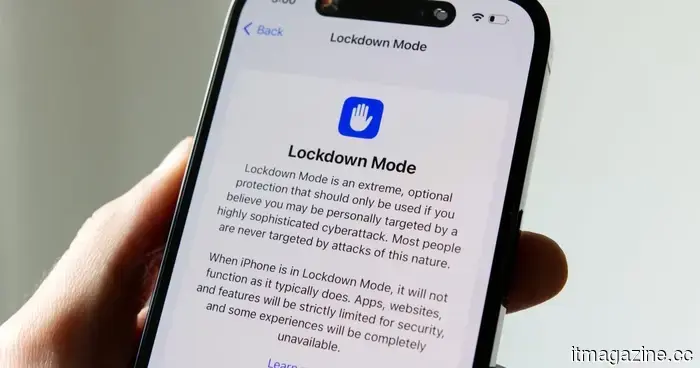 Apple reports that Lockdown Mode successfully prevented spyware attacks without any issues.
Apple states that it has not encountered any successful spyware attacks on iPhones that have Lockdown Mode activated, emphasizing how the feature reduces attack surfaces and prevents commonly exploited entry points used by sophisticated threats.
Apple reports that Lockdown Mode successfully prevented spyware attacks without any issues.
Apple states that it has not encountered any successful spyware attacks on iPhones that have Lockdown Mode activated, emphasizing how the feature reduces attack surfaces and prevents commonly exploited entry points used by sophisticated threats.
 GDC 2026: How Samsung and International Game Studios Are Transforming the Gaming Experience
At GDC 2026, Samsung showcased how Odyssey 3D and HDR10+ GAMING are revolutionizing the gaming experience. By collaborating with international studios, the company is expanding its 3D library to over 120 titles, providing an immersive experience without the need for glasses.
GDC 2026: How Samsung and International Game Studios Are Transforming the Gaming Experience
At GDC 2026, Samsung showcased how Odyssey 3D and HDR10+ GAMING are revolutionizing the gaming experience. By collaborating with international studios, the company is expanding its 3D library to over 120 titles, providing an immersive experience without the need for glasses.
I observe that Apple is avoiding the AI chaos, instead focusing on making Siri the most adaptable assistant.
The walls remain standing, but they have lost some of their height.