
Dating Apps Are Transitioning from Swiping to AI Assistants
Online dating applications have historically been characterized by "the swipe," yet as the online environment changes, users are seeking more from their dating platforms. People are growing increasingly dissatisfied with merely scrolling and swiping through potential matches, as this process is often perceived as repetitive and gamified, lacking in meaningfulness. Due to the low stakes involved, some users find themselves less committed to the experience, which contributes to typical frustrations such as ghosting and halted conversations.
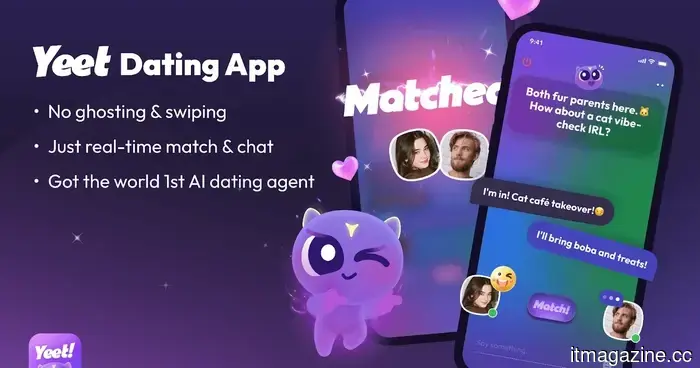
In response to this cultural shift, dating apps are transitioning into a post-swipe era, with certain platforms starting to implement AI agents that play a more proactive role in guiding interactions, such as Yeeta, created by the dating app Yeet.
As stated by the Yeet team, “the issue isn’t that people cannot communicate. The challenge is that swipe-based dating frequently leads to low-commitment or brief interactions that never fully develop. When it’s easy to start conversations and just as easy to abandon them, and with ghosting being prevalent, users often express fatigue over time.”
The Advancement of AI in Dating
While swiping left or right may have once seemed efficient, numerous users now perceive it as an exhausting and ultimately fruitless task. They feel drained from scrolling through countless profiles, initiating conversations that quickly fade, and experiencing a lack of emotional investment from others.
To address this, many dating apps have incorporated artificial intelligence (AI) to enhance user profiles by improving photos, suggesting engaging openers, and making bios more appealing. However, simply updating profiles does not resolve the challenge of fostering meaningful interactions among users on these platforms.
Some dating apps are leveraging AI to assist users in reaching out to those they wish to connect with by proposing opening messages and conversation prompts. This marks a shift from focusing on presentation to prioritizing genuine connections.
The Shift Toward AI-Mediated Interaction
The dating app Yeet has launched Yeeta, an AI agent that not only facilitates interactions but also participates in them. Yeeta interacts with users on the app to help facilitate social exchanges and alleviate social awkwardness or tension. It assists users before, during, and after live conversations but doesn’t speak on their behalf; instead, it provides helpful prompts.
These AI agents observe and react to ongoing conversations, analyzing emotional cues and offering guidance on how users are perceived. The AI aids in steering real-time interactions between users to minimize the chances of conversations going stale or resulting in ghosting.
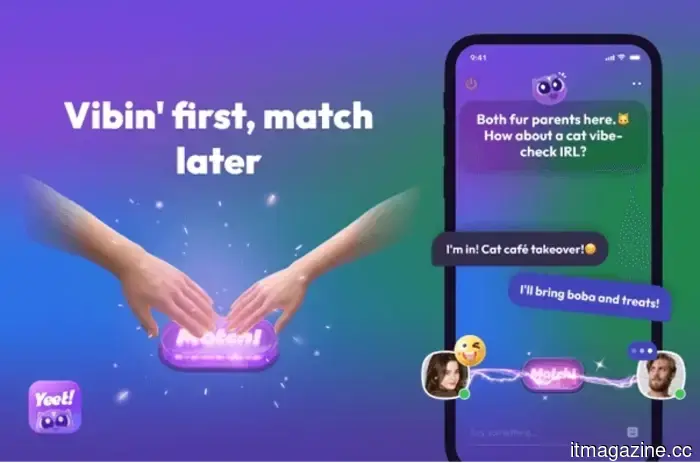
By eliminating the swiping process and fostering real-time matching and chatting, AI encourages users to meet in person before determining if there is chemistry.
Implications of This Shift for Dating
This interaction-first approach alters the way individuals connect through apps, placing a greater emphasis on communication rather than merely swiping through profiles. Historically, these apps have focused on selection through scrolling and swiping, but they are evolving to prioritize real-time interactions with the aim of fostering authentic connections among users.
The underlying idea of AI agents assisting in maintaining conversations is straightforward. By providing subtle prompts to keep users engaged in chats, individuals can navigate their initial awkwardness and discover whether there’s potential chemistry to explore further.
Digital Trends collaborates with external contributors, and all contributor content is reviewed by the Digital Trends editorial team.
Other articles
 tozero inaugurates the first industrial battery recycling facility in Europe.
tozero has inaugurated Europe’s first industrial battery recycling facility in Bavaria, marking the first large-scale production of recycled lithium and graphite.
tozero inaugurates the first industrial battery recycling facility in Europe.
tozero has inaugurated Europe’s first industrial battery recycling facility in Bavaria, marking the first large-scale production of recycled lithium and graphite.
 iOS 26.4 introduces ChatGPT to your car's infotainment display.
Apple's newest iPhone update subtly introduces the most thrilling enhancement to CarPlay in recent times, paving the way for hands-free AI discussions, personalized ambient playlists, and a long-awaited video feature that is almost ready for launch.
iOS 26.4 introduces ChatGPT to your car's infotainment display.
Apple's newest iPhone update subtly introduces the most thrilling enhancement to CarPlay in recent times, paving the way for hands-free AI discussions, personalized ambient playlists, and a long-awaited video feature that is almost ready for launch.
 tozero inaugurates the first industrial battery recycling facility in Europe.
tozero has inaugurated Europe's inaugural industrial battery recycling facility in Bavaria, enabling the large-scale production of recycled lithium and graphite for the first time.
tozero inaugurates the first industrial battery recycling facility in Europe.
tozero has inaugurated Europe's inaugural industrial battery recycling facility in Bavaria, enabling the large-scale production of recycled lithium and graphite for the first time.
 Tozero has inaugurated Europe’s first facility dedicated to industrial battery recycling.
Tozero has inaugurated Europe's inaugural industrial battery recycling facility in Bavaria, marking the first large-scale production of recycled lithium and graphite.
Tozero has inaugurated Europe’s first facility dedicated to industrial battery recycling.
Tozero has inaugurated Europe's inaugural industrial battery recycling facility in Bavaria, marking the first large-scale production of recycled lithium and graphite.
 iPhone users can now access live translation on their headphones via Google Translate.
Google is introducing its live translation feature to iOS, transforming your headphones into a real-time translator that enables you to engage in conversations naturally without the need to frequently look at your screen.
iPhone users can now access live translation on their headphones via Google Translate.
Google is introducing its live translation feature to iOS, transforming your headphones into a real-time translator that enables you to engage in conversations naturally without the need to frequently look at your screen.
 iPhone users can now experience live translation on their headphones using Google Translate.
Google is introducing its live translation feature for iOS, allowing your headphones to serve as a real-time translator that enables you to engage in conversations naturally without the need to frequently check your screen.
iPhone users can now experience live translation on their headphones using Google Translate.
Google is introducing its live translation feature for iOS, allowing your headphones to serve as a real-time translator that enables you to engage in conversations naturally without the need to frequently check your screen.
Dating Apps Are Transitioning from Swiping to AI Assistants
Online dating applications have traditionally been characterized by “the swipe,” but as the digital environment changes, users are seeking more from these platforms. People are no longer content with merely scrolling and swiping through potential matches. This process is increasingly viewed as monotonous and game-like, lacking a sense of significance for users. Due to the minimal stakes involved, some […]