

The OpenAI Foundation intends to allocate a minimum of $1 billion this year.
The nonprofit overseeing OpenAI has identified four key program areas: Alzheimer’s, job creation, AI resilience, and community initiatives, and has appointed two senior leaders to manage the most substantial of these areas. The contrast between its charitable past and its new objectives stands out as the most notable point in their announcement.
After shifting its operational functions to a for-profit subsidiary in 2019, OpenAI's nonprofit branch effectively ceased its grantmaking activities. IRS tax filings illustrate this starkly: the nonprofit incurred $51 million in expenses in 2018, the year prior to the for-profit’s formation, and only $3.3 million in 2019.
In its most recent IRS report for 2024, OpenAI's nonprofit reported receiving contributions of $4,433 and distributing $7.6 million in grants. The announcement from the OpenAI Foundation, which has been rebranded as the nonprofit managing the organization, represents a significant shift: the Foundation is pledging to invest at least $1 billion over the coming year across the four program areas.
This $1 billion is presented as part of the initial funding of the $25 billion commitment the Foundation unveiled last October, coinciding with OpenAI’s recapitalization. This corporate restructuring transformed its for-profit segment into a public benefit corporation, OpenAI Group PBC, while retaining ultimate control within the nonprofit.
The recapitalization valued OpenAI’s for-profit division at approximately $130 billion, granting the Foundation an equity stake that, according to their initial announcement, positions it among the most well-funded philanthropic organizations globally. Board chair Bret Taylor is providing this update, detailing the distribution of these resources.
The four focus areas include life sciences and disease cures, jobs and economic effects, AI resilience, and community programs. Among these, the life sciences initiative is the most advanced, featuring three specific sub-areas: AI applications for Alzheimer’s (which include mapping disease pathways, identifying biomarkers, and speeding up personalized treatments); public health data (developing and making scientific datasets available); and enhancing efforts on high-mortality, underfunded diseases.
Jacob Trefethen, previously of Coefficient Giving, which is aligned with the effective altruism movement and has had differing views from OpenAI on AI development priorities, has been appointed to lead this initiative. Under Trefethen, Coefficient Giving managed over $500 million in grants focused on science and health.
It is noteworthy that the effective altruism community, prominent in discussions around catastrophic AI risks, is now assisting OpenAI in allocating its philanthropic funds.
For AI resilience, which the Foundation describes as the potential harms arising from more advanced AI, OpenAI co-founder Wojciech Zaremba has stepped in as Head of AI Resilience. Zaremba is among the few original co-founders from OpenAI still actively with the organization. The initial aims of this program will center on AI's effects on children and youth, with the Foundation intending to soon announce the final round of grants from its People-First AI Fund. Regarding jobs and economic impact, the Foundation has started engaging with civil society groups, small business owners, unions, and economists, though specific programs have not yet been detailed in this announcement.
Two additional appointments are rounding out the Foundation’s leadership structure. Anna Makanju will join in mid-April as Head of AI for Civil Society and Philanthropy, where she will focus on utilizing AI to assist nonprofits, NGOs, and philanthropic organizations. The search for an Executive Director, who will serve as the senior operational leader for the Foundation’s grantmaking efforts, is still ongoing. The transformation taking place within the Foundation—from being a $7.6 million grantmaker in 2024 to aiming for a $1 billion-per-year philanthropic entity by 2026—represents a structural change as significant as the corporate reforms that made it feasible.
Other articles
 This new Android flagship competitor is taking zoom capabilities beyond those of Apple and Samsung.
The forthcoming Oppo Find X9 Ultra will include a new 10x optical zoom camera equipped with a revamped periscope system, with the goal of advancing smartphone photography.
This new Android flagship competitor is taking zoom capabilities beyond those of Apple and Samsung.
The forthcoming Oppo Find X9 Ultra will include a new 10x optical zoom camera equipped with a revamped periscope system, with the goal of advancing smartphone photography.
 The OpenAI Foundation intends to allocate a minimum of $1 billion this year.
The OpenAI Foundation is dedicating $1 billion this year to research on Alzheimer’s, job creation, AI resilience, and community grants.
The OpenAI Foundation intends to allocate a minimum of $1 billion this year.
The OpenAI Foundation is dedicating $1 billion this year to research on Alzheimer’s, job creation, AI resilience, and community grants.
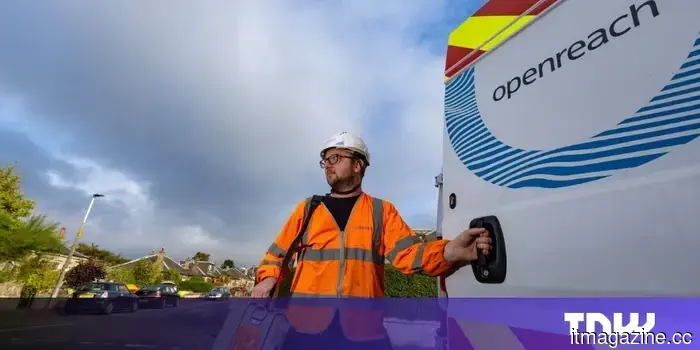 Openreach enhances partnership with Google Cloud AI.
Openreach is leveraging Google Cloud's AI to direct its full-fibre rollout to 25 million households across the UK, expedite the electrification of its fleet of 24,000 vans, and reduce code migration time by 50%.
Openreach enhances partnership with Google Cloud AI.
Openreach is leveraging Google Cloud's AI to direct its full-fibre rollout to 25 million households across the UK, expedite the electrification of its fleet of 24,000 vans, and reduce code migration time by 50%.
 Amazon purchases Fauna Robotics.
Amazon has purchased Fauna Robotics, the creator of Sprout, a 3.5-foot tall, 50-pound humanoid designed for residential and research environments.
Amazon purchases Fauna Robotics.
Amazon has purchased Fauna Robotics, the creator of Sprout, a 3.5-foot tall, 50-pound humanoid designed for residential and research environments.
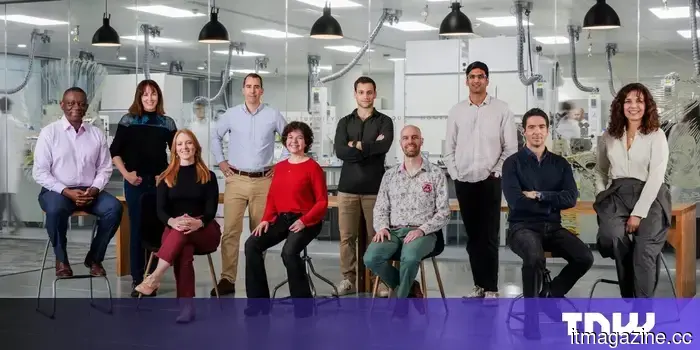 Epoch Biodesign secures $12 million in funding.
Epoch Biodesign has secured $12 million to expand its enzymatic nylon recycling method with the aim of establishing a 20,000-ton commercial facility by 2028.
Epoch Biodesign secures $12 million in funding.
Epoch Biodesign has secured $12 million to expand its enzymatic nylon recycling method with the aim of establishing a 20,000-ton commercial facility by 2028.
 Amazon purchases Fauna Robotics.
Amazon has purchased Fauna Robotics, the company behind Sprout, a 3.5-foot tall, 50-pound humanoid intended for residential and research environments.
Amazon purchases Fauna Robotics.
Amazon has purchased Fauna Robotics, the company behind Sprout, a 3.5-foot tall, 50-pound humanoid intended for residential and research environments.
The OpenAI Foundation intends to allocate a minimum of $1 billion this year.
The OpenAI Foundation is dedicating $1 billion this year to research on Alzheimer's, job creation, AI resilience, and community grants.