

The Gemini avatar allows you to be featured in AI content without the need to film yourself.
Gemini avatar features may soon allow you to incorporate a digital version of yourself into AI-generated images and videos without needing to use your camera. A recent build of a Google app indicates the presence of tools that can scan your face and convert it into a reusable 3D model within Gemini, as highlighted in an APK analysis by Android Authority.
This idea builds on the previous Likeness system from Android XR, which created a realistic substitute for video calls. Now, it's extending beyond headsets. The same concept is emerging within Gemini, with indications that it could function on both phones and desktop browsers.
Instead of capturing a new selfie each time, you would create a lasting version of yourself that you can reuse across various outputs. This change enhances speed and helps maintain a consistent appearance when frequently generating content.
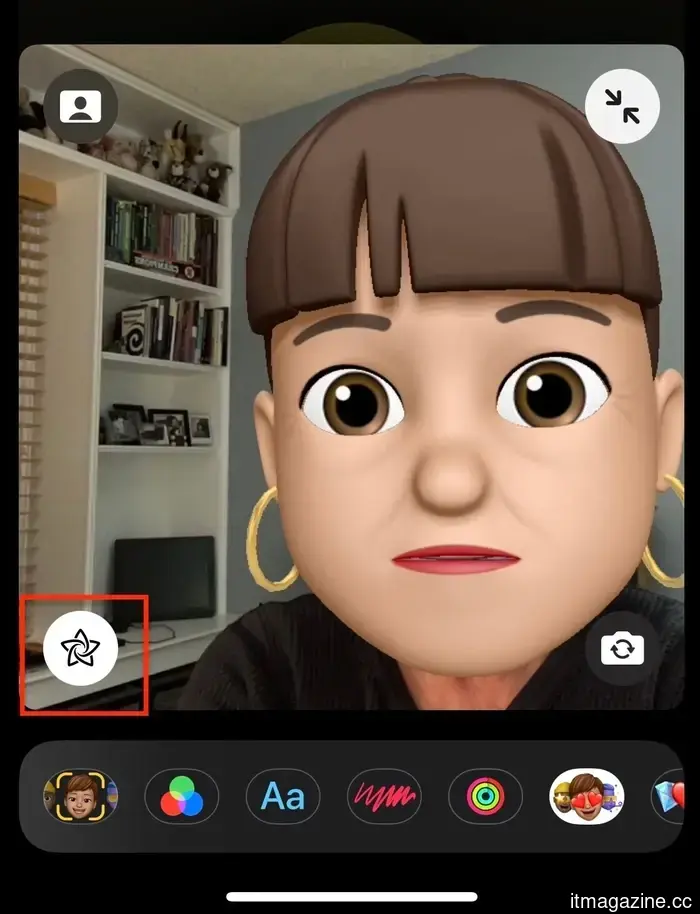
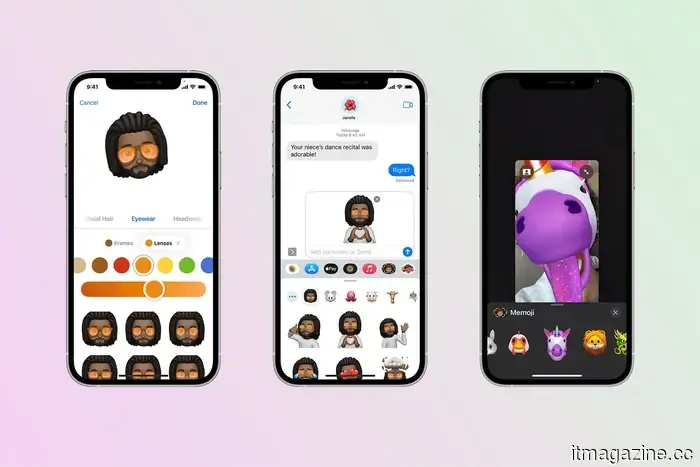
Apple already provides Memoji, a stylized representation of you for messages and FaceTime. Google’s version appears more rooted in realism and is intended to integrate directly with generative tools, rather than solely serving as a communication feature.
How the Gemini avatar operates
The system seems to depend on a simple capture process. You record a brief video of your face, and the application transforms it into a 3D model. This follows the same core concept as Likeness, but without the need for a headset.
On-screen instructions assist you in framing your face and capturing sufficient detail. Once finished, the model is stored in your account and linked to your identity across Gemini functionalities.
An interesting aspect is how the setup operates. The creation process appears to be web-based, implying that you might not be restricted to your mobile device. A desktop version would simplify the process and highlight its intended compatibility across devices.
More than Apple’s Memoji
Memoji emphasizes expression and simplicity, using a cartoon-style approach that suits messaging and video calls. In contrast, Google’s method targets a more realistic outcome that integrates smoothly into generated visuals.
Instead of transmitting an animated face, you could embed a lifelike representation of yourself into AI-generated scenes. The build suggests prompts that allow for direct insertion into content, indicating deeper integration with Gemini’s creative tools.
This alters how you create. Rather than needing to capture fresh images each time, you work with a reusable asset that can be placed into different contexts.
However, there is a tradeoff – a more realistic scan brings up concerns regarding accuracy and privacy, and Google has not provided specifics on how these issues will be addressed.
What to expect moving forward
The feature is still under development and has not yet been released in a functional form. It originates from an app teardown, so the final product may vary or may not launch at all.
Nonetheless, the direction is becoming clearer. The transition from earlier names like Character to Avatar signifies a broader identity system associated with Gemini. Along with cross-device support, this appears to be more than just an XR experiment.
If it is launched, it will likely debut in Gemini’s creative tools, where the ability to quickly incorporate yourself into visuals would offer significant value. There is currently no timeline or confirmed availability, so for now, this serves as an early glimpse into the future of Google’s AI tools.
Other articles
 Pagaya completes $450 million auto resecuritization, marking a first in AI-driven lending.
Israeli fintech Pagaya has completed its first auto resecuritization, raising $450 million by refinancing loan portfolios selected by AI, marking a new phase for algorithmic lending.
Pagaya completes $450 million auto resecuritization, marking a first in AI-driven lending.
Israeli fintech Pagaya has completed its first auto resecuritization, raising $450 million by refinancing loan portfolios selected by AI, marking a new phase for algorithmic lending.
 Playing with AI: My Sweet 16 remains quite delightful.
(NOTE: This article is a segment of a continuous series that tracks an experiment using AI to complete the NCAA brackets and evaluate its performance against years of human expertise. The initial article reads as follows.) Following the first two rounds, I am leading both in my friends' pool, which has sixty entries, and my […]
Playing with AI: My Sweet 16 remains quite delightful.
(NOTE: This article is a segment of a continuous series that tracks an experiment using AI to complete the NCAA brackets and evaluate its performance against years of human expertise. The initial article reads as follows.) Following the first two rounds, I am leading both in my friends' pool, which has sixty entries, and my […]
 Claude can now manage tasks on your PC independently without the complicated OpenClaw setup.
Claude is now able to operate your computer for you, clicking, scrolling, and navigating applications to accomplish tasks while you attend to other matters. There’s no need for a complex setup.
Claude can now manage tasks on your PC independently without the complicated OpenClaw setup.
Claude is now able to operate your computer for you, clicking, scrolling, and navigating applications to accomplish tasks while you attend to other matters. There’s no need for a complex setup.
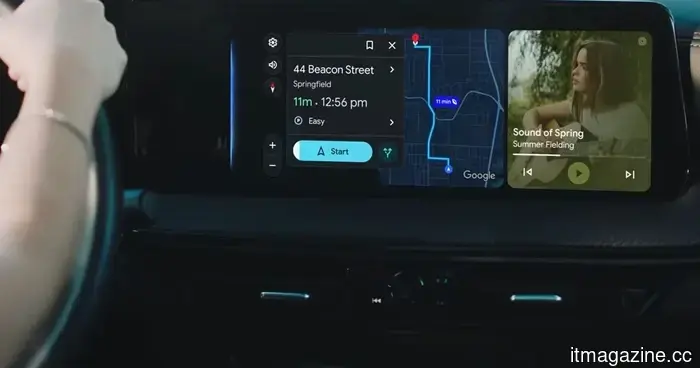 Users of Pixel and Samsung devices are facing connection problems with Android Auto.
Connection problems with Android Auto are affecting Pixel and Samsung users, with numerous reports of unreliable or failed connections. A recent update or a feature in Android 16 might be the cause, but a solution has not been provided yet.
Users of Pixel and Samsung devices are facing connection problems with Android Auto.
Connection problems with Android Auto are affecting Pixel and Samsung users, with numerous reports of unreliable or failed connections. A recent update or a feature in Android 16 might be the cause, but a solution has not been provided yet.
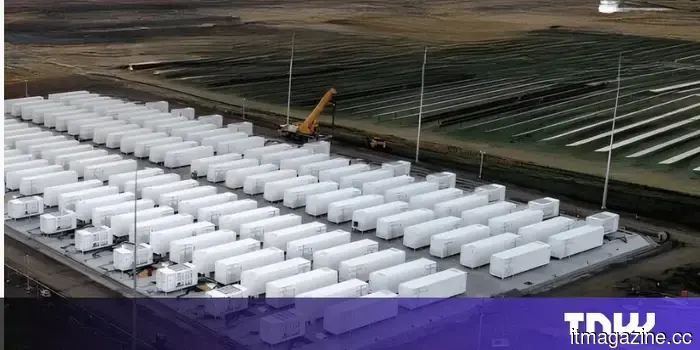 Energy Vault purchases a 175 MW battery storage project located near Dallas.
Energy Vault acquired a 175 MW battery storage project located in ERCOT North from Belltown Power, furthering its 1,500 MW deployment strategy and AI infrastructure.
Energy Vault purchases a 175 MW battery storage project located near Dallas.
Energy Vault acquired a 175 MW battery storage project located in ERCOT North from Belltown Power, furthering its 1,500 MW deployment strategy and AI infrastructure.
 Claude is now capable of managing tasks on your PC independently, without the need for a complicated OpenClaw setup.
Claude can now operate your computer for you, clicking, scrolling, and navigating applications to accomplish tasks while you attend to other matters. There's no need for any complicated setup.
Claude is now capable of managing tasks on your PC independently, without the need for a complicated OpenClaw setup.
Claude can now operate your computer for you, clicking, scrolling, and navigating applications to accomplish tasks while you attend to other matters. There's no need for any complicated setup.
The Gemini avatar allows you to be featured in AI content without the need to film yourself.
Google might soon enable users to create a reusable 3D avatar within Gemini, which would allow individuals to insert themselves into AI-generated images and videos without the need for frequent selfies. This indicates a move towards quicker and more uniform content creation.