

Granola secures $125 million in funding at a valuation of $1.5 billion to transform meetings into enterprise AI insights | TNW
Granola, the AI meeting app based in London that records discussions without introducing a bot into the call, has secured $125 million in a Series C financing round led by Danny Rimer from Index Ventures, with additional participation from Mamoon Hamid at Kleiner Perkins. This funding round values Granola at $1.5 billion, a significant jump from its $250 million valuation less than a year ago, bringing the total funding to $192 million. Existing backers, including Lightspeed Venture Partners, Spark Capital, and NFDG—managed by Nat Friedman and Daniel Gross—also contributed. Rimer will take a position as an observer on Granola’s board.
The increase in valuation is remarkable, even amidst the current surge in AI funding. In May 2025, Granola raised a $43 million Series B from NFDG at a $250 million valuation. Prior to that, the company secured a $20 million Series A in October 2024 with only 5,000 weekly users, followed by a $4.25 million seed round from Lightspeed and betaworks in May 2023. The speed at which it has progressed from seed funding to unicorn status in less than three years is notably rapid, although it isn’t entirely without precedent in this market cycle.
Granola's functionality is straightforward yet appealing. The app operates on a user's computer, recording audio from meetings locally, rather than deploying an obvious bot into the conversation. It transcribes discussions, creates structured notes, and makes these notes searchable for the organization. This approach is significant as many professionals, particularly those in sales, legal, and executive areas, find meeting bots to be intrusive. Granola’s value proposition is that it gathers the same information without the associated social discomfort.
Founded in 2023 by Chris Pedregal and Sam Stephenson, Granola has broadened its focus beyond note-taking. Granola Chat allows users to query their conversation histories utilizing AI models like Claude, GPT, or Gemini. Spaces enables teams to organize, share, and search contextual notes across different meetings and channels. Earlier this year, Granola introduced a Model Context Protocol server along with two new APIs—one personal and one enterprise-level—that facilitate the integration of meeting context into external AI workflows.
Pedregal is particularly banking on the latter feature as key to the company’s future. With AI meeting notes becoming increasingly commonplace, as seen with offerings from Otter.ai, Fireflies.ai, Read AI, and Quill, Granola argues that the true value lies not in the notes themselves but in making the insights from conversations accessible to other systems. The reasoning is that if an AI agent can extract context from every meeting a team has ever had, it can enhance decision-making capabilities moving forward.
The funding will primarily be used to support expansion into the enterprise market. Granola's clientele includes Vanta, Gusto, Thumbtack, Asana, Cursor, Lovable, Decagon, and Mistral AI, covering a range that includes compliance, fintech, home services, project management, developer tools, and AI. The enterprise API encompasses SSO, SCIM, and consent-based data management, essential infrastructure needed by large organizations before adopting any tool that records employee conversations.
The competitive landscape is dense and fast-evolving. Fireflies.ai boasts over 16 million users and a valuation of $1 billion. Otter.ai has established itself since 2016 with strong brand recognition. Glean and Mem.ai tackle similar issues from the perspective of enterprise knowledge management. Additionally, established companies like Notion, Microsoft, and Google are integrating AI meeting functionalities into their existing productivity platforms.
Granola’s potential advantage lies in its early entry at the intersection of meeting intelligence and agentic AI. The MCP server, APIs, and LLM integrations position it as a context layer rather than a standalone application, allowing it to be queried by other AI tools instead of competing directly. The key question for the next two years will be whether this positioning can withstand competition from Microsoft Copilot and Google Gemini at an enterprise scale.
The valuation issue raises eyebrows, as $1.5 billion for a company previously valued at $250 million just ten months ago warrants investigation. Granola has not publicly shared revenue figures, user statistics, or retention rates. The market for AI meeting assistants is projected to grow from approximately $3.5 billion in 2025 to over $34 billion by 2035, according to Market Research Future, indicating potential for multiple large players in the sector. However, the disparity between market potential and actual demonstrated revenue remains considerable across the industry.
Granola does possess product-market fit within a specific niche: professionals seeking AI-driven meeting intelligence without the intrusion of a visible bot. This niche has proven substantial enough to attract the attention of Index Ventures and Kleiner Perkins, both of whom typically don’t pursue early-stage hype. The viability of justifying a $1.5 billion valuation will depend on how
Other articles
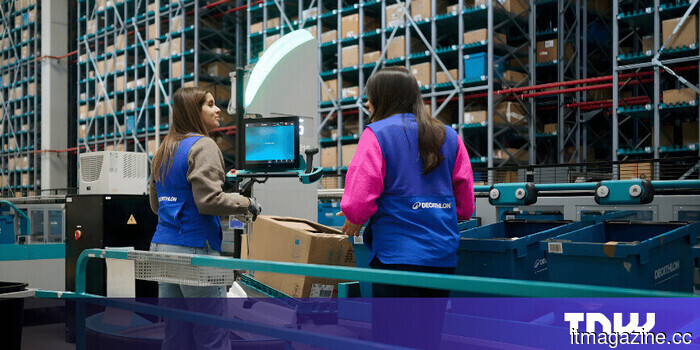 Decathlon increases warehouse productivity by two times with Exotec robots at seven locations in Europe | TNW
Decathlon has automated seven of its European warehouses using Exotec's Skypod robots, resulting in a doubling of order output in Portugal and a 90% reduction in the walking distance for pickers.
Decathlon increases warehouse productivity by two times with Exotec robots at seven locations in Europe | TNW
Decathlon has automated seven of its European warehouses using Exotec's Skypod robots, resulting in a doubling of order output in Portugal and a 90% reduction in the walking distance for pickers.
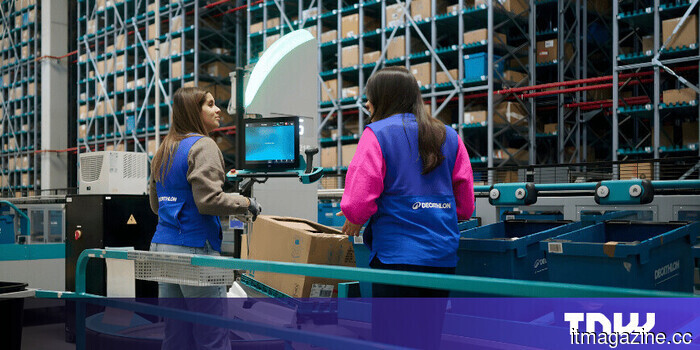 Decathlon increases warehouse productivity by two times using Exotec robots at seven locations in Europe | TNW
Decathlon has automated seven warehouses in Europe using Exotec's Skypod robots, which has resulted in a twofold increase in order output in Portugal and a 90% reduction in picker walking.
Decathlon increases warehouse productivity by two times using Exotec robots at seven locations in Europe | TNW
Decathlon has automated seven warehouses in Europe using Exotec's Skypod robots, which has resulted in a twofold increase in order output in Portugal and a 90% reduction in picker walking.
 OpenAI Sora is no longer available. The artists continue their efforts.
OpenAI's AI video application claimed to revolutionize creative tasks. However, six months after the introduction of Sora 2, it struggled to retain users.
OpenAI Sora is no longer available. The artists continue their efforts.
OpenAI's AI video application claimed to revolutionize creative tasks. However, six months after the introduction of Sora 2, it struggled to retain users.
 Pepper acquires Alima, a startup supported by Y Combinator, to integrate AI into food distribution catalogs | TNW
Pepper obtained Alima, which is backed by Y Combinator, enhancing its food distribution platform, funded at $99M, with AI product content and expertise in Latin America.
Pepper acquires Alima, a startup supported by Y Combinator, to integrate AI into food distribution catalogs | TNW
Pepper obtained Alima, which is backed by Y Combinator, enhancing its food distribution platform, funded at $99M, with AI product content and expertise in Latin America.
 The Samsung Galaxy S26 Ultra is amazing, but issues arise when it requires repair.
iFixit's teardown of the Galaxy S26 Ultra showed a combination of results: a surprisingly straightforward battery swap, a frustratingly difficult screen replacement, and a replacement parts system that is almost comically inadequate.
The Samsung Galaxy S26 Ultra is amazing, but issues arise when it requires repair.
iFixit's teardown of the Galaxy S26 Ultra showed a combination of results: a surprisingly straightforward battery swap, a frustratingly difficult screen replacement, and a replacement parts system that is almost comically inadequate.
 Meta reduces its workforce by hundreds in Reality Labs, recruiting, and sales as it invests $135 billion in AI | TNW
On Wednesday, Meta eliminated hundreds of positions within Reality Labs, Facebook, recruiting, and sales, marking the most recent in a ongoing series of layoffs as AI capital expenditure approaches $135 billion.
Meta reduces its workforce by hundreds in Reality Labs, recruiting, and sales as it invests $135 billion in AI | TNW
On Wednesday, Meta eliminated hundreds of positions within Reality Labs, Facebook, recruiting, and sales, marking the most recent in a ongoing series of layoffs as AI capital expenditure approaches $135 billion.
Granola secures $125 million in funding at a valuation of $1.5 billion to transform meetings into enterprise AI insights | TNW
The London-based AI meeting application Granola secured $125 million in Series C funding, achieving a valuation of $1.5 billion. The funding round was led by Index Ventures and Kleiner Perkins.