

NeuReality names former Google AI director as an advisor.
During his address to 30,000 attendees at GTC last week, Jensen Huang described the future data center as a "token factory," highlighting a vision that a small Israeli startup has quietly worked towards for months. NeuReality, the Caesarea-based firm behind the NR-NEXUS inference operating system, has announced the appointment of Shalini Agarwal, a product management director at Google Labs, as a strategic adviser to help guide NR-NEXUS's approach to enterprise customers, as stated in a press release on Monday.
This appointment represents a shift in the company’s ambitions, evolving from its initial focus on custom silicon for AI inference to software aimed at transforming fragmented GPU clusters into robust inference engines. Agarwal comes with nearly 20 years of experience in product strategy from major tech companies. At Google Labs, she led product management for AI-centric projects, and prior to that, she spent close to a decade at eBay, according to available professional records. She holds degrees in computer science, electrical engineering, and management science from MIT. While her role is advisory rather than operational, it adds a notable name from Silicon Valley alongside NeuReality’s current leadership, which includes co-founder and CEO Moshe Tanach and president Hiren Majmudar, a former GlobalFoundries and Intel Capital executive who joined the team in September 2024.
The timing of this announcement is intentional. On March 12, NeuReality launched NR-NEXUS, promoting it as a hardware-agnostic operating system for what the company refers to as AI factories. The platform separates prefill and decode tasks across diverse hardware, including GPUs, CPUs, and network interface cards, with the goal of maximizing productivity from costly accelerators that often remain underutilized. According to the company, beta customers are already utilizing the software, although NeuReality hasn't disclosed which organizations are participating in the program.
As inference economics have become a key focus in enterprise AI, Deloitte predicts that inference tasks represented half of all AI computing in 2025 and are expected to reach two-thirds this year. In response, hyperscalers are making substantial capital investments, with Amazon projecting $200 billion in spending in 2026, while Google has budgeted between $175 billion and $185 billion based on recent earnings reports. However, much of this investment is concentrated within a small number of vertically integrated systems, offering limited options for enterprises seeking to run inference across diverse hardware.
NeuReality aims to fill this gap. NR-NEXUS is designed to be compatible with any CPU, GPU, or NIC, including NVIDIA's upcoming Vera Rubin architecture, and targets three categories of buyers: neocloud providers, enterprises enhancing their own inference capabilities, and semiconductor manufacturers looking to implement a comprehensive software layer on top of their chips.
To date, the company has secured about $70 million in funding, beginning with a $35 million Series A round in late 2022, led by Samsung Ventures with participation from OurCrowd and SK Hynix. This was followed by a $20 million round in March 2024, funded primarily by the European Innovation Council Fund and existing investors. This backing from the EU positions NeuReality within a broader European initiative to develop independent AI infrastructure, although its engineering center remains in Israel.
Agarwal’s advisory role seems to focus on the go-to-market strategy rather than product development, acknowledging that creating an inference operating system is only part of the challenge. The other aspect is convincing infrastructure buyers, many of whom have established ties with NVIDIA's software ecosystem, that a startup's orchestration layer is worth the effort required for integration.
The success of NR-NEXUS in gaining traction will hinge on its execution in a marketplace that is seeing well-funded competitors emerge. Modal Labs is reportedly raising funds at a $2.5 billion valuation, Baseten recently announced a $300 million investment at a $5 billion valuation, and Fireworks AI secured $250 million. Each company approaches inference optimization with a different perspective, yet all are pursuing the same essential opportunity: as AI transitions from training to deployment, the entity that governs the inference layer stands to capture an increasing share of the value chain.
For NeuReality, bringing on an advisor with Google's product expertise may seem like a minor step on the surface, but in reality, it is a strategic move that suggests the next stage of AI infrastructure will be advantageous for companies that can connect silicon with the enterprises that need to implement models efficiently at scale, utilizing existing hardware.

Other articles
 Claude can now independently manage tasks on your PC without the need for a complicated OpenClaw configuration.
Claude is now able to operate your computer for you, clicking, scrolling, and navigating applications to accomplish tasks while you concentrate on other activities. There's no need for a complicated setup.
Claude can now independently manage tasks on your PC without the need for a complicated OpenClaw configuration.
Claude is now able to operate your computer for you, clicking, scrolling, and navigating applications to accomplish tasks while you concentrate on other activities. There's no need for a complicated setup.
 A leak regarding the Oura Ring 5 offers an early glimpse at its most significant updates.
A recent leak regarding the early Oura Ring 5 showcases an enhanced design, a new Deep Rose hue, and upgraded sensors, offering a glimpse of what to anticipate before its anticipated launch in late 2027.
A leak regarding the Oura Ring 5 offers an early glimpse at its most significant updates.
A recent leak regarding the early Oura Ring 5 showcases an enhanced design, a new Deep Rose hue, and upgraded sensors, offering a glimpse of what to anticipate before its anticipated launch in late 2027.
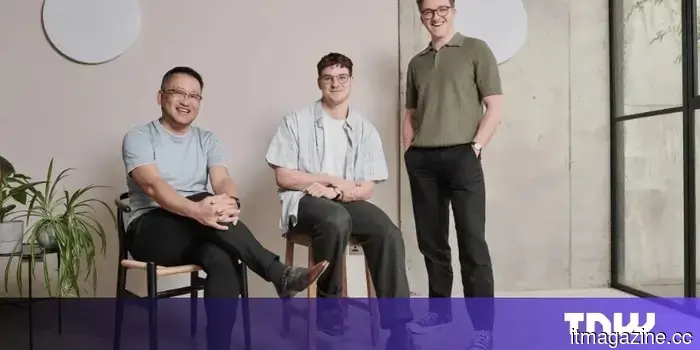 Zevero completes a $7 million second fundraising round.
Zevero has secured $7 million in funding, increasing its total funding to $14 million, as the London-based carbon management platform grows into the Asia-Pacific region and continental Europe.
Zevero completes a $7 million second fundraising round.
Zevero has secured $7 million in funding, increasing its total funding to $14 million, as the London-based carbon management platform grows into the Asia-Pacific region and continental Europe.
 The Gemini avatar allows you to be featured in AI content without the need to film yourself.
Google might soon enable users to create a reusable 3D avatar within Gemini, which would allow individuals to insert themselves into AI-generated images and videos without the need for frequent selfies. This indicates a move towards quicker and more uniform content creation.
The Gemini avatar allows you to be featured in AI content without the need to film yourself.
Google might soon enable users to create a reusable 3D avatar within Gemini, which would allow individuals to insert themselves into AI-generated images and videos without the need for frequent selfies. This indicates a move towards quicker and more uniform content creation.
 Pagaya completes $450 million auto resecuritization, marking a first in AI-driven lending.
Israeli fintech Pagaya has completed its first auto resecuritization, raising $450 million by refinancing loan portfolios selected by AI, marking a new phase for algorithmic lending.
Pagaya completes $450 million auto resecuritization, marking a first in AI-driven lending.
Israeli fintech Pagaya has completed its first auto resecuritization, raising $450 million by refinancing loan portfolios selected by AI, marking a new phase for algorithmic lending.
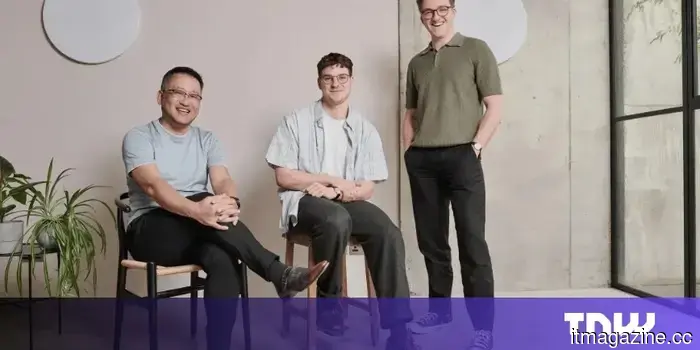 Zevero completes a second funding round, raising $7 million.
Zevero has secured $7M in funding, raising its total to $14M, as the London-based carbon management platform extends its operations into the Asia-Pacific region and continental Europe.
Zevero completes a second funding round, raising $7 million.
Zevero has secured $7M in funding, raising its total to $14M, as the London-based carbon management platform extends its operations into the Asia-Pacific region and continental Europe.
NeuReality names former Google AI director as an advisor.
Israeli AI startup NeuReality has appointed Shalini Agarwal, the product director at Google Labs, as a strategic advisor to enhance the enterprise adoption of its NR-NEXUS inference platform.