
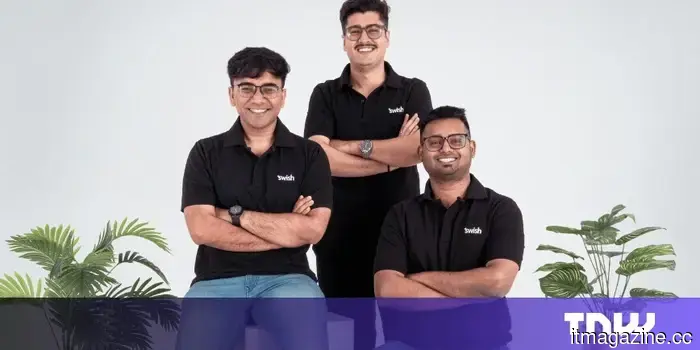
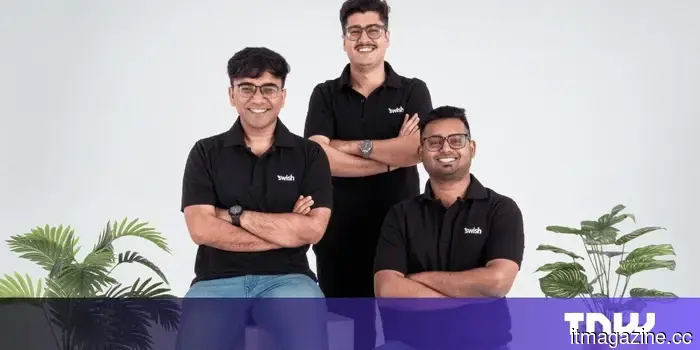
Foodtech company Swish secures $38 million in Series B funding, valuing the company at $139 million.
Bengaluru’s Swish has successfully raised $54 million over the past 18 months, assigning itself a valuation of $139 million, and is convinced that controlling the kitchen, technology, and last-mile delivery is essential for achieving scalable ultra-fast food delivery.
The timing is significant. Just before Swish revealed its $38 million Series B round, three of India’s biggest food and quick-commerce companies had discreetly stepped back from the 10-minute food delivery market they had attempted to dominate.
Swiggy terminated Snacc, its dedicated rapid-delivery app, within a year of its launch. Zomato halted Quick, its 15-minute delivery service, just four months after it began. Zepto closed about 200 of the 600 outlets it initially opened for Zepto Café during an internal restructuring. Amidst this retreat, Swish announced its successful $38 million raise and continues to move forward.
The funding round was led by Hara Global and Bain Capital Ventures, with ongoing support from Accel, one of Swish’s earliest institutional backers. Additionally, Alteria Capital and Stride Ventures contributed, providing venture debt along with equity.
This latest funding puts Swish's post-money valuation at $139 million, which is over double its $60 million valuation from its Series A in March 2025, and brings its total funding to $54 million through three rounds in 18 months. Aniket Shah, Ujjwal Sukheja, and Saran S. founded the company in 2024.
Swish claims that its success stems from a structural advantage. Unlike Swiggy, Zomato, and Zepto, which function as aggregators or marketplace platforms, taking commissions from partner restaurants and relying on third-party kitchens, Swish owns its kitchens, runs its own consumer app, employs its own delivery personnel, and operates within a roughly one-kilometer radius of each kitchen cluster. This eliminates third-party commissions, allowing Swish to reinvest its margins into food quality and delivery reliability, which aggregators cannot do. Currently, over 20,000 customers place orders with Swish every day.
Saanya Ojha, a partner at Bain Capital Ventures, noted that Swish is pursuing a different and larger opportunity than established food delivery players: rather than competing for planned dinner orders, which Swiggy and Zomato have optimized for, Swish aims to capture more frequent, lower-consideration opportunities like breakfast, mid-morning coffee, afternoon snacks, and solo meals.
“Swish is aiming for a much broader and more frequent market,” she stated. “The opportunity lies not only in capturing market share within food delivery but also in expanding the market by encouraging more daily consumption online.”
The financial data reflects the usual challenges faced by early-stage, growth-oriented consumer startups. Regulatory filings reviewed by Whalesbook indicate revenue of ₹4 crore from July 2024 to March 2025, contrasted with a net loss of ₹19 crore during the same timeframe, highlighting substantial investments in kitchen infrastructure and team-building rather than immediate profitability.
The new funding will be utilized for team expansion, growth into multiple cities beyond Bengaluru, and investment in kitchen automation and supply chain infrastructure. Accel partner Abhinav Chaturvedi succinctly captured the thesis:
“Urban India’s connection to food is evolving rapidly. Consumers desire meals that are fresh, delicious, and delivered quickly. Swish has charted a course to fulfill this customer expectation by controlling the kitchen, technology, and last-mile delivery.”
The challenges posed by the Series B, and the exit of Swiggy, Zomato, and Zepto from this segment, focus on whether the economics of a vertically integrated, hyperlocal food delivery model can adapt successfully from the concentrated clusters of Bengaluru to the more complex, dispersed landscapes of multi-city India. This will be the experiment conducted over the next 18 months.
Other articles
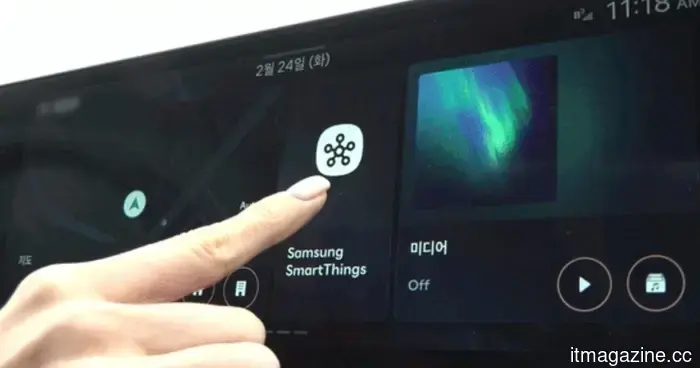 Samsung will soon enable you to manage smart home devices directly from your car's dashboard.
Samsung has introduced a Car-to-Home integration for Hyundai and Kia cars, enabling drivers to control smart home devices — such as air conditioners and robot vacuums — all from their seats.
Samsung will soon enable you to manage smart home devices directly from your car's dashboard.
Samsung has introduced a Car-to-Home integration for Hyundai and Kia cars, enabling drivers to control smart home devices — such as air conditioners and robot vacuums — all from their seats.
 Startup Dash0 achieves unicorn status after raising $110 million in Series B funding.
Dash0, the observability platform built on OpenTelemetry, has secured $110 million at a valuation of $1 billion to support Agent0, its autonomous layer for production operations.
Startup Dash0 achieves unicorn status after raising $110 million in Series B funding.
Dash0, the observability platform built on OpenTelemetry, has secured $110 million at a valuation of $1 billion to support Agent0, its autonomous layer for production operations.
 Apple is reportedly preparing to launch a new entry-level iPad in the coming months.
Apple's most user-friendly iPad is expected to receive a significant upgrade in 2026, replacing its outdated chip with the A18 — marking it as the first entry-level iPad to feature Apple Intelligence.
Apple is reportedly preparing to launch a new entry-level iPad in the coming months.
Apple's most user-friendly iPad is expected to receive a significant upgrade in 2026, replacing its outdated chip with the A18 — marking it as the first entry-level iPad to feature Apple Intelligence.
 You might begin to notice advertisements in ChatGPT, but companies are uncertain about their effectiveness.
Early advertisements for ChatGPT by OpenAI are generating worries among advertisers who are finding it difficult to assess performance.
You might begin to notice advertisements in ChatGPT, but companies are uncertain about their effectiveness.
Early advertisements for ChatGPT by OpenAI are generating worries among advertisers who are finding it difficult to assess performance.
 Traefik has established itself as the standard for Kubernetes networking.
This month, the Kubernetes community officially retired Ingress NGINX following years of inadequate resources. The ensuing rush to migrate is coalescing around a single open source beneficiary, with Traefik Labs announcing this at KubeCon.
Traefik has established itself as the standard for Kubernetes networking.
This month, the Kubernetes community officially retired Ingress NGINX following years of inadequate resources. The ensuing rush to migrate is coalescing around a single open source beneficiary, with Traefik Labs announcing this at KubeCon.
 Foreverland secures €6M to expand its cocoa-free chocolate ingredient.
Foreverland has secured €6M, increasing its total funding to €9.4M, to expand the reach of Choruba, its cocoa-free chocolate ingredient, throughout Europe.
Foreverland secures €6M to expand its cocoa-free chocolate ingredient.
Foreverland has secured €6M, increasing its total funding to €9.4M, to expand the reach of Choruba, its cocoa-free chocolate ingredient, throughout Europe.
Foodtech company Swish secures $38 million in Series B funding, valuing the company at $139 million.
Swish, the foodtech startup based in Bengaluru that operates its own kitchens and handles delivery, has secured $38 million at a valuation of $139 million.