
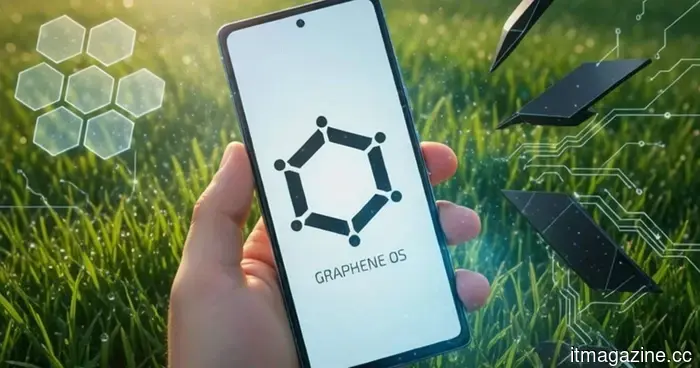
GrapheneOS maintains a strict stance on privacy, with no identity verification required at any point.
GrapheneOS is intensifying its focus on privacy at a moment when most platforms are heading in the opposite direction. The security-oriented Android alternative declares that it will not ask for personal information from users, even as governments tighten their identity and data collection regulations.
In a recent public statement, the team confirmed that the operating system will remain functional without accounts or ID verification globally. However, this decision comes with a tradeoff; if local laws require verification, access in those areas may be revoked rather than the platform modifying its stance.
This places GrapheneOS directly at odds with a wider trend toward verified online services. While many companies are quietly adapting to ensure compliance, this project is opting to remain completely outside that framework.
No identification means no concessions.
This stance isn’t particularly new, but the clarity in communication is noteworthy. Access to GrapheneOS and its services won’t hinge on registration or identity verification, irrespective of location.
GrapheneOS will continue to be accessible worldwide without the need for personal data, identification, or accounts. If regulations prevent the sale of GrapheneOS devices in a certain area, so be it. — GrapheneOS (@GrapheneOS) March 20, 2026
Rather than customizing regulations for each market, the platform maintains a single global standard. If a government mandates identity verification for distribution or usage, support in that region ceases.
This approach stems from the way the OS is designed. GrapheneOS minimizes unnecessary data exposure whenever feasible, steering clear of centralized accounts that could link actions to individuals. Implementing identity requirements would fundamentally undermine this model.
Why this position is notable
There’s a practical downside to this unwavering consistency: in areas with more stringent regulations, users might find themselves unable to access GrapheneOS devices or updates linked to the platform.
The constraints extend beyond mere availability. Hardware compatibility is intentionally limited to devices fulfilling strict security criteria. Broader compatibility is avoided as it could compromise defenses. Even the setup reflects this philosophy, with pre-configured devices offered to minimize exposure associated with conventional Android installations.
YouTube
This tradeoff is evident. You receive stronger privacy assurances but at the cost of flexibility in devices and accessibility.
Future developments
GrapheneOS is still striving for growth without relaxing its regulations. A long-term partnership with Motorola aims to provide official support for more devices starting in 2027, potentially enhancing availability while maintaining its standards.
Expansion will remain selective. Devices that fail to meet its requirements will not receive support, even if this hinders adoption rates.
The project’s funding model is also a factor. It operates solely on donations, sufficient to sustain a full-time team. This independence allows it to uphold its principles while others yield to regulatory or commercial pressures.
If you’re considering making the switch, the benefits are clear. You gain a mobile operating system that entirely avoids identity verification, but depending on your location, maintaining access may become increasingly challenging over time.
Other articles
 Human therapists staged a strike to protest against being replaced by AI counselors.
Are AI chatbots on the verge of taking over the role of your therapist? That concern prompted 2,400 mental health providers from Kaiser Permanente to go on strike.
Human therapists staged a strike to protest against being replaced by AI counselors.
Are AI chatbots on the verge of taking over the role of your therapist? That concern prompted 2,400 mental health providers from Kaiser Permanente to go on strike.
 Laifen Spring Sale 2026: Enhance Your Grooming Routine with Innovative Technology and Significant Savings
Laifen is launching its Spring Sale 2026, offering enticing discounts on its personal care products, making it an ideal opportunity to enhance your daily routine. The event will take place from March 21 to March 31, 2026, featuring price reductions of up to 25%, as well as extra savings on Amazon with special coupon codes. [...]
Laifen Spring Sale 2026: Enhance Your Grooming Routine with Innovative Technology and Significant Savings
Laifen is launching its Spring Sale 2026, offering enticing discounts on its personal care products, making it an ideal opportunity to enhance your daily routine. The event will take place from March 21 to March 31, 2026, featuring price reductions of up to 25%, as well as extra savings on Amazon with special coupon codes. [...]
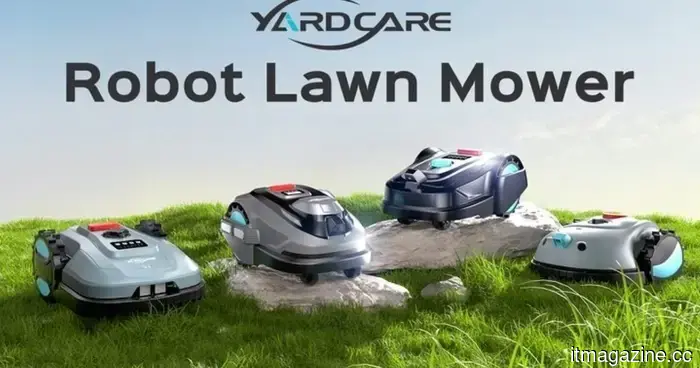 Beyond the Boundary Wire: How Yardcare and the Innovative N1600PRO are Pioneering the Robotic Mower Movement
Yardcare can put an end to your tiring manual mowing today. We present the N1600PRO, a smart, wireless lawnmower designed for homeowners seeking a smart upgrade. Featuring RTK + Vision navigation and intelligent app control, this robotic mower provides a flawlessly trimmed yard without requiring hours of your time.
Beyond the Boundary Wire: How Yardcare and the Innovative N1600PRO are Pioneering the Robotic Mower Movement
Yardcare can put an end to your tiring manual mowing today. We present the N1600PRO, a smart, wireless lawnmower designed for homeowners seeking a smart upgrade. Featuring RTK + Vision navigation and intelligent app control, this robotic mower provides a flawlessly trimmed yard without requiring hours of your time.
 Researchers showcase the feasibility of wireless communication underground, capable of penetrating solid bedrock.
Korean scientists have successfully sent voice signals 100 meters underground via magnetic fields, marking a world first that has the potential to revolutionize rescue operations and communication in subterranean environments.
Researchers showcase the feasibility of wireless communication underground, capable of penetrating solid bedrock.
Korean scientists have successfully sent voice signals 100 meters underground via magnetic fields, marking a world first that has the potential to revolutionize rescue operations and communication in subterranean environments.
 Adzuna acquires the job sections of Trovit and Mitula.
Adzuna has taken over the job segments of Trovit and Mitula from Lifull Connect, broadening its reach into Spain, Italy, and Latin America.
Adzuna acquires the job sections of Trovit and Mitula.
Adzuna has taken over the job segments of Trovit and Mitula from Lifull Connect, broadening its reach into Spain, Italy, and Latin America.
 The CEO of Meta is creating a personal AI assistant to manage executive responsibilities.
Mark Zuckerberg is creating a personal AI assistant intended to help him with his responsibilities as the CEO of Meta.
The CEO of Meta is creating a personal AI assistant to manage executive responsibilities.
Mark Zuckerberg is creating a personal AI assistant intended to help him with his responsibilities as the CEO of Meta.
GrapheneOS maintains a strict stance on privacy, with no identity verification required at any point.
GrapheneOS is steadfast in its stance against global identification regulations, maintaining its no-account policy despite the potential restrictions on access in certain areas, prioritizing enhanced privacy protections over convenience and availability.