
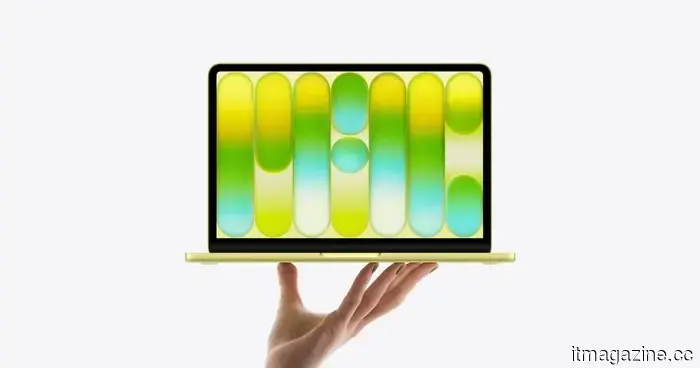
The new MacBook Neo charges more quickly than what Apple states.
Digital Trends may receive a commission if you make a purchase through links on our site. Why trust us?
Testing has revealed an unexpected charging limitation in Apple’s latest budget laptop, which can be remedied for just $59 at Apple’s store.
Apple's new MacBook Neo is powered by the same chip as the iPhone 16 Pro, yet it does not charge at the same speed as the 2024 flagship iPhone, at least according to Apple's official specifications.
The MacBook Neo includes a 20W USB-C power adapter in the package, a choice that seems increasingly questionable, especially considering it achieved the best launch week for a Mac with first-time buyers.
The charger provided with the MacBook Neo is too slow.
ChargerLAB’s tests show that the Neo reaches a maximum of only 18W with the included charger. I recently watched a YouTube video where it took approximately four hours to fully charge the Neo, which I feel is excessively lengthy.
However, when the Neo is charged using Apple’s 35W dual USB-C adapter, the charging speed increases to 30W. Doing the math shows a 67% enhancement in charging speed with a single $59 accessory.
In my opinion, I would definitely prefer a faster charging speed rather than waiting for my MacBook to reach 90% while I'm running late for school or work. Although ChargerLAB didn't specify the time difference, the 35W charger should charge the device in much less time (around 20 to 30 minutes).
Apple
Will using an even faster charger boost the charging speed further?
Not at all. In the tests, the Neo was also charged with Apple’s 96W and 140W adapters, but both provided the same charging speed of 30W as the 35W charger. More watts, yet the same outcome; it’s quite characteristic of Apple to have such a spending tactic.
The positive news? Third-party chargers from reputable brands rated at 30W or more can also achieve the MacBook Neo’s peak charging speed, thus reducing charging time from excessively slow to moderately slow. Therefore, instead of purchasing Apple’s 35W charger for $59, you could invest half that amount (or even less) in a 30W+ charger and enjoy a better experience.
For over five years, Shikhar has reliably simplified advancements in consumer technology and presented them...
Microsoft is trimming the "bloat" of Copilot in Windows 11.
The company indicates it will be more deliberate about the presence of AI.
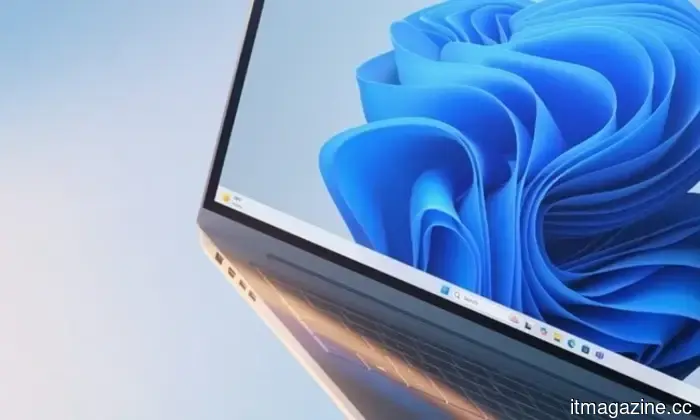
Microsoft is reassessing the level of AI integration in Windows 11, particularly regarding Copilot. As a part of its ongoing effort to enhance Windows quality, the company is scaling back the number of Copilot entry points throughout the operating system and its applications.
Per Microsoft, this reduction will begin with applications such as Photos, Notepad, Widgets, and the Snipping Tool, where Copilot features had become overly plentiful. This shift aligns with Microsoft’s broader strategy to move away from embedding AI extensively and instead integrating it only where it truly adds value.
Windows 11 aims to operate like a MacBook Neo by focusing on memory efficiency.
Microsoft is minimizing RAM utilization to enhance the performance of 8GB systems.
Microsoft is addressing one of the most persistent criticisms of Windows 11: its performance, particularly on lower-end devices. As part of its commitment to improving Windows quality, the company is dedicated to lowering resource usage, increasing responsiveness, and optimizing memory efficiency across the operating system. The intent is straightforward: to make Windows feel quicker and more reliable, even on modest hardware, which has become increasingly significant.
Why is Microsoft prioritizing memory now?
Windows 11 is reinstating a feature that users have desired for years.
Soon, you will have the option to relocate the taskbar to the top or sides once more.
Microsoft is finally addressing one of the most aggravating limitations of Windows 11: the inability to move the taskbar. In line with a broader quality enhancement initiative, the company has confirmed that users will soon be able to reposition the taskbar to the top or sides of the screen, rather than being confined to the bottom.
This update is currently in testing and will first be made available to Windows Insiders before being released to all users later this year. This reinstatement marks the return of a feature that was part of Windows for decades but was removed during the redesign of Windows 11 in 2021, a decision that faced continuous backlash from long-time users.



Other articles
 The co-founder of Super Micro has been accused of smuggling servers to China.
The indictment against Super Micro involves more than just three individuals and $2.5 billion worth of smuggled servers. It highlights a flawed export control system that was never designed to withstand such challenges.
The co-founder of Super Micro has been accused of smuggling servers to China.
The indictment against Super Micro involves more than just three individuals and $2.5 billion worth of smuggled servers. It highlights a flawed export control system that was never designed to withstand such challenges.
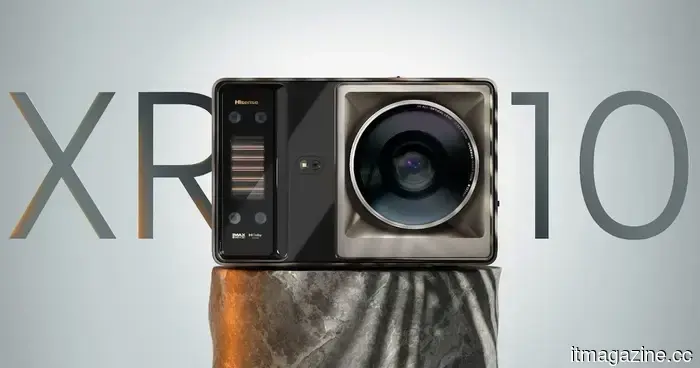 Hisense begins pre-orders for the XR10, offering a $1,700 discount along with a complimentary HT Saturn.
The XR10 Triple Laser Projector from Hisense is now open for pre-orders. If you place your order before April 24, you'll save $1,700 and receive a complimentary HT Saturn soundbar valued at $1,299.
Hisense begins pre-orders for the XR10, offering a $1,700 discount along with a complimentary HT Saturn.
The XR10 Triple Laser Projector from Hisense is now open for pre-orders. If you place your order before April 24, you'll save $1,700 and receive a complimentary HT Saturn soundbar valued at $1,299.
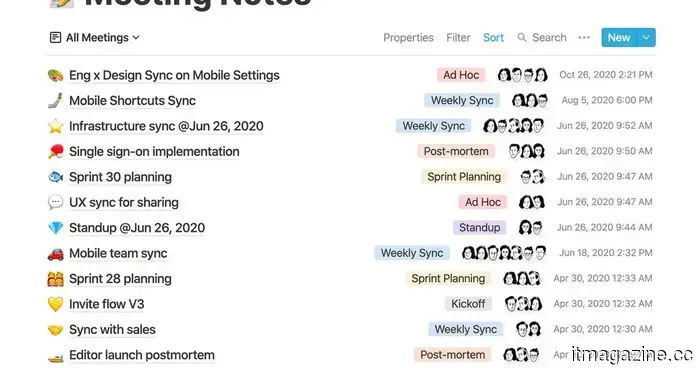 Notion's AI Meeting Notes can now operate in the background.
Notion's AI Meeting Notes now operate in the background, allowing users to switch between apps or lock their screens while the transcription persists without interruption.
Notion's AI Meeting Notes can now operate in the background.
Notion's AI Meeting Notes now operate in the background, allowing users to switch between apps or lock their screens while the transcription persists without interruption.
 Notion's AI Meeting Notes can now operate in the background.
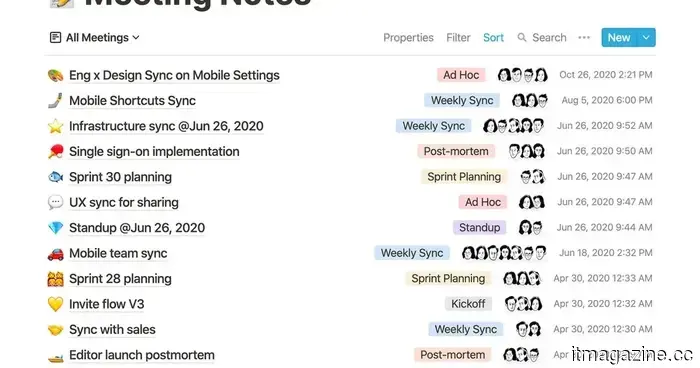
Notion's AI Meeting Notes now operate in the background, allowing users to switch between apps or lock their screens while the transcription proceeds without disruption.
Notion's AI Meeting Notes can now operate in the background.
Notion's AI Meeting Notes now operate in the background, allowing users to switch between apps or lock their screens while the transcription proceeds without disruption.
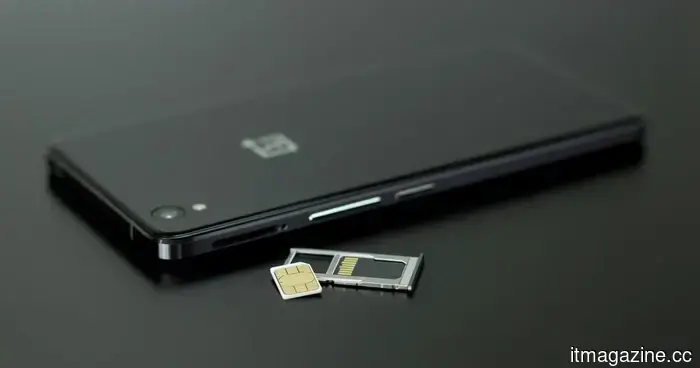 Google is eliminating the inconvenience of recalling SIM codes on Android 17.
Android 17 has the potential to simplify the process of recalling SIM PINs by automatically inputting them once you unlock your device, while continuing to safeguard your SIM on different phones.
Google is eliminating the inconvenience of recalling SIM codes on Android 17.
Android 17 has the potential to simplify the process of recalling SIM PINs by automatically inputting them once you unlock your device, while continuing to safeguard your SIM on different phones.
 Diving into the deep end of my NCAA Pool with AI.
ChatGPT performed 50,000 simulations of the tournament, considering efficiency ratings, coaching styles, and past upsets — and then posed a question that no bracket sheet has ever asked: would you prefer to be correct, or would you rather make money?
Diving into the deep end of my NCAA Pool with AI.
ChatGPT performed 50,000 simulations of the tournament, considering efficiency ratings, coaching styles, and past upsets — and then posed a question that no bracket sheet has ever asked: would you prefer to be correct, or would you rather make money?
The new MacBook Neo charges more quickly than what Apple states.
Charging tests indicate that Apple's $599 MacBook Neo reaches a maximum of only 18W with its included adapter — notably slower than the iPhone 17 Pro, which uses the same chip.