
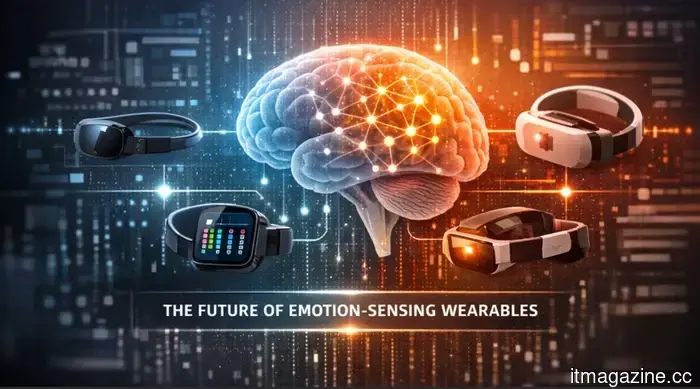
The emergence of emotion AI: the integration of emotion recognition algorithms into wearable technology and industrial uses.
Shenzhen Bi’an Mind Technology, established in 2021, specializes in developing algorithms for emotion recognition and smart wearable technology. The company integrates physiological signals with AI to embed emotion-sensing features into devices and is also investigating applications in the fields of healthcare, education, and high-risk industries.
The fundamental strategy is simple: continuously track and analyze individuals' emotional states using physiological data.
Core technology: emotion recognition based on autonomic nervous signals
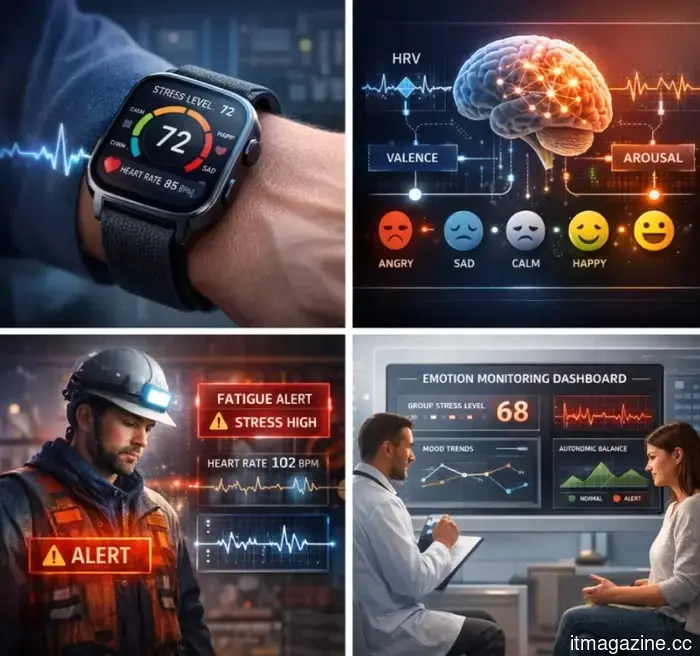
Bi’an Mind’s primary technology is its proprietary AI emotion recognition algorithm. This method relies on the activities of the sympathetic and parasympathetic nervous systems. By gathering physiological signals like heart rate variability (RRI) and breathing patterns, and incorporating them into the Valence-Arousal model, the algorithm can categorize and evaluate basic emotional states such as anger, sadness, anxiety, and happiness.
Compared to traditional emotion recognition techniques that depend on facial expressions or vocal characteristics, this method focuses on physiological data, which theoretically minimizes the impact of cultural variations or intentional expression control. It facilitates more discreet and continuous monitoring; however, its accuracy, generalizability, and adaptability across various demographics still require validation through large-scale real-world testing.
Product forms — merging algorithms with hardware
Leveraging its algorithmic expertise, the company has introduced various hardware and system products. The smart emotion watch includes an RRI monitoring module that constantly tracks emotional states, stress levels, and energy, producing visual reports. It also features tools for mindfulness practices and psychological assessments, thus establishing a feedback loop for monitoring, intervention, and response. The main challenges for these products encompass the long-term reliability of emotional data, users' willingness to consistently interact with their psychological information, and the measurement of intervention effectiveness.
The emotion screening and early warning system, aimed at healthcare institutions, educational organizations, and high-risk sectors, provides tools for group-level emotional analysis. It produces metrics such as stress indices and reports on autonomic nervous system balance, delivering real-time alerts for any unusual changes.
In practice, these systems serve more as decision-support instruments, with their effectiveness relying on compliant data gathering, privacy protections, and the capability of administrators to interpret and act on the findings.
Emotional AI strives to detect and understand emotions in real time to enhance well-being, productivity, and personalized interactions.
Industry applications and implementation scenarios
Bi’an Mind has deployed its emotion recognition technology across various specialized sectors. In early childhood education and general teaching, wearable devices track teachers’ emotional changes, which can guide training programs and optimize job assignments. For high-risk fields like nuclear energy and mining, the technology monitors workers’ fatigue and stress levels, providing data to reinforce safety management practices.
In healthcare and mental health, the company collaborates with psychological service platforms to facilitate long-term data monitoring for patients suffering from depression and anxiety, aiding clinicians in evaluating treatment progress. Given the sensitive nature of emotional data in healthcare and safety contexts, these applications necessitate a careful balance of algorithm efficiency, regulatory adherence, and ethical considerations.
From supportive feature to essential aspect of human-computer interaction
Considering broader tech trends, emotion recognition is evolving from a supportive function to a crucial component of human-computer interaction. The approach taken by Bi’an Mind, which utilizes physiological data modeling, underscores this transition.
The lasting influence of such systems will depend on not only the accuracy of the algorithms but also on how industries collectively recognize the value of emotional data and the constraints concerning its application.
Jessie Wu is a tech journalist located in Shanghai, reporting on consumer electronics, semiconductors, and the gaming sector for TechNode. You can reach her via email at jessie.wu@technode.com.
More by Jessie Wu
Other articles
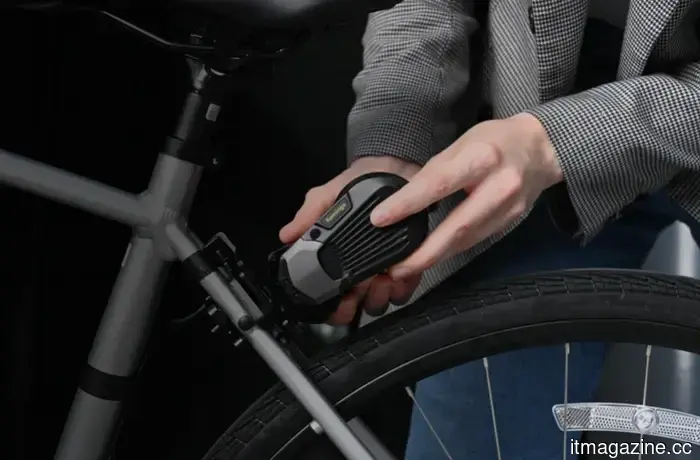 The Kamingo electric kit converts conventional bicycles into intelligent, power-assisted vehicles for adaptable urban cycling.
As urban transportation evolves, electric bicycles (e-bikes) have emerged as a favored option for commuting, recreation, and short-distance journeys. In this
The Kamingo electric kit converts conventional bicycles into intelligent, power-assisted vehicles for adaptable urban cycling.
As urban transportation evolves, electric bicycles (e-bikes) have emerged as a favored option for commuting, recreation, and short-distance journeys. In this
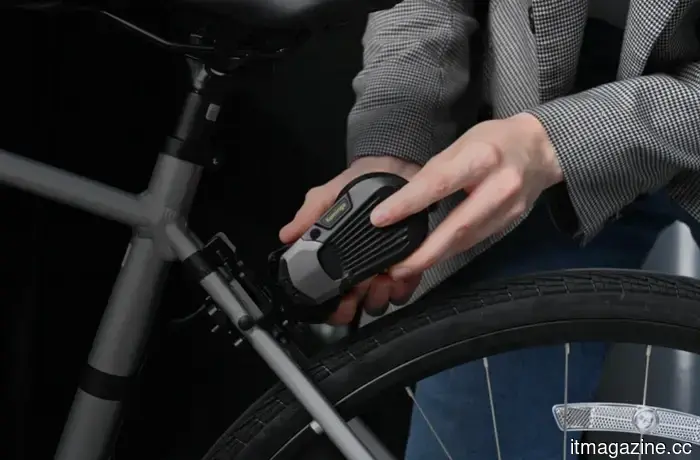 The Kamingo electric kit converts conventional bicycles into intelligent, power-assisted models, enhancing versatility for city cycling.
As urban mobility progresses, electric bicycles (e-bikes) have gained significant popularity for commuting, recreational use, and traveling short distances. In this
The Kamingo electric kit converts conventional bicycles into intelligent, power-assisted models, enhancing versatility for city cycling.
As urban mobility progresses, electric bicycles (e-bikes) have gained significant popularity for commuting, recreational use, and traveling short distances. In this
 Rivian is collaborating with Uber to deploy thousands of robotaxis on the streets.
Uber is putting up to $1.25 billion into Rivian to launch tens of thousands of autonomous R2 taxis, with San Francisco and Miami expected to be the initial cities to have them operational on the roads by 2028.
Rivian is collaborating with Uber to deploy thousands of robotaxis on the streets.
Uber is putting up to $1.25 billion into Rivian to launch tens of thousands of autonomous R2 taxis, with San Francisco and Miami expected to be the initial cities to have them operational on the roads by 2028.
 The 25W wireless charging feature of the Galaxy S26 Ultra may not function as claimed.
The Galaxy S26 Ultra from Samsung offers 25W wireless charging; however, practical compatibility concerns may prevent you from achieving those speeds.
The 25W wireless charging feature of the Galaxy S26 Ultra may not function as claimed.
The Galaxy S26 Ultra from Samsung offers 25W wireless charging; however, practical compatibility concerns may prevent you from achieving those speeds.
 Who offers cloud-based financial systems for enterprises?
Main points A cloud-based enterprise financial system is a software solution that oversees accounting, financial reporting, budgeting, and operational insights via a secure online platform. Rather than being hosted on internal servers, the system functions in the cloud, linking financial data with various business operations. This enables finance leaders to automate processes, obtain real-time insights into performance, […]
Who offers cloud-based financial systems for enterprises?
Main points A cloud-based enterprise financial system is a software solution that oversees accounting, financial reporting, budgeting, and operational insights via a secure online platform. Rather than being hosted on internal servers, the system functions in the cloud, linking financial data with various business operations. This enables finance leaders to automate processes, obtain real-time insights into performance, […]
 Which accounting suite is the highest-rated for large enterprises?
Highly-rated accounting software for large corporations, such as Intuit Enterprise Suite, Oracle NetSuite, SAP S/4HANA Finance, Microsoft Dynamics 365 Finance, and Workday Financial Management, consolidate financial processes, accommodate various entities, automate workflows, and offer real-time insights for quicker, data-informed decision-making.
Which accounting suite is the highest-rated for large enterprises?
Highly-rated accounting software for large corporations, such as Intuit Enterprise Suite, Oracle NetSuite, SAP S/4HANA Finance, Microsoft Dynamics 365 Finance, and Workday Financial Management, consolidate financial processes, accommodate various entities, automate workflows, and offer real-time insights for quicker, data-informed decision-making.
The emergence of emotion AI: the integration of emotion recognition algorithms into wearable technology and industrial uses.
Established in 2021, Shenzhen Bi’an Mind Technology focuses on creating emotion recognition algorithms and intelligent wearable technology. The firm merges physiological