
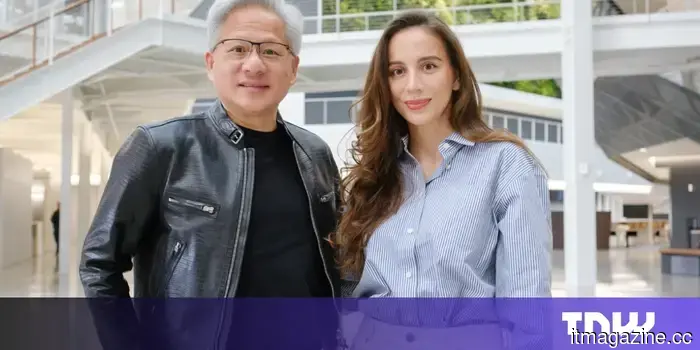
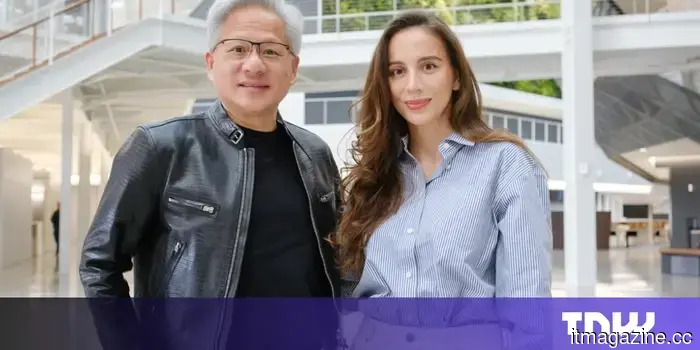
Thinking Machines Lab receives funding from NVIDIA.
The agreement combines one of the world’s leading chip manufacturers with an AI startup established by OpenAI’s former CTO, with the computational commitment amounting to tens of billions of dollars. When Mira Murati departed OpenAI in September 2024, she was tight-lipped about her future plans. However, approximately 18 months later, it has become evident that she was developing something with significant aspirations and found a partner in Nvidia willing to support them on a scale that would have appeared excessive just a year prior.
On March 10, 2026, NVIDIA and Thinking Machines Lab revealed a multiyear strategic partnership, in which Murati’s startup will utilize at least a gigawatt of NVIDIA’s next-generation Vera Rubin systems to train its models. NVIDIA has also made what both companies have described as a “substantial investment” in Thinking Machines, although neither has disclosed the amount.
As reported by the Financial Times, the chip supply agreement alone is valued in the tens of billions of dollars. NVIDIA CEO Jensen Huang has stated previously that one gigawatt of AI data center capacity could cost up to $50 billion. Since its founding in February 2025, Thinking Machines Lab has raised over $2 billion, with investors including Andreessen Horowitz, Accel, and NVIDIA, along with the venture arm of AMD, NVIDIA’s main competitor. The company has expanded from around 30 employees a year ago to about 120 today.
The firm aims to develop AI systems that are, in its words, “more widely understood, customizable, and generally capable.” The focus on customizability is deliberate: Murati and her team seem to be differentiating Thinking Machines from OpenAI and Anthropic, which tend to offer more fixed products, by creating infrastructure that companies and developers can adapt to their specific needs.
The collaboration with NVIDIA encompasses both technical cooperation and computational supply, particularly the optimization of Thinking Machines’ products for NVIDIA’s hardware. This close integration at the chip level has historically proven advantageous, contributing to OpenAI’s rapid development during the GPT era.
“NVIDIA’s technology is the foundation on which the entire field is built,” Murati stated in a release accompanying the announcement. “This partnership accelerates our capacity to create AI that people can shape and personalize.”
Thinking Machines is not the sole lab entering into gigawatt-scale compute agreements. The overall AI sector is engaged in a competition to secure the infrastructure essential for training the next generation of models; many current agreements are being made even before the hardware is available, indicating a belief that securing substantial compute early will confer a lasting advantage.
For NVIDIA, this investment serves a dual role: it generates revenue through chip sales and establishes a stake in a lab that it clearly considers a potential long-term client and strategic ally. NVIDIA has engaged in similar investments in other AI companies, building a portfolio that aligns with the industry’s cutting edge.
Murati previously declined an acquisition offer from Meta’s Mark Zuckerberg last year. The partnership with NVIDIA suggests her intention to remain independent and indicates that she has acquired the resources necessary to support this assertion. Whether a lab of 120 individuals can legitimately compete with organizations ten times its size is still uncertain, but she now has ample computational resources to attempt it.
Other articles
 The Paris-based startup Lemrock has secured €6 million in funding to establish itself as the commercial framework within AI agents.
Established only a few months ago by two seasoned Y Combinator founders and an experienced retail professional, Lemrock believes that AI agents are emerging as the new storefront, and that brands are far from prepared for this shift.
If you inquire with ChatGPT or Perplexity about which r
The Paris-based startup Lemrock has secured €6 million in funding to establish itself as the commercial framework within AI agents.
Established only a few months ago by two seasoned Y Combinator founders and an experienced retail professional, Lemrock believes that AI agents are emerging as the new storefront, and that brands are far from prepared for this shift.
If you inquire with ChatGPT or Perplexity about which r
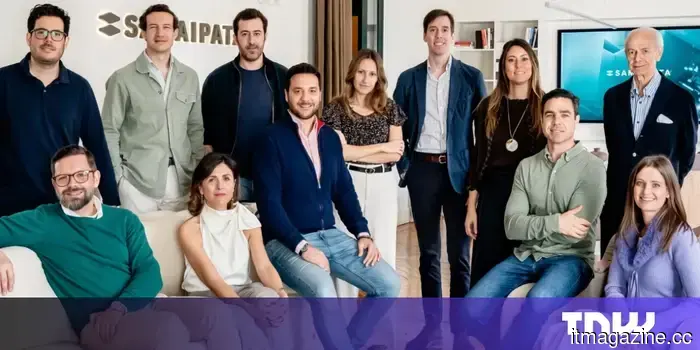 El VC español Samaipata recauda 70 millones de euros para su nuevo fondo nativo de IA.
Samaipata has initiated a €110M Fund III aimed at early-stage AI-native startups in Europe, achieving a first closing of €70M supported by KfW and SETT from Spain.
El VC español Samaipata recauda 70 millones de euros para su nuevo fondo nativo de IA.
Samaipata has initiated a €110M Fund III aimed at early-stage AI-native startups in Europe, achieving a first closing of €70M supported by KfW and SETT from Spain.
 AgentMail secures $6 million to provide AI agents with individual email inboxes.
The San Francisco-based startup, supported by General Catalyst and Y Combinator, believes that email, rather than a new identity protocol, will be the means through which AI agents establish their presence on the internet.
AI agents are already capable of scheduling your meetings and negotiating.
AgentMail secures $6 million to provide AI agents with individual email inboxes.
The San Francisco-based startup, supported by General Catalyst and Y Combinator, believes that email, rather than a new identity protocol, will be the means through which AI agents establish their presence on the internet.
AI agents are already capable of scheduling your meetings and negotiating.
 Amazon’s Health AI is now accessible to all customers in the United States.
Amazon has rolled out Health AI to all customers in the US. The assistant understands medical records, schedules appointments, and links users to One Medical.
Amazon’s Health AI is now accessible to all customers in the United States.
Amazon has rolled out Health AI to all customers in the US. The assistant understands medical records, schedules appointments, and links users to One Medical.
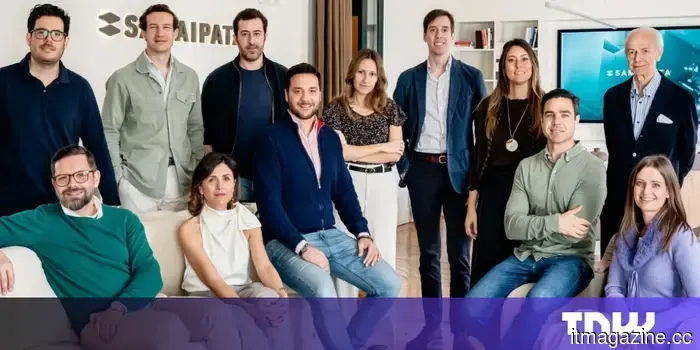 La firma de capital de riesgo española Samaipata ha recaudado 70 millones de euros para su nuevo fondo nativo de inteligencia artificial.
Samaipata has introduced a €110M Fund III aimed at early-stage AI-native startups in Europe, achieving a first close of €70M supported by KfW and Spain's SETT.
La firma de capital de riesgo española Samaipata ha recaudado 70 millones de euros para su nuevo fondo nativo de inteligencia artificial.
Samaipata has introduced a €110M Fund III aimed at early-stage AI-native startups in Europe, achieving a first close of €70M supported by KfW and Spain's SETT.
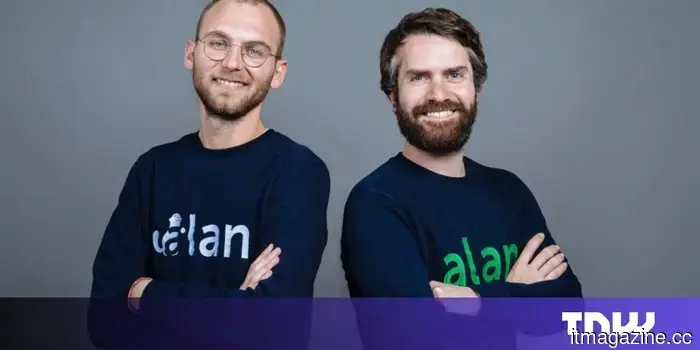 The French insurtech company Alan reaches a valuation of €5 billion.
French health insurtech Alan has secured €100M at a valuation of €5B. Additionally, it has reached 1 million members and an annual recurring revenue (ARR) of €785M, and it aims for further growth.
The French insurtech company Alan reaches a valuation of €5 billion.
French health insurtech Alan has secured €100M at a valuation of €5B. Additionally, it has reached 1 million members and an annual recurring revenue (ARR) of €785M, and it aims for further growth.
Thinking Machines Lab receives funding from NVIDIA.
NVIDIA has made a considerable investment in Mira Murati's Thinking Machines Lab and has entered into a multiyear agreement to provide at least a gigawatt of Vera Rubin computing power.