
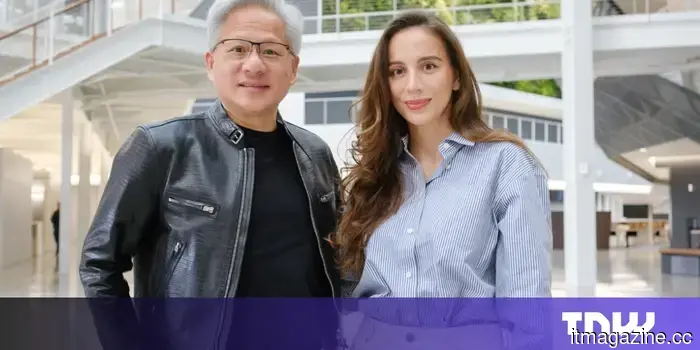
Thinking Machines Lab obtains investment from NVIDIA.
The agreement connects one of the most influential chip manufacturers in the world with an AI startup co-founded by OpenAI’s former CTO, and the commitment to computing resources alone amounts to tens of billions of dollars. After Mira Murati departed from OpenAI in September 2024, she was tight-lipped about her future plans. However, about 18 months later, it has become evident that she was developing something with significant ambitions, and she has partnered with Nvidia, which is willing to support her endeavors on a scale that would have seemed extravagant just a year prior.
On March 10, 2026, NVIDIA and Thinking Machines Lab revealed a multi-year strategic partnership wherein Murati’s startup will utilize a minimum of a gigawatt of NVIDIA’s next-generation Vera Rubin systems for training its models. NVIDIA also made what both companies describe as a "considerable investment" in Thinking Machines, though the exact amount remains undisclosed.
Reported by the Financial Times, the chip supply agreement alone is valued at tens of billions of dollars. NVIDIA CEO Jensen Huang has previously indicated that one gigawatt of AI data center capacity could cost up to $50 billion. Founded in February 2025 by Murati, Thinking Machines Lab has raised over $2 billion since its inception. Notable investors include Andreessen Horowitz, Accel, and NVIDIA, as well as the venture arm of AMD, NVIDIA's main competitor. The company has expanded from about 30 employees a year ago to around 120 today.
The lab is focused on customizability, with its mission being to create AI systems that are, in its own words, “more widely understood, customizable, and generally capable.” This emphasis on customizability is intentional: Murati and her team seem to differentiate Thinking Machines from OpenAI and Anthropic, which offer relatively inflexible products, by constructing infrastructure that companies and developers can tailor to their needs.
The partnership with NVIDIA encompasses both technical collaboration and the provision of computing resources, specifically the optimization of Thinking Machines’ offerings for NVIDIA’s hardware. Such close integration at the chip level has historically yielded significant benefits, as it contributed to OpenAI’s rapid progress during the GPT era. “NVIDIA’s technology is the foundation on which the entire field is built,” Murati stated in a press release about the announcement. “This partnership enhances our ability to create AI that people can customize and make their own.”
This development also indicates the competitive race for computing resources in the AI sector. Thinking Machines isn't the only innovative lab entering into gigawatt-scale compute agreements. The broader AI landscape is engaged in a contest to secure the necessary infrastructure to train the next generation of models. The current deals, some of which are being finalized before the hardware is even available, reflect a belief that whoever acquires the most computing power first will gain a lasting advantage.
For NVIDIA, this investment serves a dual purpose; it not only generates revenue from chip sales but also secures a stake in a lab that it clearly perceives as a potential long-term customer and strategic ally. NVIDIA has made similar investments in various AI companies, creating a portfolio that tracks the industry’s forefront.
Murati, for her part, rejected an acquisition proposal from Meta’s Mark Zuckerberg last year. The partnership with NVIDIA suggests her intention to stay independent while having acquired the resources to substantiate that choice. It remains to be seen whether a lab with 120 employees can genuinely compete with organizations ten times its size, but she now possesses ample computing resources to make that attempt.
Other articles
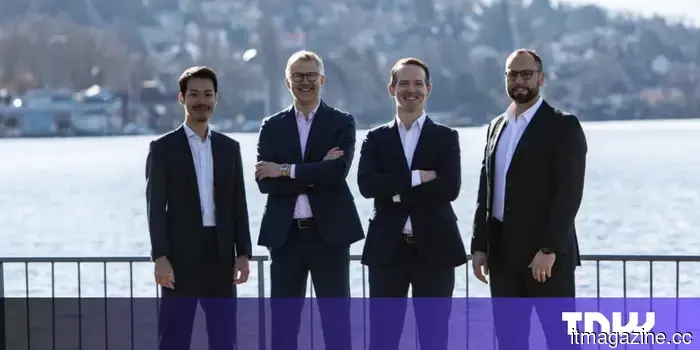 Emerald Technology Ventures has secured €100 million for a fund focused on water innovation.
Emerald Technology Ventures has reached €100 million for its Global Water Fund II, with Temasek and the Grundfos Foundation joining as investors.
Emerald Technology Ventures has secured €100 million for a fund focused on water innovation.
Emerald Technology Ventures has reached €100 million for its Global Water Fund II, with Temasek and the Grundfos Foundation joining as investors.
 Emerald Technology Ventures secures €100 million for a fund focused on water innovation.
Emerald Technology Ventures has reached €100M for its Global Water Fund II, bringing on board Temasek and the Grundfos Foundation as new investors.
Emerald Technology Ventures secures €100 million for a fund focused on water innovation.
Emerald Technology Ventures has reached €100M for its Global Water Fund II, bringing on board Temasek and the Grundfos Foundation as new investors.
 Finperks secures $4 million to establish itself as the API layer for prepaid payment solutions.
Finperks has secured $4 million in a pre-seed funding round led by Motive Partners to develop API infrastructure for gift cards, cashback, and employee benefits.
Finperks secures $4 million to establish itself as the API layer for prepaid payment solutions.
Finperks has secured $4 million in a pre-seed funding round led by Motive Partners to develop API infrastructure for gift cards, cashback, and employee benefits.
 Cedars-Sinai's AI outperforms specialized models in interpreting heart scans.
EchoPrime AI from Cedars-Sinai was developed using 12 million echocardiogram videos and featured in Nature.
Cedars-Sinai's AI outperforms specialized models in interpreting heart scans.
EchoPrime AI from Cedars-Sinai was developed using 12 million echocardiogram videos and featured in Nature.
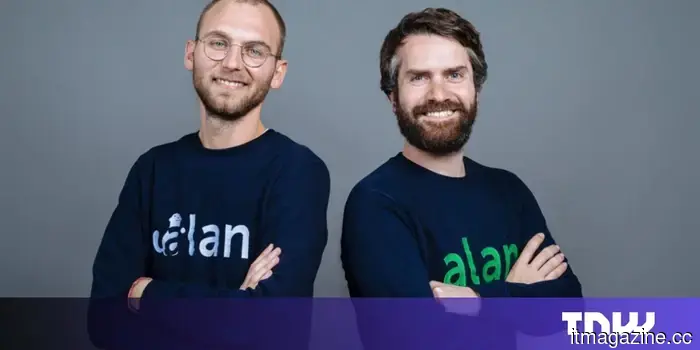 French insurtech company Alan reaches a valuation of €5 billion.
French health insurtech Alan has secured €100 million at a valuation of €5 billion. Additionally, it has reached 1 million members and an annual recurring revenue of €785 million, with ambitions for further growth.
French insurtech company Alan reaches a valuation of €5 billion.
French health insurtech Alan has secured €100 million at a valuation of €5 billion. Additionally, it has reached 1 million members and an annual recurring revenue of €785 million, with ambitions for further growth.
 Amazon’s Health AI is now accessible to all customers in the United States.
Amazon has rolled out Health AI to all customers in the US. The assistant understands medical records, schedules appointments, and links users to One Medical.
Amazon’s Health AI is now accessible to all customers in the United States.
Amazon has rolled out Health AI to all customers in the US. The assistant understands medical records, schedules appointments, and links users to One Medical.
Thinking Machines Lab obtains investment from NVIDIA.
NVIDIA has invested substantially in Mira Murati's Thinking Machines Lab and has entered into a multiyear agreement to provide a minimum of one gigawatt of compute power from Vera Rubin.