
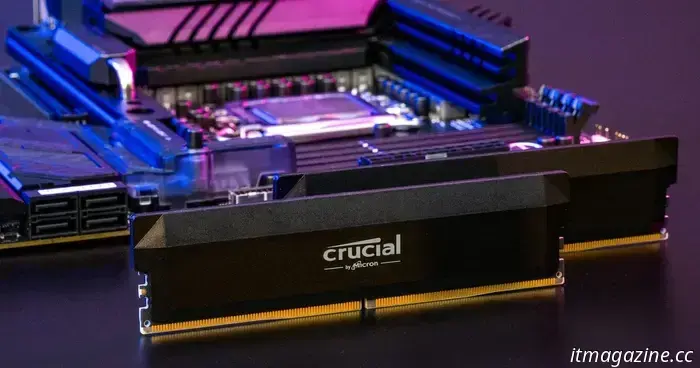
Micron indicates that the memory shortage crisis is likely to persist.
AI data centers are consuming a significant portion of the global memory supply, and Micron indicates that even large-scale factory expansions won't remedy the situation in the near future, leaving consumers in a difficult position.
The consumer technology sector is currently grappling with a memory shortage. Increased demand from enterprise clients, particularly for building AI data centers, has led memory manufacturers to allocate most of their inventory to these customers, resulting in limited supply for companies focused on consumer products.
This situation has caused prices to rise or a decrease in available memory for PCs and smartphones. In the coming months, the memory deficit is also expected to affect televisions, tablets, smartwatches, and virtually all devices utilizing RAM.
According to Christopher Moore, Micron's VP of Marketing for the Mobile and Client Business Unit, the situation may not improve before 2028, as noted in an exclusive interview with wccftech.com.
Micron’s withdrawal from the consumer market marks a strategic change
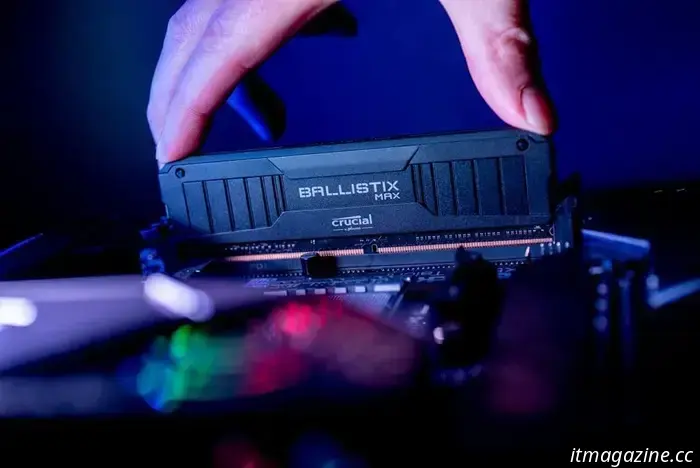
In December 2025, Micron ceased operations of its consumer-oriented RAM and SSD brand, Crucial, to concentrate on enterprise and AI markets. This decision sparked a backlash, highlighting the company's preference for the rapidly growing AI sector over the needs of individual consumers.
Nonetheless, Micron emphasized that a significant portion of its market share still derives from LPDDR5 RAM modules supplied directly to OEMs like Dell and ASUS.
Under this OEM model, Micron maintains considerable control over the consumer supply chain. "Our intention is to assist consumers globally," states Moore, noting that the company remains engaged with "every single" PC manufacturer.
The executive pointed out that the total addressable market (TAM) for DRAM has surged, driven by the increasing demand from AI data centers, now standing at 40%, an increase from the previous 30 to 35%. He also noted that "50 to 60% of the overall market is requiring more bits" than it did previously.
Micron is still catering to consumers, but under new conditions
Although the surge in demand due to the rise of AI applications and data centers is a significant factor that Micron cannot overlook, the company "is still serving the consumer market."
Even as production increases, the memory shortage isn't expected to resolve until at least 2028. According to Moore, Micron's extensive factory expansion efforts won't provide substantial relief until that time.
Micron is working closely with PC and smartphone manufacturers to streamline RAM configurations, as varying memory sizes can adversely affect production yields, but this approach will only provide temporary stability. Ultimately, this implies that the memory crisis is likely to persist, causing challenges for end consumers for the next several years.
For over five years, Shikhar has consistently simplified advancements in consumer technology and presented them…
This 27-inch QHD monitor achieves 610Hz for the fastest gaming experience
A new 27-inch QHD oxide LCD panel aims for a refresh rate of 610Hz, catering to competitive gamers who desire ultra-smooth motion when it matters most.
A 610Hz QHD gaming monitor panel showcases specifications that even seasoned PC gamers find intriguing. If it performs as expected, it could enhance visual clarity during critical moments, particularly when tracking and making rapid corrections.
Its appeal lies in the combination of features. It’s a 27-inch 2560x1440 LCD panel, targeting extreme speed without reverting to 1080p. This is significant for those who prefer the clearer appearance of 1440p while still gaming competitively.
Microsoft rolls out Copilot Checkout for an integrated shopping experience
Copilot Checkout is being introduced in the US for merchants using Shopify, PayPal, and Stripe.
OpenAI launched an Instant Checkout feature in ChatGPT last year, allowing users to browse and purchase items without leaving the chat interface. Following this, Google introduced shoppable product listings in its Gemini app, and now Microsoft has unveiled a similar checkout feature for Copilot.
According to Microsoft, Copilot Checkout enables users to explore, compare, and purchase products without exiting the chat interface. The company has collaborated with Shopify, PayPal, and Stripe to facilitate this experience and ensures a seamless onboarding process for interested businesses.
Acer remains tight-lipped about the launch date for the Nitro Blaze handheld
After opting not to attend CES 2026, Acer states that its US roadmap remains intact, but plans for launching still lack a timeline.
At CES 2026, Acer showcased monitors, laptops, and other devices in Las Vegas, but notably absent was any indication of the Nitro Blaze handheld gaming PCs that have been hinted at for over a year.
For those awaiting an announcement regarding the release date of the Acer Nitro Blaze handheld before making a purchase, the situation remains uncertain. Acer has indicated that the handheld sector remains part of its US strategy, but the company has not established a local launch schedule, focusing on core products while navigating ongoing tariff-related cost uncertainties.






Other articles
 Feeling down about Stranger Things wrapping up? Samsung's latest theme and wallpapers could help lift your spirits.
Samsung is commemorating the conclusion of Stranger Things with a fresh theme and wallpapers for Galaxy devices.
Feeling down about Stranger Things wrapping up? Samsung's latest theme and wallpapers could help lift your spirits.
Samsung is commemorating the conclusion of Stranger Things with a fresh theme and wallpapers for Galaxy devices.
 Anthropic's Claude will soon assist you in understanding your Apple Watch health information.
Anthropic's new Claude for Healthcare is designed to assist you in interpreting health and fitness data from wearables such as the Apple Watch.
Anthropic's Claude will soon assist you in understanding your Apple Watch health information.
Anthropic's new Claude for Healthcare is designed to assist you in interpreting health and fitness data from wearables such as the Apple Watch.
 The new UK guidelines on screen time for children under 5 focus on reducing passive screen use. Here’s what it means for you.
In April, the UK will release its initial guidance on screen time for children under the age of five. This guidance focuses on passive viewing, following studies that have associated excessive daily screen time in two-year-olds with poorer vocabulary and other issues.
The new UK guidelines on screen time for children under 5 focus on reducing passive screen use. Here’s what it means for you.
In April, the UK will release its initial guidance on screen time for children under the age of five. This guidance focuses on passive viewing, following studies that have associated excessive daily screen time in two-year-olds with poorer vocabulary and other issues.
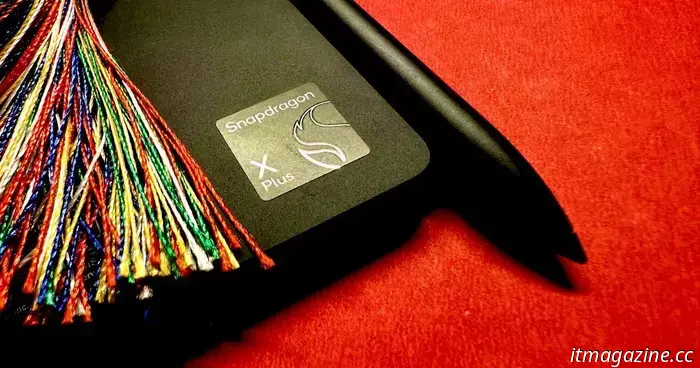 Snapdragon X2 Plus laptops are on the way; here's what the benchmarks indicate.
Benchmarks for the Snapdragon X2 Plus suggest that Qualcomm's upcoming chip for Windows laptops still falls behind Apple's M4 in most CPU and GPU evaluations. If you're planning to make a purchase soon, it’s advisable to wait for reviews of actual retail laptops.
Snapdragon X2 Plus laptops are on the way; here's what the benchmarks indicate.
Benchmarks for the Snapdragon X2 Plus suggest that Qualcomm's upcoming chip for Windows laptops still falls behind Apple's M4 in most CPU and GPU evaluations. If you're planning to make a purchase soon, it’s advisable to wait for reviews of actual retail laptops.
 Your Android and iPhone updates may encounter new security inspections in India.
India's phone security regulations may introduce a notification requirement prior to the deployment of major updates and security patches. Companies caution that this additional step could delay critical fixes, as India continues its discussions on a comprehensive security reform.
Your Android and iPhone updates may encounter new security inspections in India.
India's phone security regulations may introduce a notification requirement prior to the deployment of major updates and security patches. Companies caution that this additional step could delay critical fixes, as India continues its discussions on a comprehensive security reform.
 Gemini now allows you to purchase products from Walmart and Sam’s Club directly within the chat.
Walmart has teamed up with Google, allowing users to explore and buy products through Gemini.
Gemini now allows you to purchase products from Walmart and Sam’s Club directly within the chat.
Walmart has teamed up with Google, allowing users to explore and buy products through Gemini.
Micron indicates that the memory shortage crisis is likely to persist.
Micron asserts that the worldwide memory shortage is not a temporary issue. Due to the increasing demand for DRAM in AI data centers, even with boosted production, significant relief is not anticipated until 2028.