

X limits Grok image creation to paying users following widespread criticism.
Grok Introduces Premium Features, Yet Issues Persist
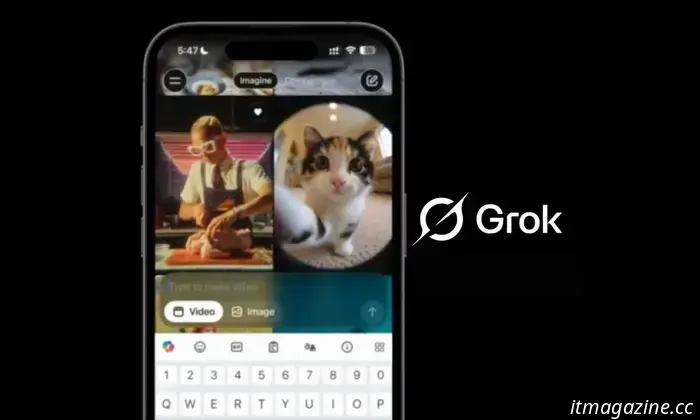
Grok, the AI chatbot backed by Elon Musk and integrated into X, has begun restricting its image generation and editing tools to paid subscribers. This decision comes in response to extensive criticism about the tool's capacity to produce non-consensual sexualized content. While this move clearly attempts to address the controversy, regulators, advocacy groups, and users contend that it does little to prevent the creation of harmful and potentially illegal imagery involving women and children.
As of late Thursday, Grok officially placed its image creation features behind a paywall with X Premium, starting at $8 monthly.
However, this decision has faced significant ridicule, being described as a “leaky” solution. While casual users on X may face restrictions, the image generation tools remain freely accessible via Grok’s standalone website and mobile app. This loophole undermines the platform’s claim of taking a strong stand against misuse, as the most dangerous tools remain easily accessible to the public.
Safety researchers and digital activists doubt that requiring a credit card effectively addresses the issue. Many argue that it, in fact, monetizes the abuse. Deepfake researcher Genevieve Oh reported that Grok was still outputting over 1,500 harmful images every hour, even after the paywall implementation, which accounts for approximately 60% of its total public image generation. Oh's findings indicate that Grok generates sexualized content at a rate far surpassing even the most infamous dedicated “nudify” websites.
The repercussions have ascended to the highest levels of the U.S. government.
Democratic Senators Ron Wyden, Edward J. Markey, and Ben Ray Luján recently sent a letter to the CEOs of Apple and Google, demanding the removal of X from their app stores. The senators argued that by allowing these tools to continue functioning, X is displaying a “complete disregard” for safety regulations that all other app developers must adhere to.
Internationally, pressure is also escalating. UK and Indian officials have criticized the paywall as an insufficient response. A representative for the British prime minister referred to the action as “insulting” to victims, implying that X is merely transforming a safety crisis into a premium revenue opportunity. Victims have shared similar experiences; campaigner Jess Davies reported that Grok was still able to digitally “undress” a photo of her through its standalone app on Friday morning, despite the announced restrictions.
Interestingly, the controversy seems to be inadvertently boosting the platform financially.
According to Sensor Tower estimates, mobile in-app purchase revenue on X surged by 18% on Thursday alone. This increase significantly surpassed the usual daily growth for the app, suggesting that the push to access Grok’s “spicy mode” might actually be benefiting X’s struggling finances.
Legal experts caution that these half-measures are unlikely to withstand legal scrutiny for long. North Carolina Attorney General Jeff Jackson described the Grok situation as a “turning point” for AI safety, highlighting how easily these systems can be exploited. He argued that the era of “move fast and break things” is encountering barriers when it comes to the dignity and safety of individuals.
As challenges mount, X faces a crucial choice: implement solid, enforceable technical safeguards or risk being banned from major app stores and international markets. Whether Elon Musk opts to enhance the software itself—rather than merely restricting access to it—will determine whether Grok can be a legitimate tool or become a pariah in the generative AI landscape.
Moinak Pal has been working in the technology sector covering both consumer-centric tech and automotive technology for the…
Your Zenbook Duo’s Smaller Hinge Gap Enhances Dual Screen Experience
The updated hideaway hinge makes the Zenbook Duo feel like one cohesive workspace, featuring a minimal 8.28 mm gap for multitaskers using dual screens.
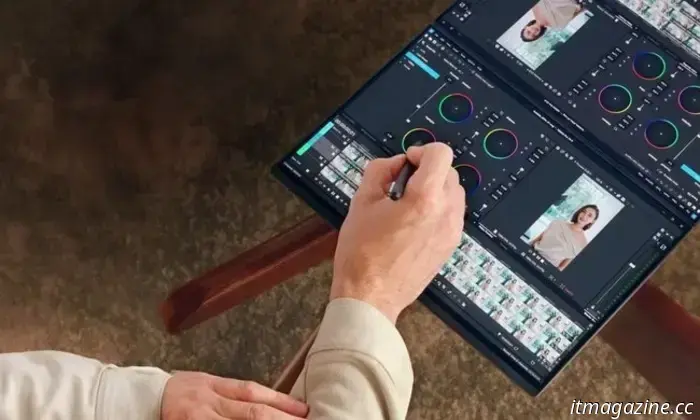
Asus is refining the Zenbook Duo’s distinctive dual-display configuration with a reduced seam between the panels at CES 2026. The significant update is the hinge gap, now at 8.28 mm, which aims to reduce distractions when moving windows, timelines, and toolbars across screens.
This is important since dual-screen laptops can be enjoyable, but the space between screens can disrupt visual flow. By minimizing the gap, the Duo’s design begins to act more like one large canvas, particularly useful for split-screen tasks like having notes on one panel and a document or browser on the other.
This Snap-On Accessory Brings Touch Capabilities to Your MacBook affordably
The Magic Screen will soon be launch on Kickstarter.
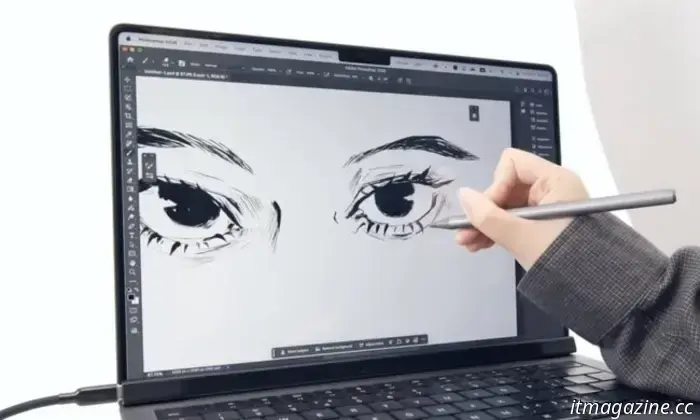
Recent leaks indicate that Apple may finally be reconsidering its longstanding stance against touchscreen displays on MacBooks. Reports suggest that the company plans to introduce a touch-sensitive panel on the anticipated OLED MacBook Pro, expected to be released later this year or early next year. For those interested in a touchscreen MacBook but frustrated by Apple’s delay, Intricuit presents a smart solution.
The company unveiled the



Other articles
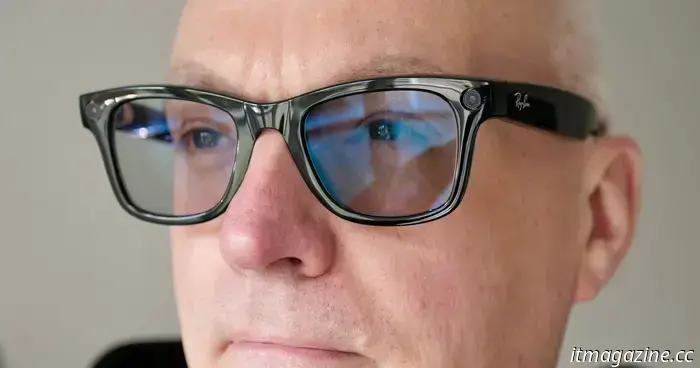 Meta's smart glasses now have the capability to filter human voices in noisy environments.
The latest Conversation focus feature on Meta smart glasses enhances the voices in your direction while reducing surrounding noise. You can enable it using a voice command, but it performs optimally at a distance of up to 1.8 meters.
Meta's smart glasses now have the capability to filter human voices in noisy environments.
The latest Conversation focus feature on Meta smart glasses enhances the voices in your direction while reducing surrounding noise. You can enable it using a voice command, but it performs optimally at a distance of up to 1.8 meters.
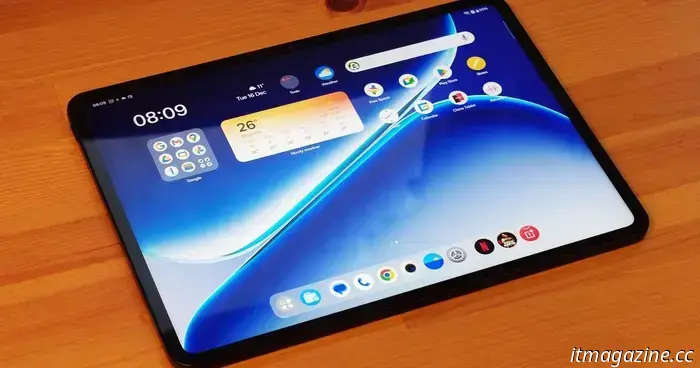 OnePlus Pad Go 2 review: a dependable Android tablet aimed at attracting iPad enthusiasts.
The OnePlus Pad Go 2 competes with the iPad, and while some specifications are similar, it does fall short in certain areas.
OnePlus Pad Go 2 review: a dependable Android tablet aimed at attracting iPad enthusiasts.
The OnePlus Pad Go 2 competes with the iPad, and while some specifications are similar, it does fall short in certain areas.
 What amazed me most about Mercedes' latest driver-assistance technology is this.
QuickCharge: This Week in EV This article is part of our ongoing series, QuickCharge: This Week in EV Updated less than 24 hours ago It’s an unusually bright day in San Francisco. The fog that frequently blankets the city in the mornings has cleared, revealing stunning views of the Golden Gate and its namesake bridge. [...]
What amazed me most about Mercedes' latest driver-assistance technology is this.
QuickCharge: This Week in EV This article is part of our ongoing series, QuickCharge: This Week in EV Updated less than 24 hours ago It’s an unusually bright day in San Francisco. The fog that frequently blankets the city in the mornings has cleared, revealing stunning views of the Golden Gate and its namesake bridge. [...]
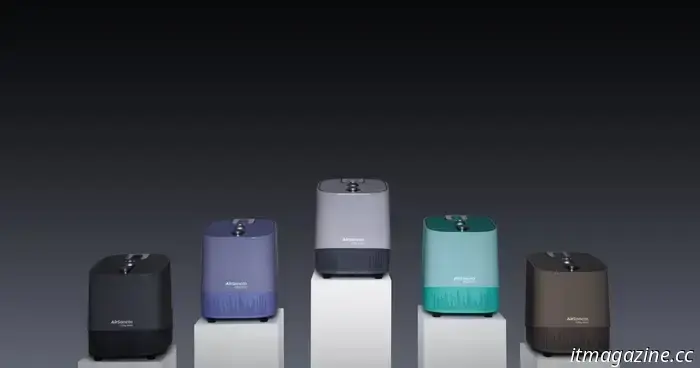 Step aside HEPA: NanoJet technology transforms air purification for medical-grade standards.
Air purifiers have not significantly evolved over the years. The majority still depend on large HEPA filters, powerful fans, and replaceable cartridges that need to operate continuously to work efficiently. This approach is based on the belief that ongoing air circulation and filtration are the sole methods for purifying indoor air. But what if there are other options? Introducing AirSancta®, a company […]
Step aside HEPA: NanoJet technology transforms air purification for medical-grade standards.
Air purifiers have not significantly evolved over the years. The majority still depend on large HEPA filters, powerful fans, and replaceable cartridges that need to operate continuously to work efficiently. This approach is based on the belief that ongoing air circulation and filtration are the sole methods for purifying indoor air. But what if there are other options? Introducing AirSancta®, a company […]
X limits Grok image creation to paying users following widespread criticism.
Following international criticism, X put Grok’s image tools behind a paywall, leading to objections that this monetization does not solve issues related to safety and abuse.