
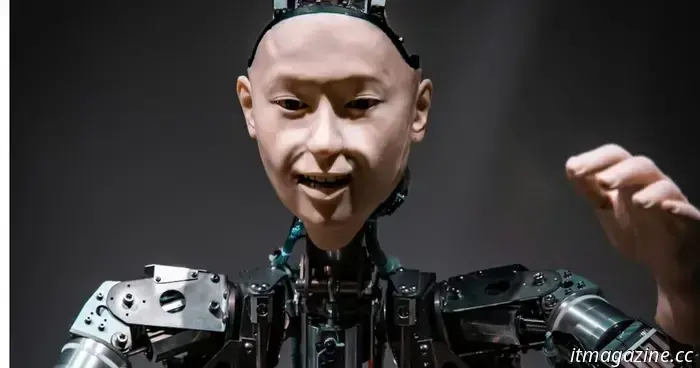
This synthetic skin could provide robots with ‘human-like’ sensitivity.
Providing robots with a sense of touch
While robots have made significant strides in visual, auditory, and movement capabilities, touch has remained an elusive element. At CES 2026, Ensuring Technology introduced a novel artificial skin that aims to give robots a level of sensitivity similar to humans, enabling them to perceive their environment rather than merely colliding with it.
The company’s newest tactile sensing technology is designed to enhance robots' ability to detect pressure, texture, and contact, surpassing the functionality of basic touch sensors. Central to this announcement are two products named Tacta and HexSkin, both intended to address a persistent challenge in the field of robotics.
Ensuring Technology's product range displayed at CES 2026
Humans heavily depend on touch to grasp items, exert appropriate force, and quickly adjust when something slips. In contrast, robots typically function with limited feedback. Ensuring Technology aims to bridge this gap by mimicking the way human skin senses and interprets touch.
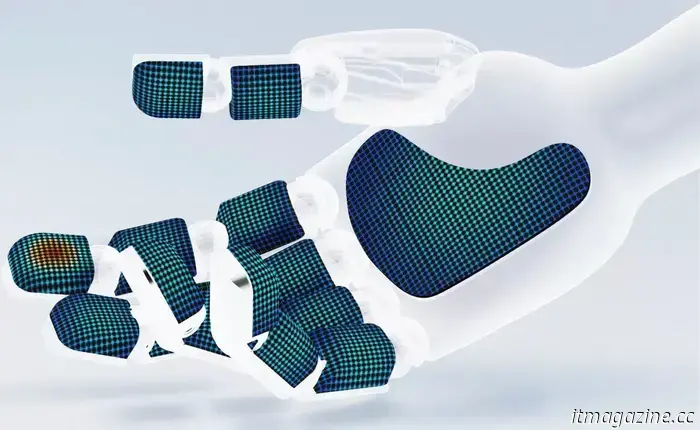
Tacta, a multi-dimensional tactile sensor, is created for robotic hands and fingers. Each square centimeter contains 361 sensing elements, sampling data at a rate of 1000Hz, which the company claims provides sensitivity comparable to that of human touch. Despite its high density, the sensor measures just 4.5mm in thickness and integrates sensing, data processing, and edge computing within a single module.
At CES, Ensuring demonstrated a fully covered robotic hand equipped with Tacta, featuring 1,956 sensing elements distributed across its fingers and palm, effectively establishing a comprehensive network of tactile perception.
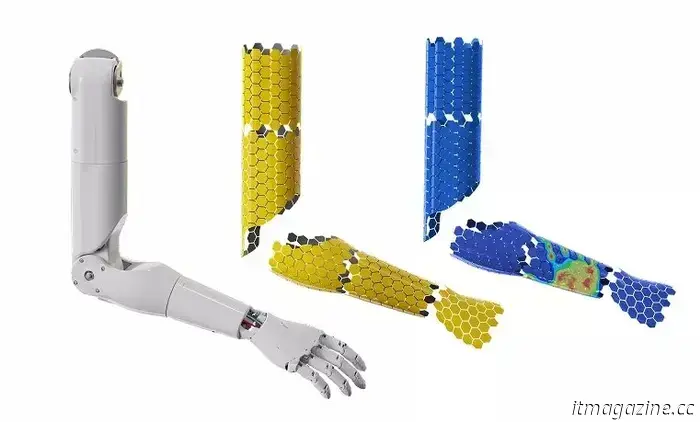
HexSkin goes a step further by extending touch capabilities to larger surfaces. Designed in a hexagonal, tile-like pattern, HexSkin is adaptable to complex curved shapes, making it ideal for humanoid robots.
CES 2026 has been filled with robots that illustrate the rapid advancements in the field and underscore the importance of enhanced touch. Notable examples include LG’s CLOiD home robot, designed to assist with household tasks such as laundry and meal preparation, alongside humanoid robots capable of playing tennis with impressive coordination and Boston Dynamics' Atlas, which demonstrated advanced balance and mobility.
Although these machines already excel in vision and movement, most still rely on visual input and rigid sensors. Incorporating a human-like sense of touch through artificial skin could be the key to making robots feel a bit more human.
Manisha focuses on technology that integrates into daily life, encompassing smartphones and apps to gaming and streaming…
The 3D-printed shoe company seeking to emulate Apple's success
A defining characteristic of the individuals and companies featured in Trending Forwards is their commitment to innovation, and Syntilay exemplifies this approach. They aspire to revolutionize shoe production—not only in terms of manufacturing through 3D printing based on extensive data but also by transforming the ideation, design, and wearability processes.
Read more
A groundbreaking technique can produce AI videos in mere seconds
TurboDiffusion is a new technique for AI video generation capable of creating synthetic videos up to 200 times faster than current methods without compromising quality. This development is a collaborative effort between ShengShu Technology, Tsinghua University, and researchers from the University of California, Berkeley. According to the creators, this system significantly reduces the time required for video generation, a traditionally time-consuming and resource-intensive process.
Read more
A camera innovation that could enable photos with complete focus
Researchers at Carnegie Mellon University have developed a revolutionary lens technology that allows cameras to focus on an entire scene simultaneously.
Whether using a top-tier camera phone or a professional camera, achieving focus across the entire frame from the foreground to the background has often been challenging. However, a new breakthrough could soon change that. Carnegie Mellon researchers have successfully created a new type of camera lens that provides spatially selective focusing, enabling cameras to capture images "where every detail, near and far, is perfectly sharp—from the flower petal right in front of you to the distant trees on the horizon."
Read more
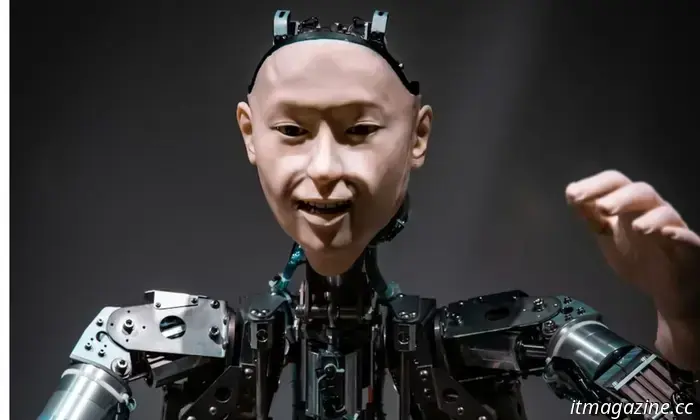






This synthetic skin could provide robots with ‘human-like’ sensitivity.
A novel artificial skin presented at CES 2026 has the potential to bestow robots with human-like sensitivity, enabling machines to better perceive pressure and texture, which would allow them to grasp objects, adjust their grip, and engage with people and surroundings in a more natural manner.