
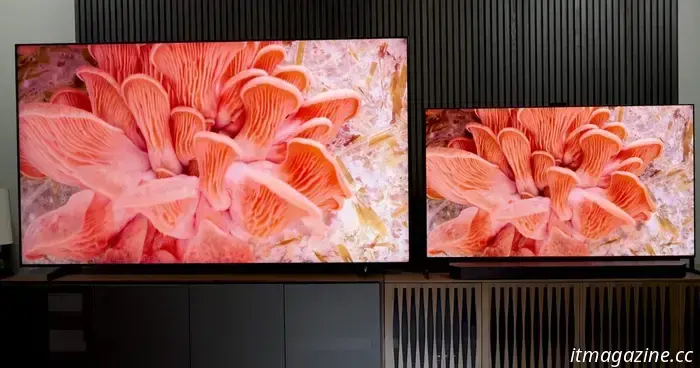
The year 2026 might be significant for televisions, but I have concerns about the software.
The world of television is vibrant and dynamic, with major brands and newcomers continually competing by innovating new screen technologies, advanced operating systems, and attractive pricing. As we step into the new year, it's natural for people to wonder: what developments could 2026 hold for TVs?
In 2025, there were significant advancements: Mini-LEDs became more affordable, OLEDs introduced new features, and companies continued to improve their software offerings. Our curated list of top TVs experienced some changes. However, I anticipate that 2026 will be even more groundbreaking, thanks to a revolutionary new type of screen technology set to debut.
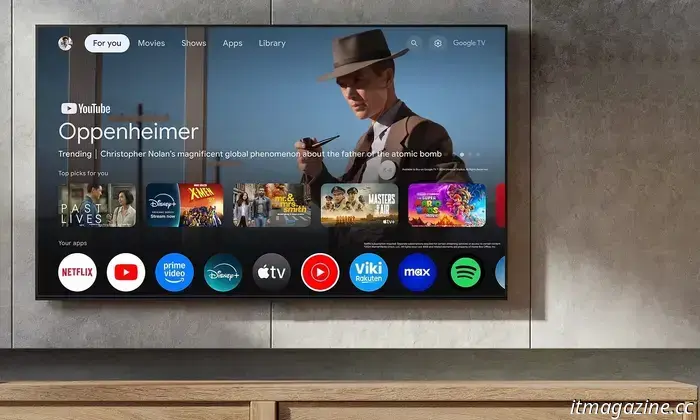
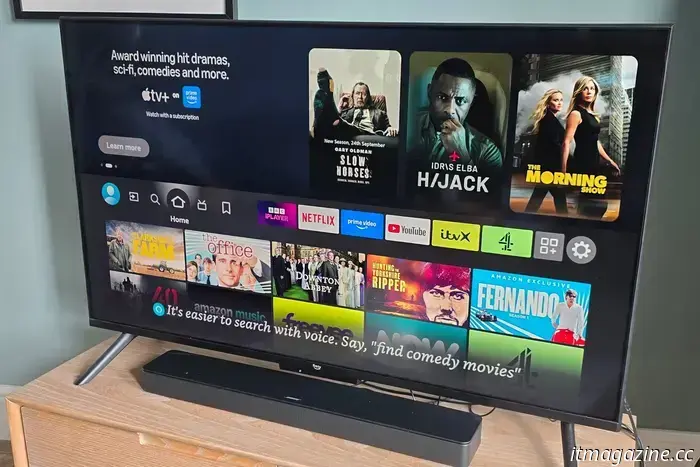
Yet, as is often the case, not every enhancement will necessarily equate to a true upgrade. I foresee improved hardware, but changes in how TV software will be managed in 2025 may lead to a somewhat frustrating experience for those looking to purchase a smart TV. More on that later.
Let’s delve into my major TV predictions for 2026, focusing on both new hardware and software that may emerge.
The major new development: RGB TVs
Hisense
As we approach 2026, RGB TVs are poised to be the leading new technology. While the term might not be used universally—with brands likely opting for their own labels—terms like Micro RGB, RGB Mini-LED, or micro-RGB will all refer to this technology.
This new panel technology functions similarly to LED and Mini-LED TVs, featuring a layer of small lights that illuminate a second layer of pixels to display images. The key difference with RGB TVs is that these lights are red, green, and blue instead of white, allowing for a broader color gamut, improved contrast, and a greater maximum brightness.
We witnessed a few RGB TV prototypes in 2025, but they were large, costly models. In 2026, however, we anticipate seeing commercially viable models from most major TV manufacturers, available in a variety of sizes and price points.
With many prominent TV brands developing RGB TVs, this will likely emerge as a key battleground at major TV exhibitions as well as in sales and consumer guides, benefiting us, the consumers.
Additionally, RGB screens are reportedly more energy-efficient compared to traditional LED or Mini-LED displays, which is a noteworthy advantage for those looking to lower their energy bills.
8K TVs... sort of
Samsung / Samsung
While 8K TVs have largely remained a niche market, there’s potential for a significant shift in 2026.
This shift could involve the widespread adoption of AI upscaling, a development many analysts and enthusiasts are hopeful about. In theory, you could purchase a TV that can play 4K content and upscale it to 8K. While this wouldn’t be true '8K' as it would only support native 4K, you would still benefit from the additional pixels.
Though it’s not guaranteed that this feature will be common in 2026, Samsung exhibited technology achieving this in 2025, suggesting it may be on the horizon. Once such technology becomes available in affordable TVs, consumers will likely take notice.
Any updates for OLEDs?
Sony
Given that some of the top OLED TVs have been favorites among reviewers for years—if not budget-conscious shoppers—you might be curious about what 2026 has in store for this type of front-lit technology.
The answer is probably ‘not much’. Most leading TV brands typically refresh their OLED lineups annually, so while we can expect to see new models, the differences are likely to be minor and incremental.
Many OLED sets released in 2025 featured slight modifications like anti-glare screens, better video upscaling, and marginally improved refresh rates. While these are certainly beneficial updates for buyers, they won’t be compelling enough for anyone to upgrade from their 2024 model. This trend will likely continue into 2026; we may not see anything that will make you exclaim “whOahLED.” However, if any significant updates do emerge, they might include broader support for Dolby Vision 2.
'Concept' TVs
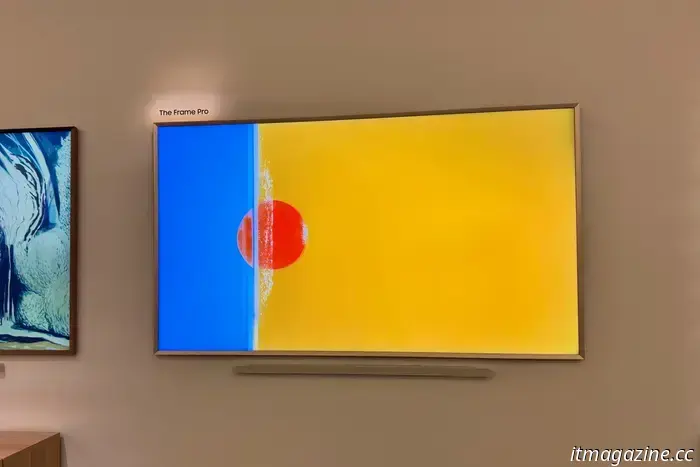
Samsung The Frame Pro John Higgins / Digital Trends
Several TV concepts have been under development for some time and will definitely progress into 2026. While they may not become mainstream, they will continue to evolve in technology and popularity, making them worth mentioning.
Several manufacturers have showcased wireless TVs that eliminate cables for a sleek look, as well as 'lifestyle' TVs that disguise themselves as artwork or furniture until activated (the most recognized being Samsung's The Frame). We can expect more of these in 2026, although I wouldn't anticipate truly affordable, consumer-ready options.
Rollable and transparent TVs remain even further from commercial availability. While we may see one or two showcased at major tech events, they will likely still be conceptual rather than accessible products for consumers during Black Friday sales.
One notable advancement in 2025 was the introduction of 165Hz TVs, which offer a faster refresh rate compared to


Other articles
 Samsung's budget-friendly Galaxy A07 5G may be released sooner than anticipated.
Samsung's Galaxy A07 5G is emerging as a recognizable yet significant budget smartphone, featuring a sleek design, up-to-date Android operating system, and 5G connectivity, all at a reasonable cost.
Samsung's budget-friendly Galaxy A07 5G may be released sooner than anticipated.
Samsung's Galaxy A07 5G is emerging as a recognizable yet significant budget smartphone, featuring a sleek design, up-to-date Android operating system, and 5G connectivity, all at a reasonable cost.
 Google's integrated Gemini is attracting users, and your workflow is the reason behind it.
Data from Similarweb indicates that Gemini's share of generative AI web traffic increased from 5.4% to 18.2% over the course of a year, while ChatGPT dropped to 68.0%.
Google's integrated Gemini is attracting users, and your workflow is the reason behind it.
Data from Similarweb indicates that Gemini's share of generative AI web traffic increased from 5.4% to 18.2% over the course of a year, while ChatGPT dropped to 68.0%.
 A recent report discusses the potential for sponsored placements in ChatGPT responses, while OpenAI emphasizes the importance of trust and product quality.
OpenAI continues to investigate the idea of “ChatGPT ads,” despite earlier indications that it was reconsidering this approach in order to enhance response quality. According to The Information, the company is thinking about introducing sponsored content that could be prioritized for inclusion in ChatGPT answers.
This is significant for a straightforward reason: if paid placements appear alongside advice, it may influence your clicks and purchases. However, this does not guarantee that ads will definitely be implemented. Companies are perpetually testing features, and this is more about concepts and prototypes than an actual rollout.
In a statement to The Information, OpenAI acknowledged this direction, stating that it is “exploring what ads in our product could look like,” while reiterating its commitment to maintaining user trust.
Prototypes indicate ad placement
The report suggests one concept where the model would prioritize sponsored content to ensure it shows up in responses. Another design proposed would feature sponsored information displayed in a sidebar next to the main ChatGPT response area.
Sidebar placement is easier to interpret quickly since it resembles traditional advertising space. In contrast, incorporating sponsored suggestions directly into an answer is more complex, as the user interface may create the impression of a unified recommendation.
Shifts in the timeline
This situation seems to fluctuate between "not at this moment" and "still being considered." After ad-related terms appeared in the Android beta, a subsequent report indicated that OpenAI had stalled ad development as leadership concentrated on quality, influenced by ongoing advancements with Gemini.
The Information now reports new advertising concepts again, implying that the notion remains alive, albeit temporarily deprioritized.
What to look for next
If “ChatGPT ads” progress beyond the prototype stage, the first indication will be disclosure: clear sponsorship labels, uniform placement across platforms, and settings that clarify personalization. The second indication will be the location of paid content, whether it remains in a sidebar or begins to integrate into the main responses.
However, there is currently no set date for implementation. Until OpenAI shares specific product details, consider this as testing and pay attention to its reactions to Google’s Gemini initiative.
---
Paulo Vargas is a reporter and technical writer who previously studied English, with a career that has continually returned to…
---
Maximize your after-Christmas sales shopping with these essential tips
These shopping strategies will aid you during the Christmas sales.
Once the mince pies are stored away and the wrapping paper is being removed, consider the neglected gadgets, clothing, and snacks that went unwrapped this holiday season. The Christmas sales begin right after the main day and offer a chance to snag a variety of items at appealing discounts.
While not as widely anticipated as Black Friday or Prime Day, the post-Christmas sales still present an excellent opportunity to find bargains, whether on a gift you desired but didn’t receive or on leftover stock of popular items from the year. Now is the perfect time to purchase that sought-after phone, discover an affordable GPU to enhance gaming in 2026, or finally get the best TV you’ve been waiting for.
---
I compared the image generation capabilities of ChatGPT with those of Nano Banana, and only one proved to produce usable stock photos.
This involves testing stock image creation with two distinct chatbots.
One of my personal hobbies is querying two different chatbots with the same question to see which one yields the best answer. Much like a professor evaluating students (which I occasionally do as a volunteer), I assess whether the bot creates hallucinations or provides intelligent, coherent responses that are genuinely useful.
“Intelligence” and “coherence” aren’t the descriptors I would typically assign to the images generated by chatbots. Often referred to as AI slop, these bizarre creations — featuring aspects like blurred backgrounds, impeccably styled humans, and sometimes even extra thumbs — abound on social media and even appear as feature images in articles like this one.
---
LG introduces its new UltraGear evo monitors, emphasizing resolution and AI upscaling.
With a focus on AI-driven upscaling and addressing Mini-LED blooming, LG's UltraGear evo monitors suggest that the future of gaming displays is about refinement rather than excess.
LG has launched a new series of UltraGear evo gaming monitors that heavily focus on two main themes: enhanced resolutions and advanced AI upscaling. The lineup includes three models: a 39-inch 5K2K OLED gaming monitor, a 52-inch 5K2K 240Hz gaming monitor, and a 27-inch 5K mini-LED monitor.
To start, the 39-inch GX9 (39GX950B), a curved OLED monitor, delivers "5K-class clarity without necessitating GPU upgrades," indicating the brand's commitment to AI upscaling. With real-time upscaling, AI Scene Optimization, and AI Sound, this monitor not only enhances visuals but also improves audio quality.
A report on Reddit states that the flashlight lens of a Pixel 10 Pro has melted, resulting in a dark, crater-like mark around the LED. While this information is unverified, it is simple to inspect, document, and raise concerns if you notice any similar damage.
A recent report discusses the potential for sponsored placements in ChatGPT responses, while OpenAI emphasizes the importance of trust and product quality.
OpenAI continues to investigate the idea of “ChatGPT ads,” despite earlier indications that it was reconsidering this approach in order to enhance response quality. According to The Information, the company is thinking about introducing sponsored content that could be prioritized for inclusion in ChatGPT answers.
This is significant for a straightforward reason: if paid placements appear alongside advice, it may influence your clicks and purchases. However, this does not guarantee that ads will definitely be implemented. Companies are perpetually testing features, and this is more about concepts and prototypes than an actual rollout.
In a statement to The Information, OpenAI acknowledged this direction, stating that it is “exploring what ads in our product could look like,” while reiterating its commitment to maintaining user trust.
Prototypes indicate ad placement
The report suggests one concept where the model would prioritize sponsored content to ensure it shows up in responses. Another design proposed would feature sponsored information displayed in a sidebar next to the main ChatGPT response area.
Sidebar placement is easier to interpret quickly since it resembles traditional advertising space. In contrast, incorporating sponsored suggestions directly into an answer is more complex, as the user interface may create the impression of a unified recommendation.
Shifts in the timeline
This situation seems to fluctuate between "not at this moment" and "still being considered." After ad-related terms appeared in the Android beta, a subsequent report indicated that OpenAI had stalled ad development as leadership concentrated on quality, influenced by ongoing advancements with Gemini.
The Information now reports new advertising concepts again, implying that the notion remains alive, albeit temporarily deprioritized.
What to look for next
If “ChatGPT ads” progress beyond the prototype stage, the first indication will be disclosure: clear sponsorship labels, uniform placement across platforms, and settings that clarify personalization. The second indication will be the location of paid content, whether it remains in a sidebar or begins to integrate into the main responses.
However, there is currently no set date for implementation. Until OpenAI shares specific product details, consider this as testing and pay attention to its reactions to Google’s Gemini initiative.
---
Paulo Vargas is a reporter and technical writer who previously studied English, with a career that has continually returned to…
---
Maximize your after-Christmas sales shopping with these essential tips
These shopping strategies will aid you during the Christmas sales.
Once the mince pies are stored away and the wrapping paper is being removed, consider the neglected gadgets, clothing, and snacks that went unwrapped this holiday season. The Christmas sales begin right after the main day and offer a chance to snag a variety of items at appealing discounts.
While not as widely anticipated as Black Friday or Prime Day, the post-Christmas sales still present an excellent opportunity to find bargains, whether on a gift you desired but didn’t receive or on leftover stock of popular items from the year. Now is the perfect time to purchase that sought-after phone, discover an affordable GPU to enhance gaming in 2026, or finally get the best TV you’ve been waiting for.
---
I compared the image generation capabilities of ChatGPT with those of Nano Banana, and only one proved to produce usable stock photos.
This involves testing stock image creation with two distinct chatbots.
One of my personal hobbies is querying two different chatbots with the same question to see which one yields the best answer. Much like a professor evaluating students (which I occasionally do as a volunteer), I assess whether the bot creates hallucinations or provides intelligent, coherent responses that are genuinely useful.
“Intelligence” and “coherence” aren’t the descriptors I would typically assign to the images generated by chatbots. Often referred to as AI slop, these bizarre creations — featuring aspects like blurred backgrounds, impeccably styled humans, and sometimes even extra thumbs — abound on social media and even appear as feature images in articles like this one.
---
LG introduces its new UltraGear evo monitors, emphasizing resolution and AI upscaling.
With a focus on AI-driven upscaling and addressing Mini-LED blooming, LG's UltraGear evo monitors suggest that the future of gaming displays is about refinement rather than excess.
LG has launched a new series of UltraGear evo gaming monitors that heavily focus on two main themes: enhanced resolutions and advanced AI upscaling. The lineup includes three models: a 39-inch 5K2K OLED gaming monitor, a 52-inch 5K2K 240Hz gaming monitor, and a 27-inch 5K mini-LED monitor.
To start, the 39-inch GX9 (39GX950B), a curved OLED monitor, delivers "5K-class clarity without necessitating GPU upgrades," indicating the brand's commitment to AI upscaling. With real-time upscaling, AI Scene Optimization, and AI Sound, this monitor not only enhances visuals but also improves audio quality.
A report on Reddit states that the flashlight lens of a Pixel 10 Pro has melted, resulting in a dark, crater-like mark around the LED. While this information is unverified, it is simple to inspect, document, and raise concerns if you notice any similar damage.
 Welcome to Greatest Hits Week – five days, five episodes from our archive, spelling out F-I-I-R-E. Today’s second letter, I, represents Investing. This episode first aired in April 2022, but the framework we discuss remains among the most practical guides we've provided for accumulating wealth at any age.
Nick Maggiulli is with us to explain why many young investors fixate on the wrong metrics and to introduce his Save-Invest Continuum, which illustrates precisely when savings outperform investment returns and when that shifts.
_____
In his twenties, Nick Maggiulli spent a considerable amount of time fixating on his investment portfolio, adjusting his asset allocation, estimating net worth projections, and creating complex spreadsheets. At the same time, he was spending $100 every weekend partying in San Francisco.
It took him years to recognize the absurdity of this behavior. His annual investment returns on his modest $1,000 portfolio might yield him $100, which is equivalent to what he would spend in one night out.
Maggiulli joins us to clarify why young investors concentrate on the wrong aspects and provides his framework for determining when to focus on saving versus investing. He introduces the Save-Invest Continuum, which compares your projected annual savings to your anticipated investment returns.
When starting out, your saving capacity greatly exceeds any investment gains. For instance, a $6,000 annual saving potential surpasses a $100 investment return every time.
We delve into the mathematics of saving 50 percent of future raises, not out of guilt or deprivation, but to achieve lifestyle balance while growing wealth. This guideline only applies to actual raises above inflation. If you receive a 3 percent raise concurrently with a 3 percent inflation rate, you have not truly made any progress.
The discussion shifts to unconventional income-generating assets. Aside from stocks and bonds, Maggiulli explores investing in farmland, which provides returns that are uncorrelated with standard markets. He recounts a story about someone who purchased the royalty rights to Jay-Z and Alicia Keys’ "Empire State of Mind" for $190,000. The song earned $32,733 in royalties the prior year, indicating an 11 percent return if that income remains stable.
We investigate why 85 to 90 percent of your portfolio should generate income via dividends, rent, interest, or business profits. Maggiulli keeps his speculative investments, including cryptocurrency, art, and individual stocks, to less than 10 percent of his net worth. He admits that his two selected individual stocks have declined by 60 to 70 percent, illustrating his point about steering clear of stock picking.
The episode underscores that time is your most valuable asset. Warren Buffett would likely be willing to trade his entire fortune—and even incur debt—to be 35 again.
This viewpoint influences every financial decision, from selecting income strategies to choosing between assets that simply appreciate versus those that provide income while you sleep.
Resources:
Afford Anything podcast episode #375
Timestamps:
Note: Timestamps may vary across different listening devices due to dynamic advertising durations. The provided timestamps are approximate and may differ by a few minutes based on changing ad lengths.
(0:00) Nick’s regret over focusing on investments while neglecting returns from partying
(4:20) Explanation of the Save-Invest Continuum
(7:00) When savings are more crucial than investment returns
(11:20) Balancing both saving and investing in midlife
(12:00) Crossover point: when investment returns surpass spending
(13:00) The 2X Rule for guilt-free spending
(14:20) Save 50 percent of future raises
(19:30) Five strategies to increase income
(21:20) Selling time versus selling skills
(23:00) Teaching and product creation for income
(25:00) Advancing the corporate ladder
(26:00) Transforming human capital into financial capital
(27:20) Income-generating vs. speculative assets
(31:00) Allocation for individual stocks and cryptocurrency
(34:40) Basics of farmland investing
(36:20) Example of royalty investing
(40:20) Art and non-income-generating assets
(42:00) Strategies for inflation and debt
Thanks to our sponsors!
Boldin: Model your retirement scenarios, test every "what if," and confidently take control of your financial future. Start planning at go.boldin.com/afford.
According to a recent report, OpenAI is still considering the introduction of ads in ChatGPT, highlighting the potential for sponsored content to be featured prominently in responses. While this isn't a launch yet, it indicates that the concept is very much in consideration.
Welcome to Greatest Hits Week – five days, five episodes from our archive, spelling out F-I-I-R-E. Today’s second letter, I, represents Investing. This episode first aired in April 2022, but the framework we discuss remains among the most practical guides we've provided for accumulating wealth at any age.
Nick Maggiulli is with us to explain why many young investors fixate on the wrong metrics and to introduce his Save-Invest Continuum, which illustrates precisely when savings outperform investment returns and when that shifts.
_____
In his twenties, Nick Maggiulli spent a considerable amount of time fixating on his investment portfolio, adjusting his asset allocation, estimating net worth projections, and creating complex spreadsheets. At the same time, he was spending $100 every weekend partying in San Francisco.
It took him years to recognize the absurdity of this behavior. His annual investment returns on his modest $1,000 portfolio might yield him $100, which is equivalent to what he would spend in one night out.
Maggiulli joins us to clarify why young investors concentrate on the wrong aspects and provides his framework for determining when to focus on saving versus investing. He introduces the Save-Invest Continuum, which compares your projected annual savings to your anticipated investment returns.
When starting out, your saving capacity greatly exceeds any investment gains. For instance, a $6,000 annual saving potential surpasses a $100 investment return every time.
We delve into the mathematics of saving 50 percent of future raises, not out of guilt or deprivation, but to achieve lifestyle balance while growing wealth. This guideline only applies to actual raises above inflation. If you receive a 3 percent raise concurrently with a 3 percent inflation rate, you have not truly made any progress.
The discussion shifts to unconventional income-generating assets. Aside from stocks and bonds, Maggiulli explores investing in farmland, which provides returns that are uncorrelated with standard markets. He recounts a story about someone who purchased the royalty rights to Jay-Z and Alicia Keys’ "Empire State of Mind" for $190,000. The song earned $32,733 in royalties the prior year, indicating an 11 percent return if that income remains stable.
We investigate why 85 to 90 percent of your portfolio should generate income via dividends, rent, interest, or business profits. Maggiulli keeps his speculative investments, including cryptocurrency, art, and individual stocks, to less than 10 percent of his net worth. He admits that his two selected individual stocks have declined by 60 to 70 percent, illustrating his point about steering clear of stock picking.
The episode underscores that time is your most valuable asset. Warren Buffett would likely be willing to trade his entire fortune—and even incur debt—to be 35 again.
This viewpoint influences every financial decision, from selecting income strategies to choosing between assets that simply appreciate versus those that provide income while you sleep.
Resources:
Afford Anything podcast episode #375
Timestamps:
Note: Timestamps may vary across different listening devices due to dynamic advertising durations. The provided timestamps are approximate and may differ by a few minutes based on changing ad lengths.
(0:00) Nick’s regret over focusing on investments while neglecting returns from partying
(4:20) Explanation of the Save-Invest Continuum
(7:00) When savings are more crucial than investment returns
(11:20) Balancing both saving and investing in midlife
(12:00) Crossover point: when investment returns surpass spending
(13:00) The 2X Rule for guilt-free spending
(14:20) Save 50 percent of future raises
(19:30) Five strategies to increase income
(21:20) Selling time versus selling skills
(23:00) Teaching and product creation for income
(25:00) Advancing the corporate ladder
(26:00) Transforming human capital into financial capital
(27:20) Income-generating vs. speculative assets
(31:00) Allocation for individual stocks and cryptocurrency
(34:40) Basics of farmland investing
(36:20) Example of royalty investing
(40:20) Art and non-income-generating assets
(42:00) Strategies for inflation and debt
Thanks to our sponsors!
Boldin: Model your retirement scenarios, test every "what if," and confidently take control of your financial future. Start planning at go.boldin.com/afford.
According to a recent report, OpenAI is still considering the introduction of ads in ChatGPT, highlighting the potential for sponsored content to be featured prominently in responses. While this isn't a launch yet, it indicates that the concept is very much in consideration.
 A leak suggests that the battery life of the Galaxy Buds 4 Pro will improve, which may make your wait worthwhile.
Samsung’s Galaxy Buds 4 Pro have recently passed through the FCC, indicating that a launch is imminent. A disclosed battery capacity of 57mAh per earbud, up from the previous 48mAh, suggests that improved battery life might be the key enhancement.
A leak suggests that the battery life of the Galaxy Buds 4 Pro will improve, which may make your wait worthwhile.
Samsung’s Galaxy Buds 4 Pro have recently passed through the FCC, indicating that a launch is imminent. A disclosed battery capacity of 57mAh per earbud, up from the previous 48mAh, suggests that improved battery life might be the key enhancement.
 Samsung's latest Music Studio speakers provide clear sound while fitting seamlessly with your decor.
Samsung's latest Music Studio speakers offer clear sound along with a stylish, minimalist design.
Samsung's latest Music Studio speakers provide clear sound while fitting seamlessly with your decor.
Samsung's latest Music Studio speakers offer clear sound along with a stylish, minimalist design.
The year 2026 might be significant for televisions, but I have concerns about the software.
Here are our forecasts for television in 2026, featuring RGB LED technology, 8K displays, and AI assistants.