
"Cyber Storage": creating a universal storage system for block, file, object, and backup
Against the backdrop of growing demand for flexible and cost-effective data storage systems, Cyberprotect offers customers "Cyber Storage," which combines block, file, and object access in a single scalable platform. The product enables creation of a fault-tolerant infrastructure on standard servers, integrates with backup solutions, and provides built-in mechanisms to protect data from ransomware. Details are in IT-World.
The data storage market is changing rapidly: there is more data, requirements for fault tolerance are becoming more complex, and classic hardware storage arrays often turn out to be expensive, hard to scale, and vendor-locking. In this context interest in SDS — software-defined storage that runs on standard servers and scales by adding nodes — is growing.
Cyberprotect’s "Cyber Storage" belongs to this class of solutions. It is a software data storage system for building local or geographically distributed infrastructure on standard x86 platforms, with centralized management and support for key access protocols. It allows combining block, file, and object storage in a single system and tuning characteristics for specific tasks depending on performance, capacity, and cost.
Regarding "Cyber Storage," it can be said that it enables building a storage system for any purpose and performance level by combining storage tiers with different characteristics in one system. Deployment and operation do not require a team of rare specialists, aided by an intuitive graphical interface, automatic hardware configuration, configuration cloning, and comprehensive documentation with support from the Russian developer company.
A bit more detail: "Cyber Storage" is a software data storage solution for building local or geographically distributed data storage infrastructure on standard server platforms. The infrastructure can implement block, file, and object stores that can work together and scale to several petabytes. Depending on requirements, the system can create storage pools with different performance and cost profiles, protected by different fault-tolerance technologies.
How "Cyber Storage" is built
The product turns a group of ordinary x86-64 servers with HDDs, SSDs, or NVMe into a single distributed disk array. Cluster nodes are equal peers, so no dedicated hardware is required for services to run; services can coexist on the same nodes that store the data. This lowers the entry barrier and makes the architecture more flexible.
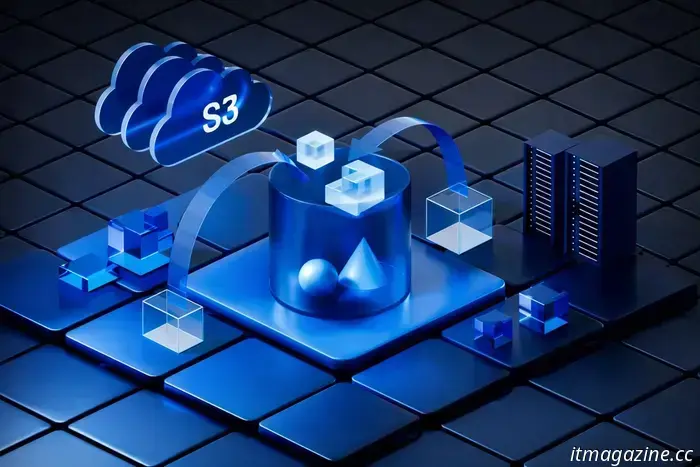
The system supports major storage protocols, including iSCSI for block access, NFS for file access, and S3 for object access. The NFS implementation is noted for being insensitive to the number of files in a folder. In addition to standard functions, "Cyber Storage" is integrated with the SRK "Cyber Backup" and "Cyber Backup Cloud" and can store backups or act as a gateway to save data in external storage systems. Integration is implemented via a Backup Gateway, which allows saving backups on the distributed array of "Cyber Storage" or in external stores such as NFS or S3.
The cluster is easily scalable and can serve up to 64 PB of user data. Within the cluster it is possible to organize storage tiers — areas on a single disk type with hybrid configuration or without it. Via the graphical interface up to four tiers are available; via the command line up to 255. This approach allows building storage spaces with the required performance and cost characteristics and reduces interference between different workloads. If "Cyber Storage" is used for S3, storage tiers can be used as storage classes similar to Amazon’s approach, using standard access methods.
Versatility and storage efficiency in one system
As noted above, the developer’s key idea is that a single cluster can simultaneously host block, file, and object storage. These services can operate on shared disk space or be placed on different storage tiers to avoid mutual interference. Within one cluster NVMe, SSD, and HDD can be combined to create disk pools that best match the requirements of specific data and applications, differing in both performance and storage cost.
Practically, this is especially useful when a company has a "zoo" of disparate storage systems. Consolidation on a single platform usually simplifies administration and makes resource management more uniform. Additionally, centralizing storage can reduce the attack surface, since it is easier to establish unified access rules, monitoring, and control.
Fault tolerance, disaster recovery, and geo-distribution
A modern storage system is evaluated not only by capacity but also by how it survives failures and site incidents. "Cyber Storage" uses advanced fault-tolerance mechanisms, including replication and erasure coding. Schemes are supported where the loss of a significant portion of equipment does not lead to service interruption when the configuration and failure domains are chosen correctly. Metrocluster and georeplication scenarios are also mentioned.
Asynchronous replication of data is available out of the box for S3 and Backup Gateway. This enables building disaster-resistant solutions with remote sites. The typical problem of S3 applications — that they often work only with a single domain name — is taken into account. "Cyber Storage" provides functionality to access all resources of a geo-distributed S3 infrastructure via a single domain name, reducing the need to modify applications or use complex global load balancers.
S3 as a tool for automation and high loads
S3 in enterprise infrastructure is no longer seen as a cloud curiosity but as a convenient mechanism for automating data management, especially when there are very many and heterogeneous objects. "Cyber Storage" supports typical S3 features, including Bucket Policy access policies, Object Lifecycle for lifecycle management, S3 Versioning, Object Lock to protect objects from deletion for a specified period, and the use of additional metadata and tags for processing automation.
The developer claims the ability to store a huge number of small objects without special administrator actions, including a scenario with 10 billion objects in a single bucket. Performance guidelines for a single node are given: up to 5,000 objects of 40 KB per second or up to 2 GB/s for objects of 1 MB and larger. For a minimal cluster of five servers, the aggregate large-object write speed can reach up to 10 GB/s. This is useful, for example, to speed up backups of large databases, including PostgreSQL when using tools like pg_probackup, and for scenarios of offloading large binary objects from an RDBMS to object storage and replacing them with links, which reduces database size and simplifies operation.
Data security and protection from ransomware
The market demand for data security in storage has shifted toward immutability. Companies need assurance that critical data or backups will not be deleted, altered, or encrypted by malware. In practice this has driven interest in WORM (Write Once Read Many) approaches that allow data to be written once and prohibit modification.
In the S3 context, "Cyber Storage" supports such scenarios through mechanisms like S3 Object Lock, which prevent objects from being overwritten or changed. This helps increase resistance to ransomware attacks and reduces the risk of backup compromise. More broadly, this is seen as one way to compensate for the shortage of tape libraries and to realize an effect similar to an air gap, where critical copies are harder to destroy through a breach of the production infrastructure.
Read also
VCS-2025. Rating of videoconferencing systems
Video meetings have long become routine, but choosing a platform is still difficult. Zoom is no longer the only reference point, Russian solutions have improved, and IT directors must sort out the nuances. IT-World’s rating shows how the market has changed over the year.
Key use cases
"Cyber Storage" is typically considered for several clear scenarios. It can expand or replace disk array capacity when it is important to use familiar server hardware and avoid strict vendor lock-in. It can consolidate disparate stores when a cluster needs to combine S3, iSCSI, and NFS access, simplify administration, and centralize security management. It can enable S3 adoption when a company needs automated data management via access policies, lifecycle rules, versioning, and immutability, as well as the ability to place data on different media types through tiers and storage classes. It can implement disaster-resilient solutions when data must be protected by geographic distribution and replication. It provides economical and fault-tolerant backup storage through integration with SRK and support for scenarios where applications write backups directly to S3. Finally, it can replace open-source solutions when comparable functionality is required along with development, documentation, and support located in Russia.
Differentiators and value of the solution
To summarize and collect the differences into a single set: "Cyber Storage" emphasizes ease of installation and operation, with a graphical interface, automatic hardware setup, and configuration transfer to new servers. Versatility is achieved by simultaneously supporting block, file, and object storage and allowing selection of disk types and fault-tolerance technologies for different tasks. The architecture remains flexible and is suitable for both small deployments and large geo-distributed systems. Fault tolerance is provided by replication and erasure coding, and by the ability to design schemes with high resilience to failures. Storage efficiency is expressed in the ability to create multiple pools with different characteristics and costs within one cluster. Integration with "Cyber Backup" covers backup storage and replication scenarios. Cost-effectiveness is achieved by running on standard hardware, transparent licensing, and the fact that no dedicated management nodes are required.
"Cyber Storage" has existed as a standalone product since May 2025; it is based on proven technologies of "Cyber Infrastructure," which has many years of history. The solution is included in the Russian software registry of the Russian Ministry of Digital Development and at the time of writing is undergoing certification with FSTEC. A perpetual trial period limited to 1 TB of storage is available for evaluation, and a larger test license can be requested if needed. Testing can begin with a single server, understanding that in such a scheme the failure domain will be the disk. For more resilient configurations it is recommended to add nodes and build a cluster with a node-level failure domain, and with five or more servers more complete fault-tolerance options can be implemented.
Advertisement by LLC "Cyberprotect" erid: 2W5zFJdK9F6

Other articles
 The major home theater trend of 2026 is set to address this frustrating A/V issue.
Here are our predictions for home theaters in 2026, featuring a wireless year along with advancements in soundbars and projectors.
The major home theater trend of 2026 is set to address this frustrating A/V issue.
Here are our predictions for home theaters in 2026, featuring a wireless year along with advancements in soundbars and projectors.
 The release window for Ted Lasso season 4 has been announced, but the wait will be prolonged.
Production for Ted Lasso season 4 has officially resumed, and a release is anticipated in mid-2026. The downside is that it requires waiting through a full football season to reach that point.
The release window for Ted Lasso season 4 has been announced, but the wait will be prolonged.
Production for Ted Lasso season 4 has officially resumed, and a release is anticipated in mid-2026. The downside is that it requires waiting through a full football season to reach that point.
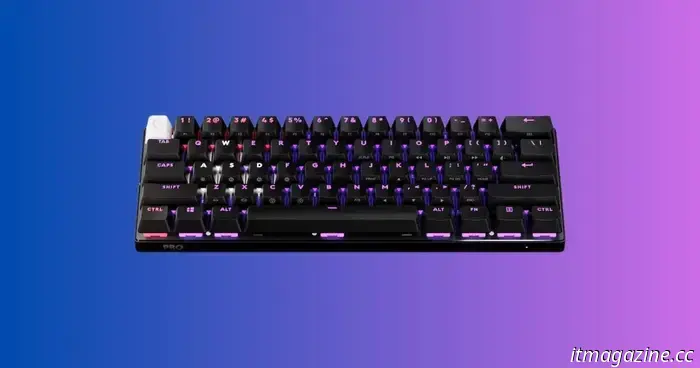 The Logitech PRO X 60 is currently available for almost 50% off at a price of $89.99.
If you're looking for a compact gaming keyboard that won’t cost a fortune, this is a solid offer for a genuine wireless choice. The Logitech PRO X 60 LIGHTSPEED is now priced at $89.99, down from $179.99, giving you a savings of $90. That’s the kind of discount that transforms a “nice-to-have” upgrade into a sensible decision, particularly if you’ve been considering […]
The Logitech PRO X 60 is currently available for almost 50% off at a price of $89.99.
If you're looking for a compact gaming keyboard that won’t cost a fortune, this is a solid offer for a genuine wireless choice. The Logitech PRO X 60 LIGHTSPEED is now priced at $89.99, down from $179.99, giving you a savings of $90. That’s the kind of discount that transforms a “nice-to-have” upgrade into a sensible decision, particularly if you’ve been considering […]
 New York will begin regulating social media in a manner similar to cigarettes by implementing warning labels.
A recently enacted law in New York requires mental health warning labels on addictive features of social media, enabling state enforcement and highlighting the increasing worldwide worry regarding the online safety of young people.
New York will begin regulating social media in a manner similar to cigarettes by implementing warning labels.
A recently enacted law in New York requires mental health warning labels on addictive features of social media, enabling state enforcement and highlighting the increasing worldwide worry regarding the online safety of young people.
 Get great savings on a 27-inch 4K gaming monitor that can switch to 320Hz at 1080p resolution.
If you've been looking for a "buy it now" deal on a high-quality gaming monitor, this one is definitely worth considering. The Acer Predator XB273K is now priced at $289.99 (originally $699.99), giving you a savings of $410 (approximately 59% off). That’s a significant discount for a 27-inch 4K IPS screen, particularly since this model is designed for two distinct [...]
TSMC has ushered in a new two-nanometer era.
Leading processor manufacturer TSMC has begun mass production of chips using a 2‑nanometer process. Simply because that's what the plan said. Without fanfare but with unfailing punctuality, the production lines at Fab 22 in Kaohsiung began stamping out the future.
Get great savings on a 27-inch 4K gaming monitor that can switch to 320Hz at 1080p resolution.
If you've been looking for a "buy it now" deal on a high-quality gaming monitor, this one is definitely worth considering. The Acer Predator XB273K is now priced at $289.99 (originally $699.99), giving you a savings of $410 (approximately 59% off). That’s a significant discount for a 27-inch 4K IPS screen, particularly since this model is designed for two distinct [...]
TSMC has ushered in a new two-nanometer era.
Leading processor manufacturer TSMC has begun mass production of chips using a 2‑nanometer process. Simply because that's what the plan said. Without fanfare but with unfailing punctuality, the production lines at Fab 22 in Kaohsiung began stamping out the future.
"Cyber Storage": creating a universal storage system for block, file, object, and backup
Against the backdrop of growing demand for flexible and cost-efficient data storage systems, CyberProtect is offering customers "Cyber Storage", which combines block, file, and object access in a single scalable platform. The product enables the creation of a fault-tolerant infrastructure on standard servers, integrates with backup solutions, and offers built-in mechanisms to protect data from ransomware. Details are in an IT-World article.