
iQOO 15: Samsung display, Sony camera and proprietary chip
Against the background of previous devices in the line, the main shifts are migration to the new Snapdragon 8 Elite Gen 5 platform with 3rd‑generation Oryon cores, the appearance of an in‑house Q3 gaming coprocessor, and the debut of a jointly developed Samsung 2K M14 LEAD OLED display.
The system side is built around Qualcomm’s 3 nm SoC with CPU responsiveness gains up to 32% and GPU performance up to 23% versus the previous generation, reflected across general scenarios — from UI smoothness to heavy 3D graphics. Storage is provided by a combination of UFS 4.1 and LPDDR5X Ultra with speeds up to 9.6 Gbps on read/write operations, which is critical for fast loading of game assets and video editing. To sustain clock rates under load, an 8000 mm² vapor chamber is used in combination with two‑layer graphite and thermal gel; the solution is oriented toward long sessions without throttling.
The gaming stack deserves separate consideration. The Q3 chip, with three specialized cores (DA, RT, AI), takes on tasks such as upscaling, interpolation and ray tracing, offloading the main GPU. Native 2K rendering with AI supersampling (QNSS) and frame interpolation with minimal latency are implemented, plus full‑screen ray tracing — a rare option in the mobile segment. System‑level streaming tools — pass‑through charging, clip recording, one‑button screen mirroring — indicate targeted work on streamers’ pain points: frame stability, temperature control and predictable power consumption. The touch subsystem is reinforced by a vibration motor with X/Z haptic feedback and improved touch input accuracy; Symmetrical Drum Master Speaker Pro together with Gaming HyperSense Audio provide positionality and clarity needed in online titles. The “Monster” visual effects synchronize with in‑game events — an engagement element implemented without pressuring pure performance.
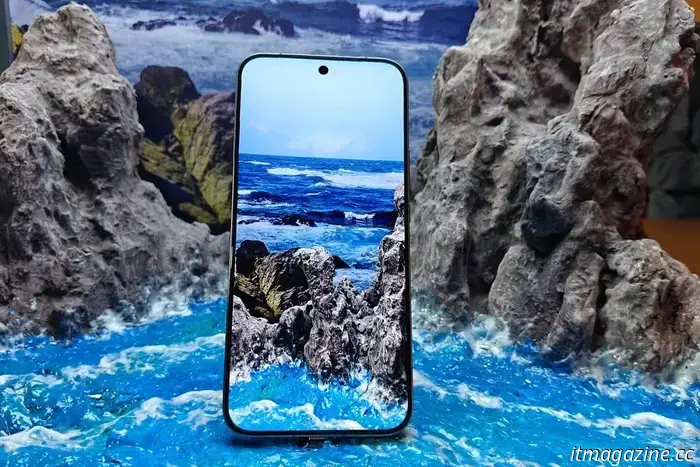
The display is the key carrier of the model’s differences. The 2K M14 LEAD OLED, co‑developed with Samsung, claims 2600 nits HBM across the panel and up to 6000 nits local peak, which puts outdoor readability and HDR scenes into a stable regime without aggressive contrast compression. A triple ambient light sensor corrects the brightness curve smoothly, eliminating “steps” between indoor and outdoor. 118% DCI‑P3 coverage and “natural lighting without polarization” are aimed at minimizing glare and color shifts, including support down to 1 nit for night reading. TÜV certifications (Full Care, Circular Polarization, Flicker‑Free) confirm measures against flicker and eye fatigue — an important aspect with higher refresh rates and long gaming sessions.
The software platform is the first‑generation iQOO on OriginOS 6 with a Smooth Engine core. A horizon of up to five years of stability is claimed, which implicitly includes management of memory/storage aging and degradation control. At the application level, drag‑and‑drop mechanics and “copy and go” for multitasking have been added, as well as end‑to‑end cross‑platform connectivity scenarios: one‑tap data transfer from an iPhone via EasyShare and an office suite for device synergy. The system logic looks coherent: high frame rates, maintained by cooling and Q3, are linked to a predictable power profile and interface stability over the long term.
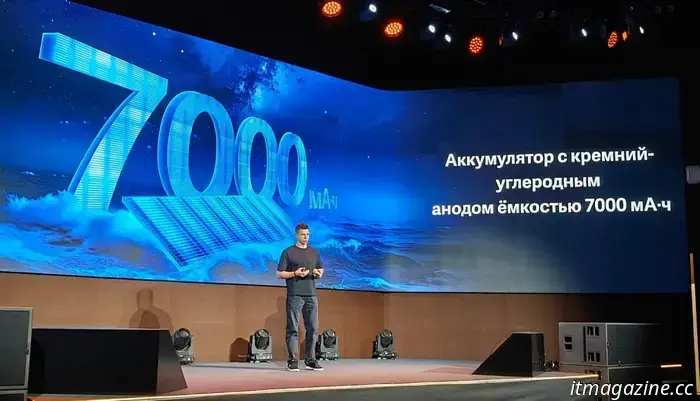
The power block is one of two main reasons to consider the iQOO 15 outside current compactness trends. A 7000 mAh battery with a 4th‑generation silicon anode paired with 100 W FlashCharge and 40 W induction is aimed at long scenarios without intermediate recharging. The vendor provides guidelines: up to 50.4 hours of music, 9.7 hours of recording with the main camera and 32.6 hours of YouTube. At 1% a maximum power‑saving mode activates with quick restoration of previous tasks after plugging in — scenarios for office notes and temporary media data are supported by automatic saving. From a wear perspective, emphasis is placed on durability and thermal control; given the battery size, the pairing with a VC (vapor chamber) appears justified.
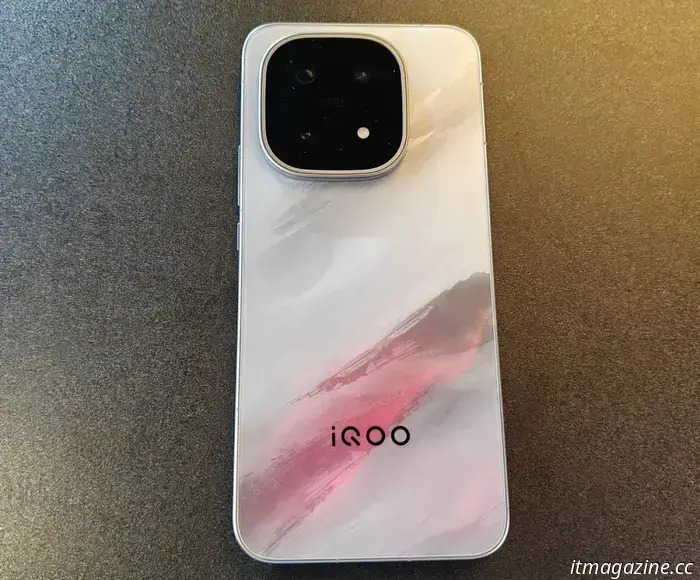
Build and communications match the positioning. The chassis meets IP68 and IP69 under China’s national standard GB/T 4208‑2017 under specified test conditions; this is not professional “waterproofing” but protection against immersion and splashes in domestic use with limitations and no warranty for liquid damage. Interfaces include 5G, Wi‑Fi 7, NFC, USB 3.2 Gen1, and eSIM support for the Russian market. Biometrics are represented by an ultrasonic 3D scanner — one of the fastest in class. The camera module is focused on “long” portrait and night scenarios: a 50 MP Sony periscope with 3× zoom, improved performance at 10× and software scaling up to 100×; live photos are claimed at 2K with EIS. AI Visual mode expands processing options without the need for external apps.
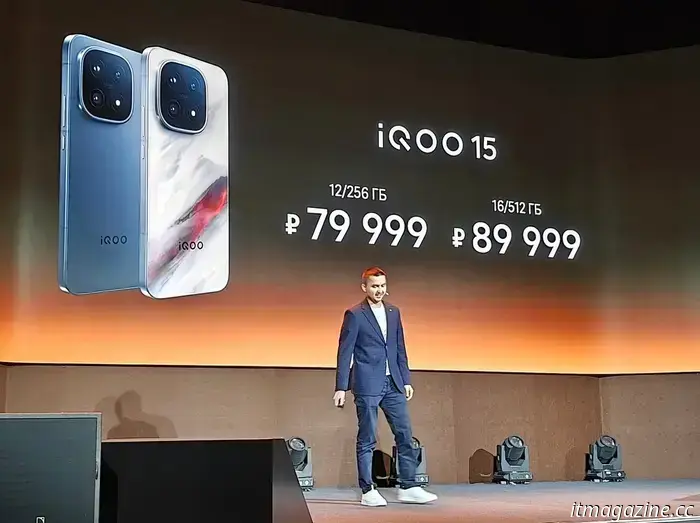
The 12/256 GB configuration is 79,999 RUB, the 16/512 GB variant is 89,999 RUB. Color finishes — “Alpha Black” and “Volcanic Gray.”

Other articles
 Are you planning to purchase a drone soon? Here's how the FCC's decision impacts you.
A recent ruling by the FCC prohibits the approval of any future DJI drones due to security concerns, though existing models can still be used.
Are you planning to purchase a drone soon? Here's how the FCC's decision impacts you.
A recent ruling by the FCC prohibits the approval of any future DJI drones due to security concerns, though existing models can still be used.
 Threads is set to become a center for podcast discussions.
Meta aims to make Threads the hub for podcast enthusiasts and creators to connect. With integrated episode previews and increasing participation from creators, discussions about podcasts could soon appear directly in your feed.
Threads is set to become a center for podcast discussions.
Meta aims to make Threads the hub for podcast enthusiasts and creators to connect. With integrated episode previews and increasing participation from creators, discussions about podcasts could soon appear directly in your feed.
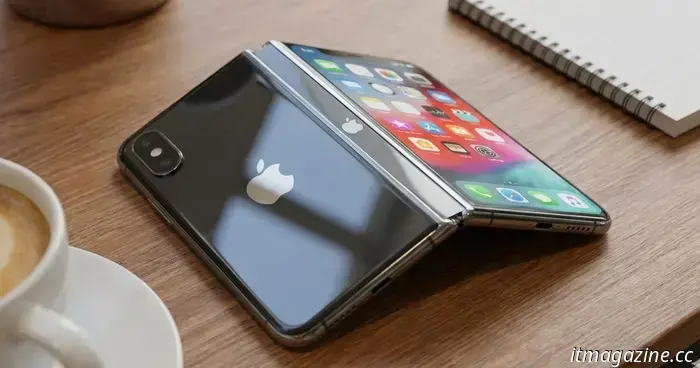 Apple's forthcoming foldable iPhone might adopt an innovative method to address the issue of the display crease.
Apple's foldable iPhone is still under development, with leaks indicating that the company is not pleased with the existing crease-reduction technologies.
Apple's forthcoming foldable iPhone might adopt an innovative method to address the issue of the display crease.
Apple's foldable iPhone is still under development, with leaks indicating that the company is not pleased with the existing crease-reduction technologies.
 OpenAI quietly released GPT-5.2.
According to reported data, the model outperforms humans on 71% of difficult tasks. GPT-5.1 was around 39%. The release also claims stronger coding abilities, including front-end building, a several-fold increase in context, knowledge up to August 2025, and 30% fewer hallucinations compared to GPT-5.1.
OpenAI quietly released GPT-5.2.
According to reported data, the model outperforms humans on 71% of difficult tasks. GPT-5.1 was around 39%. The release also claims stronger coding abilities, including front-end building, a several-fold increase in context, knowledge up to August 2025, and 30% fewer hallucinations compared to GPT-5.1.
iQOO 15: Samsung display, Sony camera and proprietary chip
Compared with previous devices in the lineup, the main changes are migration to the new Snapdragon 8 Elite Gen 5 platform with 3rd‑generation Oryon cores, the introduction of a proprietary Q3 gaming coprocessor, and the debut of a Samsung‑co‑developed 2K M14 LEAD OLED display.