
Facebook aims to transform standard link sharing into a paid service.
A new challenge for creators attracting traffic from Facebook
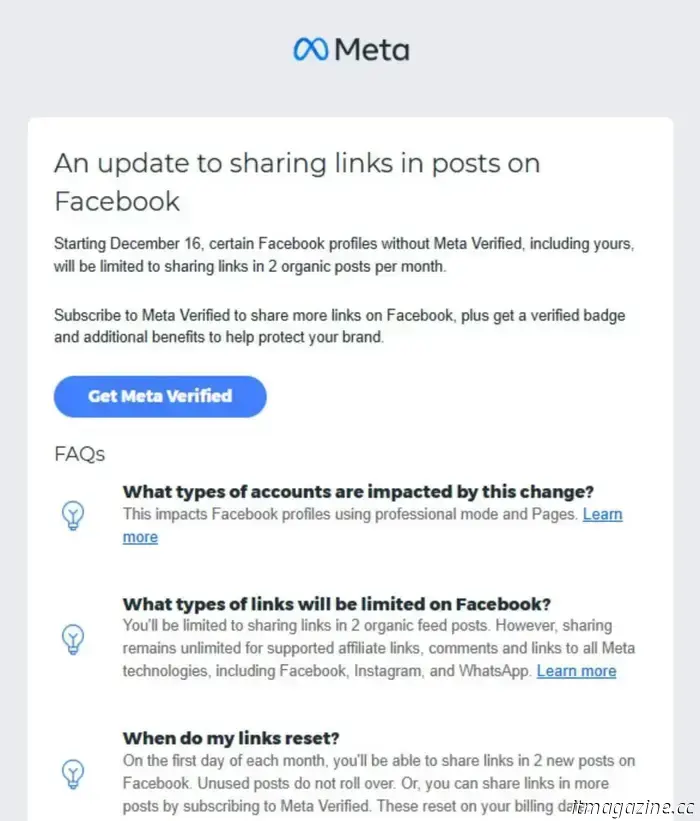
Facebook has started testing a new approach by charging for one of its fundamental features: link sharing. Users have noticed that Meta is imposing limits on the number of links certain Facebook accounts can post, unless they pay for a subscription.
Users who utilize Facebook’s professional mode or manage Pages are restricted to posting only two links in standard posts unless they subscribe to Meta Verified. The subscription starts at $14.99 monthly in the US.
This adjustment comes as recent studies indicate that Facebook remains intricately linked to regular online behaviors. It may significantly affect creators and businesses that rely on Facebook to disseminate articles, promote products, or direct traffic to other internet locations.
Why is Facebook imposing limits on link sharing?
Meta has confirmed this experiment, stating to TechCrunch that it is a “limited test” aimed at determining if the capability to post additional links provides extra value for Meta Verified subscribers. Although Meta claims that publishers are not part of this test, many creators depend on professional mode profiles and Pages to connect with their audiences.
Social media strategist Matt Navarra noted that links shared in comments are still permitted, along with affiliate links and links to other platforms owned by Meta, such as Instagram and WhatsApp.
Facebook’s own statistics may shed light on this strategy. In a recent transparency report, Meta reported that over 98% of feed views in the US are generated by posts without links. Posts containing links represent a minimal portion of views and are predominantly seen from Pages that users already follow.
Navarra mentioned to the BBC that this decision reflects Meta’s larger initiative to monetize content distribution itself, referring to it as “the basic ability to send people to other parts of the internet” now being placed behind a paywall. “Tests like this emphasize why establishing a business that heavily relies on a single platform’s goodwill is extremely risky,” he explained.
This approach is not unprecedented. Other platforms, like X, have previously minimized linked posts to keep users engaged longer on their own services and have transformed the verification checkmark into a monthly fee. Currently, this remains a test, but it raises increasing concerns about a future where even simple actions on social platforms may incur costs.
---
Manisha focuses on technology that is integral to daily life, encompassing smartphones & apps to gaming & streaming…
---
YouTube’s AI age checks affect more users, with selfies possibly determining access
The rollout expands with three methods to verify your age for full access to 18+ content: ID, selfie, or credit card.
What happened? YouTube has initiated a new phase of AI age verification prompts to a wider range of accounts. The system was announced in July and began limited implementation in late September, with the most recent rollout occurring now. According to 9to5Google, users in the last 24 hours have encountered prompts to accept restrictions or confirm they are 18 by using an ID, a selfie for age estimation, or a credit card.
---
TikTok unveils Bulletin Board, amplifying your favorite creators' voices
A new messaging tool for one-to-many communication joins the expanding toolkit for creators on the platform.
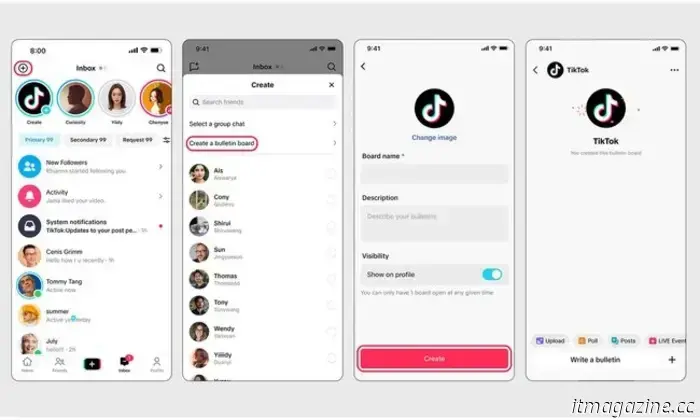
What happened? TikTok introduced Bulletin Board, a feature enabling creators to create a dedicated channel to share updates, images, or videos with their followers. This tool resembles broadcast-style features from competing platforms but is now incorporated directly into TikTok’s framework. The feature allows text, image, and video postings while letting followers react with emojis (but not leave comprehensive comments).
---
LinkedIn transforms search into a targeted AI chat to expand your network
Simply type in your goals, whether launching a startup or changing careers, and LinkedIn’s new Premium-only search will identify individuals who have successfully accomplished them.
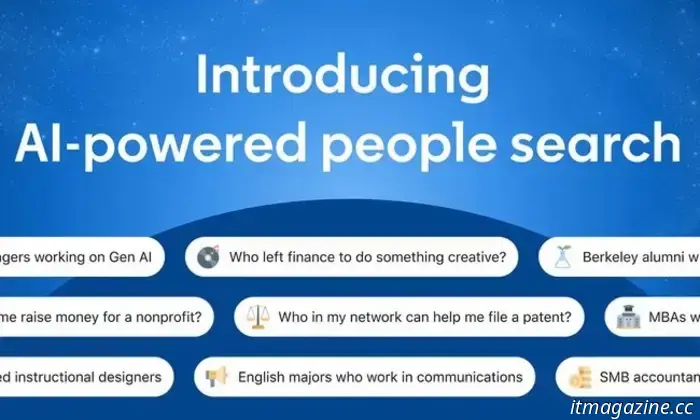
What happened? LinkedIn is rolling out an AI-enhanced people search feature for Premium members in the US. Rather than inputting job titles and company names, subscribers can describe the type of person they wish to locate using straightforward language. LinkedIn states that members can enter prompts like "someone who's expanded a small business" or "an expert in digital marketing" instead of managing multiple filters.



Other articles
 Enhance Your Gaming Setup with a $500 Logitech G Giveaway
If you’ve been considering revamping your gaming setup or upgrading some equipment, now could be the ideal opportunity. Logitech G, renowned for its innovative and player-centric designs, is offering a fortunate winner a $500 store credit to spend on its range of gaming products. Whether you’re looking for a new mouse, […]
Enhance Your Gaming Setup with a $500 Logitech G Giveaway
If you’ve been considering revamping your gaming setup or upgrading some equipment, now could be the ideal opportunity. Logitech G, renowned for its innovative and player-centric designs, is offering a fortunate winner a $500 store credit to spend on its range of gaming products. Whether you’re looking for a new mouse, […]
 This case has the potential to transform your iPhone 17 Pro into a selfie-taking machine.
Dockcase has introduced a new case for the iPhone 17 Pro that features a secondary screen on the back, functioning as a live viewfinder for taking selfies.
This case has the potential to transform your iPhone 17 Pro into a selfie-taking machine.
Dockcase has introduced a new case for the iPhone 17 Pro that features a secondary screen on the back, functioning as a live viewfinder for taking selfies.
 Santa isn't the only one keeping an eye out: Get a 50% discount on Webroot cybersecurity.
This post is sponsored in collaboration with Webroot. The holidays typically offer a chance to unwind, but for cybercriminals, this is their most active period. With online shopping, travel arrangements, and children installing new games on new gadgets, our digital presence greatly increases in December. It’s an ideal moment to […]
Santa isn't the only one keeping an eye out: Get a 50% discount on Webroot cybersecurity.
This post is sponsored in collaboration with Webroot. The holidays typically offer a chance to unwind, but for cybercriminals, this is their most active period. With online shopping, travel arrangements, and children installing new games on new gadgets, our digital presence greatly increases in December. It’s an ideal moment to […]
 Having viewed the trailer for Disclosure Day, Spielberg's upcoming sci-fi masterpiece might be his finest work to date.
The teaser for Steven Spielberg's UFO movie, Disclosure Day, has been released, and it seems the director has created another sci-fi masterpiece.
Having viewed the trailer for Disclosure Day, Spielberg's upcoming sci-fi masterpiece might be his finest work to date.
The teaser for Steven Spielberg's UFO movie, Disclosure Day, has been released, and it seems the director has created another sci-fi masterpiece.
 Priced at $799.99, the Galaxy Tab S10 Ultra is significantly more appealing than the majority of slim laptops.
Priced at $799.99, the Galaxy Tab S10 Ultra is significantly more appealing than the majority of slim laptops.
Priced at $799.99, the Galaxy Tab S10 Ultra is significantly more appealing than the majority of slim laptops.
 AI chatbots such as ChatGPT can mimic human characteristics, and experts warn that this poses a significant risk.
Researchers have created the inaugural validated personality assessment for AI chatbots and discovered that well-known models can mimic human behaviors when needed. They indicate that this capability might allow AI to subtly and potentially dangerously influence users.
AI chatbots such as ChatGPT can mimic human characteristics, and experts warn that this poses a significant risk.
Researchers have created the inaugural validated personality assessment for AI chatbots and discovered that well-known models can mimic human behaviors when needed. They indicate that this capability might allow AI to subtly and potentially dangerously influence users.
Facebook aims to transform standard link sharing into a paid service.
Meta is testing the idea of charging users for sharing more than a few links on Facebook. Although this is still a small-scale trial, it indicates that fundamental features of the platform are increasingly becoming linked to paid subscriptions.