

iOS 26.3 introduces direct data transfer capabilities between iPhone and Android devices Apple has subtly rolled out a significant enhancement in iOS 26.3 that could surprise many: it has become considerably easier for users to exit the iPhone ecosystem. This update includes a built-in utility that allows for the seamless transfer of your digital content to an Android phone without the need for dubious third-party applications or complicated steps. With iOS 26.3, the barriers are down. Users can now directly move data from an iPhone to an Android device by simply placing the two phones next to each other. Once connected, a new option appears, enabling the migration of crucial data such as photos, messages, notes, contacts, passwords, apps, and even your phone number. The last significant change we witnessed was when Apple added toggles to lessen transparency in its interface after user feedback regarding its Liquid Glass design. The entire procedure is wireless and does not require any applications. Users just need to scan a QR code displayed on the Android device or enter a pairing code to initiate the data transfer. For this feature to be effective, both phones must be updated to the latest software, connected to Wi-Fi, and have Bluetooth enabled. However, it’s important to note that it does not create a full duplicate of your phone. Apple specifies that sensitive information such as Health data, Bluetooth pairings, and locked notes will remain on the iPhone. You can currently access this feature in the iOS 26.3 beta by navigating to Settings > General > Transfer or Reset iPhone > Transfer to Android. Transitioning between platforms is finally becoming less difficult The significance of this development lies in reducing friction. Traditionally, switching from iOS to Android was fraught with complications, including lost texts and disorganized group chats. By integrating this feature directly into the settings, Apple is alleviating the technical challenges that keep many users tied to their platform. Even for those who are content with their iPhones, competition is beneficial. If you’ve ever been interested in a Pixel or Galaxy but hesitated due to the potential loss of years’ worth of memories or messages, that concern has substantially diminished. With both Google and Apple now facilitating direct transfers in both directions, users are no longer confined to a single platform due to the hassle of leaving it. It’s worth mentioning that Apple didn’t implement this change solely out of goodwill. The European Commission confirmed last week that this system was developed to comply with the EU’s Digital Markets Act. The good news is that, while regulatory pressure prompted this feature, it is being rolled out worldwide, rather than being restricted to Europe. Currently, this feature is in beta testing, but it is anticipated to become a standard aspect of iPhone setup soon. As iOS 26.3 launches publicly, we are likely to see this procedure become even more streamlined, promoting the notion that users can easily switch between Apple and Android without losing their digital data. --- Waze introduces a new feature users have been requesting, albeit limited to one country Waze appears to be gradually progressing toward incorporating traffic lights into its map—a feature users have long desired, especially since its competitor Google Maps added it back in 2022. Currently, this update is very limited and not widely released, but it signals a meaningful shift for the navigation app, which has typically focused more on live user alerts than on static map features. According to GeekTime, Waze is testing traffic light icons in Israel. This feature is reportedly in the early experimental phases, with restrictions aimed at maintaining a clean visual display. --- Gemini's latest update enhances local hotspot discovery Google has started to roll out a new upgrade for Gemini on both desktop and mobile platforms, enhancing how it presents information from Google Maps. Instead of displaying a lengthy text followed by a map view filled with pins, Gemini can now present Google Maps results in a visually rich format that allows users access to photos, ratings, and real-world information. When users inquire about nearby establishments like restaurants, parks, or attractions, Gemini now showcases an interactive map at the top featuring themed pins for various locations. Each location is highlighted with an individual card that includes images and star ratings, followed by a text response related to the user's request. --- You might reconsider upgrading your phone in 2026 due to a memory crisis affecting the industry Be cautious about upgrading your smartphone in 2026 as upcoming smartphone specifications may regress, not due to a lack of innovation, but rather because of rising costs for a critical component: memory. Prices for DRAM and NAND are climbing sharply and are projected to remain high through at least the first half of 2026. The surge in demand for AI servers, data centers, and enterprise hardware solutions has led suppliers to increase prices. This pressure first influenced PC RAM costs, but it is extending to smartphones, tablets, and smartwatches. Major brands will likely respond in one of three ways: increasing prices
Digital Trends may receive a commission if you make a purchase through links on our website. Why you can trust us?
Kyrgyzstan is making a significant push toward a digital future with no half measures. The introduction of USDKG, a $50 million gold-backed stablecoin linked to the U.S. dollar, signals the Central Asian country's ambition to become a strong player in global trade.
A hybrid approach to stability
What makes this new token distinct in the crowded stablecoin market? It’s the hybrid model it employs.
Rather than relying solely on fiat reserves like typical stablecoins or on gold tokens that fluctuate with precious metal values, USDKG combines the dollar's stability with the dependable backing of a gold reserve. Each token is attached 1:1 to the U.S. dollar, while also being supported by physical gold safely stored in vaults. It acts like a “gold dollar,” mitigating the market volatility associated with actual gold — essentially, a hedge within a hedge.
Moreover, USDKG is issued by a fully state-owned organization under Kyrgyzstan’s Ministry of Finance, and its daily operations are overseen by private-sector professionals. This aspect of the hybrid model provides governmental credibility while steering clear of central bank digital currency (CBDC) concerns. For institutions cautious of government interference and individuals doubtful of cryptocurrency stability, this arrangement offers the best of both worlds.
A tokenized vision for cross-border trade
The launch of USDKG marks the initial phase of an extensive plan to position the country as a Web3 hub. For a landlocked nation with a historically underbanked society, the opportunity to bypass outdated global financial systems is enormous. At a time when conventional cross-border payments are hampered by fees, delays, and obsolete processes, USDKG provides 24/7, nearly instantaneous settlements without intermediaries.
Picture payments that avoid losing 7% to fees. Or businesses in surrounding areas completing transactions in minutes instead of days. USDKG is bringing efficiency to Kyrgyzstan and on a global scale.
With support from the national government and the transparency offered by blockchain-based auditing, the USDKG stablecoin is not just another cryptocurrency experiment. It plays a central role in Kyrgyzstan’s broader ambition: the vision of a tokenized economy that attracts international investment, enhances financial inclusion, and modernizes cross-border trade.
This bold and unconventional strategy could indeed succeed. For Web3 developers, investors, and global institutions, Kyrgyzstan’s USDKG invites participation in constructing the digital infrastructure of an emerging frontier market.
This content is sponsored by the indicated brands. Digital Trends collaborates with advertisers to showcase their products and services to our audience. Although this article is informational and not opinionated, it reflects our team’s rigorous fact-checking to ensure accuracy. All branded content is created in-house by our dedicated partnerships team, not by external advertisers. For more details on our approach to branded content, click here.

Other articles
 Enhance Your Gaming Setup with a $500 Logitech G Giveaway
If you’ve been considering revamping your gaming setup or upgrading some equipment, now could be the ideal opportunity. Logitech G, renowned for its innovative and player-centric designs, is offering a fortunate winner a $500 store credit to spend on its range of gaming products. Whether you’re looking for a new mouse, […]
Enhance Your Gaming Setup with a $500 Logitech G Giveaway
If you’ve been considering revamping your gaming setup or upgrading some equipment, now could be the ideal opportunity. Logitech G, renowned for its innovative and player-centric designs, is offering a fortunate winner a $500 store credit to spend on its range of gaming products. Whether you’re looking for a new mouse, […]
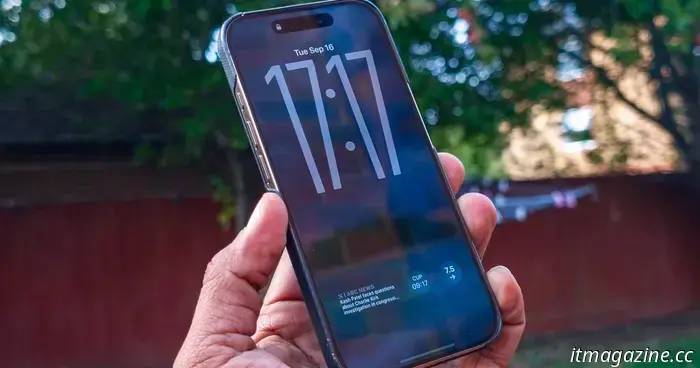 Transitioning from iPhone to Android is set to become significantly simpler.
iOS 26.3 brings native data transfers from iPhone to Android, easing the transition for users changing platforms and satisfying new interoperability standards without the need for additional apps.
Transitioning from iPhone to Android is set to become significantly simpler.
iOS 26.3 brings native data transfers from iPhone to Android, easing the transition for users changing platforms and satisfying new interoperability standards without the need for additional apps.
 An executive from OpenAI has stated that ChatGPT will evolve into an operating system.
OpenAI is investigating a future in which ChatGPT evolves from a chatbot into an operating system. Senior executives have indicated that ChatGPT could become a central hub where various apps, tools, and services operate from a single platform.
An executive from OpenAI has stated that ChatGPT will evolve into an operating system.
OpenAI is investigating a future in which ChatGPT evolves from a chatbot into an operating system. Senior executives have indicated that ChatGPT could become a central hub where various apps, tools, and services operate from a single platform.
 Having viewed the trailer for Disclosure Day, Spielberg's upcoming sci-fi masterpiece might be his finest work to date.
The teaser for Steven Spielberg's UFO movie, Disclosure Day, has been released, and it seems the director has created another sci-fi masterpiece.
Having viewed the trailer for Disclosure Day, Spielberg's upcoming sci-fi masterpiece might be his finest work to date.
The teaser for Steven Spielberg's UFO movie, Disclosure Day, has been released, and it seems the director has created another sci-fi masterpiece.
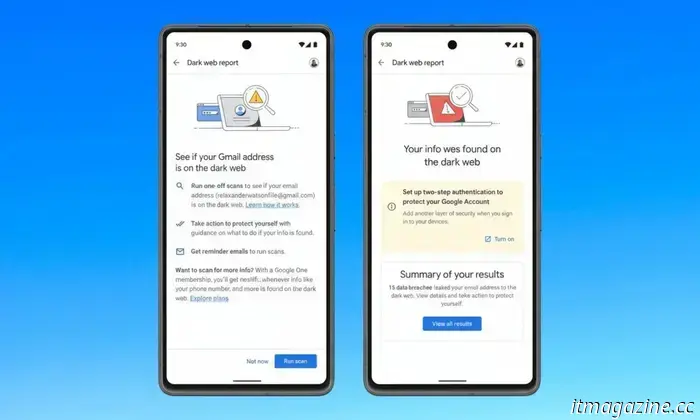 Google is discontinuing its data leak alerts; here’s how to maintain your protection moving forward.
Google is discontinuing its dark web report feature, which notified users when their personal data was found in data breaches. The company stated that feedback indicated it did not provide clear, actionable advice, and it intends to concentrate on enhancing security tools instead.
Google is discontinuing its data leak alerts; here’s how to maintain your protection moving forward.
Google is discontinuing its dark web report feature, which notified users when their personal data was found in data breaches. The company stated that feedback indicated it did not provide clear, actionable advice, and it intends to concentrate on enhancing security tools instead.
 This Roborock S8 MaxV Ultra promotion offers a $900 discount on an exceptionally low-maintenance cleaning solution.
If you’re exhausted from managing a separate vacuum, mop, and an underwhelming charging dock that barely serves its purpose, this upgrade could transform your entire cleaning routine. The Roborock S8 MaxV Ultra is the flagship model of the brand, combining powerful suction with a comprehensive 8-in-1 design.
This Roborock S8 MaxV Ultra promotion offers a $900 discount on an exceptionally low-maintenance cleaning solution.
If you’re exhausted from managing a separate vacuum, mop, and an underwhelming charging dock that barely serves its purpose, this upgrade could transform your entire cleaning routine. The Roborock S8 MaxV Ultra is the flagship model of the brand, combining powerful suction with a comprehensive 8-in-1 design.
iOS 26.3 introduces direct data transfer capabilities between iPhone and Android devices Apple has subtly rolled out a significant enhancement in iOS 26.3 that could surprise many: it has become considerably easier for users to exit the iPhone ecosystem. This update includes a built-in utility that allows for the seamless transfer of your digital content to an Android phone without the need for dubious third-party applications or complicated steps. With iOS 26.3, the barriers are down. Users can now directly move data from an iPhone to an Android device by simply placing the two phones next to each other. Once connected, a new option appears, enabling the migration of crucial data such as photos, messages, notes, contacts, passwords, apps, and even your phone number. The last significant change we witnessed was when Apple added toggles to lessen transparency in its interface after user feedback regarding its Liquid Glass design. The entire procedure is wireless and does not require any applications. Users just need to scan a QR code displayed on the Android device or enter a pairing code to initiate the data transfer. For this feature to be effective, both phones must be updated to the latest software, connected to Wi-Fi, and have Bluetooth enabled. However, it’s important to note that it does not create a full duplicate of your phone. Apple specifies that sensitive information such as Health data, Bluetooth pairings, and locked notes will remain on the iPhone. You can currently access this feature in the iOS 26.3 beta by navigating to Settings > General > Transfer or Reset iPhone > Transfer to Android. Transitioning between platforms is finally becoming less difficult The significance of this development lies in reducing friction. Traditionally, switching from iOS to Android was fraught with complications, including lost texts and disorganized group chats. By integrating this feature directly into the settings, Apple is alleviating the technical challenges that keep many users tied to their platform. Even for those who are content with their iPhones, competition is beneficial. If you’ve ever been interested in a Pixel or Galaxy but hesitated due to the potential loss of years’ worth of memories or messages, that concern has substantially diminished. With both Google and Apple now facilitating direct transfers in both directions, users are no longer confined to a single platform due to the hassle of leaving it. It’s worth mentioning that Apple didn’t implement this change solely out of goodwill. The European Commission confirmed last week that this system was developed to comply with the EU’s Digital Markets Act. The good news is that, while regulatory pressure prompted this feature, it is being rolled out worldwide, rather than being restricted to Europe. Currently, this feature is in beta testing, but it is anticipated to become a standard aspect of iPhone setup soon. As iOS 26.3 launches publicly, we are likely to see this procedure become even more streamlined, promoting the notion that users can easily switch between Apple and Android without losing their digital data. --- Waze introduces a new feature users have been requesting, albeit limited to one country Waze appears to be gradually progressing toward incorporating traffic lights into its map—a feature users have long desired, especially since its competitor Google Maps added it back in 2022. Currently, this update is very limited and not widely released, but it signals a meaningful shift for the navigation app, which has typically focused more on live user alerts than on static map features. According to GeekTime, Waze is testing traffic light icons in Israel. This feature is reportedly in the early experimental phases, with restrictions aimed at maintaining a clean visual display. --- Gemini's latest update enhances local hotspot discovery Google has started to roll out a new upgrade for Gemini on both desktop and mobile platforms, enhancing how it presents information from Google Maps. Instead of displaying a lengthy text followed by a map view filled with pins, Gemini can now present Google Maps results in a visually rich format that allows users access to photos, ratings, and real-world information. When users inquire about nearby establishments like restaurants, parks, or attractions, Gemini now showcases an interactive map at the top featuring themed pins for various locations. Each location is highlighted with an individual card that includes images and star ratings, followed by a text response related to the user's request. --- You might reconsider upgrading your phone in 2026 due to a memory crisis affecting the industry Be cautious about upgrading your smartphone in 2026 as upcoming smartphone specifications may regress, not due to a lack of innovation, but rather because of rising costs for a critical component: memory. Prices for DRAM and NAND are climbing sharply and are projected to remain high through at least the first half of 2026. The surge in demand for AI servers, data centers, and enterprise hardware solutions has led suppliers to increase prices. This pressure first influenced PC RAM costs, but it is extending to smartphones, tablets, and smartwatches. Major brands will likely respond in one of three ways: increasing prices
Kyrgyzstan is taking a significant step towards a digital future and is fully committed to this endeavor. By introducing USDKG, a gold-backed stablecoin worth $50 million that is tied to the U.S. dollar, the Central Asian country is indicating its intention to emerge as a formidable player in international trade. A hybrid strategy for stability So, […]