
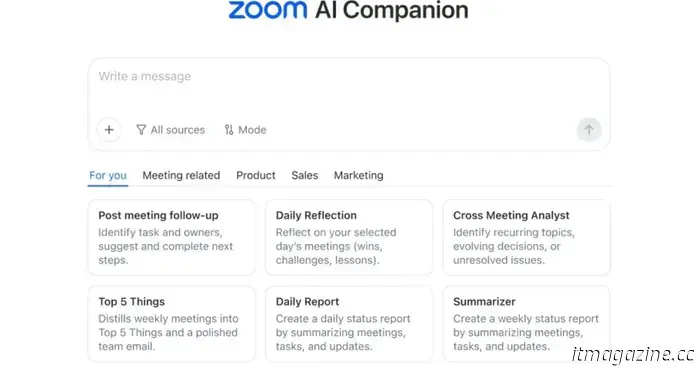
Zoom is introducing an AI assistant, in case you require help with video calls.
Zoom has introduced its AI Companion 3.0, featuring a new web interface and enhanced functionalities that transform meetings, chats, and documents into actionable insights.
With the release of AI Companion 3.0, Zoom has moved its AI assistant into a dedicated web interface, stepping beyond just transcribing and summarizing meetings. The new capabilities allow the AI to convert discussions into actionable tasks, generate daily reflection reports, draft follow-up emails, and create documents based on meetings or notes.
Free Zoom users can access AI Companion 3.0 for up to three meetings each month, which includes features such as AI note-taking, in-meeting inquiries, summaries, and the ability to ask 20 questions via the side panel. For $10 a month (in addition to the Zoom Workplace fee), users can unlock the full range of AI features.
This update represents a transition for Zoom from a basic video conferencing service to an AI-enhanced workspace. By integrating AI abilities that manage meetings, chats, documents, and interconnected applications, Zoom distinguishes itself in the market.
Additionally, the company is adopting a federal AI model strategy, merging its AI with well-known models from OpenAI, Anthropic, and other open-source resources. For avid Zoom users who balance meetings, emails, to-do lists, documents, and other applications throughout their workday, the new AI Companion 3.0 could significantly alleviate their workload.
Instead of summarizing meetings or composing follow-up messages manually, you can delegate these tasks to Zoom's AI.
This capability will allow you to dedicate more time to tasks that add greater value. In the near future, Zoom aims to enhance AI Companion’s integrations, potentially adding connectors for Gmail and Outlook to streamline personal workflows and document creation.
As time progresses, this could transform team collaboration in Zoom, not only through hosting calls but also by expediting routine tasks.
For over five years, Shikhar has continuously simplified developments in consumer technology and reported on them…
Microsoft has made theming your Windows 11 PC as straightforward as on phones, though it may lack some fun elements.
Windows 11 now features a new Themes section in the Microsoft Store, which contains hundreds of curated themes, including wallpapers, colors, and other visual elements that can be downloaded and applied with a single click. This section is designed to facilitate easier personalization for users.
With users getting used to rich theming on mobile devices, Microsoft needed to address the rising concerns that Windows PCs didn’t provide the same degree of customization or ease. The new Themes section offers more than 400 themes, including over 35 that are new to the store.
I utilized Nano Banana Pro to create 20 social media posts, and the responses were surprising.
Social media is an endless stream of content. Staying updated with trends, posting consistently, and offering thoughtful commentary can boost engagement but may also lead to significant burnout. I can attest to this—I created my first Twitter account (now X) back in 2008. Gaining around 18,000 followers on X was straightforward, but maintaining a steady flow of content became challenging, especially during the time I wrote two books.
Creating engaging content has been a struggle for me since it isn't my main profession. I have been a journalist since 2001 and have witnessed the evolution of various platforms. Currently, I prefer LinkedIn, primarily because it caters to professionals. I still regularly use X, post a few times a week on Instagram and Facebook, and often experiment on newer platforms like Bluesky and Threads without taking them too seriously.
Google’s top Gemini AI feature may soon be integrated into your everyday applications.
Google has recently upgraded its Gemini Deep Research, its most sophisticated AI research agent, and this enhancement extends beyond Google's own products. The company states that its AI capabilities could soon be integrated into the common applications you're already using. With the launch of the new Interactions API, Deep Research is no longer restricted to Google. It can now be incorporated into third-party applications, paving the way for a plethora of tools on your devices to gain enhanced AI functionality quietly.
Gemini Deep Research is designed for complex, lengthy tasks that many chatbots often struggle to handle. Instead of providing answers to individual questions, it functions like a genuine researcher. It plans which information is necessary, searches the web, reviews results, identifies gaps, and continues its search until it formulates a comprehensive, well-researched answer. It utilizes Gemini 3 Pro as its reasoning engine, which Google claims is its most accurate model up to now, trained to minimize inaccuracies during extended, multi-step tasks.


Other articles
 You can now stream Apple TV content to your television using an Android device.
The most recent update for the Apple TV app on Android introduces Google Cast support, enabling users to stream content to their TVs and smart displays.
You can now stream Apple TV content to your television using an Android device.
The most recent update for the Apple TV app on Android introduces Google Cast support, enabling users to stream content to their TVs and smart displays.
 Letter from the Editor-in-Chief
TNW is back with a new editor-in-chief, an updated vision, and a definitive mission: authentic journalism, human narratives, and meaningful technology.
Letter from the Editor-in-Chief
TNW is back with a new editor-in-chief, an updated vision, and a definitive mission: authentic journalism, human narratives, and meaningful technology.
 The iPhone 17e could address major shortcomings of the iPhone 16e by incorporating MagSafe charging and the C1X modem.
With speculated MagSafe compatibility, increased wireless charging speeds, and Apple's new C1X modem, the upcoming "e" model might surpass many previous iPhone versions.
The iPhone 17e could address major shortcomings of the iPhone 16e by incorporating MagSafe charging and the C1X modem.
With speculated MagSafe compatibility, increased wireless charging speeds, and Apple's new C1X modem, the upcoming "e" model might surpass many previous iPhone versions.
 Ford's forthcoming F-150 Lightning will remain an electric vehicle, but to achieve greater distance, you'll require gasoline.
Ford's upcoming F-150 Lightning shifts away from a purely electric vehicle design, opting instead for a gasoline-supported extended-range electric truck that offers impressive range and towing capabilities.
Ford's forthcoming F-150 Lightning will remain an electric vehicle, but to achieve greater distance, you'll require gasoline.
Ford's upcoming F-150 Lightning shifts away from a purely electric vehicle design, opting instead for a gasoline-supported extended-range electric truck that offers impressive range and towing capabilities.
 This Samsung Galaxy Z Fold7 offer discounts $400 on one of the top foldable devices available.
Foldables are often seen as "cool but overpriced." However, the current deal on the Samsung Galaxy Z Fold7 (256GB) brings it into a more reasonable price range. Priced at $1,599.99, it remains a premium phone investment, but you're receiving a fully-featured flagship that unfolds into a tablet-sized display rather than just another flat device. Here's what you can expect from the Fold7 [...]
This Samsung Galaxy Z Fold7 offer discounts $400 on one of the top foldable devices available.
Foldables are often seen as "cool but overpriced." However, the current deal on the Samsung Galaxy Z Fold7 (256GB) brings it into a more reasonable price range. Priced at $1,599.99, it remains a premium phone investment, but you're receiving a fully-featured flagship that unfolds into a tablet-sized display rather than just another flat device. Here's what you can expect from the Fold7 [...]
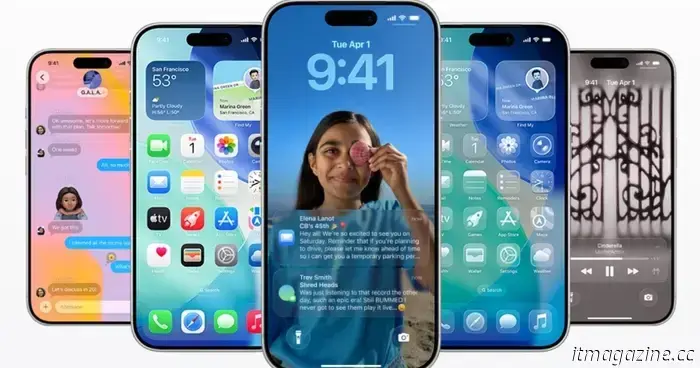 iOS 26.3 provides an official preview of a handy tool for migrating from iPhone to Android.
Apple's iOS 26.3 beta brings the most efficient iPhone-to-Android transfer tool to date, along with enhanced notification support for third-party gadgets.
iOS 26.3 provides an official preview of a handy tool for migrating from iPhone to Android.
Apple's iOS 26.3 beta brings the most efficient iPhone-to-Android transfer tool to date, along with enhanced notification support for third-party gadgets.
Zoom is introducing an AI assistant, in case you require help with video calls.
Zoom is advancing beyond video calls with its AI Companion 3.0, a web-based assistant that transforms discussions into tasks, summaries, and content.