
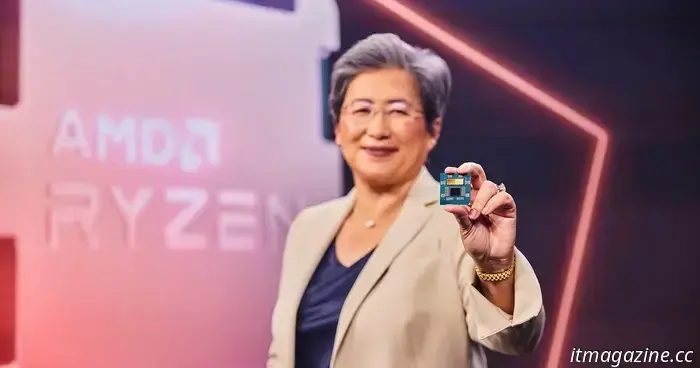
AMD will take a cautious approach at CES 2026, but it could still be worth your attention.
For many years, the Consumer Electronics Show (CES) has transformed from a showcase for consumer electronics into a premier global launchpad for chip manufacturers, making it a crucial arena for competition in computing and AI hardware. The upcoming edition in 2026 is anticipated to be no different.
AMD has announced that its President and CEO, Dr. Lisa Su, will present the opening keynote on January 5, detailing the company's AI vision across cloud, enterprise, edge, and consumer products. While we are not expecting any groundbreaking announcements such as a new GPU generation or a sudden Zen 6 teaser (though there's always hope), significant launches are anticipated.
Let’s explore what is likely, what is rumored, and what is merely wishful thinking.
**New 3D V-cache Chips**
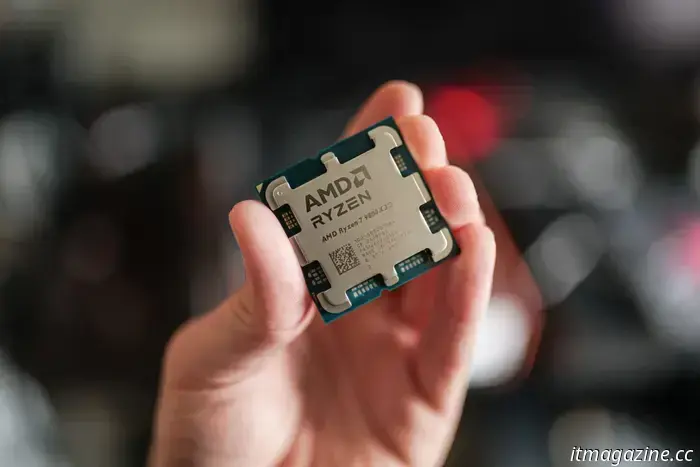
AMD has captured a substantial share of the consumer CPU market with its 3D V-Cache CPUs, and it appears the company plans to expand its offerings. The Ryzen 7 9850X3D is expected to be officially unveiled at CES 2026. This chip was unintentionally disclosed by AMD through its own driver pages, suggesting that it’s ready for launch.
According to another leak, the 9850X3D will include 8 cores and 16 threads, with base clock speeds of 4.7GHz and boost clock speeds of 5.6GHz. It will share a similar TDP of 120W and have 96MB of L3 cache like the 9800X3D, potentially making it one of the best CPUs for gaming.
Additionally, there are mentions of a more powerful Ryzen 9 9950X3D2 CPU that would feature dual 3D V-Cache stacks totaling 192MB of L3 cache and a 200W TDP. This could make it AMD’s most potent gaming CPU design to date, although these remain speculative. It is worth mentioning that this leaked SKU has not emerged from a reliable source, and AMD typically launches its mainstream X3D gaming chip prior to any high-core-count variants.
**Ryzen 9000G Desktop APUs**
While the X3D series targets gamers, the Ryzen 9000G APUs may represent AMD’s most significant CES launch aimed at the mainstream desktop market. Recent AGESA updates found by data miners suggest that AMD could be working on new desktop APUs utilizing the same Krackan and Strix Point silicon found in its latest mobile chips.
If accurate, the 9000G lineup would incorporate Zen 5 CPU cores, RDNA 3.5 graphics, enhanced AI/NPU functionalities, and native AM5 socket support in one package.
This could make the 9000G series exceptionally attractive for home PCs, HTPCs, budget gaming setups, and compact form-factor builds. AMD has consistently held a strong position in the integrated GPU market, and a Zen 5 + RDNA 3.5 APU on desktop could certainly replicate the excitement generated by the Ryzen 7 5800G, providing truly capable gaming performance without the need for a discrete GPU.
However, expectations should be moderated. A credible source indicated earlier this year that the Ryzen 9000G series might merely be a refresh of the existing Ryzen 8000G lineup, meaning it would still be based on the older Zen 4 architecture rather than Zen 5. If this turns out to be true, the 9000G range would be considerably less thrilling than earlier leaks hinted and would instead be an incremental update rather than a true next-generation advancement.
**Ryzen AI 400 "Gorgon Point"**
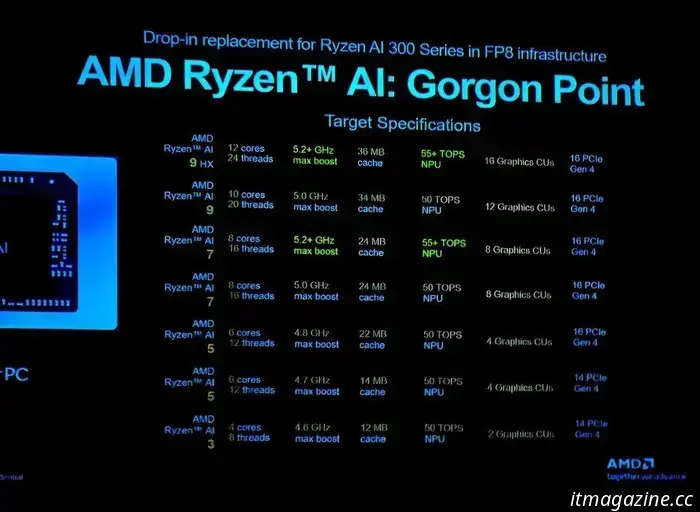
One area AMD is likely to emphasize at CES next year is AI PCs, given that the entire industry is heading in that direction, whether there is demand for it or not. This brings us to Ryzen AI 400, codenamed Gorgon Point, the next phase in AMD’s mobile roadmap. Until recently, it was largely thought to be a straightforward refresh of Strix Point.
According to leaked company slides, Gorgon Point is expected to feature up to 12 Zen 5 CPU cores with a slightly upgraded NPU, and RDNA 3.5 graphics rather than transitioning to RDNA 4. This positions Gorgon Point closer to Strix Point than enthusiasts had hoped.
RDNA 3.5 is an optimized, efficient architecture, but for handheld gaming PCs, which likely means only incremental improvements instead of a major generational upgrade. Given the competitiveness of the handheld market, sticking with RDNA 3.5 may come across as a lost opportunity.
AMD is set to heavily focus on the AI narrative. With Microsoft advancing its Copilot+ branding, Intel targeting over 50 TOPS NPUs with Panther Lake, and Qualcomm’s Snapdragon X chips already establishing benchmarks for on-device AI, AMD needs to keep pace.
Look for a plethora of designs, including ultrabooks, thin-and-light laptops, and high-end creator devices
Other articles
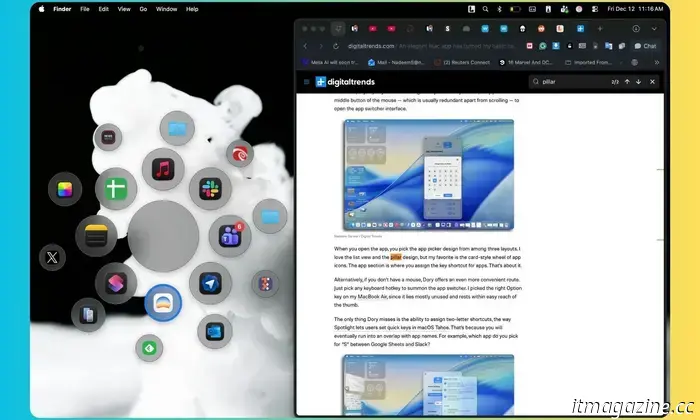 I discovered a Mac tool that you'll appreciate for its streamlined dock and additional features.
If you've ever wanted to swap out the Mac's dock for something more practical and visually appealing, Loopty is the free app that will fulfill your productivity wishes with remarkable flair.
I discovered a Mac tool that you'll appreciate for its streamlined dock and additional features.
If you've ever wanted to swap out the Mac's dock for something more practical and visually appealing, Loopty is the free app that will fulfill your productivity wishes with remarkable flair.
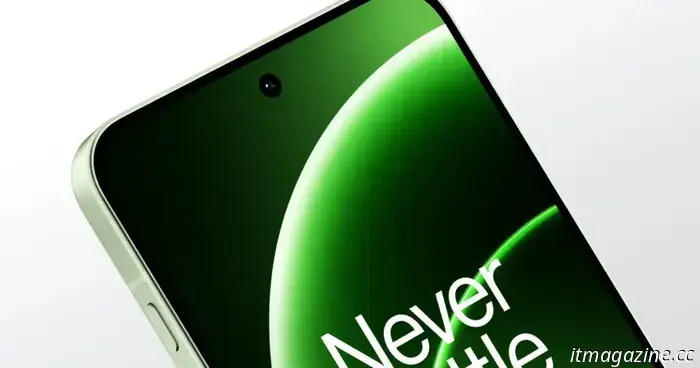 The OnePlus 15R has been confirmed to receive a significant camera upgrade compared to its predecessor.
The 15R will be the inaugural OnePlus smartphone featuring a 32MP front camera with autofocus capability and the ability to record 4K video at 30fps.
The OnePlus 15R has been confirmed to receive a significant camera upgrade compared to its predecessor.
The 15R will be the inaugural OnePlus smartphone featuring a 32MP front camera with autofocus capability and the ability to record 4K video at 30fps.
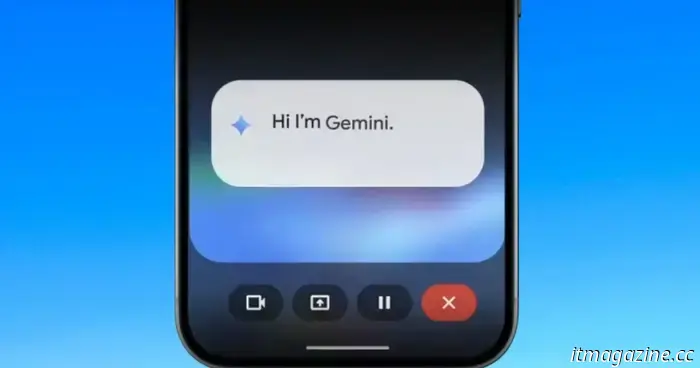 Google Play Books might soon allow you to inquire with Gemini while reading.
Google might soon incorporate an Ask Gemini button into the Google Play Books app, enabling users to easily access the chatbot while reading.
Google Play Books might soon allow you to inquire with Gemini while reading.
Google might soon incorporate an Ask Gemini button into the Google Play Books app, enabling users to easily access the chatbot while reading.
 Google Gemini now allows you to create images with Nano Banana Pro. I checked to see if the bot can produce engaging graphics for social media.
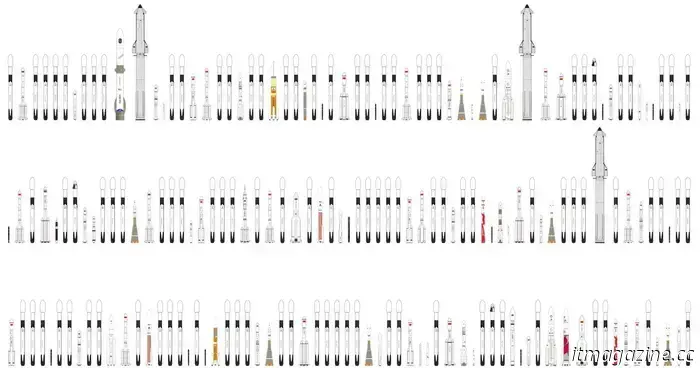 These fantastic rocket charts are ideal for space enthusiasts.
If you're passionate about rocket launches, you'll definitely appreciate these charts made by Flight Atlas. The website debuted earlier this year, but a recent tweet by Rocket Lab CEO Peter Beck has increased its visibility. Recommended Videos Flight Atlas allows you to filter rocket launches in numerous ways, such as […]
These fantastic rocket charts are ideal for space enthusiasts.
If you're passionate about rocket launches, you'll definitely appreciate these charts made by Flight Atlas. The website debuted earlier this year, but a recent tweet by Rocket Lab CEO Peter Beck has increased its visibility. Recommended Videos Flight Atlas allows you to filter rocket launches in numerous ways, such as […]
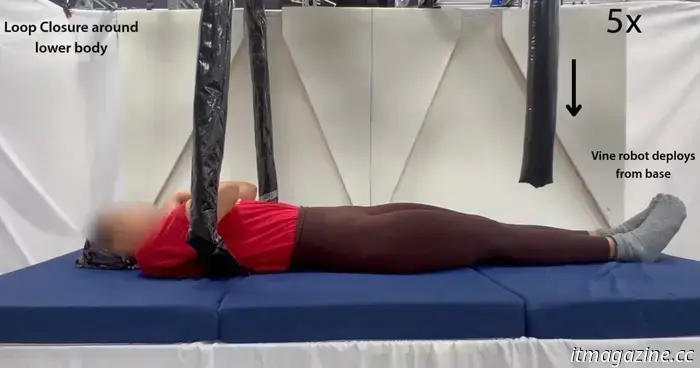 This impressive vine-like robot may greatly benefit care workers.
Engineers from MIT and Stanford University have created a robotic gripper resembling a vine that ensnares items before gently elevating them. This cutting-edge robot features a pressurized compartment that deploys inflatable tubes, which expand around objects and then retract to lift them. The engineers have crafted it to delicately manage fragile items such as […]
This impressive vine-like robot may greatly benefit care workers.
Engineers from MIT and Stanford University have created a robotic gripper resembling a vine that ensnares items before gently elevating them. This cutting-edge robot features a pressurized compartment that deploys inflatable tubes, which expand around objects and then retract to lift them. The engineers have crafted it to delicately manage fragile items such as […]
AMD will take a cautious approach at CES 2026, but it could still be worth your attention.
CES 2026 Read and view our full CES coverage here Updated less than 6 hours ago For many years, the Consumer Electronics Show (CES) has transitioned from a platform for consumer electronics to a prominent global launch site for chip manufacturers, transforming the event into a crucial arena for competition in computing and AI hardware. The forthcoming 2026 edition is […]