
I used the Galaxy Watch 8 Classic during an extended vacation, and I find it superior to the Apple Watch.
I recently returned from an extensive journey that included hiking, sleeping by riverbanks, camping in the Himalayan foothills, living in tribal areas, and avoiding urban environments as much as possible. It was a much-needed break from my routine. This trip also marked my first significant period without my Apple Watch accompanying me.
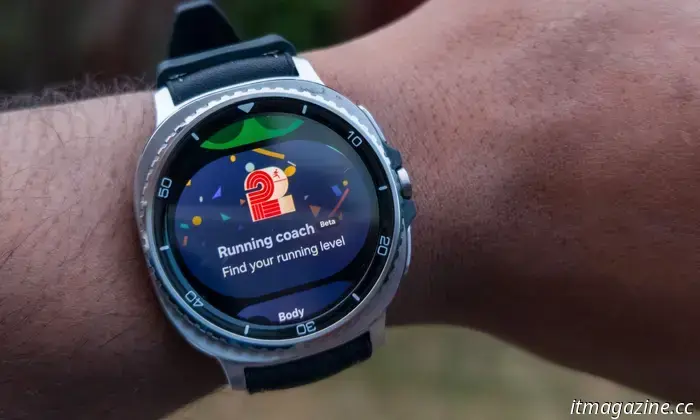
Instead, I opted to try the Galaxy Watch 8 Classic. Priced at $499, Samsung's smartwatch combines an elegant design with advanced health features, all supported by robust AI technology.
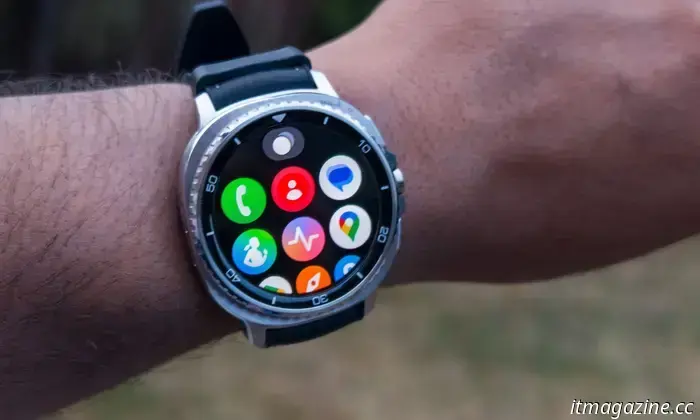
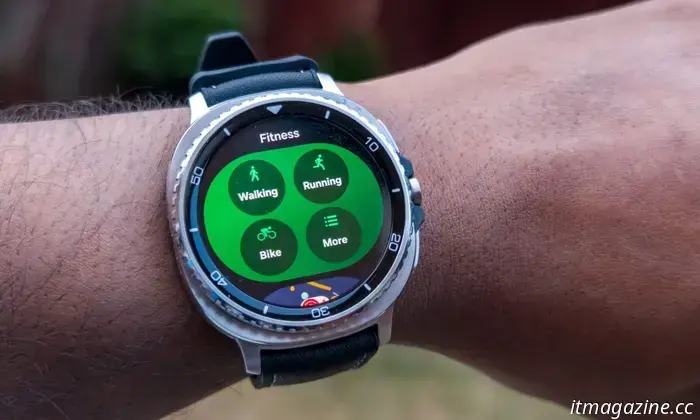
There are many appealing aspects of this smartwatch beyond its familiar strengths like varied activity tracking, enhanced biosensing accuracy, customizable action buttons, and more. However, after using it for a month, I realized that the Galaxy Watch 8 Classic represents a notable advancement in several important ways.
It can effectively accomplish tasks
“I don’t want yet another screen on my wrist.”
This is a common sentiment I hear in the smartwatch community. There’s a palpable fear of missing out in this space. Many individuals invest between $200 and $400 in a smartwatch but end up using only a fraction of its features, if any, instead of fully utilizing its health and wellness monitoring capabilities.
Eventually, they grow weary of “yet another gadget” that competes for their attention with charging requirements, notifications, and more. This disconnect isn't due to the shortcomings of smartwatches but rather because they fail to provide a function that is significantly different or more convenient than their reliable phones.
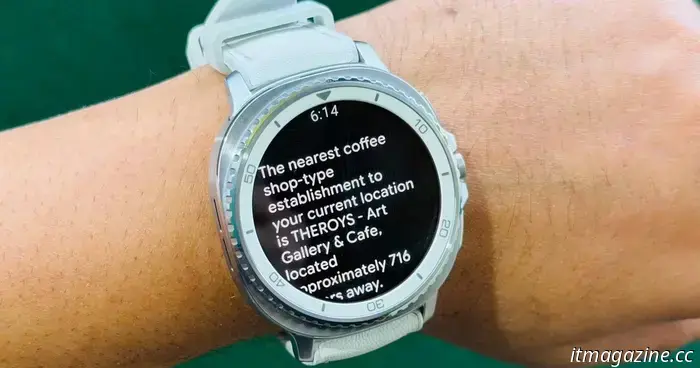
The Galaxy Watch 8 Classic fulfills that need, thanks to its significantly smarter onboard assistant. Meet Gemini! This next-gen AI is a considerable upgrade compared to Google Assistant, Bixby, or Siri on the Apple Watch. It handles a variety of tasks with far less hassle than using a smartphone.
Yet, it's not just the theoretical benefits of Gemini that distinguish it. Its true value becomes evident during more demanding situations. This is not a mere robotic answering machine; Gemini is a powerful language model capable of engaging in natural conversations with remarkable fluidity and direct access to extensive information.
It comprehends complex, multi-step questions and open-ended requests — unlike Siri, which often disappoints or redirects you to a web search. “Hey Gemini, find the nearest clinic and open the map navigation.” Being a passenger on a scooter in a chilly rural setting and successfully achieving this task right from my smartwatch is incredibly relieving.
Not needing to pull my phone out of my pocket for a wide range of tasks is a significant advantage. Whether it’s catching up on the latest news, having Gemini recount the food history of a tribal region as I walk through a picturesque village, or simply having a real conversation with easy follow-up questions, the convenience is remarkable.
While traveling, my itinerary notes proved invaluable. Gemini can access those and other essential Google services, like Gmail, allowing me to retrieve vital information with just a voice command. I particularly appreciated its ability to manage my WhatsApp messages; I could simply give voice commands through my earbuds without ever touching my phone.
A smarter, conversational on-wrist assistant that can navigate across daily-used services is nothing short of a game-changer. I only truly recognized the remarkable convenience when I tested the Galaxy Watch 8 Classic beyond my usual boundaries, and it surpassed my practical expectations.
Advanced sensing for the future
We often take smartwatches for granted, especially regarding health-sensing technology. Each function, from measuring oxygen saturation to advanced ECG and AFib detection, requires extensive engineering and precise medical validation. This is why makers like Apple and Samsung proudly promote their “FDA-certified” statuses.
However, the gradual and careful approach to wearable sensing technology means significant breakthroughs don't occur every year. Smartwatches began with heart rate monitoring, and by 2025, they have evolved to detect abnormal blood pressure changes.
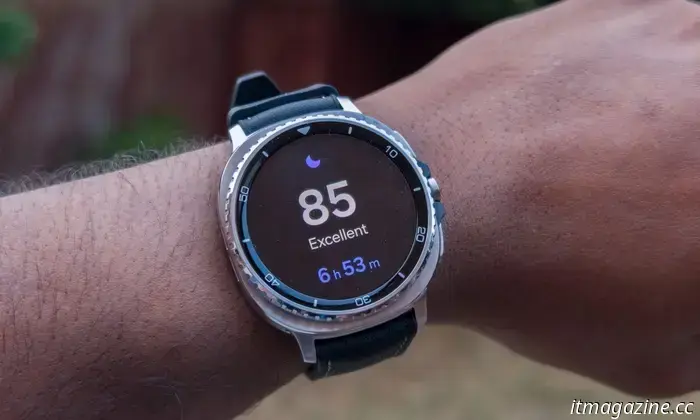
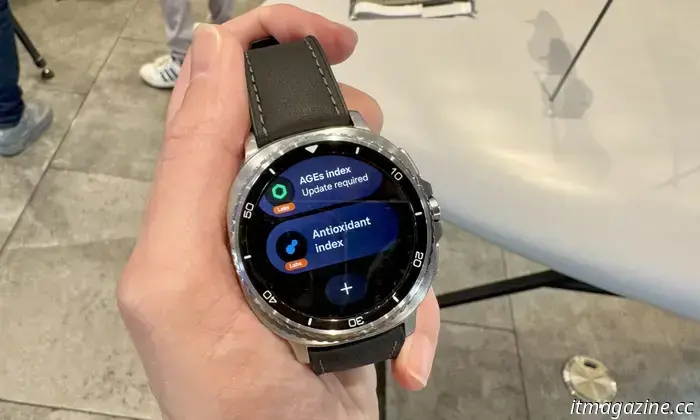
The Galaxy Watch 8 Classic raises the bar with its next-gen sensor array and wellness algorithms, offering additional insights like Energy Score, Vascular Load, Ectopic Beat Detection, and a pioneering nutritional value measurement system that can assess carotenoid levels.
These features are not just “more numbers.” They provide a more user-friendly breakdown of your sleep, rest, and energy levels that anyone can understand. For instance, the vascular load feature monitors blood flow in your vessels during sleep and the stiffness of your arteries from this activity, aiming to assess how hard your heart works during rest. The results are provided across three levels and offer insight into your sleep quality, stress levels, and dietary habits influencing heart health.
In summary, it presents a more understandable evaluation of heart activity. Instead of vague metrics, you receive ratings on a scale ranging from Higher, Slightly higher, Steady, Slightly lower, to Lower. Similarly, the Energy Score combines sleep quality, stress levels, and activity history to give you a daily overview of your physical and mental readiness.
Additionally, the Galaxy Watch 8 Classic features a unique Antioxidant Index. With a simple press on the light-activated BioActive sensor, the

Other articles
 Samsung's One UI 8.5 could potentially rescue your vacation pictures.
A new exclusive mode for the Pixel 10 simplifies Google Maps to its core features, presenting a minimalist black-and-white interface that can extend battery life by up to four hours on extended trips.
Samsung's One UI 8.5 could potentially rescue your vacation pictures.
A new exclusive mode for the Pixel 10 simplifies Google Maps to its core features, presenting a minimalist black-and-white interface that can extend battery life by up to four hours on extended trips.
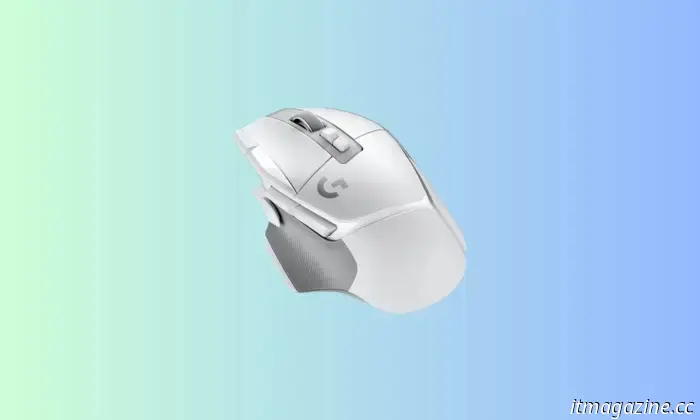 The Logitech G502 X Lightspeed is currently $50 less than its regular price and remains one of the top options available.
If your existing mouse is beginning to limit your performance in shooters or extended MMO sessions, this is a great opportunity for an upgrade. The Logitech G502 X Lightspeed wireless gaming mouse is currently priced at $109.99, a discount of $50 from its usual price of $159.99. You will be getting one of Logitech's top-tier FPS mice, featuring a lighter design and enhanced […]
The Logitech G502 X Lightspeed is currently $50 less than its regular price and remains one of the top options available.
If your existing mouse is beginning to limit your performance in shooters or extended MMO sessions, this is a great opportunity for an upgrade. The Logitech G502 X Lightspeed wireless gaming mouse is currently priced at $109.99, a discount of $50 from its usual price of $159.99. You will be getting one of Logitech's top-tier FPS mice, featuring a lighter design and enhanced […]
 Apple has released its list of the best apps and games, and we now have insight into its plans for 2026.
The 2025 App Store Awards by Apple highlight emerging trends in AI, accessibility, immersive video, and premium gaming, offering users a carefully selected collection of apps to download this year.
Apple has released its list of the best apps and games, and we now have insight into its plans for 2026.
The 2025 App Store Awards by Apple highlight emerging trends in AI, accessibility, immersive video, and premium gaming, offering users a carefully selected collection of apps to download this year.
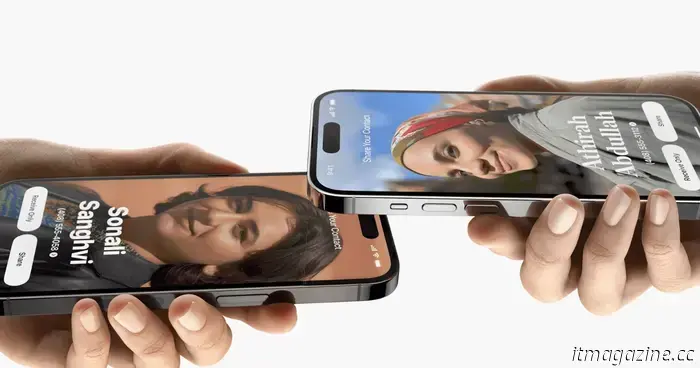 The upcoming NameDrop alternative for Android has just received a new animation.
The forthcoming NameDrop alternative for Android has received a new animated interface. When two devices come into contact, an elegant animation now shows up, indicating NFC detection. However, the exchange feature is still not operational, implying that it is still in the early stages of development, despite the refined visuals.
The upcoming NameDrop alternative for Android has just received a new animation.
The forthcoming NameDrop alternative for Android has received a new animated interface. When two devices come into contact, an elegant animation now shows up, indicating NFC detection. However, the exchange feature is still not operational, implying that it is still in the early stages of development, despite the refined visuals.
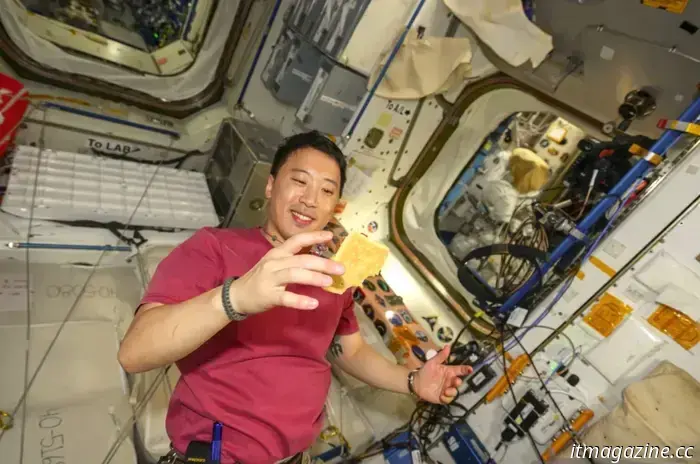 A NASA astronaut is set to experience a 17,500 mph journey back to Earth. Here's how you can watch it.
After an eight-month stay in orbit, NASA astronaut Jonny Kim is preparing to leave the International Space Station (ISS) for his return trip to Earth. He will be making the journey back alongside Roscosmos cosmonauts Sergey Ryzhikov and Alexey Zubritsky on the Soyuz MS-27 spacecraft. The undocking is scheduled for Monday evening Eastern Time, followed by the final descent happening […]
A NASA astronaut is set to experience a 17,500 mph journey back to Earth. Here's how you can watch it.
After an eight-month stay in orbit, NASA astronaut Jonny Kim is preparing to leave the International Space Station (ISS) for his return trip to Earth. He will be making the journey back alongside Roscosmos cosmonauts Sergey Ryzhikov and Alexey Zubritsky on the Soyuz MS-27 spacecraft. The undocking is scheduled for Monday evening Eastern Time, followed by the final descent happening […]
 You can now experience One UI 8.5 on your Galaxy S25.
Samsung has launched the One UI 8.5 beta program for the Galaxy S25 series, allowing users to try out the update before its official release.
You can now experience One UI 8.5 on your Galaxy S25.
Samsung has launched the One UI 8.5 beta program for the Galaxy S25 series, allowing users to try out the update before its official release.
I used the Galaxy Watch 8 Classic during an extended vacation, and I find it superior to the Apple Watch.
I recently completed an extensive journey that involved trekking, sleeping near riverbanks, camping in the foothills of the Himalayas, residing in tribal areas, and keeping my distance from urban environments. It was a much-needed shift in rhythm. Moreover, it was my first prolonged period without my Apple Watch as a wrist companion. [...]