

I'm overwhelmed with subscriptions, but I have finally discovered an iPhone app that can help restore order.
We are currently in a subscription-driven age. This situation is less than ideal, and the constant cycle of app payments is detracting from the smartphone experience for many users. Even web browsers have embraced the subscription model, significantly influenced by AI. However, managing numerous subscriptions can be a hassle beyond just the financial impact.
If you’re anything like me, overseeing various academic and creative subscriptions for family members can turn into a major headache. Additionally, those sporadic emails about automatic payments that unexpectedly pop up in the notification panel can be quite annoying.
There are plenty of subscription management tools available, but many come with their own in-app purchases. The few that are accessible for free often have frustrating user interfaces or lack essential features. After a lengthy search for an ideal subscription manager, I discovered Subpli, and I believe I have finally found my digital haven.
What makes Subpli different from others
Firstly, it’s free. Secondly, this software doesn’t bombard you with ads. There are no in-app purchases or premium features locked behind a paywall. You can use the app in its entirety without needing to create an account, thanks to its guest mode feature.
However, if you prefer, you can log in directly with your Google or Apple account for Android users, ensuring that all subscription details are synced according to the account you choose. I appreciate the guest mode for another reason as well.
It embodies an implicit commitment to user privacy and provides a fully functional tool right from the start, which is often lacking in many financial applications. You won’t be entering any credit card or banking details into the app, as Subpli doesn’t even offer the option to save such information.
The app boasts a clean, well-crafted user interface. The homepage is organized into four sections, and adding new subscriptions is as simple as logging fitness or food data in health-related applications.
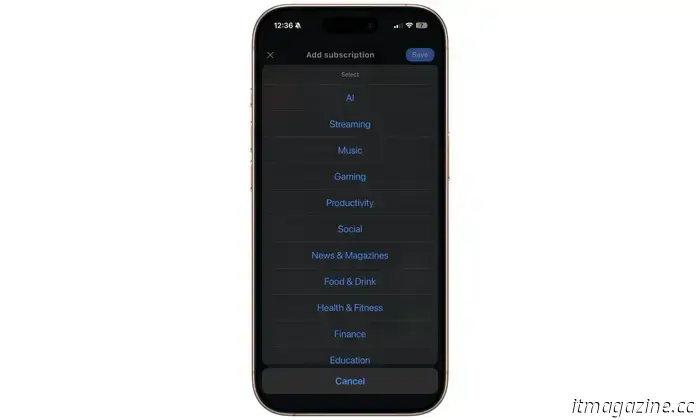
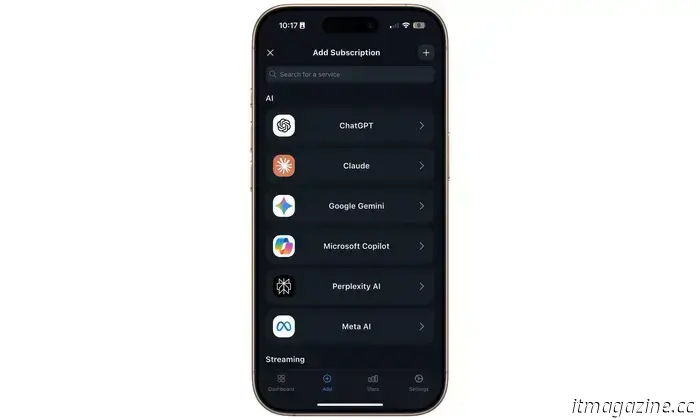
Subpli provides an extensive list of subscription templates that you can scroll through or search for specific ones using the universal search bar at the top. If you can’t find what you need, you can manually add the subscription.
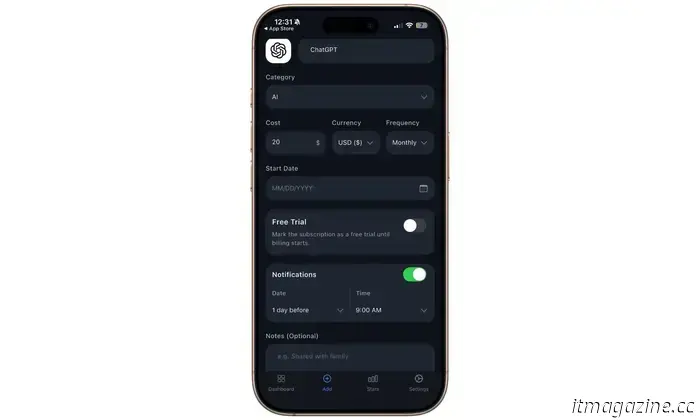
When adding a subscription, you have the flexibility to select the local currency, choose an appropriate one, set a custom icon, specify the payment frequency, and even leave a note. Importantly, you can also set alert preferences ahead of the next payment cycle, selecting the specific hour and the time frame for receiving reminders—be it a day or a whole week—before the payment is due.
This method allows you to prepare for the upcoming payment and avoids the stress of a last-minute notification catching you off guard. You have complete control over the subscription reminders, acting as a safety net to cancel any unwanted service before being charged for another year just moments too late.
Visibility is paramount
The standout feature of Subpli lies in its simplicity in tracking and managing subscriptions. Rather than a convoluted approach with buried information, Subpli adopts a hybrid model. Let’s begin with the dashboard.
This is the app’s default landing page, clearly displaying the total amount for ongoing annual subscriptions at the top. A single tap on this card lets you toggle between annual and monthly spending, allowing for a better understanding of short-term recurring costs.
Adjacent to it is the exact count of active subscriptions, followed by a carousel of these ongoing services. You can click on any entry to access a page where you can edit, cancel, or delete the subscription for that particular app or service.
The dashboard also provides a straightforward view of upcoming subscriptions, making it simpler to grasp what’s ahead and take appropriate measures. This strategy proves effective, especially when viewing the numbers prompts you to reconsider your subscription commitments.
It resembles the principle highlighted in Harvard Business School’s insightful paper, “Lifting the Veil: The Benefits of Cost Transparency.” However, instead of a company revealing prices to build trust, the app offers you clear, total visibility to help you make informed financial decisions regarding your subscription expenditures.
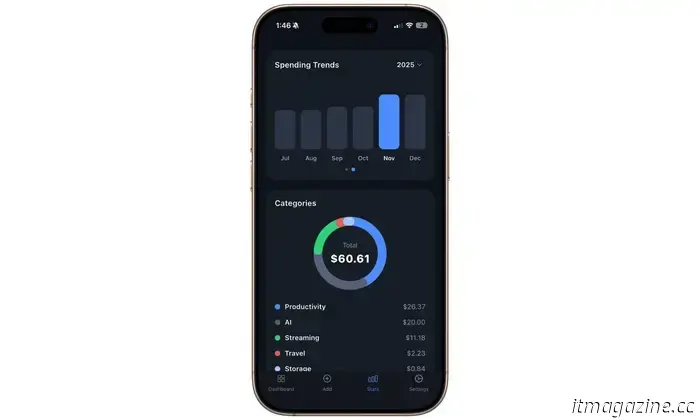
Subpli further includes a Stats page that presents a graphical overview of subscriptions along with a breakdown by category. This is another clever psychological tactic encouraging you to reflect on your spending patterns.
Are you directing a significant portion of your subscription fee towards entertainment services? Why do productivity tools only represent 10% of your monthly digital expenses? These questions arise when you see a clear breakdown of your monthly and annual costs.
This approach led me to cancel at least two active subscriptions after a few moments of contemplation. Subpli enabled me to visualize my digital spending in one place, and frankly, I was not pleased with my monthly outlay or the projected annual total.
I also appreciate the Activity Ring-inspired design on the stats page. Next to it is the Settings page, where you can manage on-device notification preferences and view a breakdown of temporarily paused or permanently canceled subscriptions.
In summary, if you struggle with the hidden weight of subscriptions—like I do—and seek a straightforward solution, Subpli stands out as the best option. Its completely free status, absence of ads,



Other articles
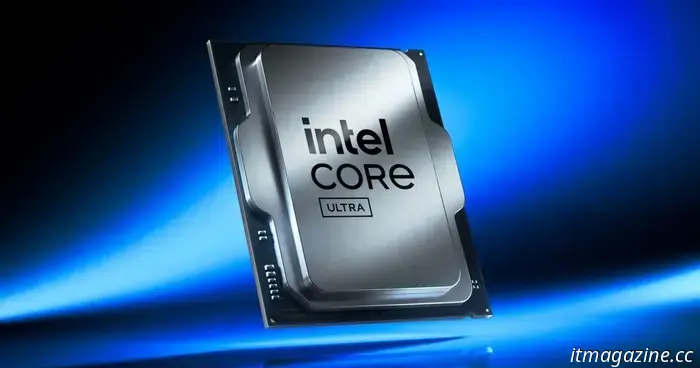 Your Arrow Lake PC might unexpectedly appear to be quicker; here's the reason.
Do you recall when Intel released its Arrow Lake-S desktop processors (the Core Ultra 200S series) at the end of last year? The initial reaction was somewhat tepid. However, recent data indicates that it has been steadily improving over time. New benchmarks from Phoronix reveal that the top-tier Core Ultra 9 285K is currently operating approximately 9% faster on […]
Your Arrow Lake PC might unexpectedly appear to be quicker; here's the reason.
Do you recall when Intel released its Arrow Lake-S desktop processors (the Core Ultra 200S series) at the end of last year? The initial reaction was somewhat tepid. However, recent data indicates that it has been steadily improving over time. New benchmarks from Phoronix reveal that the top-tier Core Ultra 9 285K is currently operating approximately 9% faster on […]
 Arrow Lake owners could benefit from free performance improvements due to software updates
Intel
Do you remember when Intel introduced its Arrow Lake-S desktop processors (the Core Ultra 200S series) late last year? The initial reception was somewhat subdued. However, recent data indicates that the performance has significantly improved over time.
Fresh benchmarks from Phoronix reveal that the leading Core Ultra 9 285K is now operating approximately 9% faster on average under Linux compared to its launch performance. The impressive part? It's achieving this while consuming 15% less power.
Typically, achieving such a performance increase would require purchasing a new chip, but this enhancement comes at no cost. It's the result of a year’s worth of software refinements—improved microcode, enhanced kernel tuning, and compiler adjustments. Essentially, the software has finally aligned with the hardware capabilities.
Intel
Why does this matter
This represents a significant turnaround. Upon the initial release of Arrow Lake, reviewers expressed frustration over inconsistent performance and an efficiency that didn’t meet expectations.
Yet, these new figures highlight an age-old tech adage: “drivers matter.” The hardware has remained the same, but the communication between the software and the hardware has improved.
You may be wondering, “What about Windows?”
Intel appears to be ahead of the curve here. It has already deployed its “Application Performance Optimizations” (APO) tool for Windows. This software effectively acts like a traffic cop for your CPU, intelligently allocating power in real-time to where it’s most needed. Some gamers are experiencing frame rate increases of up to 14%. If the Windows updates can match the improvements seen on Linux, Arrow Lake users could be utilizing a much more powerful chip than they previously realized.
Intel
Why should this matter to you
If you already own an Arrow Lake processor, congratulations: your PC just received a free upgrade. All you need to do is keep your software and drivers up to date.
If you bypassed this generation due to lukewarm reviews, it may be worth reconsidering. The platform is rapidly evolving, and the initial instability appears to be dissipating.
What’s next
Intel is preparing for an “Arrow Lake Refresh” in early 2026. The good news? The new chips are likely to come with these performance enhancements integrated from the start.
For now, it seems that Arrow Lake is maturing like fine wine—a rare and pleasant surprise in an industry where old technology is typically discarded for new.
Moinak Pal has been involved in the technology sector, covering both consumer technology and automotive innovations…
Risk of a bubble in the humanoid robot sector, warns China. So, what happens if it bursts?
We’ve heard a lot about an AI bubble, but there seems to be another one forming in the tech industry.
Lately, discussions about the so-called “AI bubble” have been prevalent, stemming from overinvestment in AI technology that drives its prices and valuations far beyond their realistic worth, resulting in a bubble that might eventually burst.
Now, early warnings are surfacing regarding a similar bubble developing in the burgeoning sector of humanoid robots.
Read more
Why UPDF is the ultimate PDF editor you've been seeking
Say farewell to Adobe and hello to UPDF, with a 50% discount this Black Friday
When you have a PDF that requires editing, you want a program that can handle all your needs and even a bit more. One of the most comprehensive PDF editors available is UPDF, which offers an extensive array of AI-powered tools to help you comprehend, analyze, annotate, convert, and protect your documents, along with being one of the most cost-effective choices out there.
Additionally, UPDF is currently hosting a Black Friday sale, allowing you to save up to 50% on a lifetime subscription across various tiers, as well as that same discount on a subscription to its AI Assistant tier. You can acquire these prices by using the link provided and the extra $10 off coupon displayed at the top of the page.
Read more
Google Gemini 3 Pro users, your free access might be ending soon
Google reduces daily quotas for free use of Gemini 3 Pro and Nano Banana Pro
It seems the initial phase of free access to Google’s new AI tools may already be over. Just weeks after launching its flagship Gemini 3 Pro and Nano Banana Pro image generator, Google is quietly restricting what free users are allowed to do.
When these tools were first introduced, the guidelines were straightforward: you received five prompts per day with the top-tier model and could generate three images. However, in recent days, this guarantee has disappeared. If you’re on the free plan, you now have “Basic access.” Google is no longer guaranteeing a specific number of prompts; instead, it warns that your daily quota may fluctuate significantly depending on server demand.
Read more
Mozilla is testing lightweight tab notes in Firefox Nightly, providing users with an easy method to recall the reasons for keeping tabs open.
Arrow Lake owners could benefit from free performance improvements due to software updates
Intel
Do you remember when Intel introduced its Arrow Lake-S desktop processors (the Core Ultra 200S series) late last year? The initial reception was somewhat subdued. However, recent data indicates that the performance has significantly improved over time.
Fresh benchmarks from Phoronix reveal that the leading Core Ultra 9 285K is now operating approximately 9% faster on average under Linux compared to its launch performance. The impressive part? It's achieving this while consuming 15% less power.
Typically, achieving such a performance increase would require purchasing a new chip, but this enhancement comes at no cost. It's the result of a year’s worth of software refinements—improved microcode, enhanced kernel tuning, and compiler adjustments. Essentially, the software has finally aligned with the hardware capabilities.
Intel
Why does this matter
This represents a significant turnaround. Upon the initial release of Arrow Lake, reviewers expressed frustration over inconsistent performance and an efficiency that didn’t meet expectations.
Yet, these new figures highlight an age-old tech adage: “drivers matter.” The hardware has remained the same, but the communication between the software and the hardware has improved.
You may be wondering, “What about Windows?”
Intel appears to be ahead of the curve here. It has already deployed its “Application Performance Optimizations” (APO) tool for Windows. This software effectively acts like a traffic cop for your CPU, intelligently allocating power in real-time to where it’s most needed. Some gamers are experiencing frame rate increases of up to 14%. If the Windows updates can match the improvements seen on Linux, Arrow Lake users could be utilizing a much more powerful chip than they previously realized.
Intel
Why should this matter to you
If you already own an Arrow Lake processor, congratulations: your PC just received a free upgrade. All you need to do is keep your software and drivers up to date.
If you bypassed this generation due to lukewarm reviews, it may be worth reconsidering. The platform is rapidly evolving, and the initial instability appears to be dissipating.
What’s next
Intel is preparing for an “Arrow Lake Refresh” in early 2026. The good news? The new chips are likely to come with these performance enhancements integrated from the start.
For now, it seems that Arrow Lake is maturing like fine wine—a rare and pleasant surprise in an industry where old technology is typically discarded for new.
Moinak Pal has been involved in the technology sector, covering both consumer technology and automotive innovations…
Risk of a bubble in the humanoid robot sector, warns China. So, what happens if it bursts?
We’ve heard a lot about an AI bubble, but there seems to be another one forming in the tech industry.
Lately, discussions about the so-called “AI bubble” have been prevalent, stemming from overinvestment in AI technology that drives its prices and valuations far beyond their realistic worth, resulting in a bubble that might eventually burst.
Now, early warnings are surfacing regarding a similar bubble developing in the burgeoning sector of humanoid robots.
Read more
Why UPDF is the ultimate PDF editor you've been seeking
Say farewell to Adobe and hello to UPDF, with a 50% discount this Black Friday
When you have a PDF that requires editing, you want a program that can handle all your needs and even a bit more. One of the most comprehensive PDF editors available is UPDF, which offers an extensive array of AI-powered tools to help you comprehend, analyze, annotate, convert, and protect your documents, along with being one of the most cost-effective choices out there.
Additionally, UPDF is currently hosting a Black Friday sale, allowing you to save up to 50% on a lifetime subscription across various tiers, as well as that same discount on a subscription to its AI Assistant tier. You can acquire these prices by using the link provided and the extra $10 off coupon displayed at the top of the page.
Read more
Google Gemini 3 Pro users, your free access might be ending soon
Google reduces daily quotas for free use of Gemini 3 Pro and Nano Banana Pro
It seems the initial phase of free access to Google’s new AI tools may already be over. Just weeks after launching its flagship Gemini 3 Pro and Nano Banana Pro image generator, Google is quietly restricting what free users are allowed to do.
When these tools were first introduced, the guidelines were straightforward: you received five prompts per day with the top-tier model and could generate three images. However, in recent days, this guarantee has disappeared. If you’re on the free plan, you now have “Basic access.” Google is no longer guaranteeing a specific number of prompts; instead, it warns that your daily quota may fluctuate significantly depending on server demand.
Read more
Mozilla is testing lightweight tab notes in Firefox Nightly, providing users with an easy method to recall the reasons for keeping tabs open.
 Intel may make a comeback in Apple laptops, but not in the manner you might expect.
Analyst Ming-Chi Kuo asserts that Intel might begin producing Apple’s entry-level M-series chips by mid-2027. This does not indicate a return of Intel-powered Macs, but rather a significant behind-the-scenes change that could transform Apple’s supply chain and the construction of future MacBooks.
Intel may make a comeback in Apple laptops, but not in the manner you might expect.
Analyst Ming-Chi Kuo asserts that Intel might begin producing Apple’s entry-level M-series chips by mid-2027. This does not indicate a return of Intel-powered Macs, but rather a significant behind-the-scenes change that could transform Apple’s supply chain and the construction of future MacBooks.
 Have you upgraded to Windows 11? If you haven't, you're not alone.
The uptake of Windows 11 is slow, with millions of compatible PCs choosing not to upgrade. This situation poses challenges for Microsoft and raises worries about future security strategies.
Have you upgraded to Windows 11? If you haven't, you're not alone.
The uptake of Windows 11 is slow, with millions of compatible PCs choosing not to upgrade. This situation poses challenges for Microsoft and raises worries about future security strategies.
 A new report indicates that Intel may serve as a foundry for Apple's M-series chips, though not fully returning to the x86 architecture.
What’s happening? Although Apple and Intel severed their partnership some time ago, the situation might change soon. A recent leak from Ming-Chi Kuo suggests Intel could re-enter the Apple ecosystem, not as a CPU designer, but as a manufacturer for Apple’s lower-end M-series chips. This doesn’t imply a return of Intel-powered MacBooks; rather, Intel would manufacture chips designed by Apple. If all goes well, Intel might begin supplying these chips by mid-2027.
The plan involves utilizing Intel’s 18AP process node to produce Apple’s entry-level M-series chips, likely intended for MacBook Air and base iPads.
Apple will retain control over the design and architecture of the chips; only the manufacturing will change.
Intel is anticipated to provide initial sample batches after Apple receives the 18AP design kit, expected in the first quarter of 2026, with mass shipments possibly starting in mid-to-late 2027.
Existing high-end Apple chips (Pro / Max / Ultra) will likely continue to be produced by TSMC, meaning the change will only impact the entry-level segment.
Intel might start shipping Apple’s lowest-end M processor as early as 2027. There have been persistent market whispers about Intel becoming an advanced-node foundry supplier for Apple, but clarity on this topic has been limited. My latest industry research, however, suggests that…— 郭明錤 (Ming-Chi Kuo) (@mingchikuo) November 28, 2025
Why this matters: This rumor could indicate a meaningful shift in Apple’s supply chain strategy, impacting anyone concerned about availability, pricing, and regional production. Should Apple truly collaborate with Intel as an additional chip manufacturer, it could lessen its reliance on TSMC and Taiwan. For those waiting for entry-level MacBook Airs or base iPads, this might result in more reliable stock, fewer unexpected delays, and potentially U.S.-focused production runs that keep store shelves well-stocked.
Additionally, there’s the “Made in the USA” consideration. Intel manufactures chips domestically, and Apple utilizing this resource could influence everything from taxes to shipping schedules. For consumers, this might result in subtle but significant changes: pricing variations, different launch timelines based on region, and potentially two versions of the same MacBook (one produced by TSMC and the other by Intel). In short, come 2027, checking which foundry produced the chip in your laptop might become as routine as checking storage or RAM today.
Why should you care? If you've been hesitant to buy an entry-level MacBook or waiting for better deals, this news might prompt you to keep an eye out. Two potential outcomes could arise: stock stabilization or slight price adjustments, depending on Apple's manufacturing decisions. If long-term support, regional availability, or a U.S.-built Mac is important to you, this could mark the beginning of a new chapter.
However, if you’re a developer or concerned about consistent performance, dual-sourced chips might be significant—potentially affecting build-to-order variations, shipping times, and subtle distinctions. Still, if you appreciate the advantages of Apple Silicon and want a Mac soon, there's no need to delay. As the rumor indicates, this may only influence lower-end models, with substantial changes likely not occurring until 2027.
So, what’s next? For now, it’s a matter of waiting. Intel’s design kit for Apple is not expected until early 2026, so don’t anticipate immediate changes to the current Mac lineup. If you plan to purchase a Mac soon, there’s no reason to wait, as these changes won’t arrive until at least 2027. However, if you're interested in a U.S.-made chip or want to observe how dual sourcing affects prices, it may be wise to monitor developments over the next year.
Varun is a knowledgeable technology journalist and editor with over eight years of experience in consumer tech media. His work encompasses...
Don’t worry; your holiday shopping stress will now be managed by AI. Your AI will know your purchasing preferences before you do.
If you’ve ever felt your blood pressure rise at the thought of holiday shopping, you are not alone. The frantic search for the perfect gift at the lowest price typically involves numerous browser tabs and hoping not to overlook a coupon code. Just in time for the Black Friday rush, two major tech entities—Microsoft and Perplexity AI—are stepping in to alleviate the stress for you.
Read more
Laptop deals I won’t be keeping to myself this Black Friday Save on an ASUS ROG gaming laptop, the latest Apple MacBook Pro, a 32-inch LG gaming monitor, a Razer cooling pad, and an Anker docking station.
If you’re considering upgrading your laptop this year, it’s advisable
A recent test from WindowsLatest reveals that the preloaded File Explorer in Windows 11 still starts up more slowly than that of Windows 10, and it also consumes more RAM in the process. This makes the upgrade significantly less attractive for many users.
A new report indicates that Intel may serve as a foundry for Apple's M-series chips, though not fully returning to the x86 architecture.
What’s happening? Although Apple and Intel severed their partnership some time ago, the situation might change soon. A recent leak from Ming-Chi Kuo suggests Intel could re-enter the Apple ecosystem, not as a CPU designer, but as a manufacturer for Apple’s lower-end M-series chips. This doesn’t imply a return of Intel-powered MacBooks; rather, Intel would manufacture chips designed by Apple. If all goes well, Intel might begin supplying these chips by mid-2027.
The plan involves utilizing Intel’s 18AP process node to produce Apple’s entry-level M-series chips, likely intended for MacBook Air and base iPads.
Apple will retain control over the design and architecture of the chips; only the manufacturing will change.
Intel is anticipated to provide initial sample batches after Apple receives the 18AP design kit, expected in the first quarter of 2026, with mass shipments possibly starting in mid-to-late 2027.
Existing high-end Apple chips (Pro / Max / Ultra) will likely continue to be produced by TSMC, meaning the change will only impact the entry-level segment.
Intel might start shipping Apple’s lowest-end M processor as early as 2027. There have been persistent market whispers about Intel becoming an advanced-node foundry supplier for Apple, but clarity on this topic has been limited. My latest industry research, however, suggests that…— 郭明錤 (Ming-Chi Kuo) (@mingchikuo) November 28, 2025
Why this matters: This rumor could indicate a meaningful shift in Apple’s supply chain strategy, impacting anyone concerned about availability, pricing, and regional production. Should Apple truly collaborate with Intel as an additional chip manufacturer, it could lessen its reliance on TSMC and Taiwan. For those waiting for entry-level MacBook Airs or base iPads, this might result in more reliable stock, fewer unexpected delays, and potentially U.S.-focused production runs that keep store shelves well-stocked.
Additionally, there’s the “Made in the USA” consideration. Intel manufactures chips domestically, and Apple utilizing this resource could influence everything from taxes to shipping schedules. For consumers, this might result in subtle but significant changes: pricing variations, different launch timelines based on region, and potentially two versions of the same MacBook (one produced by TSMC and the other by Intel). In short, come 2027, checking which foundry produced the chip in your laptop might become as routine as checking storage or RAM today.
Why should you care? If you've been hesitant to buy an entry-level MacBook or waiting for better deals, this news might prompt you to keep an eye out. Two potential outcomes could arise: stock stabilization or slight price adjustments, depending on Apple's manufacturing decisions. If long-term support, regional availability, or a U.S.-built Mac is important to you, this could mark the beginning of a new chapter.
However, if you’re a developer or concerned about consistent performance, dual-sourced chips might be significant—potentially affecting build-to-order variations, shipping times, and subtle distinctions. Still, if you appreciate the advantages of Apple Silicon and want a Mac soon, there's no need to delay. As the rumor indicates, this may only influence lower-end models, with substantial changes likely not occurring until 2027.
So, what’s next? For now, it’s a matter of waiting. Intel’s design kit for Apple is not expected until early 2026, so don’t anticipate immediate changes to the current Mac lineup. If you plan to purchase a Mac soon, there’s no reason to wait, as these changes won’t arrive until at least 2027. However, if you're interested in a U.S.-made chip or want to observe how dual sourcing affects prices, it may be wise to monitor developments over the next year.
Varun is a knowledgeable technology journalist and editor with over eight years of experience in consumer tech media. His work encompasses...
Don’t worry; your holiday shopping stress will now be managed by AI. Your AI will know your purchasing preferences before you do.
If you’ve ever felt your blood pressure rise at the thought of holiday shopping, you are not alone. The frantic search for the perfect gift at the lowest price typically involves numerous browser tabs and hoping not to overlook a coupon code. Just in time for the Black Friday rush, two major tech entities—Microsoft and Perplexity AI—are stepping in to alleviate the stress for you.
Read more
Laptop deals I won’t be keeping to myself this Black Friday Save on an ASUS ROG gaming laptop, the latest Apple MacBook Pro, a 32-inch LG gaming monitor, a Razer cooling pad, and an Anker docking station.
If you’re considering upgrading your laptop this year, it’s advisable
A recent test from WindowsLatest reveals that the preloaded File Explorer in Windows 11 still starts up more slowly than that of Windows 10, and it also consumes more RAM in the process. This makes the upgrade significantly less attractive for many users.
 Battlefield 6 is finally targeting cheaters effectively, and it's proving to be successful.
Recent anti-cheat statistics from the Battlefield 6 team reveal that they have blocked 2.4 million cheating attempts, resulting in a “match infection rate” of only 2–2.5%. This could lead to fewer aimbots, reduced laggy cheating, and a more equitable gaming experience for players.
Battlefield 6 is finally targeting cheaters effectively, and it's proving to be successful.
Recent anti-cheat statistics from the Battlefield 6 team reveal that they have blocked 2.4 million cheating attempts, resulting in a “match infection rate” of only 2–2.5%. This could lead to fewer aimbots, reduced laggy cheating, and a more equitable gaming experience for players.
I'm overwhelmed with subscriptions, but I have finally discovered an iPhone app that can help restore order.
We are currently in the age of subscriptions. This situation isn't perfect, and the exhaustion from continuous app payments is diminishing the smartphone experience for numerous users. Furthermore, web browsers have also embraced the subscription model, largely due to the influence of AI. However, the responsibility of keeping track of various subscriptions is a challenge in itself, aside from the [...]