

The smartphone I’m looking forward to the most in 2025 is not an iPhone.
I typically feel a lot of excitement for every new or upcoming phone release, and while I'm currently preoccupied with the captivating Apple iPhone 17 Air and still enjoy my iPhone 16 Pro Max, there's another smartphone that has caught my attention: the Xiaomi 15 Ultra, the successor to my favorite camera phone of 2024, the Xiaomi 14 Ultra. Nonetheless, I'm aware that it has a high bar to meet.
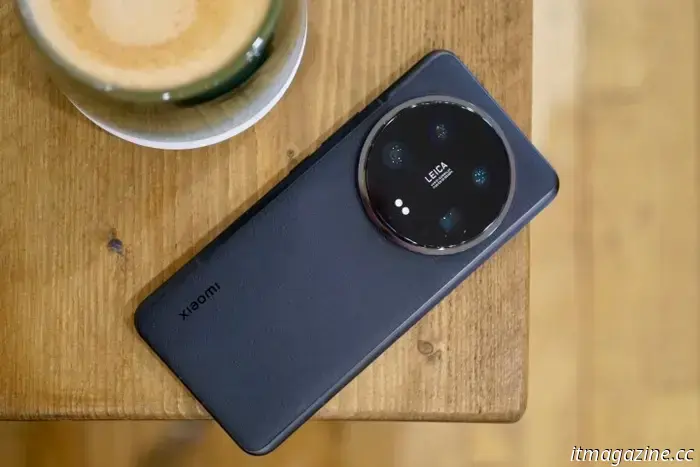
It’s the combination of Leica and Xiaomi at their best
Andy Boxall / Digital Trends
Xiaomi has a continuing collaboration with camera manufacturer Leica, and the 14 Ultra truly showcases what they can achieve together. My appreciation for Leica's commitment to mobile photography dates back to their partnership with Huawei, and I can trace my enjoyment of photography to some of the initial Leica and Huawei phones, such as the Huawei P9 and Mate 10 Pro.
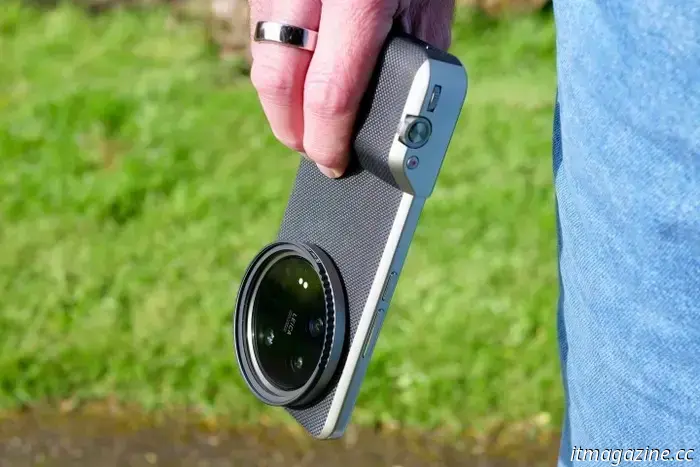
However, the 14 Ultra’s camera excellence wasn't solely due to Leica; it also stemmed from Xiaomi’s creativity with the Photography Kit, which included a custom camera grip with an internal battery and a remarkable adapter ring for full-size filters. This innovation transformed the 14 Ultra from a phone into a camera, and I thoroughly enjoyed using it.
Xiaomi 14 Ultra with the Photography Kit Andy Boxall / Digital Trends
I was eager to utilize the Xiaomi 14 Ultra’s camera, not just because of my confidence in its capabilities, but also due to my curiosity regarding how it handled various scenes and environments. Only one other smartphone camera has come close to inspiring me in the same way, but I haven't felt similarly creatively motivated by any other recent phone. Understanding why I hold the Xiaomi 14 Ultra in such high regard is essential to grasping my anticipation for the next model.
The intriguing design leak
Smart Pikachu
If I had to point out one downside of the Xiaomi 14 Ultra’s design, it would be that it appeared somewhat uninspired. Although the back features a faux leather finish with a nice feel, the plain black exterior rendered it nearly anonymous. I didn't feel proud to carry it, and while the large camera module did provide some presence, it could never be described as attractive.
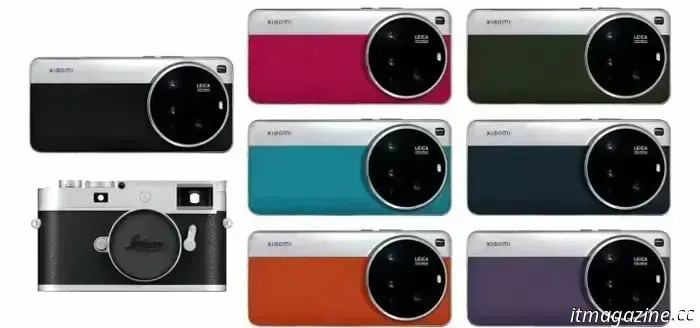
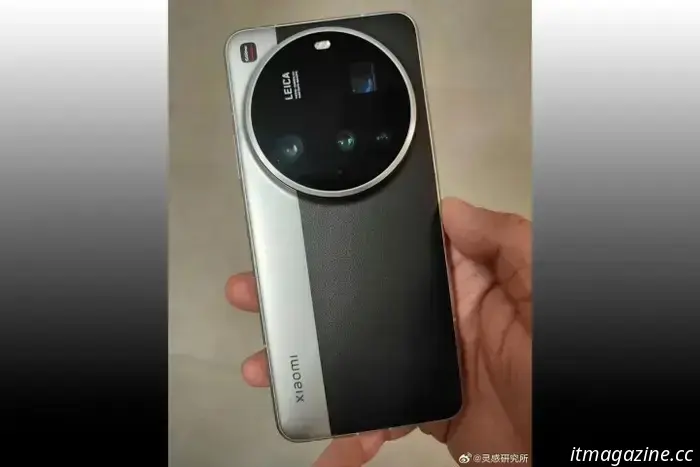
Images reportedly showcasing the Xiaomi 15 Ultra have surfaced, and if they're authentic, it seems that Xiaomi recognized this issue and has gone all out for the sequel. Rather than just offering it in a few different colors and calling it a day, it appears they have collaborated with Leica on the design, giving the rear panel an aesthetic reminiscent of a Leica camera. It looks fantastic and imbues the Xiaomi 15 Ultra with the character that the 14 Ultra lacked.
Possible image of the Xiaomi 15 Ultra. Innogyan
There is a possibility that these images were created by a fan hoping for the same improvements as I am, but they do seem genuine. If Leica has granted Xiaomi permission to draw inspiration from its renowned design for the phone's aesthetic, just think about the innovations happening with the camera itself. Speculation about the specifications suggests it will have four cameras — a 50-megapixel 1-inch sensor main, a wide-angle, a 3x telephoto zoom, and a 200MP telephoto for a 4.3x zoom. This configuration is somewhat different from that of the Xiaomi 14 Ultra.
The software aspect
Xiaomi 14 Ultra Andy Boxall / Digital Trends
Hardware is just the beginning of what makes modern smartphone camera systems exceptional, and what happens behind the scenes does raise some concerns for me, though I’m hopeful that Leica will temper Xiaomi in this regard. I’m referring to AI, which is increasingly prevalent in our phones, and Chinese brands, in particular, are eager to leverage it, seeing it as a significant selling point for local consumers.
While AI can be beneficial in our cameras — think Google’s Magic Eraser and similar features — it often strays too close to the realm of gimmicks. Examples like Google’s Add Me and Samsung’s Sketch to Image tool illustrate this. They certainly have their uses, and although Google’s computational photography enhances the Pixel 9 Pro and Pro Fold’s cameras, I don’t want AI to overshadow Xiaomi’s plans for its next flagship device.
This is where Leica’s extensive experience comes into play. With over a century in the industry, it continues to produce high-quality cameras for enthusiasts who, I believe, prefer minimal AI in their photographs. The Xiaomi 14 Ultra debuted just before the wave of AI in smartphones began, and it surprisingly offered an analog experience, especially when using the camera grip and screw-in filters. As long as Xiaomi doesn’t overload the camera with AI at the cost of fine-tuning the already impressive collaboration with Leica, the 15 Ultra could potentially surpass its predecessor.
When is it expected to launch?
Xiaomi 14 Ultra Andy Boxall / Digital Trends
If Xiaomi can enhance the 14 Ultra’s remarkable camera without overwhelming the results with excessive AI, package it in

Other articles
 James Cameron discusses Pandora, the Ash clan, and the Wind Traders in Avatar 3.
In a series of interviews, James Cameron hinted at Avatar 3 and discussed what to expect in the upcoming film, including the introduction of new Na'vi clans.
James Cameron discusses Pandora, the Ash clan, and the Wind Traders in Avatar 3.
In a series of interviews, James Cameron hinted at Avatar 3 and discussed what to expect in the upcoming film, including the introduction of new Na'vi clans.
 Security vulnerabilities and privacy issues affect the DeepSeek iOS application.
There are increasing worries that the DeepSeek AI chatbot, which is based in China, is not secure and does not have adequate privacy measures.
Security vulnerabilities and privacy issues affect the DeepSeek iOS application.
There are increasing worries that the DeepSeek AI chatbot, which is based in China, is not secure and does not have adequate privacy measures.
 Amazon intends to allocate approximately $100 billion toward AI by 2025.
On Thursday, Amazon CEO Andy Jassy informed investors that the company intends to invest over $100 billion in capital expenditures for AWS and AI development in 2025.
Amazon intends to allocate approximately $100 billion toward AI by 2025.
On Thursday, Amazon CEO Andy Jassy informed investors that the company intends to invest over $100 billion in capital expenditures for AWS and AI development in 2025.
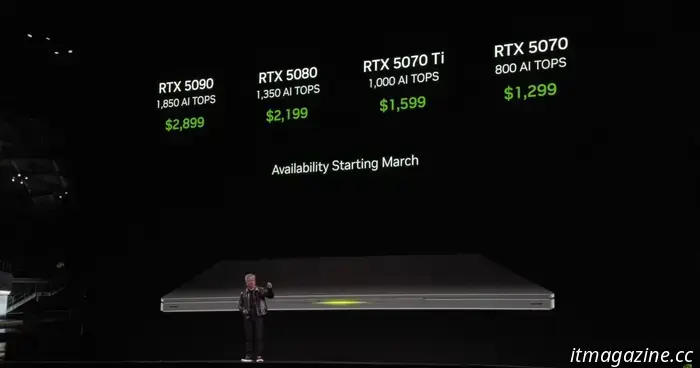 The RTX 5080 could demonstrate its value in upcoming gaming laptops.
Nvidia's RTX 5080 for laptops could potentially match the performance of the previous generation's RTX 4090 laptop GPU.
The RTX 5080 could demonstrate its value in upcoming gaming laptops.
Nvidia's RTX 5080 for laptops could potentially match the performance of the previous generation's RTX 4090 laptop GPU.
 The Dell G16 gaming laptop featuring the RTX 4070 is available with a $400 discount.
The Dell G16 gaming laptop, featuring a 13th-generation Intel Core i9 processor and Nvidia GeForce RTX 4070 graphics card, is currently available from Dell with a discount of $400.
The Dell G16 gaming laptop featuring the RTX 4070 is available with a $400 discount.
The Dell G16 gaming laptop, featuring a 13th-generation Intel Core i9 processor and Nvidia GeForce RTX 4070 graphics card, is currently available from Dell with a discount of $400.
 Google employees are experimenting with a new AI Mode search function.
Google intends to enhance its search capabilities further in 2025 by introducing a new AI mode feature, which is currently under testing by its employees.
Google employees are experimenting with a new AI Mode search function.
Google intends to enhance its search capabilities further in 2025 by introducing a new AI mode feature, which is currently under testing by its employees.
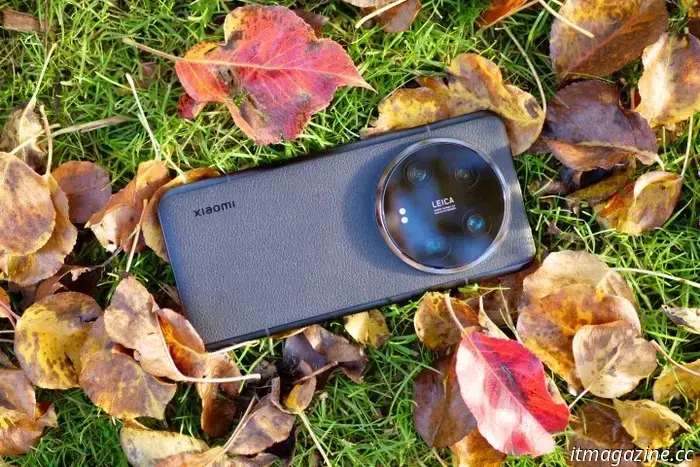
The smartphone I’m looking forward to the most in 2025 is not an iPhone.
I'm certainly thinking about the upcoming iPhone models, but there's one phone that I'm even more eager to experience, and that's the Xiaomi 15 Ultra. Let me explain why.