
UBS reports that Chinese car buyers anticipate increased prices next year.
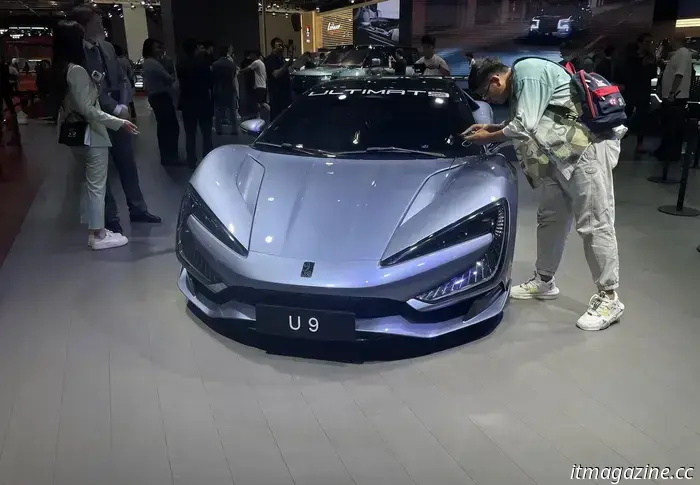
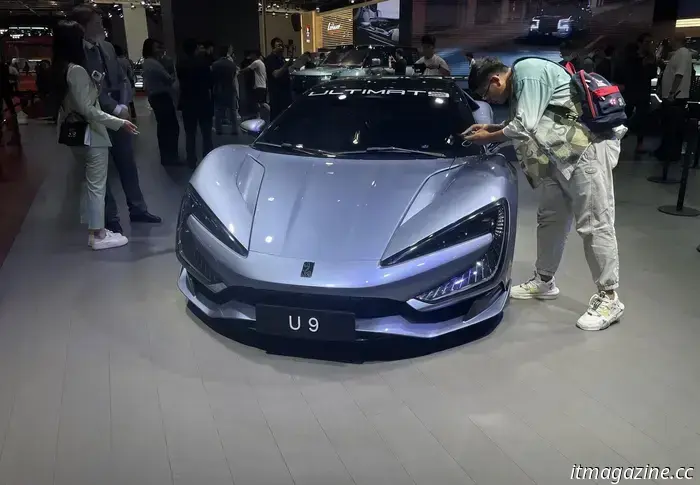
BYD unveiled the Yangwang U9 sports car at Auto Shanghai 2023 on Tuesday, April 18, 2023. Credit: TechNode/Jill Shen
Chinese consumers are bracing for significant car price hikes next year, as the central government begins to gradually eliminate its vehicle purchase incentives. This shift could lead to a spike in car sales, with reduced competition for automakers through the end of this year, according to a UBS analyst on Tuesday. "2025 will mark the last year electric vehicles can benefit from tax breaks on purchases, and consumer expectations regarding future price changes could elevate sales to unprecedented levels," Paul Gong, head of China auto research at UBS, informed reporters in Shanghai (translated). As reported by Reuters, China’s Ministry of Finance had previously announced that new energy vehicles (NEVs), which encompass all-electric and plug-in hybrid vehicles, will be exempt from purchase tax if bought in 2024 and 2025. However, this exemption will be reduced and limited to RMB 15,000 ($2,046), or 5% of the price, down from the original 10%, for vehicles purchased in 2026 and 2027.
Nonetheless, international car manufacturers and newer electric vehicle startups will continue to face substantial competitive pressure from a variety of established Chinese companies in the early part of this year, attributed to an oversupply in relation to demand before and after the upcoming Lunar New Year holiday, Gong remarked. These observations come after prominent luxury automakers reported a downturn in 2024 within the world’s largest automotive market. Sales for BMW and Audi dropped 13.4% and 10.9% year-on-year, respectively, while Porsche saw a 28% decline from the previous year, with approximately 56,000 units sold.
China’s extensive stimulus package aimed at enhancing car consumption could also serve as a positive factor for 2025, described as “more generous than anticipated” and indicative of Beijing’s dedication to economic growth, according to Gong. On January 8, the central government revealed it would maintain subsidies for the replacement of old vehicles as part of a broader trade-in program for consumer goods, including appliances and autos. Local consumers who exchange old cars for new ones this year will receive a one-time subsidy of up to RMB 20,000.
In April of the previous year, Beijing announced subsidies for buyers of additional gas-powered or environmentally friendly vehicles of up to RMB 7,000 and RMB 10,000, respectively. This was later raised to RMB 15,000 and RMB 20,000 starting in August. Gong added that the stimulus package for 2025 is expected to be larger than last year’s measures, with UBS predicting it will have contributed to an additional 2 million car sales in 2024.
Jill Shen is a technology reporter based in Shanghai, focusing on Chinese mobility, autonomous vehicles, and electric cars. Connect with her via email at [email protected] or on Twitter at @jill_shen_sh.
More from Jill Shen.
Other articles
 CATL is expected to announce a record profit in 2024, even with a decrease in revenue due to the decline in lithium prices.
In the meantime, CATL cautioned that it could finish the year with a drop in revenue for the first time since it began disclosing its financial data in 2015.
CATL is expected to announce a record profit in 2024, even with a decrease in revenue due to the decline in lithium prices.
In the meantime, CATL cautioned that it could finish the year with a drop in revenue for the first time since it began disclosing its financial data in 2015.
 Lomonosov 3 and Kant 3 eBooks
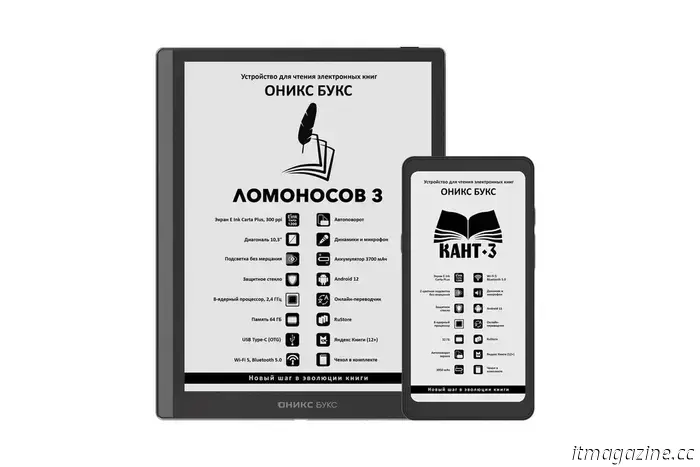
ONYX International Inc, has introduced an update of two popular series of ONYX BOOKS e-readers. The new products - "Lomonosov 3" and "Kant 3" - are already on sale. They offer improved technical specifications, modern software and new features for comfortable reading.
Lomonosov 3 and Kant 3 eBooks
ONYX International Inc, has introduced an update of two popular series of ONYX BOOKS e-readers. The new products - "Lomonosov 3" and "Kant 3" - are already on sale. They offer improved technical specifications, modern software and new features for comfortable reading.
 DJI introduces the DJI Flip, a foldable drone equipped with hand launch capabilities and AI features.
On Tuesday, Chinese drone manufacturer DJI introduced the DJI Flip, a foldable drone that includes a 1/1.3-inch image sensor for capturing 4K/60fps HDR videos. Weighing less than 249 grams, this foldable model comes with a protective cover, offers a flight duration of 31 minutes, features AI smart tracking, and can be launched by hand without the need for a remote control.
DJI introduces the DJI Flip, a foldable drone equipped with hand launch capabilities and AI features.
On Tuesday, Chinese drone manufacturer DJI introduced the DJI Flip, a foldable drone that includes a 1/1.3-inch image sensor for capturing 4K/60fps HDR videos. Weighing less than 249 grams, this foldable model comes with a protective cover, offers a flight duration of 31 minutes, features AI smart tracking, and can be launched by hand without the need for a remote control.
 Relaxing massage from steel hands from Shanghai
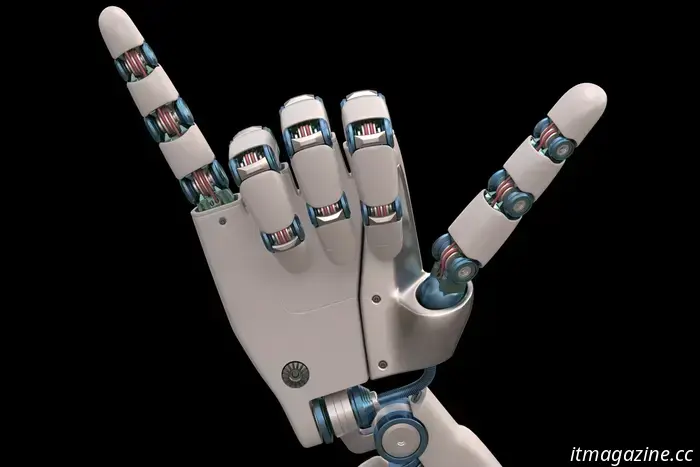
Scientists from Shanghai have developed a robotic system that replicates massage techniques used in traditional Chinese medicine. The novelty can be used in health care facilities, rehabilitation centers and other places to help patients experiencing pain or discomfort.
Relaxing massage from steel hands from Shanghai
Scientists from Shanghai have developed a robotic system that replicates massage techniques used in traditional Chinese medicine. The novelty can be used in health care facilities, rehabilitation centers and other places to help patients experiencing pain or discomfort.
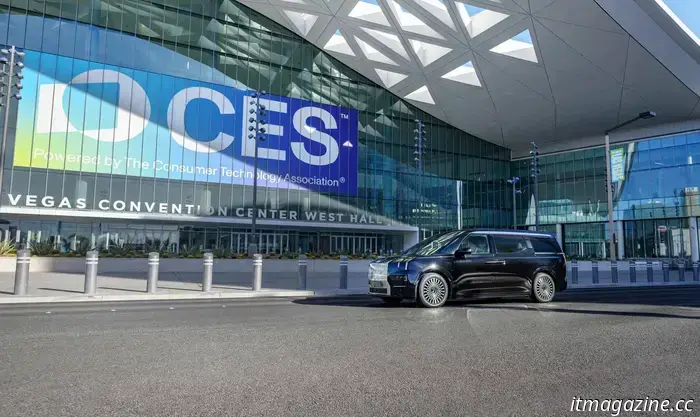 Great Wall Motor and Zeekr from China showcase innovative technology at CES 2025.
Great Wall Motor and Zeekr's public showcases of new technologies are uncommon actions among Chinese car manufacturers.
Great Wall Motor and Zeekr from China showcase innovative technology at CES 2025.
Great Wall Motor and Zeekr's public showcases of new technologies are uncommon actions among Chinese car manufacturers.
 HUAWEI Mate X6 and FreeBuds Pro 4 sales launch
Sales of the flagship foldable smartphone HUAWEI Mate X6 and new headphones FreeBuds Pro 4 have started in Russian stores. Buyers of HUAWEI Mate X6 get HUAWEI WATCH GT 5 smartwatch as a gift, as well as 6 months of additional warranty for screen replacement.
HUAWEI Mate X6 and FreeBuds Pro 4 sales launch
Sales of the flagship foldable smartphone HUAWEI Mate X6 and new headphones FreeBuds Pro 4 have started in Russian stores. Buyers of HUAWEI Mate X6 get HUAWEI WATCH GT 5 smartwatch as a gift, as well as 6 months of additional warranty for screen replacement.
UBS reports that Chinese car buyers anticipate increased prices next year.
“According to Paul Gong, head of China auto research at UBS, '2025 will mark the final year that EVs may qualify for tax incentives on purchases, and the public’s expectations regarding future price changes could elevate sales significantly.'”