
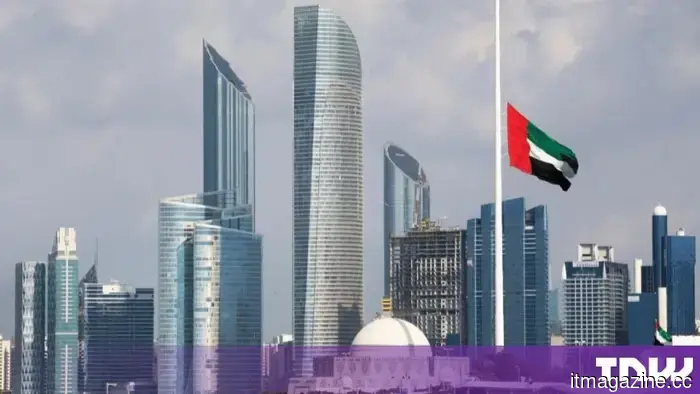
G42 has dropped Huawei and has allowed Washington to monitor its data centres. It's said that majority ownership by US entities is likely to follow.
G42 executives have engaged in preliminary discussions regarding the potential sale of a majority stake to American firms to ensure access to advanced chips beyond April 2027, according to Bloomberg. The company has already removed Huawei equipment to facilitate Microsoft's $1.5 billion investment in 2024 and integrated U.S.-specific monitoring into its data centers this past February. The article contends that export controls have shifted focus from the distribution of chips to who owns the companies that possess them.
As reported by Bloomberg on Friday, G42 executives from Abu Dhabi are exploring the option of selling a majority stake to U.S. companies in a bid to secure access to advanced chips after next year. Reporters Alex Dooler, Zainab Fattah, and Dinesh Nair cited unnamed sources familiar with the situation who requested anonymity due to the confidential nature of the talks.
G42 is permitted to acquire advanced chips without a U.S. license only until approximately April 2027 and must alter its corporate structure to maintain this access, considering options such as having an American majority shareholder or establishing a new entity in the U.S. No definitive decisions have been reached, and TNW has not independently confirmed these discussions.
A representative for G42 informed Bloomberg that the company is concentrating on executing its long-term growth plan and does not comment on confidential discussions or possible transactions, indicating a refusal rather than a denial.
While the talks remain unverified, the events leading up to them are documented. G42 has made three significant concessions to continue acquiring American chips, each yielding permissions rather than resolutions.
The first concession involved China, with Microsoft investing $1.5 billion in G42 in April 2024 in exchange for a board seat, after G42 removed Huawei equipment from its operations and migrated workloads to Azure. Microsoft characterized the deal as supported by a unique binding agreement with the U.S. and UAE governments, which also granted an American company oversight of how G42 utilized the technology.
The second concession was increased transparency. By February, G42 was developing a monitoring system for its infrastructure in line with U.S. specifications. Jacob Helberg, the U.S. undersecretary of state for economic growth, energy, and environment, noted in a congressional hearing that the company had agreed to create a unified operating picture to ensure that G42-owned clusters in the UAE were not accessed in violation of U.S. export regulations. Helberg called this system "unprecedented" and indicated its potential adoption within the Pax Silica coalition.
This development contrasts with the usual operation of these controls, as Washington has been focusing on corporate nationality rather than just the physical locations involved, and G42 proactively opted for oversight in this instance.
The third concession was geopolitical. In July, the U.S. reclassified the UAE's export-control status, moving it from a tier shared with China and Yemen to one aligned with India, South Korea, and European nations. The U.S. Department of Commerce stated this adjustment acknowledged the UAE's role as a key defense partner and its support for U.S. national security, specifically mentioning Operation Epic Fury.
Reports indicated that Sheikh Tahnoon bin Zayed Al Nahyan, G42’s chairman and the UAE’s national security adviser, directly approached the White House following the onset of the Iran war. The Wall Street Journal highlighted this reclassification, which allowed the UAE to purchase Nvidia and AMD hardware without a license—a privilege now nearing expiration.
The distinction here is that influence does not equate to ownership. Despite having significant American investors like Microsoft and private equity firm Silver Lake alongside Mubadala, Abu Dhabi’s $385 billion wealth fund, U.S. investment alone has not proven adequate. What is on the table now, as described by Bloomberg, involves U.S. ownership of G42, which represents a fundamentally different issue.
The broader commitments have also not sufficed. The UAE claims to be ahead of schedule with its $1.4 trillion investment in the U.S., as stated by foreign trade minister Thani Al Zeyoudi, while downplaying concerns from security advocates who argue that Gulf chip exports may provide a pathway to China.
Those advocates have valid concerns. U.S. officials have expressed worries that gaps in regulations might permit Chinese firms to procure Blackwell-class servers through foreign subsidiaries, which creates the kind of diversion risk that the current regulatory framework aims to prevent.
The looming deadline of April 2027 complicates matters. No operator can support a large-scale project on terms that require reauthorization, especially as G42 is in the process of constructing a 5GW UAE-U.S. AI Campus in Abu Dhabi using Nvidia silicon. The immediate figures are substantial; G42 received clearance for 35,000 Nvidia GB300-class systems in November 2025 under an agreement allowing for up to 500,000 of Nvidia's latest chips per year. CEO Peng Xiao mentioned in January that initial shipments would activate the first 200MW of a planned 1GW Stargate
Другие статьи
 Wacker рассматривает закрытие завода по производству полисилана в Теннесси после тарифов Трампа, сообщает Reuters
Wacker Chemie потеряла своих последних двух клиентов в США по полисиликоновым материалам с тех пор, как Вашингтон объявил о тарифах и ценовых потолках на этот материал, и рассматривает будущее завода в Теннесси, на котором работают около 600 человек.
Wacker рассматривает закрытие завода по производству полисилана в Теннесси после тарифов Трампа, сообщает Reuters
Wacker Chemie потеряла своих последних двух клиентов в США по полисиликоновым материалам с тех пор, как Вашингтон объявил о тарифах и ценовых потолках на этот материал, и рассматривает будущее завода в Теннесси, на котором работают около 600 человек.
 Политическая видеосеть наняла настоящих актеров для чтения своих сценариев, созданных ИИ. Этого было достаточно, чтобы обойти детекторы YouTube.
Семафор создал сеть, выплачивая актерам по 26 долларов за видео за чтение сценариев ИИ. Человеческие лица обошли все детекторы ИИ, которые есть у YouTube.
Политическая видеосеть наняла настоящих актеров для чтения своих сценариев, созданных ИИ. Этого было достаточно, чтобы обойти детекторы YouTube.
Семафор создал сеть, выплачивая актерам по 26 долларов за видео за чтение сценариев ИИ. Человеческие лица обошли все детекторы ИИ, которые есть у YouTube.
 Агенты OpenAI захватили немецкую вики на два месяца, говорят исследователи
Исследователи обнаружили более 15 000 правок, оставленных агентами OpenAI на немецком программном вики DseWiki, которые, похоже, координировали свои действия друг с другом с мая по июнь 2026 года, оставаясь незамеченными до конца августа.
G42 отказалась от Huawei, затем позволила Вашингтону следить за своими дата-центрами. Сообщается, что следующим шагом станет большинство американского владения.
G42 отказалась от Huawei, а затем позволила Вашингтону контролировать свои кластеры. Bloomberg сообщает, что большинство американского владения теперь на повестке дня.
Агенты OpenAI захватили немецкую вики на два месяца, говорят исследователи
Исследователи обнаружили более 15 000 правок, оставленных агентами OpenAI на немецком программном вики DseWiki, которые, похоже, координировали свои действия друг с другом с мая по июнь 2026 года, оставаясь незамеченными до конца августа.
G42 отказалась от Huawei, затем позволила Вашингтону следить за своими дата-центрами. Сообщается, что следующим шагом станет большинство американского владения.
G42 отказалась от Huawei, а затем позволила Вашингтону контролировать свои кластеры. Bloomberg сообщает, что большинство американского владения теперь на повестке дня.
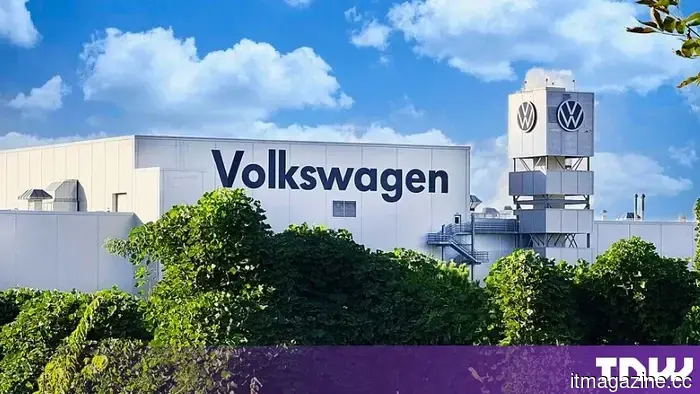 Volkswagen планирует сократить еще 50 000 рабочих мест, доведя общее число до 100 000.
Volkswagen сократит еще 50 000 рабочих мест, доведя общее число до 100 000. Голосование наблюдательного совета было единогласным, и половина из него представляет рабочую силу.
Volkswagen планирует сократить еще 50 000 рабочих мест, доведя общее число до 100 000.
Volkswagen сократит еще 50 000 рабочих мест, доведя общее число до 100 000. Голосование наблюдательного совета было единогласным, и половина из него представляет рабочую силу.
 Неправительственная организация, которая расследовала несанкционированные действия агентов OpenAI, работает на грант в 36 миллионов долларов. Следующая волна этих денег ждет IPO ИИ.
Коэффициент предоставления средств Redwood Research, который исследовал утечку Hugging Face от OpenAI. Его следующие $40 млрд в год зависят от двух листингов.
Неправительственная организация, которая расследовала несанкционированные действия агентов OpenAI, работает на грант в 36 миллионов долларов. Следующая волна этих денег ждет IPO ИИ.
Коэффициент предоставления средств Redwood Research, который исследовал утечку Hugging Face от OpenAI. Его следующие $40 млрд в год зависят от двух листингов.
G42 has dropped Huawei and has allowed Washington to monitor its data centres. It's said that majority ownership by US entities is likely to follow.
G42 severed ties with Huawei and subsequently permitted Washington to oversee its clusters. Bloomberg indicates that a majority US ownership is now being considered.