

Hugging Face is considering a sale at a valuation of $13 billion, almost three times its previous valuation.
Hugging Face has engaged bankers to gauge interest in a potential sale, aiming for a valuation of $13 billion or more, as reported by Business Insider. The publication noted that discussions are at an early stage and that no potential bidders have been named.
This marks a significant turn for a company that has spent the last decade positioning itself as a neutral player in machine learning and only recently sought assistance with its computing expenses by requesting $100 million from OpenAI.
The anticipated valuation is nearly three times the $4.5 billion value assigned to Hugging Face following its last funding round, which was a $235 million investment in August 2023 led by Salesforce Ventures, with participation from Nvidia, Google, Amazon, Intel, Qualcomm, IBM, Sequoia Capital, and Lux Capital. It is uncommon for the company to not have raised external funds since then, especially in an industry where three years can encompass multiple funding cycles.
Founded in New York in 2016 by Clement Delangue, Julien Chaumond, and Thomas Wolf, Hugging Face began as a chatbot company before shifting focus to the underlying infrastructure for various models. Its Hub now supports over three million public models and approximately one million datasets, making it strategically appealing to potential buyers and challenging to value.
Revenue is generated from paid subscription tiers, enterprise hosting, and compute services built on the free repository, yet the company has never disclosed any financial figures. By November 2025, about half of the roughly $400 million raised since its inception remained unspent, positioning it well for negotiations and poorly for being compelled into any transaction.
A prospective buyer would need to consider what exactly they would be acquiring. The value of Hugging Face lies in its reputation as a trusted platform for developers to publish and download open weights, but that level of trust may falter under the ownership of a company with its own proprietary models.
This concern is not merely theoretical. The CEO of Mistral has pointed out that proprietary models give providers power over their customers, and a similar rationale applies to the registry housing the open alternatives.
The Hub’s extensive scale has also created its own challenges. Researchers have identified numerous malicious models and agent skills embedded within Hugging Face and ClawHub as part of a cyber campaign targeting AI infrastructure. Additional investigations have linked certain banned tools in the EU back to components hosted on the platform.
Managing a repository of three million items incurs escalating costs, and any acquirer assumes regulatory risks associated with it. In Europe, these risks are tangible, as the AI Act imposes responsibilities on providers of general-purpose models, and the exact role of hosting platforms within that framework remains unsettled.
A sale at $13 billion would occur in a market that has shown a growing interest in AI infrastructure compared to AI applications, with market valuations based on the premise that whoever controls the infrastructure benefits financially, irrespective of which model ultimately prevails. Hugging Face is close to owning the distribution layer for open weights, and there isn’t an obvious alternative to it.
Hugging Face has been pursuing expansion rather than contraction. In April 2025, it acquired the French robotics firm Pollen Robotics, branching into hardware alongside its software operations, and it has continued supporting open-source projects that do not yield direct revenue.
Neither Hugging Face nor its advisors have commented on this report, and Business Insider indicates that the discussions are in the preliminary phase rather than indicative of a deal in progress. Such exploratory efforts often lead to significant funding rounds instead, which would be less disruptive for a company with unspent capital and a valuation that has not been updated in three years.
The list of potential buyers is limited and primarily consists of Hugging Face’s current investors. Nvidia, Google, Amazon, IBM, and Salesforce all have stakes in the company and motivations to integrate the Hub into their ecosystems, which aligns with the desires of many in the open-source community who sought to join the platform to evade such consolidation.
Altri articoli
 Il finanziamento delle fintech nel Regno Unito è sceso ai suoi livelli più bassi in almeno un decennio.
Il finanziamento fintech nel Regno Unito ha raggiunto il suo livello più basso in almeno dieci anni, anche se gli investimenti globali nel fintech sono aumentati del 23% nel primo semestre del 2026.
Il finanziamento delle fintech nel Regno Unito è sceso ai suoi livelli più bassi in almeno un decennio.
Il finanziamento fintech nel Regno Unito ha raggiunto il suo livello più basso in almeno dieci anni, anche se gli investimenti globali nel fintech sono aumentati del 23% nel primo semestre del 2026.
 Hugging Face esplora una vendita a una valutazione di 13 miliardi di dollari, quasi il triplo dell'ultima.
Hugging Face ha assunto banchieri per esplorare una vendita a 13 miliardi di dollari o più, quasi il triplo dei 4,5 miliardi di dollari a cui era valutata nel 2023.
Hugging Face esplora una vendita a una valutazione di 13 miliardi di dollari, quasi il triplo dell'ultima.
Hugging Face ha assunto banchieri per esplorare una vendita a 13 miliardi di dollari o più, quasi il triplo dei 4,5 miliardi di dollari a cui era valutata nel 2023.
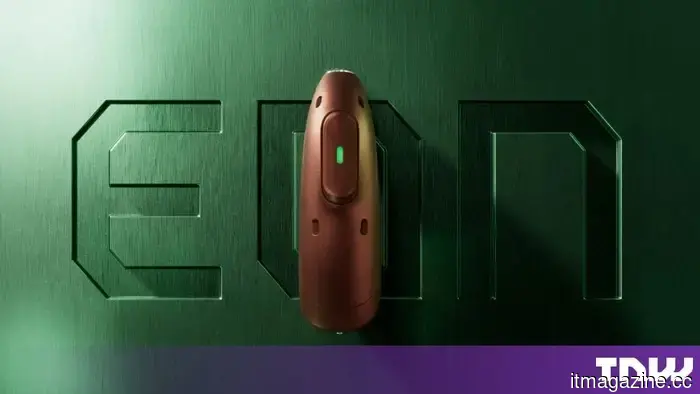 Gli nuovi apparecchi acustici EON di Phonak utilizzano due sistemi di intelligenza artificiale su un chip progettato per consumare poca energia.
Gli apparecchi acustici EON di Phonak eseguono simultaneamente la separazione del parlato e la classificazione delle scene su un nuovo chip, con 38 ore di autonomia e supporto Auracast.
Gli nuovi apparecchi acustici EON di Phonak utilizzano due sistemi di intelligenza artificiale su un chip progettato per consumare poca energia.
Gli apparecchi acustici EON di Phonak eseguono simultaneamente la separazione del parlato e la classificazione delle scene su un nuovo chip, con 38 ore di autonomia e supporto Auracast.
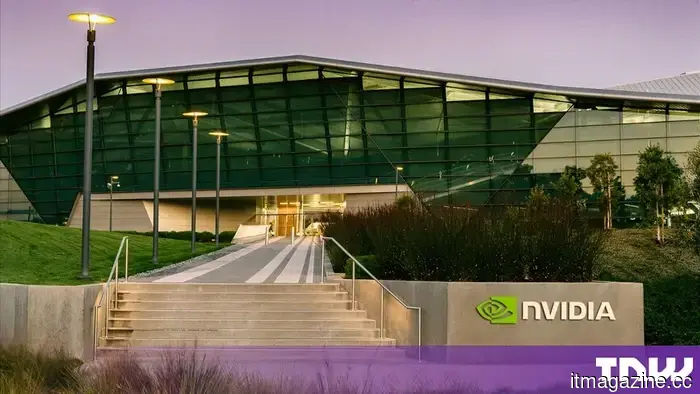 Nvidia è in trattative per sostenere Perplexity a più di 30 miliardi di dollari.
Nvidia ha discusso di investire in Perplexity a una valutazione superiore ai 30 miliardi di dollari e ha valutato un accordo di licenza tecnologica insieme a questo.
Nvidia è in trattative per sostenere Perplexity a più di 30 miliardi di dollari.
Nvidia ha discusso di investire in Perplexity a una valutazione superiore ai 30 miliardi di dollari e ha valutato un accordo di licenza tecnologica insieme a questo.
 Il braccio robotico di XPENG ha raccolto oltre 900 milioni di dollari in vista della sua produzione di robot umanoidi.
XPENG afferma che la sua attività di robotica ha raccolto oltre 900 milioni di dollari, mesi prima che il suo umanoide IRON sia pronto per entrare in produzione di massa.
Hugging Face esplora una vendita a una valutazione di 13 miliardi di dollari, quasi il triplo dell'ultima.
Hugging Face ha assunto banchieri per esplorare una vendita a 13 miliardi di dollari o più, quasi il triplo dei 4,5 miliardi di dollari a cui era valutata nel 2023.
Il braccio robotico di XPENG ha raccolto oltre 900 milioni di dollari in vista della sua produzione di robot umanoidi.
XPENG afferma che la sua attività di robotica ha raccolto oltre 900 milioni di dollari, mesi prima che il suo umanoide IRON sia pronto per entrare in produzione di massa.
Hugging Face esplora una vendita a una valutazione di 13 miliardi di dollari, quasi il triplo dell'ultima.
Hugging Face ha assunto banchieri per esplorare una vendita a 13 miliardi di dollari o più, quasi il triplo dei 4,5 miliardi di dollari a cui era valutata nel 2023.
Hugging Face is considering a sale at a valuation of $13 billion, almost three times its previous valuation.
Hugging Face has engaged bankers to consider a sale with a valuation of $13 billion or higher, which is nearly three times its 2023 valuation of $4.5 billion.